
Article
Airbnb on Dover Heights Prestige Properties: How Banks Really Treat It
A decision-grade guide to how Australian lenders view Airbnb and short‑term letting income on prestige Dover Heights properties – what they count, what they ignore, and how to structure your loan safely.
Key Takeaway
Australian lenders usually treat Airbnb income from Dover Heights prestige properties as volatile, so many either ignore it for servicing or shade it by 20–50% and apply tighter LVR limits. Some banks classify short‑stay-heavy buildings as specialised security, further reducing borrowing power and flexibility. Borrowers should run servicing on conservative long-term rent or base salary, check council and strata rules in parallel, and hold 6–12 months of stressed repayments in offset to manage risk from changing regulations or bookings.
This topic is covered in full on Tailored Loans Sydney
A decision-grade guide to how Australian lenders view Airbnb and short‑term letting income on prestige Dover Heights properties – what they count, what they ignore, and how to structure your loan safely.
Read the full guide on tailoredloans.sydneyBuying or refinancing a prestige property in Dover Heights and planning to “make the mortgage work” with Airbnb can be tempting. But lenders treat short‑term letting very differently from standard rent – especially at Eastern Suburbs price points.
In plain terms: most banks either ignore Dover Heights Airbnb income completely or only count a discounted portion, and they may also tighten your loan‑to‑value ratio (LVR) because they see short‑stay properties as higher risk. If your numbers only work when you assume high Airbnb income, your loan approval is fragile.
This guide steps through how lenders actually view short‑term letting on Dover Heights prestige homes and apartments, how it changes borrowing power and valuations, and what you can do this week to get decision‑grade clarity.
1. Why Dover Heights Airbnb is different in lender eyes
1.1 Prestige postcode plus volatile income
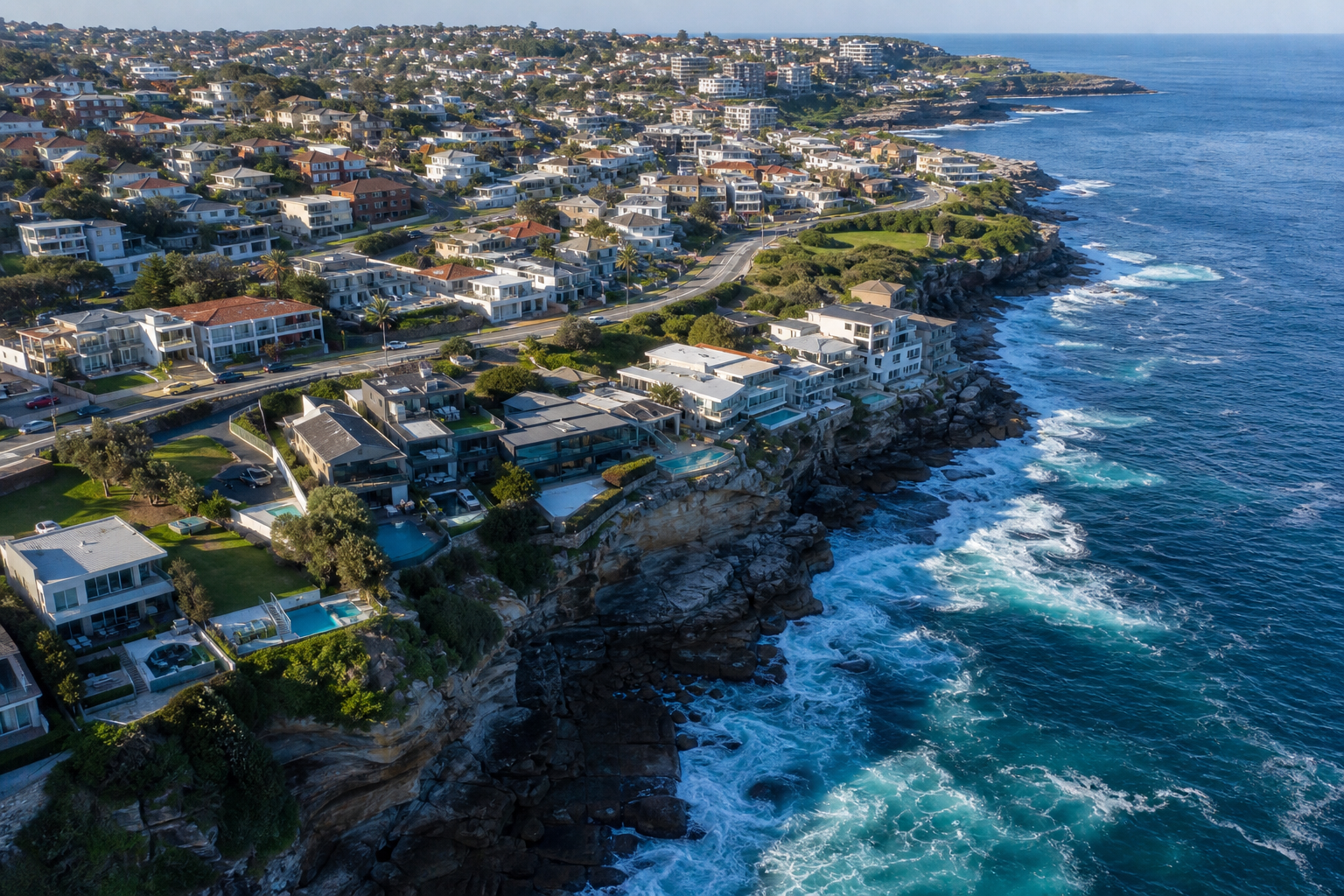
Dover Heights sits in a small, expensive pocket between Bondi and Rose Bay. Purchase prices are high, land is scarce, and even apartments can feel like bespoke assets.
Add Airbnb and holiday letting into the mix, and lenders see two layers of risk:
- Asset concentration risk – a big loan tied to a small, prestige market with fewer comparable sales.
- Income volatility risk – bookings and nightly rates that can swing with tourism cycles, regulation and global events.
That’s why you’ll often see tighter policy for Dover Heights and nearby Airbnb hotspots than for a standard long‑term rental in a middle‑ring suburb. The same pattern shows up just south in Rose Bay, covered in detail here: /insights/airbnb-short-term-letting-rose-bay-apartments-lender-rules.
1.2 The three questions every lender asks
When a bank sees “Airbnb” in your scenario, they tend to ask:
-
Is it even allowed?
- Council rules, planning controls, fire safety.
- Strata by‑laws or building rules.
-
How stable is the income – really?
- Seasonal variation, occupancy, reviews, competition.
-
What happens if regulations or demand change?
- Can you still service the loan on your base income or long‑term rent?
If they don’t like the answers, they’ll do one or more of:
- Ignore Airbnb income altogether.
- Shade it heavily (reduce the amount they count).
- Cap LVR (e.g. 70–80% max instead of 90%).
- Load a higher assessment rate or margin.
2. What lenders will and won’t count from Airbnb
2.1 Typical lender treatment of short‑stay income
Different banks sit on a spectrum, but for Dover Heights prestige properties you’ll see patterns like:
-
Conservative majors
- May decline to use Airbnb income unless there is a long, stable history.
- Prefer to rely on PAYG or business income and treat the Airbnb as a bonus.
-
More flexible majors / second‑tier banks
- May accept Airbnb income but shade it 20–40%.
- Often require 2 years’ tax returns showing the income.
-
Non‑banks and specialist lenders
- Sometimes more open to alternate documentation (Airbnb statements, BAS).
- May allow higher LVRs but at a higher interest rate.
2.2 How shading works – a Dover Heights example
Say you own (or are buying) a Dover Heights apartment:
- Purchase price: $2.8m
- Loan requested: $2.1m (75% LVR)
- Projected Airbnb net income (after platform fees, cleaning, utilities): $180,000 p.a.
A cautious lender might do this:
- Shading: 30% discount
- Counted income: $126,000 p.a. ($180,000 × 70%)
- Then they apply a serviceability buffer (APRA minimum 3% over actual rate) and a Household Expenditure Measure (HEM) for high‑income households.
Another lender might say:
"We will not use this Airbnb income for servicing; we’ll only use your base salary and other documented, recurring investment income."
The difference in borrowing power between those two approaches can be several hundred thousand dollars.
2.3 What banks often won’t count
Common elements lenders ignore or strip out of Airbnb income:
- Cleaning and linen charges passed through to guests.
- One‑off event bookings (e.g. New Year’s Eve premiums) if they distort averages.
- Periods where the property was owner‑occupied or blocked.
- Unverifiable cash payments or income not reported to the ATO.
If your projections assume every weekend books at peak rates, but your tax returns tell a different story, the bank will rely on the tax data every time.
3. Borrowing power: short‑stay vs standard tenancy
3.1 Servicing comparison – same property, different strategy
Let’s compare how borrowing power can look on the same Dover Heights prestige apartment under two strategies.
- Dover Heights apartment value: $3.0m
- Base PAYG income (combined couple): $520,000 p.a. after super
- Interest rate (illustrative): 6.5% p.a. P&I, 30‑year term
- Assessed by lender at 9.5% (6.5% + 3% APRA buffer)
| Scenario | Rental strategy | Gross property income | How lender treats it | Indicative max loan* |
|---|---|---|---|---|
| A | Standard 12‑month lease | $145,000 p.a. | 80–90% accepted as rent | ~$2.6m–$2.8m |
| B | Airbnb with strong history | $220,000 p.a. | 50–80% accepted (after shading) | ~$2.6m–$2.9m (wide spread) |
| C | New Airbnb, no history | Projected $240,000 p.a. | Often ignored entirely | ~$2.3m–$2.5m |
*Illustrative only. Actual outcomes depend on full financials, lender, LVR and other debts.
Key points:
- More income doesn’t always mean more borrowing power. If the lender ignores or heavily shades Airbnb, you might be better off – for servicing only – on a standard tenancy.
- For new short‑stay listings, many banks act as if no income exists until it is proven over 1–2 years.
3.2 APRA buffer and real‑world repayment stress
Under APRA’s 3% buffer, a loan at 6.5% is assessed at 9.5% – even on prestige Dover Heights properties.
At 9.5%, repayments on a $2.5m 30‑year P&I loan are about $21,400 per month.
Roy Morgan’s July 2026 research shows about 32.5% of Australian owner‑occupier borrowers are now “At Risk” of mortgage stress, with repayments consuming large parts of after‑tax income.
For borrowers relying on volatile Airbnb income, a prudent internal rule (consistent with our Eastern Suburbs guidance) is:
- Keep total home and investment loan repayments under 30–35% of after‑tax income.
- Hold 6–12 months of stressed repayments plus living costs in cash or true offset.
That way, a run of weak bookings or regulatory changes doesn’t push you into the “At Risk” category.
The strategy continues below
You've seen the problem and the groundwork — now unlock the exact steps our CPA-certified brokers use, including 7 more sections. Enter your email for instant, free full access.
Free access. No spam — unsubscribe anytime. Your details stay confidential.
Frequently asked questions
Talk to a CPA-certified broker
Free consultation, plain-English advice tailored to your situation.