
Article
Hidden Lending Rules in Alexandria: Postcode Risk, LVR Caps and Bank Appetite
A plain‑English guide to how banks really see Alexandria postcodes, units and zoning – and what you can do this week to avoid nasty LVR and approval surprises.
Key Takeaway
This guide explains how lenders assess Alexandria postcode risk, including lower LVR caps, tighter valuations and extra income shading for high‑density, mixed‑use and industrial‑zoned pockets. Around 28.2% of Australian mortgage holders are already at risk of mortgage stress, so understanding these rules before you buy or refinance matters. The article shows how to test your numbers at current rates plus 3% and take specific steps this week to choose safer lenders, structures and buffers.
This topic is covered in full on Tailored Loans Sydney
A plain‑English guide to how banks really see Alexandria postcodes, units and zoning – and what you can do this week to avoid nasty LVR and approval surprises.
Read the full guide on tailoredloans.sydneyAlexandria looks like one suburb on the map, but banks don’t see it that way.
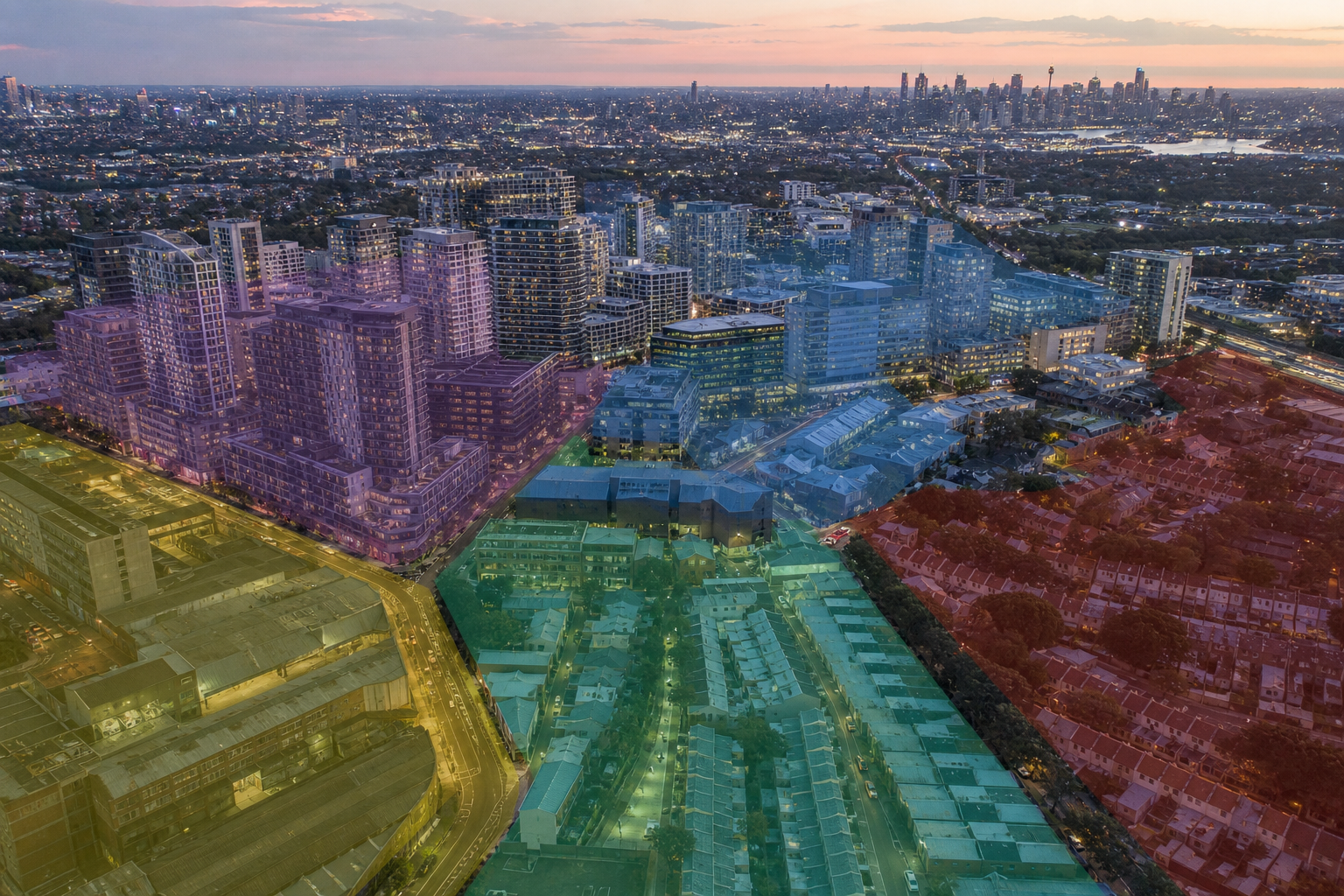
Within the same postcode you can have: high‑density investor towers, heritage terraces, mixed‑use blocks over retail, light‑industrial pockets and flight‑path noise. Lenders slice that up using postcode risk lists, LVR caps and extra income shading. If you miss those rules, your borrowing power, deposit and settlement plan can fall over at the worst time.
In plain English: some Alexandria properties are on quiet internal bank watchlists. That can mean lower maximum LVRs, tougher valuations and extra hoops for units or mixed‑use sites. The safest approach is to stress‑test your loan at current rates plus 3% and plan as if you’ll need a slightly bigger deposit and lower borrowing limit than one bank’s maximum.
This guide shows how lenders actually read Alexandria postcodes, buildings and zoning – and what you can do this week to avoid a nasty surprise.
1. How banks really use “postcode risk” in Alexandria
1.1 What is a postcode risk list?
Every major bank keeps an internal list of higher‑risk postcodes. These often include:
- High‑density apartment pockets
- Areas with lots of investor‑owned stock
- Locations with building‑quality issues or recent oversupply
- Industrial or mixed‑use zoning near residential
For those postcodes, banks may:
- Cap the maximum LVR (e.g. 80% instead of 90–95%)
- Ask valuers to be more conservative
- Shade income harder for investors or short‑term leases
As covered in our Bronte guide, postcode rules can change your options but rarely shut them down completely – they just change the levers you can pull this week [/insights/postcode-risk-lists-bronte-home-loan-options].
A key point: lists vary by lender. A postcode that one bank flags as high‑risk can be treated as normal by another.
1.2 What makes Alexandria show up on those lists?
Alexandria sits in the inner south, squeezed between:
- High‑density Green Square / Zetland towers
- Light‑industrial and logistics zones
- Major arterial roads and flight paths
That mix makes some pockets more sensitive for lenders, especially when:
- There’s a large pipeline of new units
- Investor ratios are high
- Titles are small (studios, micro‑one‑bedrooms)
- Zoning or usage is mixed (residential over commercial, live‑work, warehouse conversions)
Banks are not guessing. They look at arrears data, rental vacancy, valuer feedback and sales history in each micro‑pocket.
1.3 The quiet split inside the same postcode
Within one Alexandria postcode, you can have three very different lending profiles:
- Conventional houses and townhouses on residential streets – generally treated like any other inner‑Sydney suburb.
- Standard residential unit blocks (small‑ to mid‑rise, mostly owner‑occupied) – some extra scrutiny but broadly bank‑friendly.
- High‑density or mixed‑use buildings around Green Square / arterial roads or industrial edges – frequently subject to tighter postcode and building‑specific rules.
If you’re weighing suburbs, our comparison of Alexandria vs Green Square vs Zetland walks through these differences in more depth [/insights/alexandria-green-square-zetland-first-home-budget-comparison].
2. LVR caps in Alexandria: where they quietly tighten
2.1 How LVR caps normally work
LVR (loan‑to‑value ratio) is your loan divided by the property value. Typical broad settings (illustrative only):
- Up to 95% LVR – first‑home buyers with strong income and clean credit
- Up to 90% LVR – standard buyers and refinancers
- 80% LVR and below – avoids LMI and is usually the most flexible
In higher‑risk pockets, banks may quietly move those caps down.
2.2 Common Alexandria caps by property type (illustrative)
Not all lenders are the same, but a pattern we see in Alexandria looks roughly like this:
| Property / risk type | Typical LVR at conservative lenders* | Notes |
|---|---|---|
| Free‑standing house / terrace, resi zoning | Up to 90–95% | Strong income and clean credit needed above 90% |
| Townhouse / small low‑rise block | Up to 90–95% | Valuer will scrutinise recent comparable sales |
| Standard 1–2 bed unit, non‑high‑density | Up to 90%, sometimes 95% | Some banks shade rent harder for investors |
| High‑density unit (large complex) | Often capped at 80–90% | Some lenders treat like a special‑risk postcode |
| Mixed‑use over retail / commercial | 70–80% typical | May attract quasi‑commercial policy rules |
| Very small units (e.g. <40–50 m² internal) | 70–80% typical | Strong restrictions and valuer caution |
*Indicative only, not a rate or policy quote.
The big takeaway: the same borrower can qualify for 90–95% on one Alexandria property and be capped at 70–80% on another, purely because of building and zoning.
2.3 Worked example: when a 10% deposit is suddenly not enough
Say you’re buying an Alexandria unit:
- Contract price: $900,000
- You’ve built a 10% deposit = $90,000 plus costs
- You expect an LVR of 90% with LMI
But the bank treats this building as high density and caps LVR at 80%.
- Max loan at 80%: $720,000
- Required contribution: $180,000 + costs
You now have a $90,000 deposit shortfall.
You may still proceed by:
- Switching lenders with a more generous view of that building
- Negotiating a lower price (if possible)
- Using extra equity, family pledge or delaying and saving more
But you don’t want to discover this two weeks before settlement.
If you’re buying in or near a high‑density pocket, read the extra rules you’ll face first [/insights/high-density-mixed-use-alexandria-green-square-lending-rules].
3. Bank shading by suburb: how your income changes on paper
3.1 What “shading” means in practice
When banks assess your income, they often shade it – using less than 100% of the number you think you earn. Common examples:
- Only 80% of overtime or bonuses
- 70–90% of rental income
- 60–80% of Airbnb or short‑stay income
In higher‑risk postcodes or buildings, that shading can be harsher because banks expect:
- More vacancy risk
- More price volatility
- Larger swings in investor demand
3.2 Why Alexandria investors get extra scrutiny
Factors that increase shading around Alexandria include:
- High investor ratios in certain blocks
- Heavy reliance on short‑stay or corporate lets
- Exposure to commercial tenancies under the same roof
- Smaller apartments where vacancy and competition spike in downturns
Lenders are thinking: "If rates rise or rents soften, will this borrower still cope?"
This matters more now. Research in 2026 shows 28.2% of Australian mortgage holders are already ‘at risk’ of mortgage stress, and the RBA has the cash rate at 4.35% with more hikes possible if inflation stays high.
A simple, suburb‑proof rule for your own numbers is to stress‑test all loans at current rates + 3% and keep total home and investment repayments under 30–35% of after‑tax income.
3.3 Worked example: rental shading for an Alexandria unit
You buy an investor unit:
- Expected rent: $800 per week ($41,600 p.a.)
- Some lenders shade this to 80% = $33,280
But in a higher‑risk building, another lender may assume:
- 70% usable income = $29,120
If your marginal tax rate is 34.5%, after‑tax rent is roughly:
- At 80% shading: ~$21,800
- At 70% shading: ~$19,000
That difference alone can reduce borrowing capacity by tens of thousands of dollars, especially if you have multiple properties.
If you’re self‑employed, the effect stacks – income shading for your business plus extra shading for the postcode. Our detailed guide for Alexandria self‑employed borrowers steps through that interplay [/insights/abn-age-industry-risk-contract-type-alexandria-home-loan].
The strategy continues below
You've seen the problem and the groundwork — now unlock the exact steps our CPA-certified brokers use, including 6 more sections. Enter your email for instant, free full access.
Free access. No spam — unsubscribe anytime. Your details stay confidential.
Frequently asked questions
Talk to a CPA-certified broker
Free consultation, plain-English advice tailored to your situation.