
Article
Financing Alexandria Warehouse Conversions, Lofts and Industrial-Style Apartments
Alexandria’s warehouse conversions and loft apartments look amazing, but lenders don’t treat them like vanilla units. This guide explains how banks assess them, common valuation traps, and how to structure your finance so a quirky building doesn’t derail your purchase or refinance.
Key Takeaway
Australian lenders view Alexandria warehouse conversions and loft apartments as higher-risk than standard units, so they often apply lower loan-to-value ratios, more conservative valuations and tighter policy checks on size, zoning and construction. Many banks cap LVRs at 70–80% for quirky or non-standard security in high-density inner-south postcodes, which can mean larger deposits or more equity. Buyers should secure a lender pre-check on the specific building and a valuation-aware pre-approval before committing to purchase.

This topic is covered in full on Tailored Loans Sydney
Alexandria’s warehouse conversions and loft apartments look amazing, but lenders don’t treat them like vanilla units. This guide explains how banks assess them, common valuation traps, and how to structure your finance so a quirky building doesn’t derail your purchase or refinance.
Read the full guide on tailoredloans.sydneyAlexandria’s warehouse conversions and loft-style apartments are some of Sydney’s most character-filled homes. But lenders don’t always share buyers’ enthusiasm. In lending policy, many of these properties sit in a grey zone between “standard residential” and “non-standard security”, which can mean lower maximum LVRs, tougher valuations and fewer lender choices.
This guide explains how banks and valuers actually see Alexandria conversions and lofts, what it means for your borrowing, and how to structure your finance so a cool building doesn’t derail your purchase or refinance.
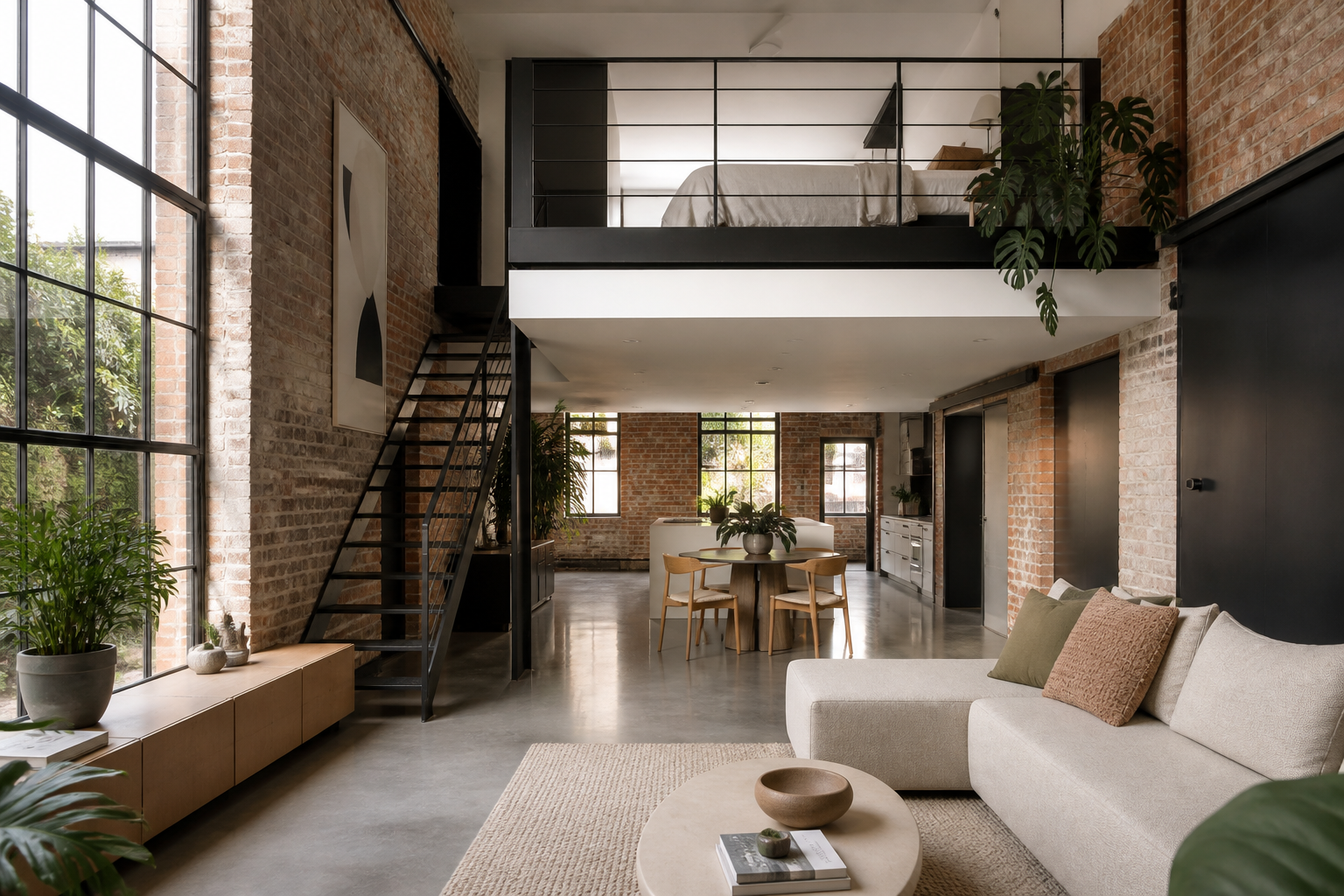
1. What counts as a warehouse conversion or loft in lender language?
1.1 Real-world examples in Alexandria
In the Alexandria/Green Square pocket, lenders regularly see:
- Old warehouse shells converted to residential strata (often 1990s–2000s)
- Purpose-built “warehouse style” or loft apartments with exposed brick, high ceilings, mezzanines
- Mixed-use blocks with ground-floor commercial and warehouse-inspired apartments above
- Live–work style units that blur the line between residential and commercial
On a real estate listing, they might be described as “New York-style loft”, “warehouse conversion” or “industrial chic”. Lenders look past the marketing and ask: does this behave like a normal apartment from a risk and resale point of view?
1.2 The key lender classification questions
Most lenders run through a few core questions:
- Is it standard residential zoning? (Usually R1/R2/R3 in NSW.)
- Is the construction standard? (Concrete/brick vs unusual materials.)
- Is it part of a normal strata scheme?
- Is the layout and size broadly mainstream?
- Is there a healthy resale market if they have to sell?
If the answer is “yes” to most of these, the loan is more likely to be treated like a normal apartment. If two or more are “no” or “not sure”, you drift into “non-standard” territory – with policy and LVR consequences.
2. Why lenders worry about conversions and lofts
2.1 The three big risks banks see
Most policies boil down to three perceived risks:
- Valuation risk – Will valuers be conservative because of uniqueness, past sale volatility or high-density postcode lists?
- Liquidity risk – If the bank ever has to sell it, is there a broad buyer pool or only a niche audience?
- Construction/defect risk – Was the conversion done well, and how does the building compare to newer code and fire standards?
In the inner south, those sit on top of broader postcode rules. Alexandria, Green Square and nearby high-density pockets are already on many lenders’ “watch lists” for apartments.
If you haven’t read it yet, it’s worth pairing this article with our guide on how local rules differ in nearby high-density hubs: /insights/green-square-mascot-property-types-vs-harbourside-lender-rules.
2.2 How this translates into lending policy
Common responses from lenders when something looks a bit left-of-centre:
- Lower maximum LVR (e.g. 70–80% instead of 90–95%)
- No interest-only for owner-occupiers
- Stricter serviceability assessment (APRA’s 3% buffer still applies)
- Requirement for full-doc applications only (self-employed feel this the most)
- Extra conditions in the approval tied to valuation or building reports
That doesn’t mean you can’t borrow strongly against a good conversion. It means you must choose carefully which bank to ask – and in what order.
3. How valuers look at Alexandria conversions and lofts
3.1 The valuer’s brief
The valuer’s job is not to fall in love with the brickwork. Their brief from the lender is to answer two questions:
- What would this property reasonably sell for in an orderly sale?
- How does it compare to similar, recent sales nearby?
For Alexandria conversions, they pay particular attention to:
- Building history – original use, conversion date, known defect history
- Sales evidence – similar stock in the same building or very close by
- Size and layout – functional bedrooms, internal area, ceiling heights
- Zoning and use – purely residential, or any commercial/industrial elements
If the building is a one‑off or has only a handful of similar sales, valuers tend to err on the cautious side.
3.2 Worked example: when a valuation comes in short
Assume you’re buying a loft-style apartment in a converted warehouse:
- Purchase price: $1,050,000 (what you’ve agreed with the vendor)
- You’re aiming for: 80% LVR (20% deposit)
- Expected loan: $840,000
If the valuer concludes the fair value is $1,000,000 based on comparable sales:
- Max lend at 80% LVR = $800,000
- Shortfall = $40,000
Your choices become:
- Tip in an extra $50,000 (to keep some buffer for costs), or
- Shift to a lender with a more generous view of the property (not always possible under time pressure), or
- Re‑negotiate the price – often very hard if you’re already unconditionally exchanged.
This is why we stress test valuations and avoid bidding blind. For smaller or quirky apartments, see also our studio-specific guide: /insights/small-studio-one-bed-alexandria-minimum-size-lvr-valuation.
3.3 Size and layout: minimums still matter
While warehouse conversions are often generous in size, some lofts carve bedrooms out of voids or awkward mezzanines. Lenders and valuers look at:
- Internal area on the strata plan (excluding car space and balconies)
- Whether bedrooms are fully enclosed and meet basic legal definitions
- Whether the property would appeal to an average buyer, not just a niche
If the internal size dips into “small apartment” territory (sub‑50 m² internal), expect:
- Lower LVR caps
- Fewer lender options
- Extra scrutiny on rental demand for investors
The strategy continues below
You've seen the problem and the groundwork — now unlock the exact steps our CPA-certified brokers use, including 7 more sections. Enter your email for instant, free full access.
Free access. No spam — unsubscribe anytime. Your details stay confidential.
Frequently asked questions
Talk to a CPA-certified broker
Free consultation, plain-English advice tailored to your situation.