
Article
Older Art-Deco Blocks vs New Builds in Sydney’s East: Finance Rules
How banks actually treat older Art-Deco blocks versus shiny new builds in Sydney’s Eastern Suburbs – and how that should shape your offer, structure and buffer this week.
Key Takeaway
Older Art-Deco apartments in Sydney’s Eastern Suburbs are generally viewed by lenders as lower risk than many high-density new builds, provided there are no major defects or cladding issues. Banks often favour solid, low-rise blocks with proven performance and may lend up to 80–90% LVR, while new builds with small floor areas or defect histories can be restricted to 70–80%. Buyers should align property choice, deposit size and buffers to these lending realities and order a contract review plus strata check before committing.

This topic is covered in full on Tailored Loans Sydney
How banks actually treat older Art-Deco blocks versus shiny new builds in Sydney’s Eastern Suburbs – and how that should shape your offer, structure and buffer this week.
Read the full guide on tailoredloans.sydneyBuying in Bondi, Coogee, Randwick or Woollahra, the key finance difference is this: lenders usually prefer a solid, low-rise Art-Deco block with no major defects over a shiny but risky new build. Older stock can get higher LVRs and smoother valuations, while many newer buildings are capped on LVR, hit by conservative valuations, or slowed down by defect reports and cladding checks.
If you’re choosing between an older Art-Deco apartment and a new build in Sydney’s Eastern Suburbs, your lender will look at: 1) building type and density, 2) floor area, 3) construction quality and defects, 4) strata strength and levies, and 5) your buffers if rates rise another 3% (as APRA expects banks to test). Get these right, and you can move this week with a clear plan.
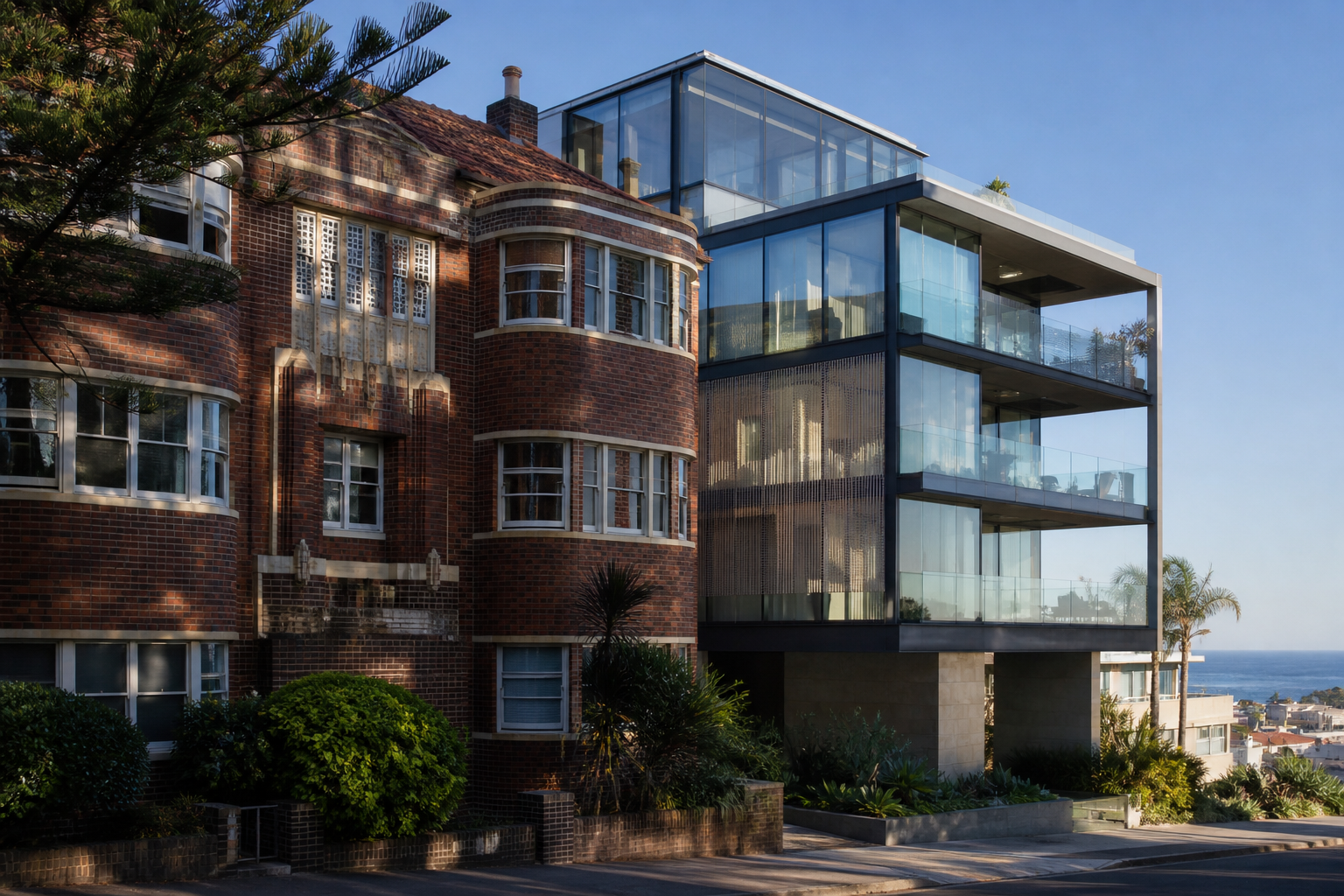
1. How lenders see older Art-Deco blocks vs new builds
1.1 Core risk lens
Most banks care less about the age of the building and more about how easily they can sell it if you default.
Older Art-Deco blocks in the east typically score well because:
- Low to medium rise, often 4–12 units per block.
- Proven demand in blue-chip pockets like Bondi, Coogee, Randwick, Woollahra.
- Larger floorplans and solid construction.
New builds are often treated as higher risk when:
- High-density (100+ units) or in a cluster of near-identical towers.
- Lots of investor-owned or short-stay units.
- Past or potential defects (waterproofing, cracking, cladding).
1.2 Typical lending settings (indicative only)
| Feature / Risk | Older Art-Deco (Bondi/Randwick) | New Build Mid-Rise (Coogee) | New High-Density Build (Mascot-style) |
|---|---|---|---|
| Typical max LVR* | 80–90% | 80–90% (if no issues) | 70–80% in practice |
| Valuation vs purchase | Often close to contract | Sometimes conservative | Often below contract |
| Floor area sensitivity | Flexible if >45–50 m² | Strict if <45 m² | Very strict |
| Extra credit sign-offs | Usually minimal | Common if many investors | Frequent, higher decline rate |
| Strata focus | Repairs, special levies | Early defects, sinking fund | Defects, cladding, under-funded fund |
*Illustrative only; actual LVR depends on your profile and lender policy.
For a deeper look at how lenders treat small, boutique stock versus larger buildings, see /insights/boutique-block-paddington-woollahra-lending-strata-considerations.
The strategy continues below
You've seen the problem and the groundwork — now unlock the exact steps our CPA-certified brokers use, including 4 more sections. Enter your email for instant, free full access.
Free access. No spam — unsubscribe anytime. Your details stay confidential.
Frequently asked questions
Talk to a CPA-certified broker
Free consultation, plain-English advice tailored to your situation.