
Article
How to Avoid Dangerous Cross‑Collateralisation on Inner‑South Loans
Clear, decision‑grade guide for Green Square and inner‑south borrowers on using a broker to avoid dangerous cross‑collateralisation, protect equity and keep refinancing options open.
Key Takeaway
Using a broker is one of the most effective ways to avoid dangerous cross‑collateralisation on inner‑south properties, because they can design standalone loans where each property secures only its own debt. This is critical in Green Square and Zetland, where apartment values can be volatile and one weak valuation can otherwise lock up equity or force sales. Investors should map all securities, then work with a CPA‑grade broker to prioritise uncrossing and protect the family home first.
This topic is covered in full on Tailored Loans Sydney
Clear, decision‑grade guide for Green Square and inner‑south borrowers on using a broker to avoid dangerous cross‑collateralisation, protect equity and keep refinancing options open.
Read the full guide on tailoredloans.sydneyUsing a broker is the easiest way to avoid dangerous cross‑collateralisation on Green Square and inner‑south properties because a good broker designs standalone securities: each property only secures its own loan, keeping equity accessible and avoiding one bad valuation dragging down your whole portfolio.
If you’re buying or refinancing in Green Square, Zetland, Waterloo or Alexandria this month, your job is simple: don’t sign any loan offer until you understand exactly which property secures which loan.
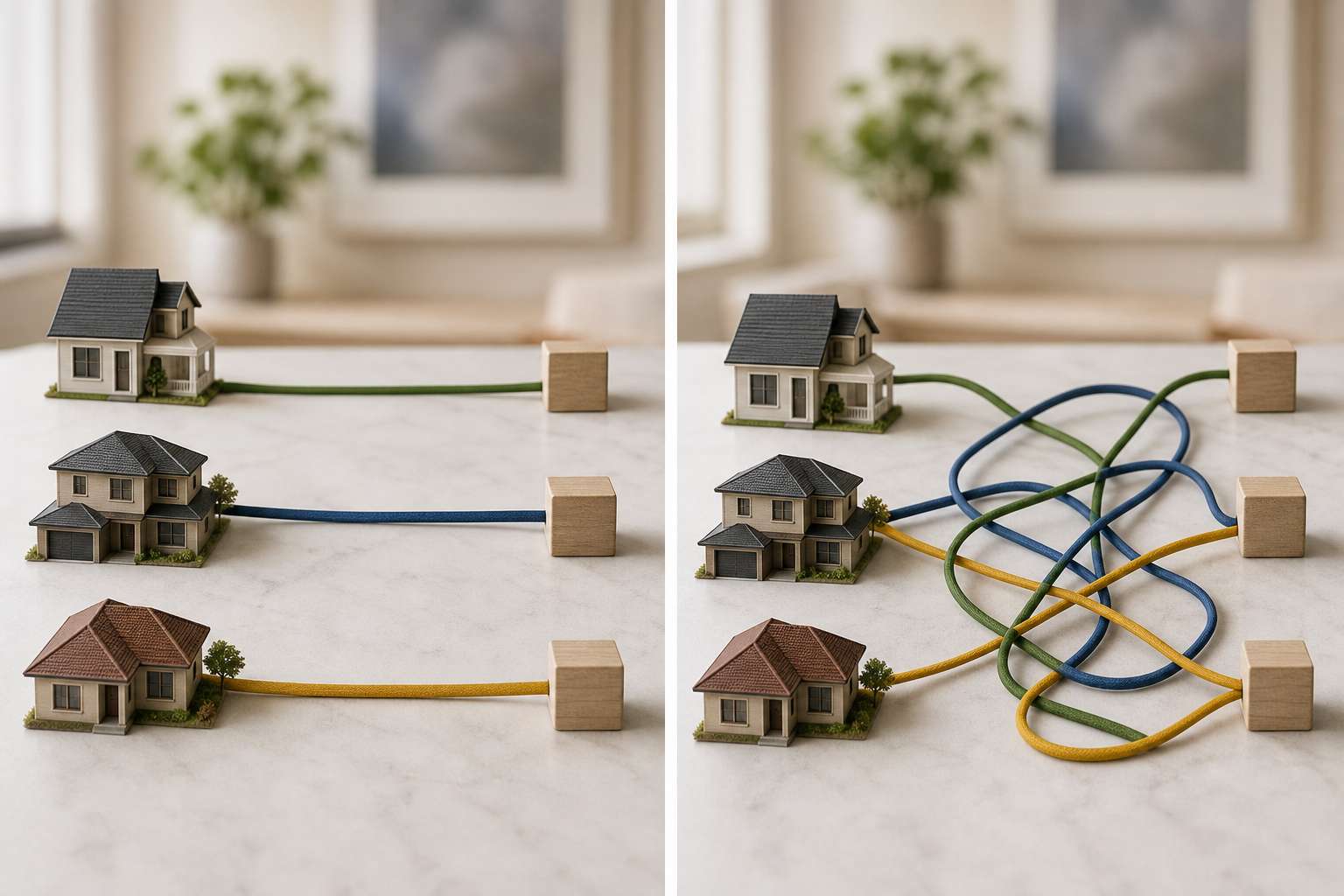
What cross‑collateralisation actually is (and why it’s worse in Green Square)
Cross‑collateralisation is when the bank uses more than one property as security for one or more loans.
Example:
- Home in Alexandria worth $1.5m with $600k loan.
- Investment unit in Green Square worth $850k.
- Bank offers one big $1.45m facility secured by both properties.
It looks neat. But you’ve just given the lender control over both properties for every decision: increases, refinances, releases, even fixing valuations.
In dense apartment markets like Green Square and Zetland, this is riskier because:
- Valuations can move fast – if one tower or complex falls out of favour, the valuer can mark the whole block down.
- Lenders often shade high‑density postcodes – tighter LVRs, lower valuations, or different policies for small or investor‑heavy units.
- You’re likely to own more than one apartment – many clients own 2–3 near‑city units; crossing them amplifies any wobble in one building.
A standalone structure means:
- Each Green Square property secures only its own debt.
- Your Alexandria home is ring‑fenced from your units.
- If a Zetland valuation comes in low, it doesn’t freeze the whole portfolio.
For a deeper explainer of the mechanics, see /insights/avoiding-dangerous-cross-collateralisation-broker-keeps-properties-uncrossed.
The strategy continues below
You've seen the problem and the groundwork — now unlock the exact steps our CPA-certified brokers use, including 4 more sections. Enter your email for instant, free full access.
Free access. No spam — unsubscribe anytime. Your details stay confidential.
Frequently asked questions
Talk to a CPA-certified broker
Free consultation, plain-English advice tailored to your situation.