
Article
Bridging Finance for Luxury Property Moves: When It Works, When It Bites
Thinking about a prestige home upgrade before selling your current place? This guide explains how bridging loans work in Australia, the extra risks with luxury properties, realistic limits, and safer alternatives you can act on this week.
Key Takeaway
Bridging finance for luxury property upgrades temporarily combines your existing home loan and new purchase into one higher “peak debt”, magnifying risk if valuations fall or your sale is delayed. In high‑value markets, a 3–5% valuation shortfall and 3% interest-rate buffer can quickly add thousands per month to holding costs. Buyers should stress-test multiple sale scenarios, cap peak debt and consider safer alternatives such as longer settlements, equity releases or sell‑then‑buy strategies before committing.

This topic is covered in full on Tailored Loans Sydney
Thinking about a prestige home upgrade before selling your current place? This guide explains how bridging loans work in Australia, the extra risks with luxury properties, realistic limits, and safer alternatives you can act on this week.
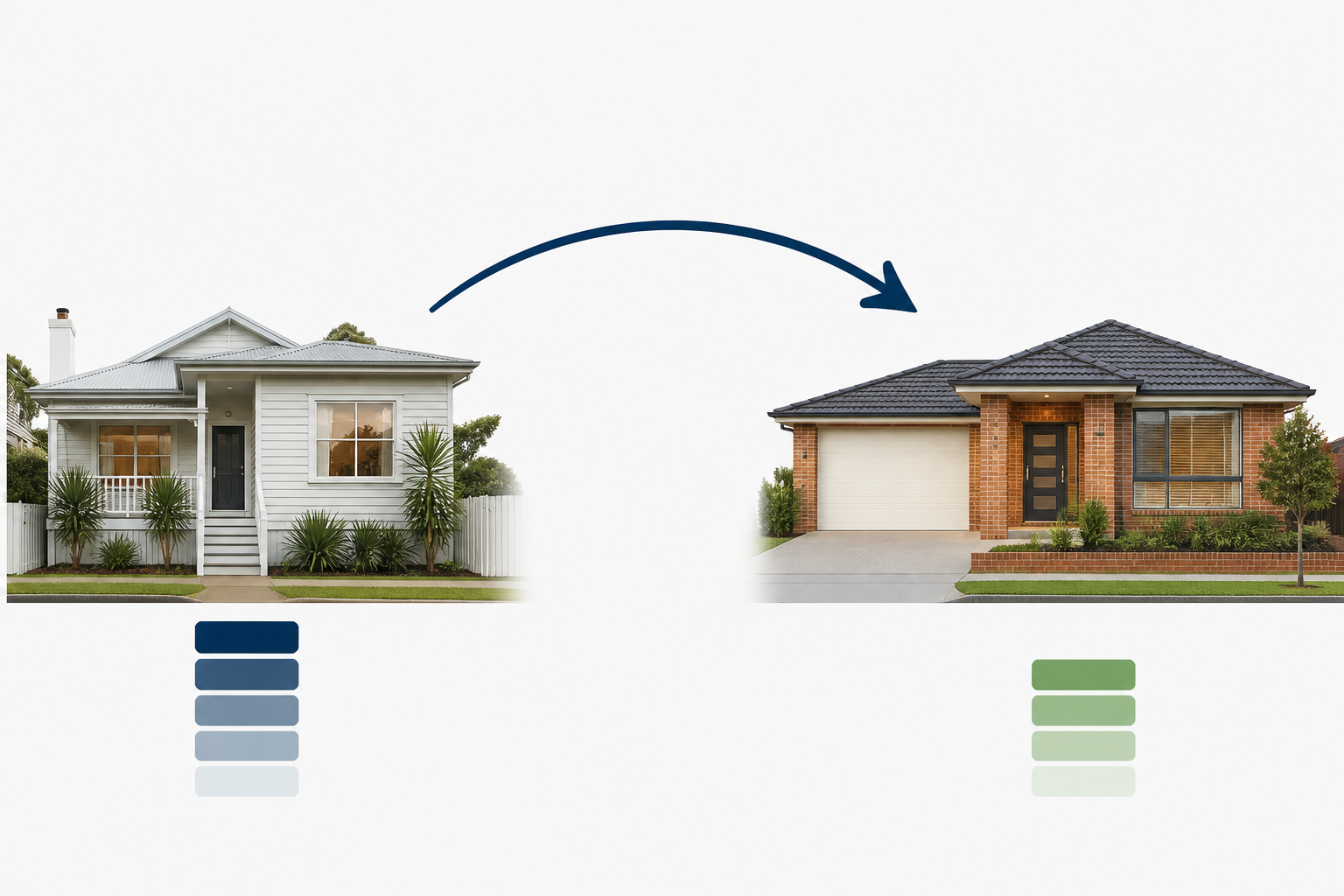
Read the full guide on tailoredloans.sydneyUpgrading into a luxury home before you’ve sold your current place is tempting – especially when the right property pops up off‑market or in a tightly held suburb. In Australia, a bridging loan can make that move possible by funding the new property while you still own the old one. But on high‑value properties, bridging finance can push your total debt and risk up very fast if sale, valuation or rates don’t go your way.
This guide explains how bridging loans work for prestige moves, the specific risks at higher price points, realistic limits, and safer alternatives you can act on this week.

1. How bridging finance actually works in Australia
A bridging loan lets you buy a new property before selling your current home. For a period (often 6–12 months), you effectively carry both properties while the lender expects your existing home to be sold and the net sale proceeds used to pay down the debt.
1.1 Key concepts: peak debt, ongoing debt and end position
For a luxury move, you need to be clear on three numbers:
-
Peak debt – the total you owe during the bridging period:
- Existing home loan balance
- Plus purchase price and costs (stamp duty, legals)
- Minus any cash contribution/deposit you put in
-
Ongoing debt – what’s left after your current home is sold and the net sale proceeds are applied to the loan.
-
End position – your ongoing loan compared to the value of the new home (your LVR) and your income. This is the structure that has to pass the bank’s full serviceability test.
Many lenders capitalise interest during the bridging period (you don’t make full repayments; interest is added to the balance), but they still assess the loan as if you could afford it with principal and interest (P&I) repayments at a rate at least 3% higher, in line with APRA guidance.
1.2 Worked example: $5m upgrade with bridging
Assume:
- Current home value: $3.5m
- Current home loan: $1.2m
- Target home purchase price: $5m
- Buying and selling costs (stamp duty, legals, agents, etc.): ~$450k
- Cash in offset: $300k, of which you’ll use $200k
Step 1 – Peak debt
- Existing loan: $1.2m
- New purchase + costs: ~$5.25m
- Less cash contribution: -$0.2m
- Indicative peak debt ≈ $6.25m
Step 2 – Assume sale of existing home at $3.5m
- Sale price: $3.5m
- Less selling costs already allowed above
- Less payout of $1.2m existing loan
- Net proceeds available to reduce peak debt: ≈ $2.3m
Step 3 – Ongoing debt
- Peak debt $6.25m – $2.3m ≈ $3.95m ongoing loan
- LVR = $3.95m ÷ $5m = 79%
On paper, that might just pass an 80% LVR limit. But if the sale comes in even 5% lower, or costs blow out, your ongoing LVR and repayments change quickly – and that’s exactly where large bridging loans start to bite.
For more on how peak debt and end debt work, see the broader overview in /insights/bridging-loan-vs-sell-then-buy-structuring-finance-safely.
2. Why bridging is riskier on luxury and high‑value property
Bridging isn’t automatically unsafe. But once you’re talking about $3m, $5m or $8m properties, the margin for error shrinks while the dollars at risk explode.
2.1 Concentrated risk in one asset
With prestige homes, most of your wealth is tied to a single dwelling in a single suburb. If the market softens, or that suburb has an oversupply of similar high‑end listings, it can take longer to sell or require discounting to clear.
A 5% price miss on:
- $1m property = $50k difference
- $5m property = $250k difference
If you’re on a bridging loan, that $250k shortfall doesn’t just hurt on paper – it can push your ongoing LVR above 80%, trigger lender discomfort, or force a top‑up you weren’t expecting.
2.2 Higher valuation risk and fewer comparables
Prestige markets like Woollahra, Rose Bay or Toorak often have:
- More off‑market and pre‑market deals
- Fewer truly comparable sales
- A wider range of property quality
That means a bank valuer might quite reasonably come in 3–5% below your expectations, especially where there are few recent sales to anchor value [as we see frequently in blue‑chip suburbs; see /insights/finance-traps-rose-bay-off-market-pre-market-deals].
On a $5m contract price, a 5% lower valuation is $250k. Your approved loan might be limited to 80% of the valuation, not the contract price, forcing extra cash or reshaping the deal at the last minute.
2.3 Big loans magnify cashflow shock
Roy Morgan estimates over 28% of Australian mortgage holders were already at risk of mortgage stress in early 2026 as rates rose. With jumbo loans, each 1% rate increase adds thousands per month.
For example, on a $4m ongoing loan over 25 years at an indicative 6.5% P&I:
- Monthly repayment ≈ $27,000
Add a 1% rise (to 7.5%):
- Monthly repayment jumps to ≈ $30,600 – about $3,600 more per month
During the bridging period, if you’re required to at least cover interest, the cashflow impost can be brutal unless your income is extremely strong and stable.
2.4 Liquidity risk and forced‑sale risk
High‑value homes can be illiquid:
- Fewer buyers at each price point
- Longer selling periods if sentiment turns
If your bridging term expires and your old home still hasn’t sold, lenders can:
- Refuse to extend the term
- Insist you drop the price to clear
- Require partial debt reduction or additional security
For high‑net‑worth borrowers, the real risk is a forced sale at a bad time, not an automatic loan recall. This is consistent with what we see more broadly with large loans and estates [/insights/large-home-investment-loans-when-high-net-worth-borrower-dies].
The strategy continues below
You've seen the problem and the groundwork — now unlock the exact steps our CPA-certified brokers use, including 7 more sections. Enter your email for instant, free full access.
Free access. No spam — unsubscribe anytime. Your details stay confidential.
Frequently asked questions
Talk to a CPA-certified broker
Free consultation, plain-English advice tailored to your situation.