
Article
Clifftop and Coastal Homes in Dover Heights: How Banks Really Lend
Thinking about a clifftop or coastal‑risk home in Dover Heights? Lenders will usually lend, but expect tighter LVRs, forensic valuations, insurer sign‑off and buffers. Here’s how banks actually assess erosion, access and insurance risk so you can structure a safe approval this week.
Key Takeaway
Australian banks will usually lend on clifftop and coastal‑risk Dover Heights homes, but they tighten rules via lower maximum LVRs, conservative valuations, postcode risk caps and mandatory insurance sign‑off. Valuers heavily discount unstable land, unengineered structures and poor access, which can trim 5–15% off price guides. Buyers should secure insurer quotes, allow for a 3% serviceability buffer, and keep post‑settlement cash or offset buffers so they’re not forced sellers if coastal risks worsen.
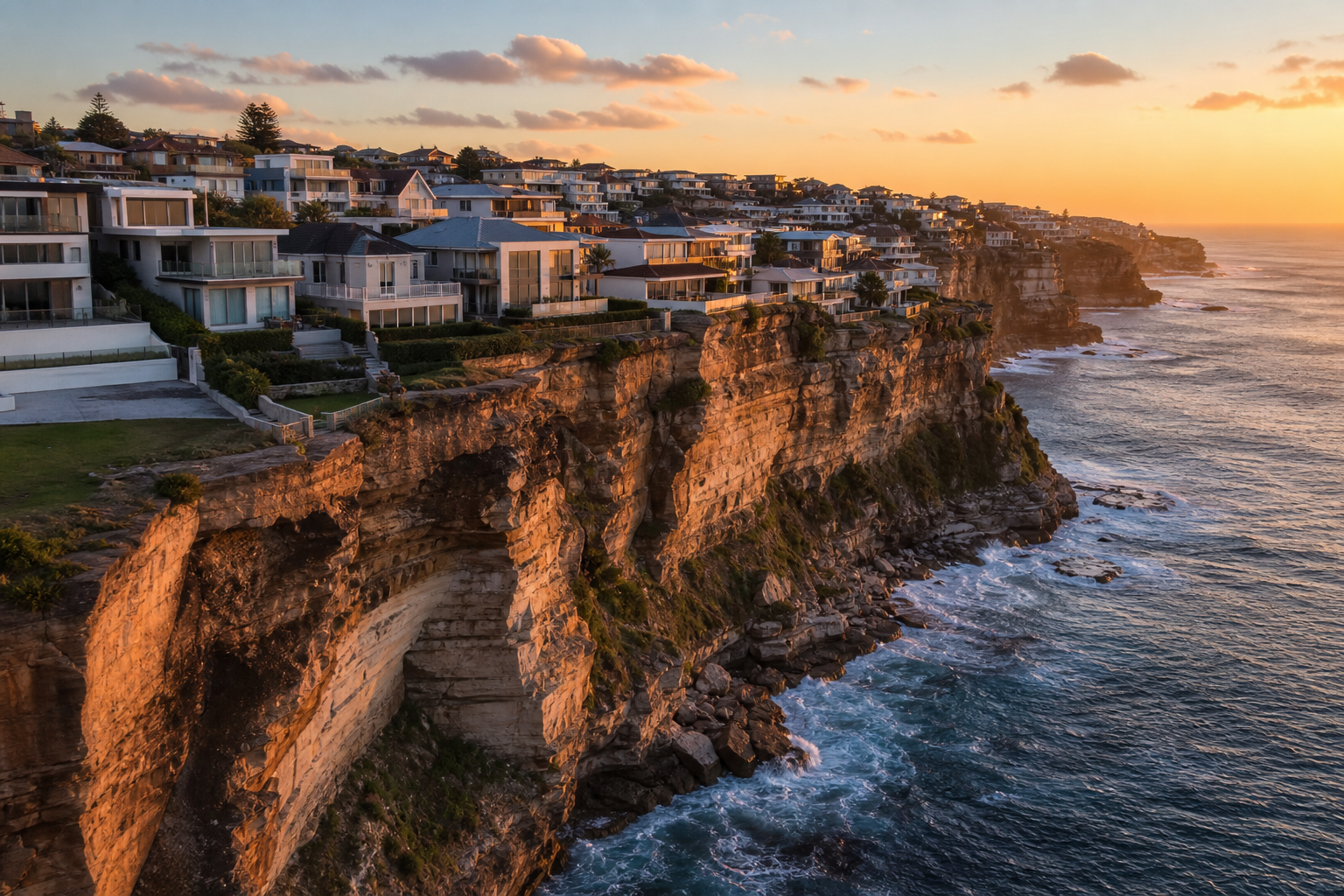
This topic is covered in full on Tailored Loans Sydney
Thinking about a clifftop or coastal‑risk home in Dover Heights? Lenders will usually lend, but expect tighter LVRs, forensic valuations, insurer sign‑off and buffers. Here’s how banks actually assess erosion, access and insurance risk so you can structure a safe approval this week.
Read the full guide on tailoredloans.sydneyBanks will usually lend on clifftop and coastal‑risk homes in Dover Heights, but they treat them as higher risk: lower maximum LVRs, tougher valuations, postcode caps and strict insurance requirements. If you assume standard “suburban” rules, you risk a painful down‑valuation or last‑minute policy knock‑back.
Quick action this week: get insurer quotes in writing, talk to an experienced valuer or broker about realistic value, and model your buffer if banks haircut what you think the property is worth.

How lenders actually see clifftop and coastal‑risk homes
Lenders don’t just see an ocean view. They see:
- Erosion and landslip risk – future loss of land or structural movement.
- Access risk – what happens if a storm, subsidence or neighbour dispute affects access.
- Insurance risk – whether you can get affordable, ongoing building and liability cover.
- Exit risk – how easy it will be to sell quickly in a stressed market.
In practice, that means:
- Lower LVRs – often 60–80% instead of 80–95%.
- No LMI appetite – many insurers won’t cover >80% LVR on obvious coastal‑risk sites.
- Conservative valuations – valuers lean to the bottom of the range or apply land discounts.
- Postcode and micro‑location flags – some lenders shade parts of Dover Heights more than others.
For a broader Eastern Suburbs view, see /insights/lending-rules-clifftop-coastal-risk-properties-eastern-suburbs.
Worked example: the 80% vs 70% problem
- Contract price: $5,000,000 clifftop home
- Standard 80% lend (if bank loved it): $4,000,000 loan, $1,000,000 cash
- Coastal‑risk policy capped at 70%: bank limit $3,500,000
You now need $1,500,000 cash (plus stamps and costs) or a second lender. That’s the gap you want to know about before you waive cooling‑off.
The strategy continues below
You've seen the problem and the groundwork — now unlock the exact steps our CPA-certified brokers use, including 4 more sections. Enter your email for instant, free full access.
Free access. No spam — unsubscribe anytime. Your details stay confidential.
Frequently asked questions
Talk to a CPA-certified broker
Free consultation, plain-English advice tailored to your situation.