
Article
Buying Company Title and Older Strata in Harbourside Sydney: Finance Rules
Thinking about a company title or older strata apartment in Double Bay, Rose Bay or nearby? Here’s how lenders really treat quirky titles, what it means for your deposit, and the checks to run this week before you bid or refinance.
Key Takeaway
Lenders do finance company title and older strata apartments in Sydney’s Eastern Suburbs, but they usually cap LVRs around 60–80% and apply tighter valuations due to resale and legal risks. Company title often restricts leasing and renovations, which can reduce borrowing power and investor appetite. Buyers should confirm loan policy on the exact building, obtain strata/company searches early, and stress‑test repayments 2–3% above current rates before bidding or refinancing.

For harbourside apartments in Double Bay, Rose Bay and surrounds, banks will lend against company title and older strata – but on tighter terms, lower LVRs and fussier valuations than for a standard Torrens or modern strata title. The trade‑off is simple: blue‑chip location and character, in exchange for more deposit, more scrutiny and slower lender lists.
If you understand the lending rules early, you can decide this week whether a specific building is worth pursuing or if you should pivot to a simpler title.
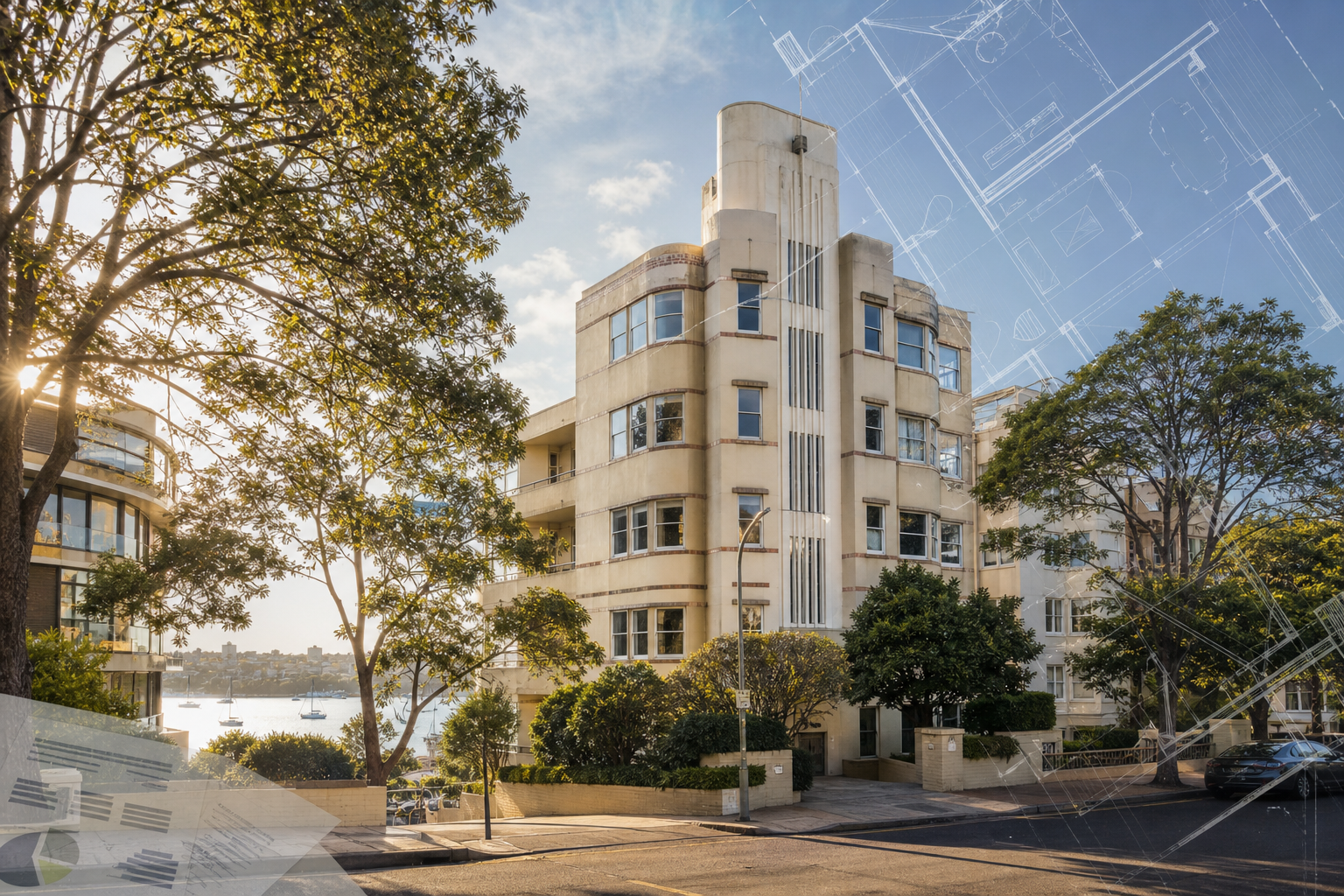
1. Company title vs older strata: what lenders actually care about
1.1 Quick definitions
Company title: You buy shares in a company that owns the building, plus an occupancy right. No separate title. The company’s constitution and board approvals control who can buy, lease or renovate.
Older strata (often Art‑Deco): You own a registered strata lot plus common property shares. Legally simpler, but lenders worry about small blocks, ageing services and levy spikes.
For a deeper dive on the age issue itself, see /insights/art-deco-vs-new-build-finance-eastern-suburbs.
1.2 How lender risk translates into policy
Most banks see these properties as higher resale risk and higher legal complexity. That feeds into:
- Lower maximum LVRs (more deposit required).
- Stricter valuation assumptions.
- Narrower lender choice, especially for investors or self‑employed buyers.
Where a standard Eastern Suburbs apartment might be 80–90% LVR, quirky titles in harbourside pockets can sit closer to 60–80%, sometimes lower for investors.
2. Typical LVRs and conditions: company title vs older strata
Indicative only – every lender and building is different, but this is the ballpark we see in Sydney’s east.
| Property type | Typical max LVR (OO) | Typical max LVR (INV) | Common extra conditions |
|---|---|---|---|
| Standard modern strata (≥50 sqm internal) | 80–90% | 80% | Usual valuation and strata report |
| Older Art‑Deco strata, well‑run block | 80–90% | 70–80% | Check levies, sinking fund, structural reports |
| Small boutique strata (≤6–8 units) | 70–80% | 60–70% | Extra focus on levies, insurance, building condition |
| Company title, larger block, flexible by‑laws | 70–80% | 60–70% | Company search, board consent, legal review |
| Company title, tiny/strict block | 60–70% | 50–60% | Tight valuation, limited lender list, tough covenants |
OO = owner‑occupier, INV = investor. Figures are indicative, not promises or live offers.
If you’re looking at a small company title unit in Double Bay or Rose Bay, this is why your broker will often push for a bigger deposit than your friend needed for a standard Bondi strata.
For more detail on similar quirks outside the east, see /insights/company-title-strata-quirks-inner-south-finance-basics.
The strategy continues below
You've seen the problem and the groundwork — now unlock the exact steps our CPA-certified brokers use, including 5 more sections. Enter your email for instant, free full access.
Free access. No spam — unsubscribe anytime. Your details stay confidential.
Frequently asked questions
Talk to a CPA-certified broker
Free consultation, plain-English advice tailored to your situation.