
Article
Should You Roll Other Debts into Your Mascot Mortgage?
Consolidating car loans, cards and even investment debts into your Mascot home loan can ease monthly pressure but can also put your family home at risk and increase lifetime interest. This guide shows Mascot borrowers exactly when it makes sense, when it doesn’t, and how to structure it safely this week.
Key Takeaway
Consolidating personal and investment debts into a Mascot mortgage only makes sense when the cashflow relief and reduced default risk clearly outweigh the higher concentration risk on the family home and extra interest over time. With around 28% of Australian mortgage holders already at risk of stress, Mascot borrowers should use separate loan splits, shorter terms and closed old facilities to avoid a quiet 30‑year reset. The actionable step is to model repayments and terms before consolidating any debt.
Rolling personal and investment debts into your Mascot mortgage can work if it clearly cuts immediate cashflow stress and default risk more than it increases risk to your family home. The mistake is blindly rolling everything in, resetting the clock to 30 years and quietly paying thousands more in interest.
This guide shows Mascot borrowers exactly when consolidation makes sense, when it doesn’t, and how to structure it safely so you can act this week.
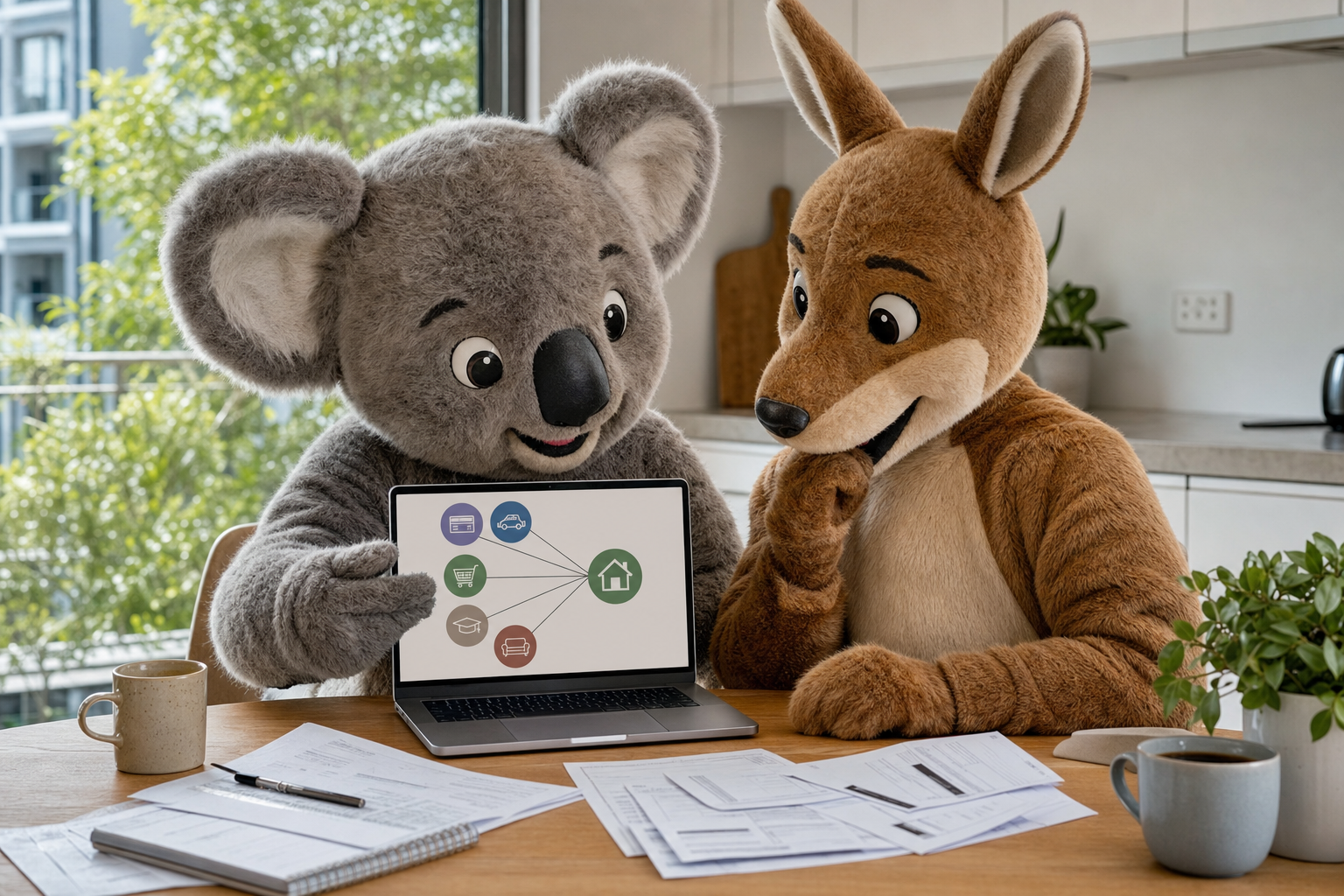
Mapping every debt is the first step before consolidating into your Mascot mortgage.
1. How debt consolidation into a Mascot home loan actually works
What you’re really doing
Debt consolidation means using equity in your Mascot home or investment property to:
- Refinance high‑rate debts (cards, personal loans, car loans, some business facilities) into your mortgage; and
- End up with one or more new home‑loan splits at mortgage rates instead of double‑digit rates.
For most Mascot households, this is defensible when it reduces immediate cashflow stress and default risk more than it increases concentration risk on the home (see also [/insights/consolidating-personal-investment-debts-dover-heights-mortgage]).
Typical Mascot consolidation scenario (worked example)
- Mascot home value: $1,100,000 (unit or townhouse)
- Current home loan: $650,000 at 6.2% p.a., 25 years remaining
- Other debts:
- Credit cards: $18,000 at ~20% p.a., $540/month
- Car loan: $32,000 at 9% p.a., 5‑year term, $665/month
- Personal loan: $15,000 at 11% p.a., 4‑year term, $390/month
Total non‑mortgage repayments: ~$1,595/month.
If you roll the full $65,000 into the home loan at, say, 6.2% and reset it to 25 years, your extra repayment is only around $430/month. Cashflow improves by over $1,100/month — but you’ve potentially turned short‑term debts into 25‑year debt and added tens of thousands in extra interest.
The key is not just whether you consolidate, but how you set the term and structure (see Section 3).
2. When consolidating into your Mascot mortgage makes sense
A. You’re under real cashflow pressure
Roy Morgan data shows about 28% of Australian mortgage holders are ‘At Risk’ of mortgage stress, with higher rates hitting households hard. If your Mascot repayments plus other debts are pushing you into arrears risk, consolidation can be the least‑bad option.
Good reasons to consolidate:
- You’re one or two pay cycles away from missing payments.
- You’re only making minimum card repayments and balances aren’t falling.
- You’re juggling multiple due dates and regularly dipping into savings to cope.
Reducing monthly commitments can stabilise your position and make you a safer borrower overall — which lenders and the RBA both care about from a financial‑stability perspective.
B. You have equity and a realistic plan
Most Mascot borrowers should aim for a safer personal LVR of 70–80%, not the absolute maximum (see [/insights/how-much-equity-safely-unlock-mascot-home]).
Consolidation is more reasonable when:
- Post‑consolidation LVR stays at or below ~80% (or at least doesn’t spike into risky territory).
- You have stable income (even if variable or self‑employed) and can commit to higher repayments on the new split.
- You’re willing to close the old cards/loans and change habits.
C. You’re cleaning up for a bigger plan
If you’re planning to:
- Upgrade homes in Mascot,
- Buy your first investment,
- Or prepare for a 10‑year property strategy,
then tidying messy consumer debts into a clear, well‑structured home‑loan setup can help. It often improves your borrowing power and presents better to lenders (see [/insights/mascot-broker-case-studies-long-term-planning]).
3. When rolling debts into your Mascot mortgage is a bad idea
A. Resetting everything to 30 years
The biggest hidden trap is restarting a 30‑year term on debts that were meant to be cleared in 3–7 years.
If you consolidate that $65,000 for 25–30 years instead of 5, even at a lower rate, the total interest can blow out.
| Scenario | Amount | Rate (indicative) | Term | Monthly repayment | Approx. total interest |
|---|---|---|---|---|---|
| Keep car + personal loans | $47,000 | 9–11% | 4–5 yrs | ~$1,055 | ~$8,000–$12,000 |
| Consolidate into mortgage, 25 yrs | $47,000 | 6.2% | 25 yrs | ~$312 | ~$46,000 |
| Consolidate into mortgage, 7 yrs | $47,000 | 6.2% | 7 yrs | ~$691 | ~$10,000 |
Illustrative only. Not advice. Your numbers will differ.
You can see the issue: term length matters more than the rate cut.
B. Mixing investment and personal debt
Rolling an investment loan or business facility into your owner‑occupier Mascot mortgage can:
- Contaminate tax deductibility if not kept in a separate, clearly labelled split.
- Make it harder to refinance or sell individual assets later.
Best practice (and consistent with tax reforms for 2026–27) is to keep investment debt completely separate via its own split and direct surplus cash toward non‑deductible home debt first.
C. You keep all the old facilities open
Consolidation fails if you:
- Roll debts into the home loan, and
- Keep using the same cards/Buy Now Pay Later accounts.
That’s how people end up with more debt within 1–2 years.
You must be willing to close cards or at least cut limits to what you genuinely need for day‑to‑day use.
For self‑employed Mascot residents, this is also the moment to separate business and personal facilities properly (see [/insights/restructuring-personal-vs-business-debts-strong-trading-year]).
Using separate splits for home, personal and investment debts keeps structure and tax treatment clear.
4. Structuring Mascot debt consolidation safely
A. Use separate loan splits
For Mascot borrowers, the safest structure usually involves:
- Split 1 – Home loan (P&I, 25–30 years): Your owner‑occupier debt only.
- Split 2 – Consolidated personal debts (P&I, 3–7 years): All ex‑cards, car loans, personal loans.
- Split 3 – Investment debt (IO or P&I, separate purpose): Any investment or business‑related debt that should remain deductible.
This echoes a core principle from other portfolio work: each distinct purpose should have its own split for clarity and tax compliance.
B. Keep terms short on consolidated splits
Aim for a term not much longer than what was remaining on the original debts. For example:
- Old car loan: 4 years left → new split: 5–7 years max.
- Personal loan: 3 years left → new split: 5 years max.
The goal is to balance:
- Enough term to meaningfully reduce monthly repayments; and
- Short enough term that total interest doesn’t explode.
C. Maintain (or increase) repayments
Where possible:
- Set the new consolidated split repayment at least equal to what you were paying across all old debts combined, even if the bank allows less.
- Use automatic transfers to hit that higher amount.
This is how you use the lower rate and still get out of debt faster.
D. Use offsets, not redraw, for buffers
If there’s any chance your Mascot home may become an investment later, keep surplus cash in an offset account linked to the relevant split, not in redraw. This preserves clear tax tracing and avoids contaminating loan purposes under the 2026–27 tax reforms.
5. A one‑week action plan for Mascot borrowers
Step 1: Map every debt (today)
List for each facility:
- Balance, rate, minimum repayment, remaining term
- Purpose (home, personal, investment, business)
- Security (secured against the Mascot property or unsecured)
Step 2: Check if your Mascot home loan is still competitive (1–2 days)
Use a structured checklist like [/insights/mascot-home-loan-still-competitive-checklist] to see if:
- Your rate is 0.50–1.00%+ above realistic new‑customer offers.
- Your structure (splits, offsets) supports consolidation.
If your base loan is uncompetitive, consolidation should sit inside a broader refinance, not as a bolt‑on.
Step 3: Model “consolidate vs don’t consolidate” (1–2 days)
For each option, compare:
- Monthly repayments now vs after
- Total interest based on realistic terms
- Resulting LVR and risk to the Mascot property
A CPA‑grade broker who also understands tax can help you model this properly.
Step 4: Decide what not to consolidate (by week’s end)
You might choose to leave out:
- HECS/HELP (often at lower effective rates and with different rules).
- Some business facilities that are better left separate for tax and risk reasons.
Only roll in debts where the cashflow and risk trade‑off is clearly positive.
FAQs
Is it smart to roll my car loan into my Mascot mortgage?
It can be, if cashflow is tight and you keep the new split on a short term (around the same as the remaining car loan years). If you just dump it into a 25–30‑year mortgage, you’ll usually pay much more interest overall. Always close or reduce the old car finance limit once consolidated.
Can I consolidate investment property loans into my Mascot home loan?
You can, but you must keep investment loan amounts in a separate split clearly labelled as investment. Don’t mix them with your home‑loan balance or you’ll create long‑term tax headaches. You should also think carefully before increasing the debt secured against your home for investment purposes.
Will consolidating debts affect my borrowing power for a future Mascot purchase?
Done well, consolidation can improve borrowing power by cutting high monthly repayments and cleaning up your credit report. Done poorly — by stretching terms too long, or maxing LVRs — it can reduce flexibility and make lenders nervous. A broker should model both today’s position and the next planned purchase.
Is debt consolidation the same as refinancing my Mascot home loan?
Refinancing means moving your home loan to a new product or lender; consolidation is specifically about rolling other debts into that loan. You’ll often do both together: refinance to a sharper rate and restructure all your debts at the same time.
I’m self‑employed in Mascot. Is consolidation harder?
Lenders scrutinise self‑employed income more closely, but consolidation is still possible. The key is matching your income story (financials, BAS, bank statements) to the right lender and choosing structures that won’t choke business cashflow. Start with a self‑employed specific checklist like [/insights/home-loans-self-employed-mascot-residents].
Key takeaways
- Only consolidate into your Mascot mortgage when the cashflow relief and reduced default risk clearly outweigh extra interest and risk on the home.
- Keep investment, personal and home debt in separate, clearly labelled splits with appropriate terms.
- Avoid silently resetting short‑term debts to 25–30 years; aim for 3–7‑year terms on consolidated splits where possible.
- Close or reduce old facilities and use offsets, not redraw, for buffers — especially if your Mascot home may become an investment later.
Next step: If you’re considering consolidation, book a free 15‑minute strategy call at /contact this week. We’ll map your debts, model the numbers and design a structure that aligns your tax, your loan and your long‑term plan — all in one consultation with a CPA, Tax Agent and Broker.
General advice only.
Frequently asked questions
Talk to a CPA-certified broker
Free consultation, plain-English advice tailored to your situation.
