
Article
Using Construction Loans For Off‑The‑Plan Purchases In Australia
Wondering if you can use a construction loan for an off‑the‑plan apartment or townhouse? This guide explains when you can, when you can’t, and what smarter alternatives most lenders prefer — in clear, decision‑grade detail you can act on this week.
Key Takeaway
Most Australian buyers cannot use a standard construction loan for an off‑the‑plan apartment because the developer, not the buyer, controls the build and progress payments, so lenders prefer a single home or investment loan at completion. Construction loans are usually reserved for land‑and‑build or knock‑down‑rebuild projects with an owner‑held fixed‑price contract. With around 32.5% of borrowers now 'At Risk' of mortgage stress, buyers should model repayments at rates 3% higher and hold 3–12 months of buffers before committing.
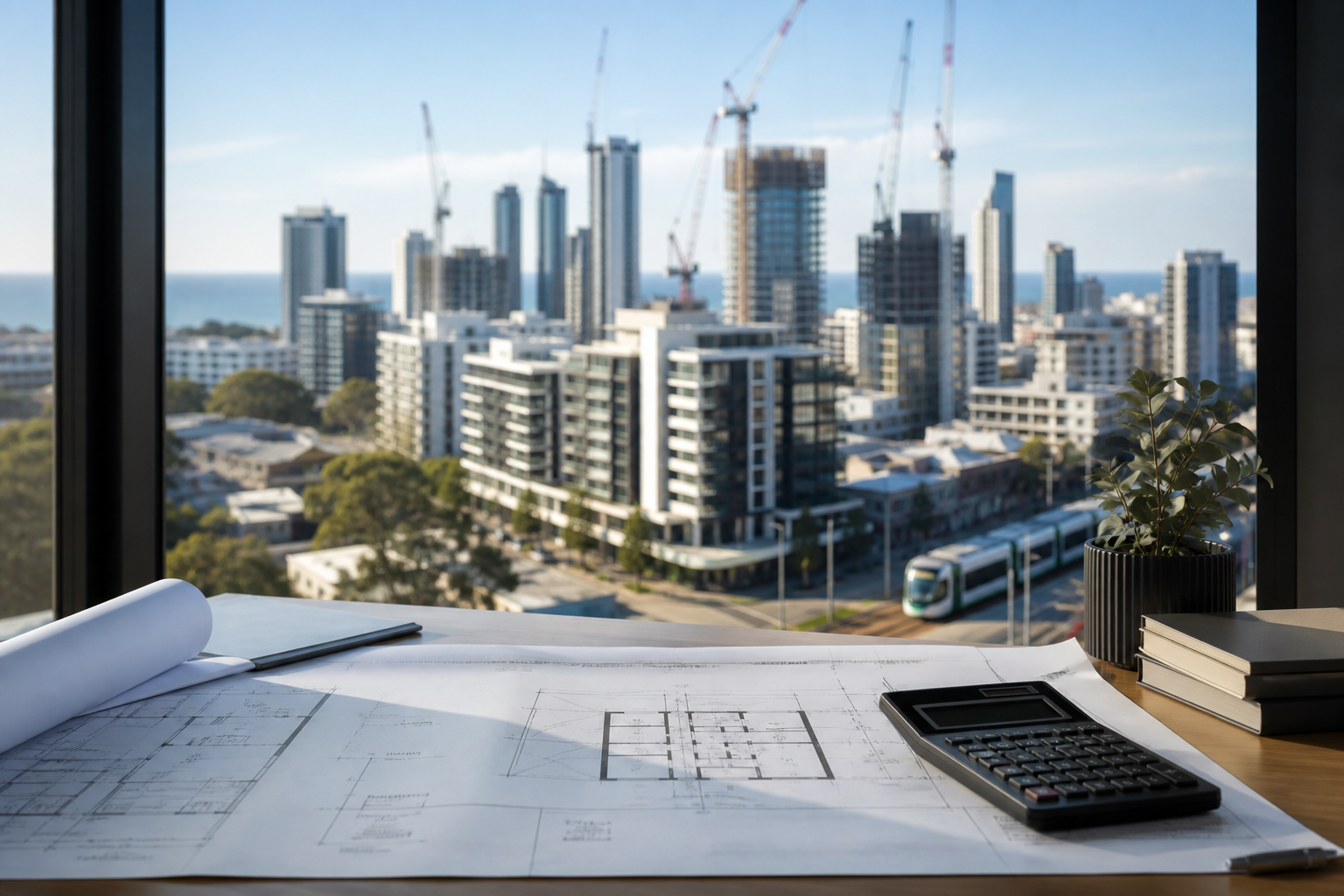
Buying off‑the‑plan raises a common question: can you use a construction loan for an off‑the‑plan apartment or townhouse, instead of a standard home loan?
In most cases, no – you generally can’t use a traditional construction loan for a standard off‑the‑plan purchase in Australia. Lenders usually treat it as a single purchase that settles when the developer finishes the build, and they release funds in one hit at settlement, not in stages during construction.
There are a few edge cases where a construction‑style facility can work, but they’re the exception, not the rule. This guide walks through those exceptions, plus the practical finance options most buyers actually use.
1. What “off‑the‑plan” and “construction loan” really mean
Before diving into whether you can mix them, it helps to be clear on definitions.
1.1 Off‑the‑plan purchase
An off‑the‑plan purchase is where you sign a contract to buy a property that doesn’t exist yet (or is incomplete) – usually an apartment or townhouse in a larger development.
Key features:
- You pay a deposit now (often 10%).
- You wait while the builder constructs the project.
- You settle in one go at completion – the bank pays the balance, you take the keys.
You don’t control the build. The developer owns the land, signs the building contract, and handles progress payments with their own lender.
1.2 Construction loan
A construction loan is a specialised home loan used when you (or your builder on your behalf) are constructing or doing a major structural renovation.
Typical features:
- You own the land or buy land and build.
- You have a fixed‑price building contract in your name.
- The lender releases funds in progress payments (slab, frame, lock‑up, fit‑out, completion).
- You often pay interest‑only on the drawn balance during construction.
This structure makes sense for house‑and‑land packages, knock‑down‑rebuilds, and some duplex/townhouse projects – but usually not for mass‑market off‑the‑plan apartments.
2. Can you use a construction loan for a typical off‑the‑plan apartment?
For a standard big‑builder apartment or townhouse development, the answer is almost always no.
2.1 Why lenders say no
Most banks and non‑banks see an off‑the‑plan unit as a completed dwelling purchase at settlement, not a construction project in your name. Their reasoning is simple:
- You’re not the builder – the developer holds the building contract.
- You don’t control progress payments – the developer’s bank funds the build.
- Your contract is to buy a finished product, not pay for materials and labour along the way.
Because of this, there’s no role for a classic progress‑payment construction facility.
2.2 The product they prefer instead
Most lenders prefer:
- A standard home loan (owner‑occupier) or
- A standard investment loan (if renting it out)
…set up to fund the entire balance at settlement.
You might:
- Get pre‑approval now,
- Re‑check your numbers during the build, and
- Convert to full approval and settle once the valuation stacks up.
If you’re choosing between principal‑and‑interest and interest‑only for that final loan, see: How to Choose Principal‑and‑Interest or Interest‑Only Off the Plan.
3. Limited situations where construction‑style lending can work
There are some situations where a construction loan or construction‑style facility can be used around an off‑the‑plan‑type purchase. They’re more niche, but worth knowing about if you’re weighing your options.
3.1 House‑and‑land or land + custom build
If you’re buying land in a new estate and then building with your own builder:
- The land purchase may be funded with a normal home loan or land loan.
- The build can be funded by a construction loan in your name.
This sometimes gets talked about casually as “off‑the‑plan”, but in lending terms it’s not the same as buying a completed unit from a developer.
3.2 Small development where you are effectively the developer
If you’re doing a small project – e.g. buying a block, demolishing, and building three townhouses – finance looks very different.
You might use:
- A residential construction loan (for smaller projects, sometimes where you’ll live in one unit), or
- A commercial development facility for more complex or higher‑value projects.
In these cases you (or a company/trust you control) hold the building contract, so a construction structure makes sense. But this is more advanced territory than a typical off‑the‑plan buyer is aiming for.
3.3 Equity release for variations or fit‑out
Sometimes buyers of higher‑end off‑the‑plan apartments want to:
- Upgrade finishes beyond the developer’s standard inclusions.
- Add custom joinery or post‑settlement fit‑outs.
You might fund those extras by:
- Increasing your main loan amount (if the valuation supports it), or
- Using a separate equity top‑up or renovation split, rather than a full construction loan.
This is similar to how many Eastern Suburbs renovators don’t need a full construction loan for smaller works – they use an equity top‑up instead. See: Renovating in Sydney’s East: Construction Loan or Simple Equity Top‑Up?.
4. Off‑the‑plan vs construction loan: key differences
It helps to see the structures side‑by‑side.
| Feature | Standard Off‑the‑Plan Purchase | Classic Construction Loan |
|---|---|---|
| Who owns the land during build? | Developer | You (or your entity) |
| Contract in your name? | Contract to buy finished unit | Building contract + (often) land contract |
| How funds are released? | Single payment at settlement | Multiple progress payments |
| Who manages the build? | Developer and their builder | You and your builder |
| Loan type | Standard home/investment loan | Construction facility, often converting to home loan on completion |
| Interest during build | Usually none (you only pay deposit) | Interest‑only on drawn balance |
| Valuation risk | At completion – bank values the finished unit | Land + “as if complete” valuation |
| Typical use case | Apartment/townhouse in multi‑unit project | House‑and‑land, knock‑down‑rebuild, custom build |
For most home buyers and investors, this table explains why lenders view “off‑the‑plan vs construction loan” as two different worlds.
The strategy continues below
You've seen the problem and the groundwork — now unlock the exact steps our CPA-certified brokers use, including 7 more sections. Enter your email for instant, free full access.
Free access. No spam — unsubscribe anytime. Your details stay confidential.
Frequently asked questions
Talk to a CPA-certified broker
Free consultation, plain-English advice tailored to your situation.