
Article
Where Eastern Suburbs Growth Will Land Next – A One‑Week Action Guide
A decision‑grade guide to the next growth corridors in Sydney’s Eastern Suburbs, focused on infrastructure, school zones and lender appetite – plus what to do this week.
Key Takeaway
Sydney’s Eastern Suburbs growth is increasingly driven by infrastructure, school zones and lifestyle corridors rather than headline postcodes alone. Buyers should prioritise areas near upgraded transport, hospital and university hubs, family‑grade school catchments, and walkable centres where lender appetite stays strong and LVRs are standard. Monitoring auction clearances and days-on-market, then matching local trends to safe borrowing capacity, lets households act within a week on specific emerging pockets rather than chasing already‑priced‑in hotspots.

This topic is covered in full on Tailored Loans Sydney
A decision‑grade guide to the next growth corridors in Sydney’s Eastern Suburbs, focused on infrastructure, school zones and lender appetite – plus what to do this week.
Read the full guide on tailoredloans.sydneyThe next wave of price growth in Sydney’s Eastern Suburbs is most likely along corridors where new or improved infrastructure, school zones and lifestyle upgrades overlap – not just in already‑expensive streets. This week you should be shortlisting pockets that tick those three boxes, checking your borrowing power, and watching live auction and days‑on‑market data to decide whether to act now or wait for a softer patch.
Put bluntly: follow transport, schools, hospitals and cafes – but only where banks are still happy to lend at normal LVRs and the numbers work under a 3% rate buffer.
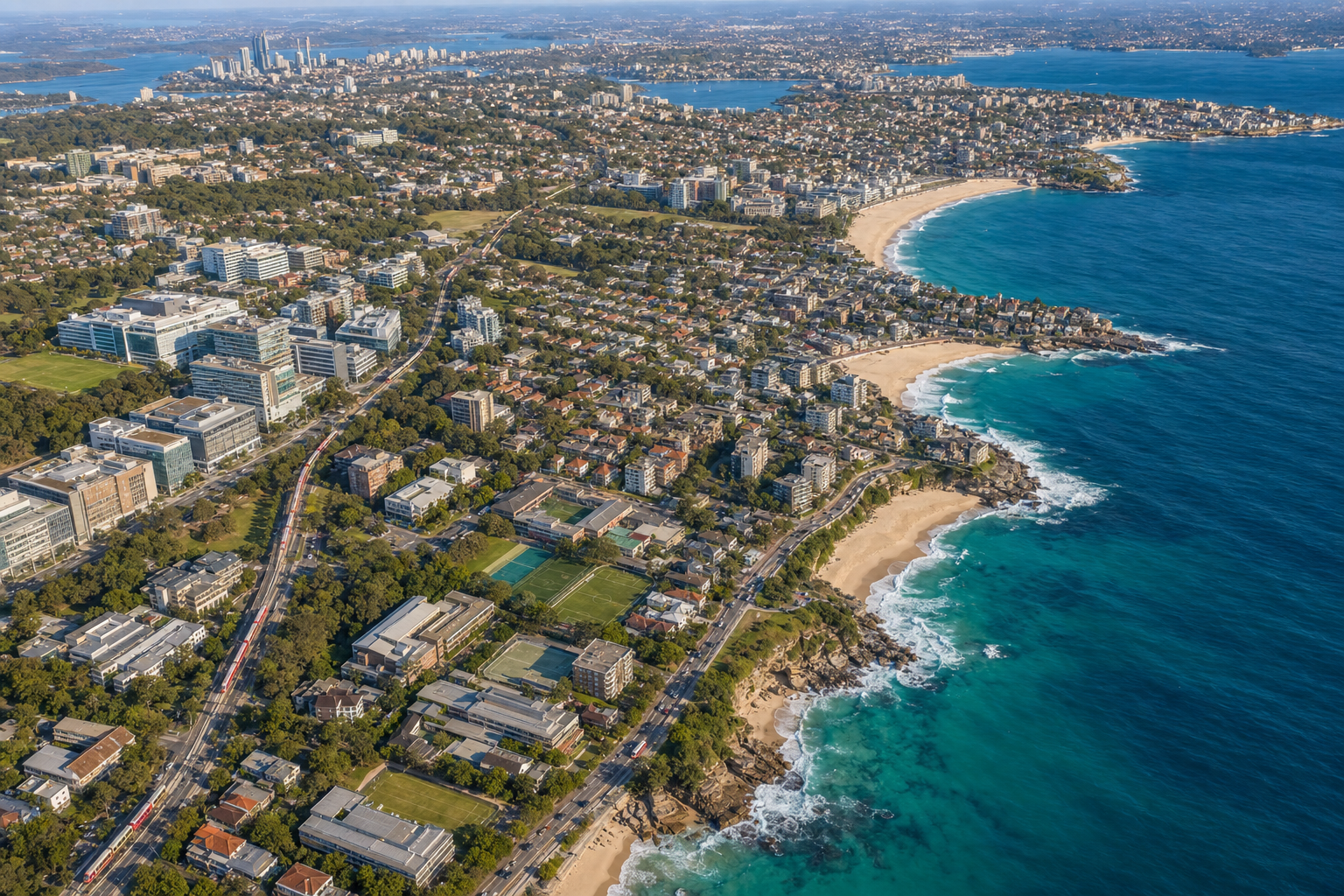
1. How to read Eastern Suburbs growth corridors in 10 minutes
Think in corridors, not postcodes. A growth corridor is a strip where:
- Infrastructure is improving (transport, health, education, parks).
- Lifestyle is getting better (cafes, retail, walkability, beaches/parks access).
- Lender appetite is stable (no special postcode caps, normal LVRs and valuation behaviour).
Fast framework for “where to buy next” in the East
Use this three‑step filter before you burn weekends at opens:
- Access corridor – Is there, or will there be, better access to the CBD/major employment hubs (City, Randwick Health & Education, UNSW, Airport/Mascot)?
- Family infrastructure – Are schools, childcare and parks attracting upgraders, not just investors?
- Finance‑friendly – Would a typical bank treat it as standard residential security, not high‑risk fringe or coastal‑risk?
Then layer on timing using local auction and days‑on‑market data from /insights/using-auction-days-on-market-data-time-move-eastern-suburbs. Rising clearance and falling DOM = move quickly. Softer results = negotiate harder or wait for a better listing.
The strategy continues below
You've seen the problem and the groundwork — now unlock the exact steps our CPA-certified brokers use, including 5 more sections. Enter your email for instant, free full access.
Free access. No spam — unsubscribe anytime. Your details stay confidential.
Frequently asked questions
Talk to a CPA-certified broker
Free consultation, plain-English advice tailored to your situation.