
Article
How to Finance a Knockdown‑Rebuild on a Premium Eastern Suburbs Block
A step‑by‑step guide to funding a knockdown‑rebuild on a premium Eastern Suburbs block, covering valuations, construction loans, equity, buffers and lender rules so you can move from sketches to contracts without over‑stretching.
Key Takeaway
To finance a knockdown‑rebuild on a high‑value Eastern Suburbs block, borrowers typically use a construction loan based on end‑value with a 20%–30% equity buffer and must pass APRA’s 3% serviceability buffer rules. Lenders usually value land “as is” first, then a ‘to‑be‑completed’ valuation for progress‑payment funding. The key actionable step is to model build costs plus a 10%–15% contingency against your borrowing capacity and cash reserves before signing any fixed‑price building contract.
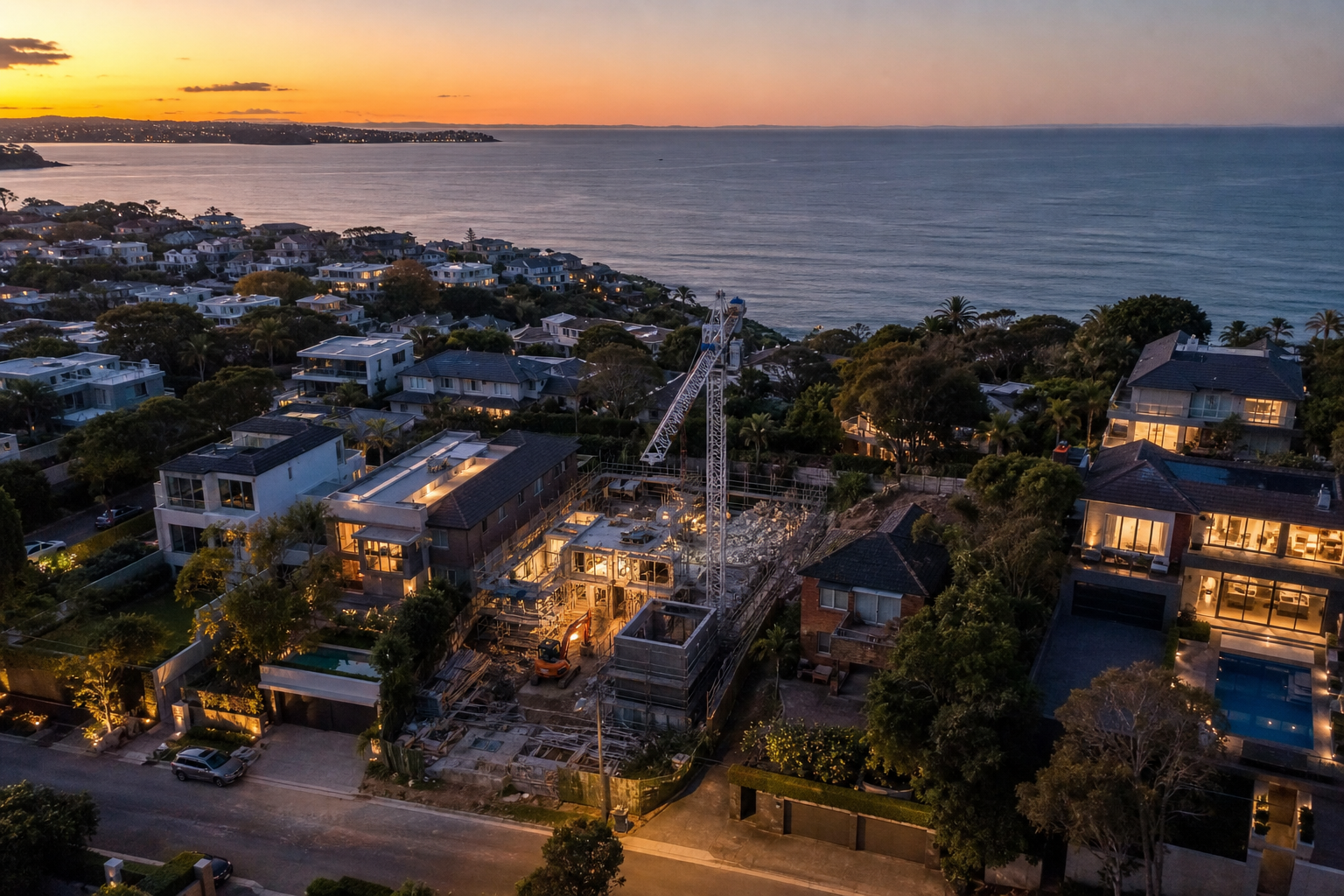
Financing a knockdown‑rebuild on a premium Eastern Suburbs block is usually done via a construction loan secured against your land, often with an additional equity top‑up from your existing home or investments. Lenders first value the land “as is”, then commission a ‘to‑be‑completed’ valuation to set your construction limit, and they must still apply APRA’s 3% serviceability buffer to your total proposed debt. Your job is to line up realistic costs, robust buffers and the right loan structure before you touch the bulldozer.
In suburbs like Vaucluse, Double Bay, Woollahra and Bronte, your land may already be worth several million dollars, but that doesn’t mean the bank will blindly fund a $1–3m build. They care about:
- How conservative the valuer is on land and end‑value.
- How you’ll cover cost overruns and rental shortfalls.
- Whether your total repayments stay inside a safe zone if rates rise.
This guide is designed so you can make decision‑grade calls this week—on budget, structure and timing.

1. Decide what you’re actually trying to achieve
Before spreadsheets and loan calculators, get clear on the why and what of your knockdown‑rebuild.
1.1 Common Eastern Suburbs knockdown‑rebuild goals
On high‑value blocks, the drivers usually look like:
- Replace an outdated cottage with a modern family home: more bedrooms, parking, better indoor‑outdoor flow.
- Unlock latent value in the land: maximise views, height limits and floor‑space ratio.
- Future‑proof for lifestyle: multi‑generational living, lifts, accessible design.
- Blend home and work: home offices, consulting rooms, creative studios.
Each goal has different implications for cost, timing and loan structure. If you’re building a forever home, you might prioritise long‑term flexibility over absolute tax efficiency.
1.2 Set non‑negotiable guardrails early
For major Eastern Suburbs projects, a practical safety rule is to keep combined home and investment repayments around 25–35% of net household income, even if the bank says you can borrow more (see also /insights/using-home-equity-major-renovation-eastern-suburbs-without-overstretching and /insights/stress-testing-large-eastern-suburbs-mortgage).
Write down three numbers before you speak to any builder:
- Maximum total debt you’re prepared to hold (home + investment + business).
- Maximum monthly repayment you’re comfortable with at a “stress rate” (e.g. 8–9% on owner‑occupied P&I, which roughly reflects APRA’s 3% buffer over recent actual rates).
- Minimum cash/offset buffer you want intact after construction—often 6–12 months of all living and loan costs for higher‑income or self‑employed households.
These numbers form the frame around everything else.
2. How lenders actually look at a knockdown‑rebuild
Construction finance on a prestige block is not just a bigger version of a standard home loan. The risk profile is very different, particularly in a council like Woollahra, where blocks are scarce and build costs are high.
2.1 Land value vs improved value
Lenders look at two key values:
- Land value (as is): What your existing property—often an older dwelling—is worth today in the current market.
- Improved value (on completion): What a finished, brand‑new home of your proposed spec should be worth once built.
Most banks will lend the lesser of:
- A percentage of total cost (land + build + soft costs), and
- A percentage of end value from the valuer.
If you already own the land unencumbered and it’s worth $5m, you might theoretically be able to borrow a high percentage of the build. But if the valuer is conservative on the end value, it can still cap your loan materially below your actual build quote.
2.2 Typical LVRs and buffers for Eastern Suburbs construction
Indicative ranges (not advice, not live product quotes):
- Owner‑occupied construction on a strong Eastern Suburbs site: up to ~80% of end value.
- Investment‑oriented project (e.g. dual‑occ or spec build): often 60–70% of end value unless you move into more specialist or commercial‑style products.
Because of the risk and the recent rise in national mortgage stress (Roy Morgan estimates over 28% of mortgage holders were ‘At Risk’ by early 2026), prudent borrowers set extra buffers above what lenders require—especially for knockdown‑rebuilds where you cannot live in the home mid‑build.
2.3 Serviceability and APRA’s 3% buffer
No matter how strong your land is, banks must generally test your borrowing capacity using a rate at least 3% higher than the actual product rate, under APRA guidance.
That means:
- A 6% variable rate is tested at 9% or more.
- Interest‑only loans are tested on an assumed P&I repayment over the remaining term.
For Eastern Suburbs borrowers holding $2–5m of total debt, that serviceability test bites hard. It’s why pre‑planning across home, investment, trusts and SMSFs matters (see /insights/trust-investment-smsf-income-large-eastern-suburbs-mortgage).
3. Choosing between an equity top‑up and a full construction loan
Many high‑income clients ask, “Can’t I just top up my loan and pay the builder from cash?” Sometimes yes, sometimes it’s a mistake.
3.1 Equity top‑up only: when it can work
You release equity against your existing home or block, then pay the builder directly in stages from your offset or redraw.
Works best when:
- Total build cost is modest relative to income and buffers (say $600k build on a $4m household income and low other debt).
- You can keep LVR under 60–70% even after the top‑up.
- You want maximum flexibility in choosing smaller builders who may not suit bank progress‑payment rules.
Risks:
- You shoulder all cost‑overrun risk.
- No bank valuer is checking that the finished product will support your new loan balance.
- Easy to let the budget creep beyond your initial guardrails.
3.2 Full construction loan: when it’s your friend
A formal construction loan:
- Uses a fixed‑price building contract and council‑approved plans.
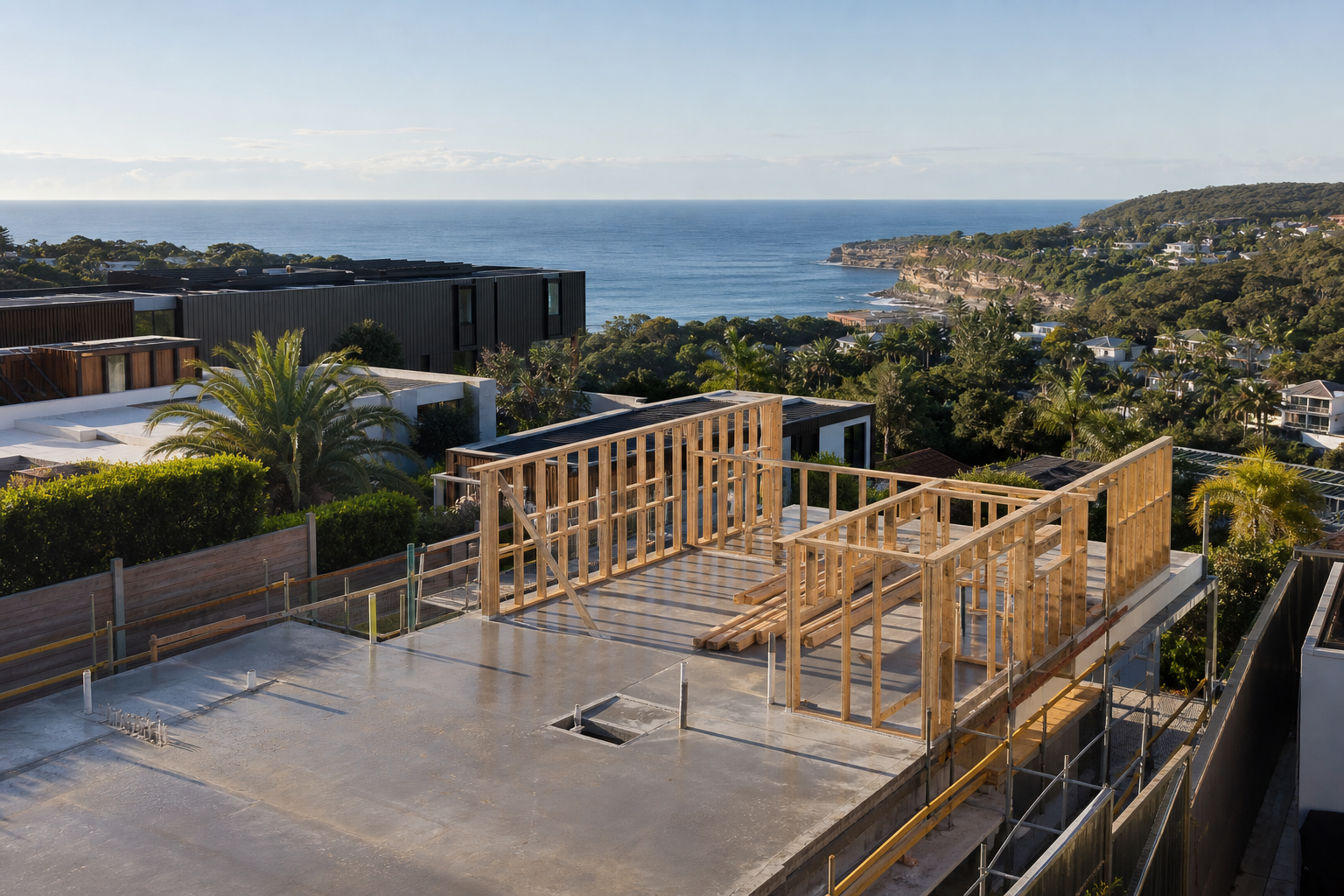
- Funds the build via progress payments: base, frame, lock‑up, fit‑out, completion.
- Is often interest‑only during construction, then reverts to P&I.
Advantages:
- Bank and valuer sanity‑check both costs and end value.
- Lender funds each stage only once work is confirmed as complete.
- Can keep your cash buffer intact because borrowing is aligned to the project.
Trade‑offs:
- Tighter lender documentation and due‑diligence.
- Less flexibility to change scope or builder mid‑stream.
For most $1m+ builds in the East, a well‑structured construction loan plus a separate equity‑funded contingency buffer is the more robust path.
The strategy continues below
You've seen the problem and the groundwork — now unlock the exact steps our CPA-certified brokers use, including 7 more sections. Enter your email for instant, free full access.
Free access. No spam — unsubscribe anytime. Your details stay confidential.
Frequently asked questions
Talk to a CPA-certified broker
Free consultation, plain-English advice tailored to your situation.