
Article
How to Finance Construction and Earthmoving Gear Without Risking It All
Written and reviewed by James Chee, CPA · Last reviewed
Clear, decision‑grade guide to funding excavators, loaders and civil gear without over‑stretching cashflow or putting your home on the line.
Key Takeaway
To finance construction and earthmoving equipment safely in Australia, businesses should prioritise asset-backed loans with terms aligned to the machine’s useful life (commonly 3–7 years) and avoid long-term property security that can multiply interest costs and concentration risk. Lenders typically want repayments covered at least 1.25–1.5 times by recurring cashflow and will require PPSR registration and insurance at replacement value. A structured approach this week—comparing security options, term, and buffers—can secure necessary machinery without putting the family home at unnecessary risk.
Watch the short answer
Finance tips for building a duplex or multi‑townhouse site
If you’re weighing up funding gear, this video steps through key finance points before you build a duplex or townhouse project.
Read the transcript
Building a duplex or multi-townhouse site? A standard residential home loan will collapse halfway through the build. Development finance requires precision. If your broker doesn't understand progress drawdowns, fixed price building contracts, or 'as-if-complete' valuations, your project will run out of money. We specialise in structuring construction and development loans that align perfectly with your builder's schedule, ensuring capital flows smoothly at every stage, so your tools are never down. Build with confidence. DM me the word 'CONSTRUCT' to review your funding project.
General information only, not personal advice. Your situation is assessed before any recommendation.
This topic is covered in full on Local Knowledge Finance
Clear, decision‑grade guide to funding excavators, loaders and civil gear without over‑stretching cashflow or putting your home on the line.
Read the full guide on ding.financialYou finance construction and earthmoving equipment safely by matching loan term to the machine’s working life, keeping security tied mainly to the asset (not your home), and stress‑testing repayments against slower work and higher interest rates. Focus on total risk and cashflow resilience, not just the headline rate.
Here’s how to get that done this week.
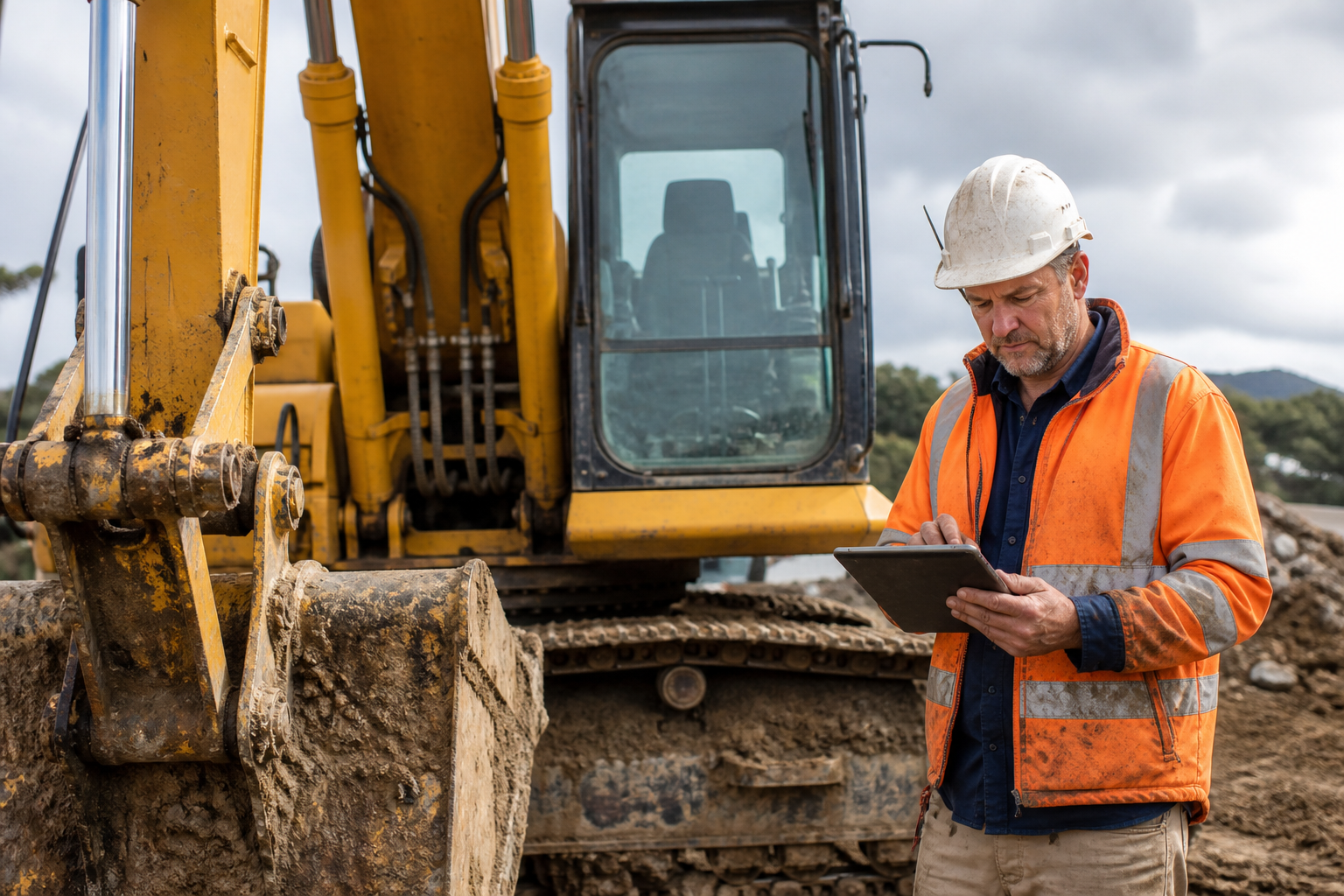
1. Start with the job, not the machine
Before talking finance, be clear on what the gear needs to earn.
For an excavator, loader or grader, ask:
- What contracts or purchase orders justify this machine?
- How many billable hours a week are realistic, after weather and downtime?
- What’s the minimum utilisation that still covers repayments and running costs?
If your pipeline is seasonal or contract‑based, structure matters even more. (We unpack this further in the cluster article on seasonal and contract-based machinery income.)
Quick worked example
You’re buying a $220,000 excavator (incl. GST) on a 5‑year chattel mortgage.
- Indicative rate: say 8% p.a. (for illustration only)
- Monthly repayment: roughly $4,450 (principal + interest)
- Fuel, maintenance, rego/insurance: say $3,000 per month
Total: about $7,450 per month before tax.
Charging $180/hour, you need around 42 billable hours a month just to cover those costs. Safe finance means checking that number still works if rates rise 1–2% and hours drop 20%.
2. Choose the right structure and security
For construction and earthmoving machinery, most lenders prefer the asset to stand on its own feet.
Common options:
- Chattel mortgage / equipment loan – you own the asset from day one; lender takes security.
- Hire purchase – similar economics, slightly different tax timing.
- Finance lease – lender owns the asset; you pay rentals and may have an end‑of‑term option.
The big safety question: what’s the security?
- For standard machines, many loans can be secured mainly by the asset itself, with property security only for riskier or larger exposures (knowledge fact 5).
- Using your home as security is a form of cross‑collateralisation that concentrates risk (knowledge facts 10 and 11).
If a lender wants to tie in your home, pause and read this explainer on secured vs unsecured equipment loans and cashflow risk.
Keep terms realistic
Lenders often cap maximum asset age at term end – commonly 10–15 years for heavy machinery (knowledge fact 4).
If you’re buying a 5‑year‑old excavator and the lender wants asset age ≤12 years at term end, your max term might be 7 years.
Pushing a 3–5 year machine over 20+ years by putting it into your home loan can:
- multiply total interest costs several times (knowledge facts 9 and 20)
- leave you paying for the machine long after it’s worn out
Good rule: loan term shouldn’t exceed realistic working life for your use case.
The strategy continues below
You've seen the problem and the groundwork — now unlock the exact steps our CPA and Registered Tax Agent-led brokers use, including 5 more sections. Enter your email for instant, free full access.
Free access. No spam — unsubscribe anytime. Your details stay confidential.
Frequently asked questions
Related articles
Commercial & development
Smart Debtor Finance Around Progress Claims For Builders And Tradies
Commercial & development
Construction Cashflow 101: Progress Claims, Retentions And Funding Gaps
Business finance
Refinancing High‑Cost Working Capital Into Safer, Sustainable Debt
Business finance
Daily‑Debit Business Loans: Make Fixed Repayments Work For Cashflow
Talk to a broker who is a CPA and Registered Tax Agent
Free consultation, plain-English advice tailored to your situation.