
Loading the latest on mortgages, RBA & inflation…
Local Knowledge Finance

Article

Financing a Knockdown‑Rebuild in Waverley, Randwick or Woollahra

How to finance a knockdown‑rebuild in Waverley, Randwick or Woollahra this week, without over‑stretching or stalling the build halfway through.

Published 6 Aug 2026Updated 6 Aug 20265 min read

Key Takeaway

Financing a knockdown‑rebuild in Waverley, Randwick or Woollahra typically involves combining existing equity in the land with a construction loan, carefully sequenced around DA approval, fixed‑price builder contracts and bank valuations. Because Eastern Suburbs projects often exceed $1.5m total spend, keeping repayments near 25–35% of net income and maintaining a 3–12 month buffer is critical. The most effective step this week is to model costs and borrowing capacity, then structure pre‑approval and valuations before signing build contracts or starting demolition.
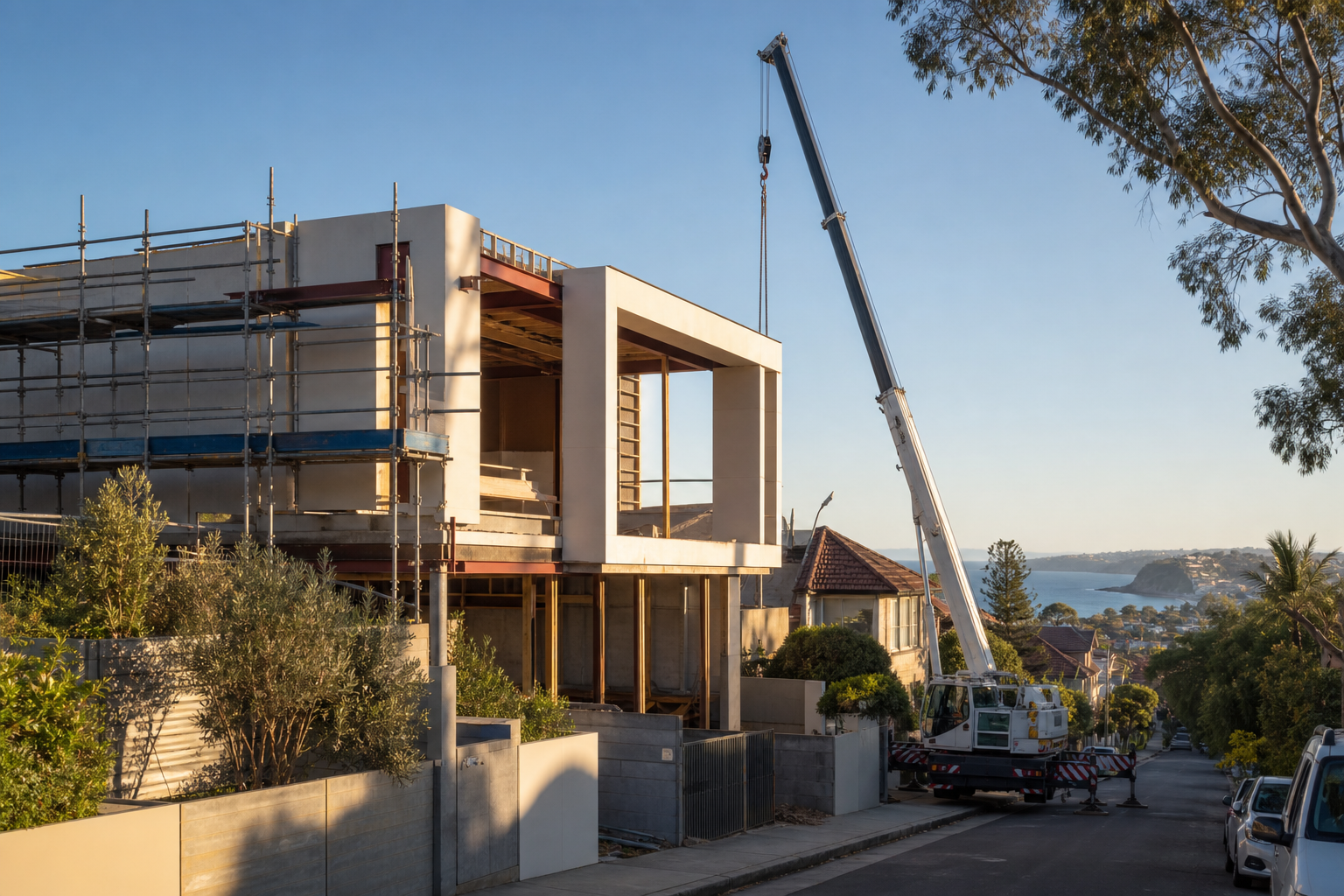
Financing a Knockdown‑Rebuild in Waverley, Randwick or Woollahra

You finance a knockdown‑rebuild in Waverley, Randwick or Woollahra by using your land as security, then layering a construction loan over it—usually after a staged refinance and equity release. The key is sequencing: confirm borrowing capacity, get a realistic build quote and valuation, then lock in structure and buffers before you touch the house.
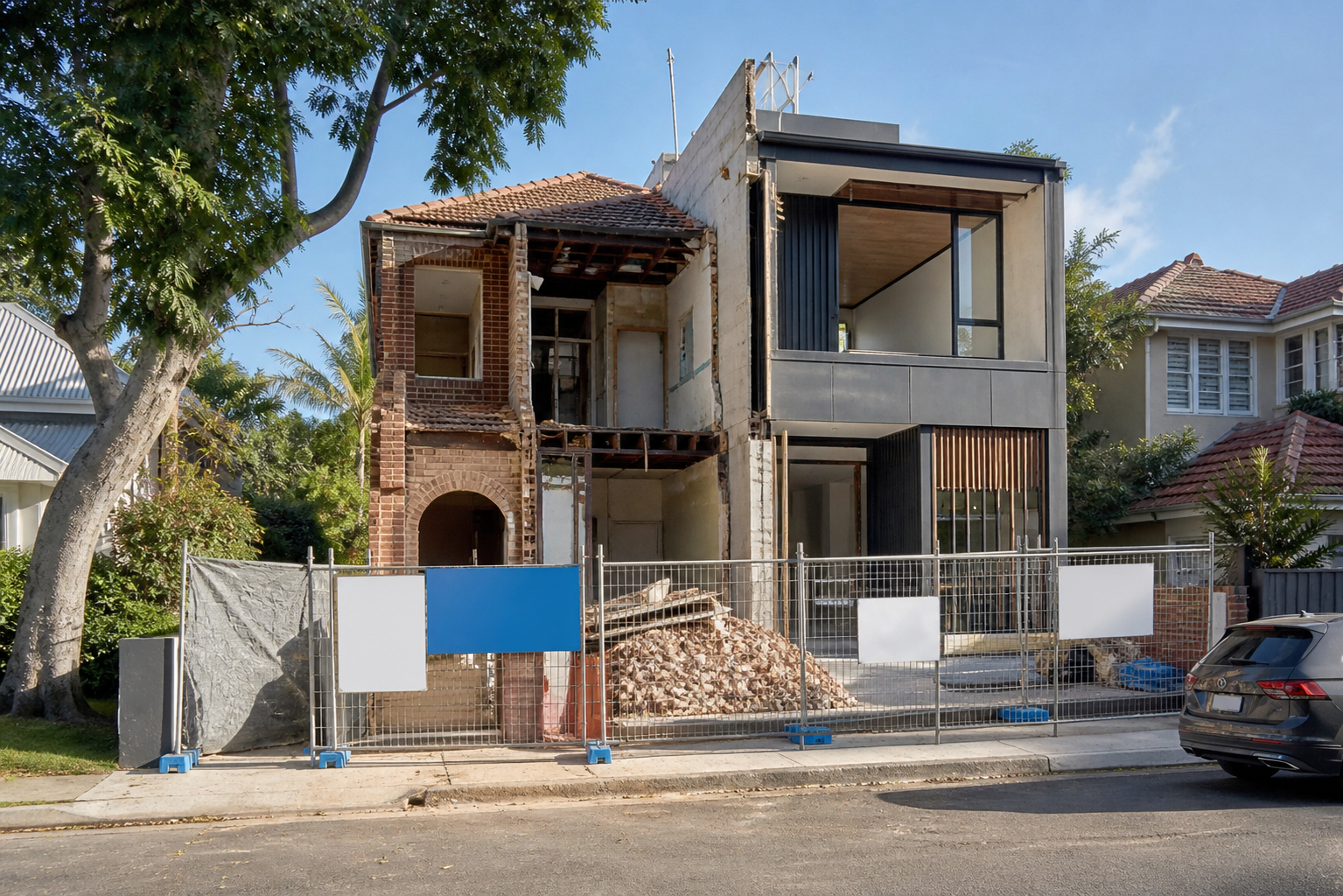
Semi‑detached Waverley home mid knockdown‑rebuild. Sequencing finance and construction is critical before demolition in Waverley, Randwick and Woollahra.

Step 1: Know if your numbers can support a rebuild

In the east, the land is usually the real asset. Lenders will look at:

  • Current land value (often via a “as‑is” valuation)
  • Existing loan balance
  • Proposed build cost and contingency
  • Your income, expenses and other debts

A practical safety range is to keep total home and investment repayments around 25–35% of your net household income, even if the bank says you can borrow more (see also /insights/finance-knockdown-rebuild-high-value-eastern-suburbs-block).

Quick example

  • Current value (Queens Park semi): $3.2m
  • Existing loan: $1.4m
  • Proposed build: $1.3m plus $150k contingency = $1.45m
  • Total loan needed: around $2.85m

If your net household income is $32,000 per month, a $2.85m loan at an indicative 6.3% P&I over 30 years is roughly $17,600 per month. That’s ~55% of net income—far outside the 25–35% comfort band. You’d either need to scale back the build, increase equity (e.g. from savings or family), or stage the project differently.

Step 2: Choose the right funding mix

Most Eastern Suburbs knockdown‑rebuilds use some combination of:

1. Refinance and equity release

You refinance your existing home loan against current land value to release a chunk of equity upfront.

Pros

  • Cash on hand for design, DA, consultants and temporary accommodation.
  • Lets you line up a builder before final construction approval.

Cons

  • Higher debt and repayments immediately.
  • If you over‑draw before build costs are locked in, you risk running short later.

2. Construction loan (with progress payments)

Once you have DA (or at least a solid concept) and a fixed‑price building contract, you can apply for a construction loan. The bank usually lends against the ‘on‑completion’ value of the new home, less your contribution.

They’ll fund in stages (slab, frame, lock‑up, fit‑out, completion), and you generally only pay interest on what’s been drawn.

This approach is explored more deeply in /insights/finance-knockdown-rebuild-high-value-eastern-suburbs-block.

3. Hybrid: equity for soft costs, construction for the build

For many Waverley, Randwick and Woollahra households, the safest pattern is:

  1. Refinance now to a sharp rate and release a capped equity split for design, DA and a 10–15% contingency.
  2. Keep that contingency in a separate account or split so it doesn’t get spent on optional upgrades (reinforcing principle 10 in the knowledge list).
  3. Use a construction loan for the main build once the contract and costings are locked.

This is similar to the logic in /insights/construction-loan-vs-equity-release-luxury-renovations.

Premium insight

The strategy continues below

You've seen the problem and the groundwork — now unlock the exact steps our CPA-certified brokers use, including 4 more sections. Enter your email for instant, free full access.

Free access. No spam — unsubscribe anytime. Your details stay confidential.

Frequently asked questions

Your maximum borrowings depend on land value, existing debt, income, spending and the completed value of the project. Banks apply at least a 3% serviceability buffer on rates and typically cap lending at 80% of the completed value to avoid LMI. A safer personal limit is usually when repayments stay within 25–35% of net household income with a clear cash buffer.
Some lenders require full DA approval before issuing an unconditional construction loan approval, while others will progress the application once DA is lodged and the building contract is ready. In practice, you should aim to have DA well advanced and a fixed‑price contract in hand before relying on any approval to start demolition or major works.
Cost overruns are common, especially in older Eastern Suburbs properties. The safest approach is to set aside a 10–15% contingency in a separate account or loan split and to avoid spending this on discretionary upgrades. If you face genuine structural surprises, having this ring‑fenced buffer can prevent stalled works or expensive last‑minute finance.

Talk to a CPA-certified broker

Free consultation, plain-English advice tailored to your situation.

Your details are kept confidential. We'll never share them.