
Article
Smart ways to fund major renovations and rebuilds in Rose Bay
Written and reviewed by James Chee, CPA · Last reviewed
A decision‑grade guide to funding Rose Bay renovations, second‑storey extensions and knockdown‑rebuilds, from equity release and construction loans to cashflow planning and tax‑aware structuring.
Key Takeaway
Financing renovations, extensions or knockdown‑rebuilds in Rose Bay typically relies on releasing usable equity up to around 80% loan‑to‑value, or using a construction loan that funds works via progress payments. Lenders must test borrowing at least 3 percentage points above the actual rate, which often reduces how much owners can safely borrow. The article explains funding options, cashflow planning and tax‑aware structuring, and ends with a one‑week checklist to help Rose Bay owners move from ideas to bank‑ready renovation plans.
Watch the short answer
Can I get a home or business loan with a 12‑month-old business?
If your renovation plans rely on a young business for income, this video explains how lenders look at 12‑month trading histories.
Read the transcript
Started a wildly successful business 12 months ago? The bank still thinks you're a startup risk. The standard institutional rule is that you need 2 full years of ABN history to get a mortgage, but if your cash flow is booming right now, you shouldn't have to wait another 12 months to buy a house. At Local Knowledge Finance, we have access to specialist alt doc lenders who will approve your loan with just 6 to 12 months of ABN registration and clean bank statements. Your success shouldn't be penalised by arbitrary timelines. DM me the word 'BUSINESS' to bypass the 2-year rule.
General information only, not personal advice. Your situation is assessed before any recommendation.

This topic is covered in full on Local Knowledge Finance
A decision‑grade guide to funding Rose Bay renovations, second‑storey extensions and knockdown‑rebuilds, from equity release and construction loans to cashflow planning and tax‑aware structuring.
Read the full guide on ding.financialSmart ways to fund major renovations and rebuilds in Rose Bay
Financing a renovation, second‑storey extension or knockdown‑rebuild in Rose Bay usually means either topping up your home loan against existing equity, using a construction loan with progressive drawdowns, or combining both with careful cashflow planning. The right structure depends on your property value, loan‑to‑value ratio (LVR), income (including self‑employed), project scale and whether any part of the property is for investment or business use.
This guide walks through the main funding options, how lenders actually assess Rose Bay projects, and what you can do this week to move from “ideas” to bank‑ready numbers.
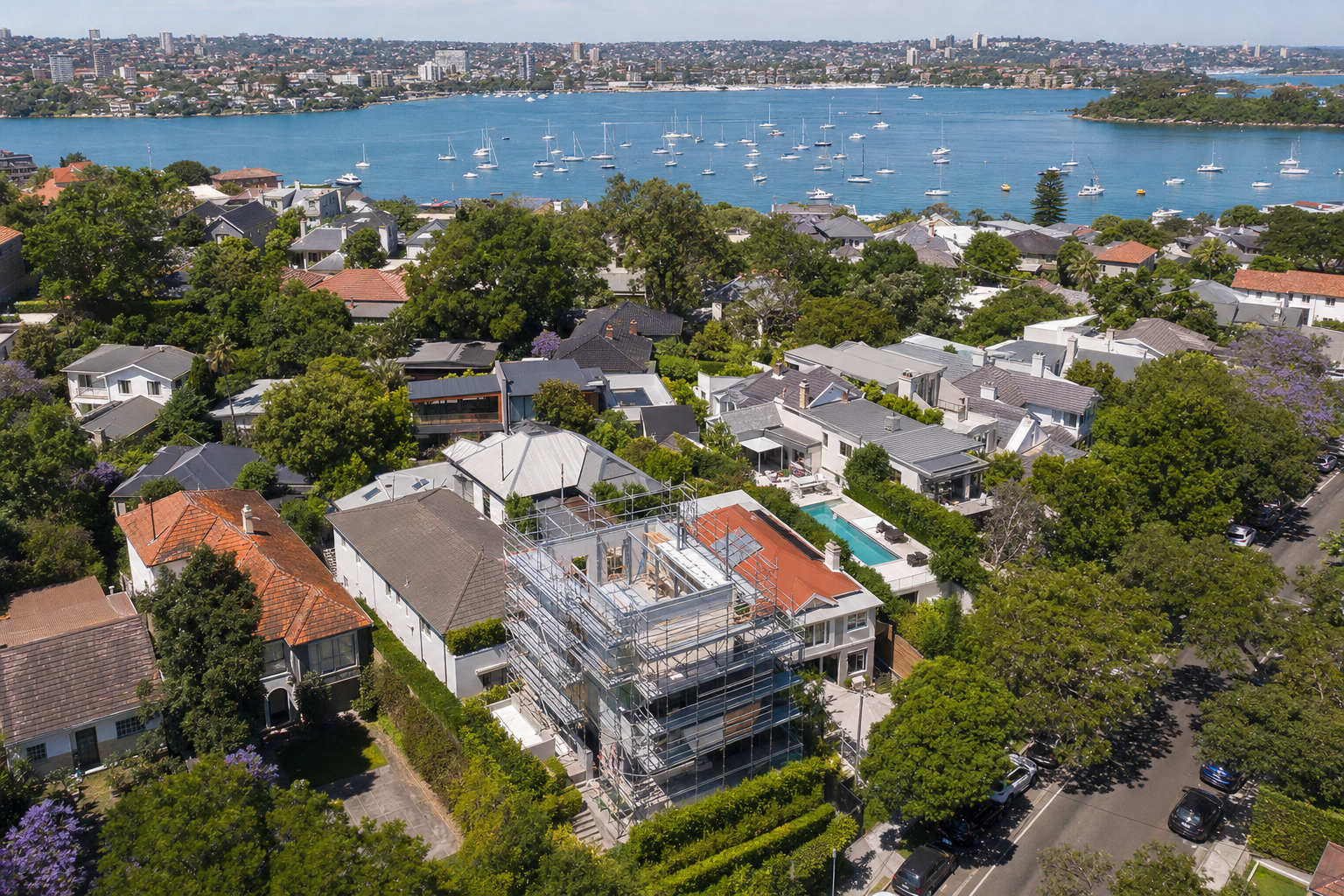
1. Why Rose Bay renovations need a different finance plan
Rose Bay sits in the high‑income, high‑value Woollahra LGA, with large mortgages and a very educated, professional population. That has two big implications:
- Your property value – and therefore your equity – can change quickly with the market.
- Your income and structures (trusts, companies, bonuses, distributions) may be more complex than a standard PAYG file.
On top of that, many homes are older, with significant value in land. Owners often face a choice between:
- A high‑end renovation or second storey
- A full knockdown‑rebuild
- Buying elsewhere and starting again
Finance is the backbone of that decision. The numbers need to work under today’s tighter lending conditions, including:
- APRA’s 3% serviceability buffer – most lenders test if you can afford repayments at least 3 percentage points above the actual rate.
- Valuation risk – lenders rely on conservative valuations, particularly where costs are high and finishes are bespoke.
- Longer approval and build timeframes – material and labour constraints can stretch projects.
If you’re also considering buying a new property and renovating it, pair this guide with the pre‑approval strategies in Designing Auction‑Proof Home Loan Pre‑Approval for Rose Bay Buyers.
2. Clarify your project: cosmetic, structural, or complete rebuild
Before you talk funding, you need a clear picture of what you’re actually doing. Lenders categorise works roughly as:
2.1 Cosmetic / light renovation (often ≤$150k–$250k)
Examples:
- New kitchen and bathrooms
- Flooring, paint, lighting
- Minor layout changes (non‑structural walls)
These can often be funded via a home loan top‑up, equity release or separate loan split without a full construction facility.
2.2 Major renovation or extension
Examples:
- Second‑storey addition
- Structural wall changes, significant reconfiguration
- Large rear extension with new slab
Lenders often want:
- Council‑approved plans
- Fixed‑price building contract
- Quantity surveyor (QS) or builder’s cost summary
These projects usually suit a construction / major renovation loan with progress payments.
2.3 Knockdown‑rebuild
You’re demolishing and constructing essentially a new dwelling. The land carries most of the value during the build, so lenders focus heavily on:
- Land value
- End value “as if complete”
- Your overall LVR and cash buffer
Funding is almost always via a specialised construction loan, sometimes coupled with bridging finance if you’re moving out to buy something else.
Having this clarity upfront saves you from chasing the wrong product and re‑doing approvals later when a builder finally produces a contract.
The strategy continues below
You've seen the problem and the groundwork — now unlock the exact steps our CPA and Registered Tax Agent-led brokers use, including 6 more sections. Enter your email for instant, free full access.
Free access. No spam — unsubscribe anytime. Your details stay confidential.
Frequently asked questions
Talk to a broker who is a CPA and Registered Tax Agent
Free consultation, plain-English advice tailored to your situation.