
Article
Practical First‑Home Buying Guide for Green Square and Surrounds
A decision‑grade guide for first‑home buyers targeting Green Square, Zetland, Waterloo and the inner south. Learn how much you really need, which schemes can help, what banks worry about with apartments, and how to decide between renting, buying now or waiting.
Key Takeaway
First-home buyers targeting Green Square and surrounds should start by testing borrowing capacity at rates at least 3% above today’s offers and checking local scheme price caps before shortlisting properties. In April–July 2026, 28.2% of Australian mortgage holders were classified as ‘At Risk’ of mortgage stress, highlighting the need to keep repayments under about one‑third of after‑tax income. A clear one‑week action plan combining budget, suburb filters and scheme eligibility gives buyers a safe, realistic path to purchase.
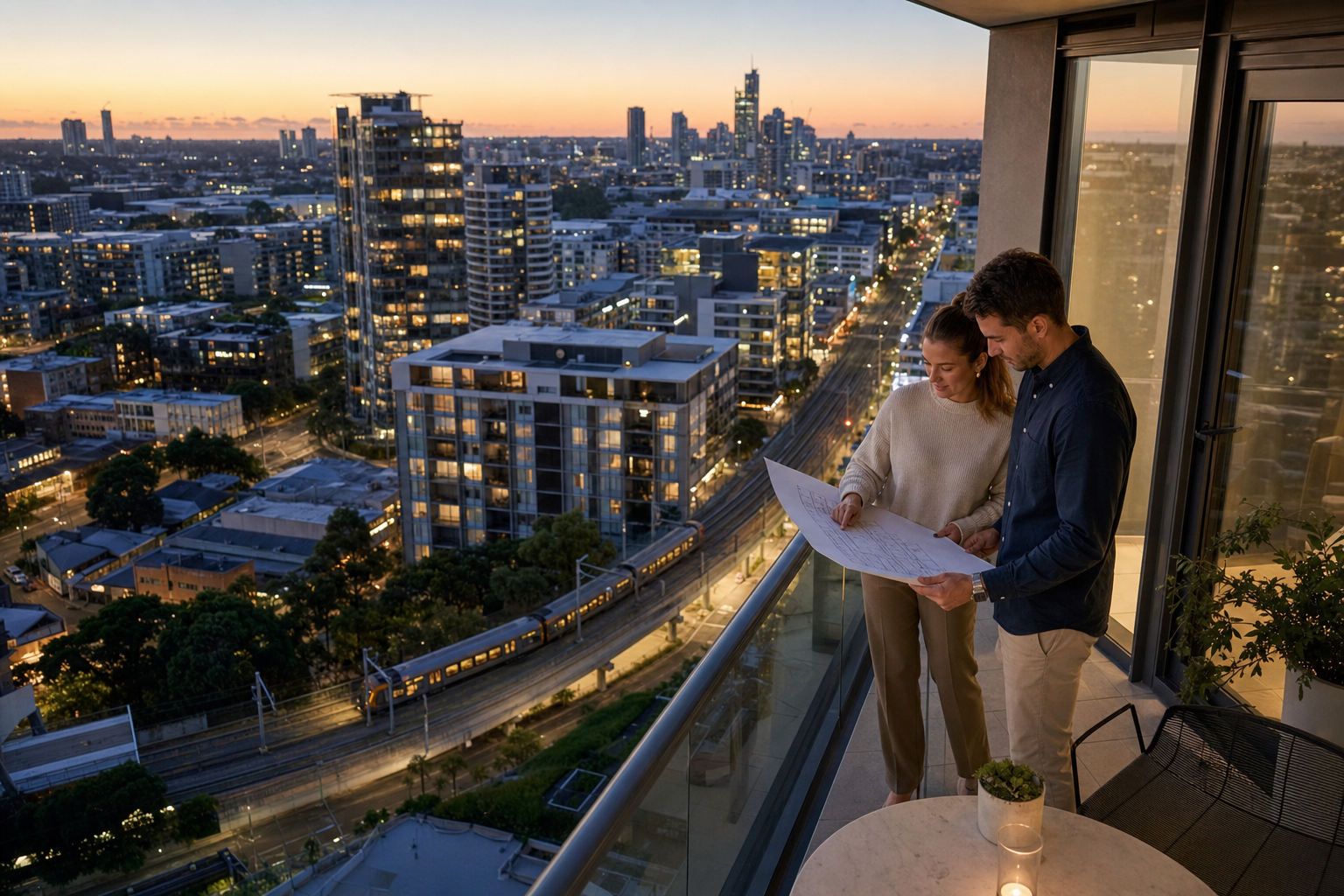
Buying your first home around Green Square – Zetland, Waterloo, Rosebery, Alexandria and Mascot – is possible, but you need a local‑specific plan. In this pocket of inner south Sydney, the smart first‑home buyers are the ones who treat the process like a project: they know their numbers, understand apartment lending quirks, and decide early whether to buy now, keep renting, or widen their search.
This guide walks you through the key decisions, using realistic numbers and Green Square‑specific traps. By the end, you’ll know exactly what you can do this week to move from “scrolling listings” to a finance‑ready decision.
1. What makes Green Square different for first‑home buyers?
Green Square isn’t a generic Sydney market. It’s a high‑density, master‑planned precinct with a lot of apartments, a mix of brand‑new and 10–20‑year‑old stock, and a high share of young professionals commuting to the CBD and airport (as shown in the City of Sydney and Bayside economic profiles).
For first‑home buyers, that means:
- Most options are apartments – often in large complexes or mixed‑use buildings.
- Lenders have postcode‑based rules – some limit maximum LVRs to 80–85% on certain buildings.
- Schemes can help, but only if price fits – federal and NSW caps matter a lot.
- Rent can be relatively high, but so are prices – rent vs buy decisions are tight.
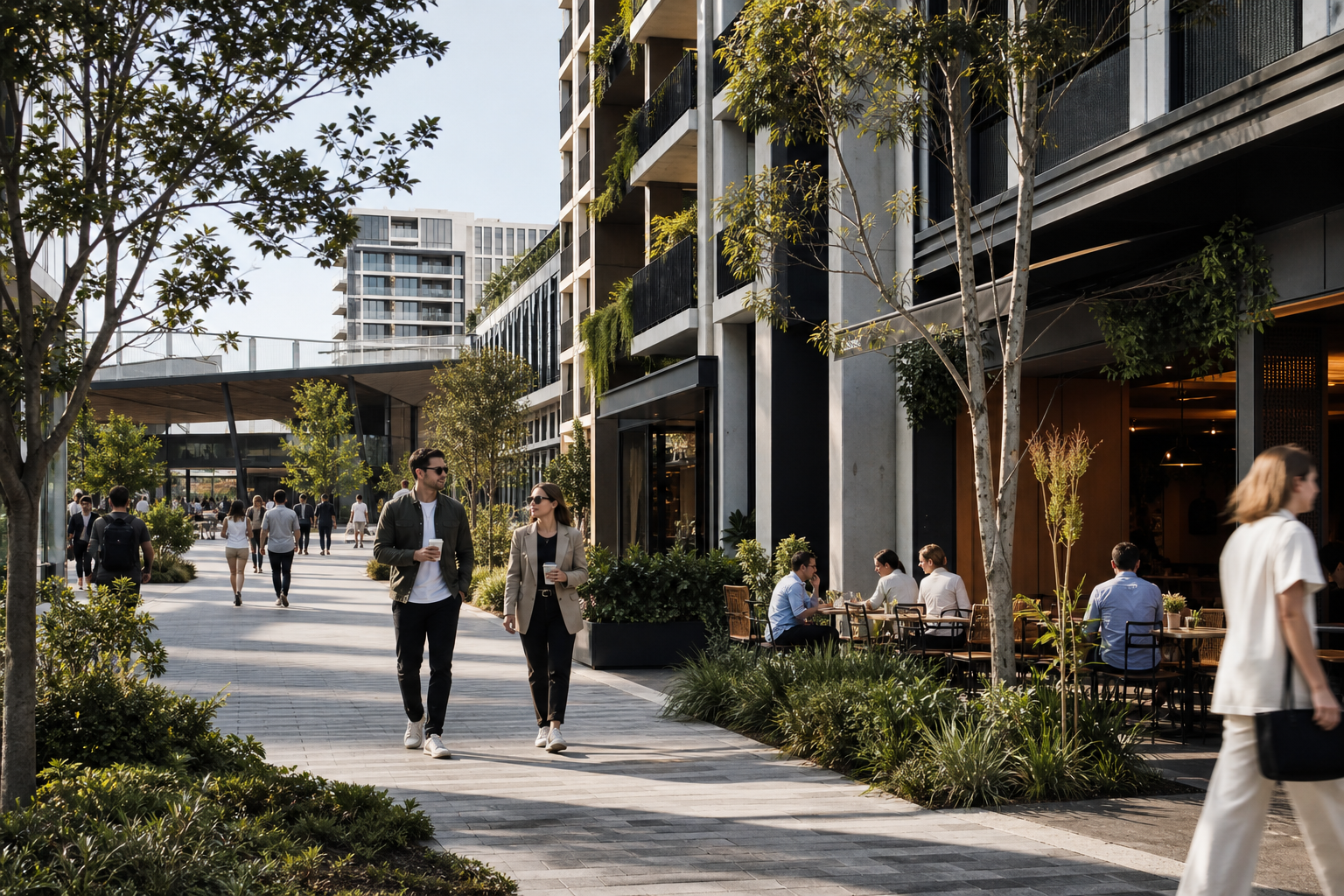
Green Square’s high-density mix of new and established apartments shapes how lenders assess your first-home purchase.
If you’re thinking about off‑the‑plan, use this guide together with the more detailed strategy article: Green Square Off‑the‑Plan Game Plan for First‑Home Buyers.
Key Green Square questions to answer upfront
Before you fall in love with a specific apartment, be clear on:
- Is this a 3–5 year base or a 10‑year stepping stone?
- Are you buying to live in, to rentvest, or a bit of both over time?
- How long do you realistically plan to stay in the inner south?
- Do you need flexibility for future kids, study or business income swings?
Your answers shape the right property, loan structure and suburb shortlist far more than any “hot tip” about where the next light rail stop might go.
2. How much can you safely borrow as a Green Square first‑home buyer?
Borrowing capacity in Australia is assessed with a built‑in safety margin. APRA guidance means banks must test your loan at at least 3 percentage points above the actual interest rate. In practice, most lenders use 3% buffers or higher.
For Green Square first‑home buyers, that means two things:
- Online calculators usually over‑simplify and over‑promise.
- You need to stress‑test your own budget, not just rely on approval.
Simple borrowing power example
Assume:
- Two buyers with combined before‑tax income: $190,000
- Minimal other debts
- Targeting a principal & interest loan with a 30‑year term
- Indicative actual interest rate: 5.8% p.a.
Lenders may test you at 8.8% p.a. (5.8% + 3% buffer). Depending on your actual living expenses, many couples in this situation might see capacity in the $950,000–$1,150,000 range. That’s a wide band – because your true borrowing power is driven by:
- How your bank treats overtime, bonuses, commissions and allowances
- Whether you’re self‑employed or PAYG
- Your dependants and real‑world spending (HEM benchmarks vs your declared expenses)
If your income is complex – self‑employed, contracting, or relying on bonuses – read: Navigating complex income home loans around Green Square.
A practical safety yardstick
Roy Morgan classifies mortgage holders as ‘At Risk’ when repayments exceed roughly 25–45% of after‑tax income, depending on household profile. With rates elevated and 28.2% of borrowers already ‘At Risk’ in 2026, treating one‑third of your take‑home pay as a soft ceiling for repayments is sensible.
Worked example – repayment vs income
- Loan: $900,000
- Rate: 5.8% p.a. (P&I)
- Term: 30 years
- Monthly repayment: ≈ $5,280 (≈ $1,218 per week)
If your combined after‑tax income is $10,000 per month, that’s 52.8% of take‑home – likely too high for comfort in a high‑cost area.
3. Deposit, costs and buffer: what you really need in cash
Minimum vs sensible deposit
With no schemes and a mainstream lender:
- 20% deposit avoids Lenders Mortgage Insurance (LMI).
- On a $900,000 apartment, that’s $180,000.
Using schemes, you may only need 5–15% plus costs, but Green Square has extra twists.
From existing local work:
- Many lenders cap LVRs for Green Square apartments at 80–85%, even where the First Home Guarantee (FHBG) technically allows 95%.
- For off‑the‑plan, we recommend budgeting a 2–5% cash buffer on top of your deposit to absorb valuation shortfalls and settlement costs.
Don’t forget purchase costs
Indicative upfront costs for a first‑home buyer purchasing an established apartment in inner south Sydney might include:
- Stamp duty – potentially reduced or exempt for eligible first‑home buyers under NSW rules (check current thresholds).
- Legal / conveyancing – often $1,800–$3,000.
- Building / strata reports – $500–$1,000+.
- Loan fees, valuation, settlement adjustments – budget $1,000–$2,000.
For rough planning, a 3–5% costs allowance on top of your purchase price is conservative if you’re not sure you’ll qualify for concessions.
The non‑negotiable buffer
In Green Square, with its high share of apartments and potential for building‑specific issues, a cash buffer is not a luxury.
- Minimum healthy buffer: 3 months of total living costs in an offset account.
- Better: 6 months of living costs, especially for self‑employed or bonus‑reliant buyers.
An offset linked to your owner‑occupied split is usually the best place for this buffer, because it reduces nondeductible interest while keeping cash accessible if you later convert the property to an investment.
4. Green Square rent vs buy: how to decide this year, not “one day”
With rents and prices both high, many Green Square renters ask the same question: “Should I keep renting in Zetland and save, or buy something smaller/older a few stops away?”
Here’s a simplified framework.
Worked rent vs buy example – Zetland apartment
Assume:
- Current rent on a 1‑bed in Zetland: $750 per week
- Comparable purchase price: $850,000
- Deposit: $120,000 (≈ 14%)
- Loan: $730,000, 5.8% p.a. P&I, 30 years
Ownership cashflows (approx):
- Loan repayment: $4,285/month
- Strata + council + water: $700/month
- Total: $4,985/month (≈ $1,151/week)
Renting cashflows (approx):
- Rent: $750/week (≈ $3,250/month)
- If you can save the difference (≈ $1,735/month), your deposit grows.
Key questions:
- Can you comfortably handle the extra ≈ $1,700/month to own rather than rent?
- How likely are capital growth and rent rises to offset that extra cost over 5–10 years?
- Would you be willing to buy slightly further out – say, Arncliffe, Wolli Creek, Mascot fringe, or inner west pockets – to improve the numbers?
This is where a Green Square‑specific 10‑year view helps. See: How a Green Square Broker Builds a 10‑Year Property Plan.
Quick rent vs buy decision triggers
You might lean toward buying now if:
- You can buy a suitable place with repayments under 35% of after‑tax income.
- You have >6 months of expenses in buffer after settlement.
- You’re likely to stay in inner south Sydney for 5+ years.
You might lean toward keep renting + saving if:
- Ownership would push you above 40% of after‑tax income.
- You’d end up with <3 months’ buffer.
- Your job/business or relationship situation is very uncertain over the next 2–3 years.
5. Schemes and price caps: can they actually work in Green Square?
First‑home buyers deal with three overlapping rule sets:
- Federal schemes – e.g. First Home Guarantee (FHBG), Regional schemes.
- NSW Government – stamp duty concessions, First Home Owner Grant (for new builds).
- Lender policy – LVR caps, apartment rules, minimum floor area.
All three have to line up for your purchase to stick.
Why price caps really matter here
Scheme price caps are usually set by broad regions. For Green Square and surrounds, some new 1‑ and 2‑bed apartments can sit near or above those caps, especially if they’re large or premium.
A practical takeaway from earlier work: targeting suburbs and buildings where entry‑level prices sit comfortably under the caps greatly increases your chance of actually using the schemes. That may mean:
- Considering older but well‑run blocks in Waterloo or Rosebery.
- Looking a train stop or two away where prices step down.
Using FHBG and other schemes around Green Square
The First Home Guarantee can let you buy with as little as a 5% deposit without LMI, but locally it’s not as simple as “5% and you’re done”. In Green Square:
- Many lenders still limit LVR to 80–85% for certain buildings and postcodes.
- For off‑the‑plan, you should also budget at least a 3–5% buffer for valuation risk at completion.
If you’re considering FHBG off‑the‑plan, read: Using the First Home Guarantee to Buy Off-the-Plan in Green Square and Avoid These Off-the-Plan First‑Home Mistakes in Green Square before signing anything.
For established apartments, FHBG can still help – but only if:
- The property price is under the cap for the relevant scheme year.
- Your chosen lender supports FHBG and is comfortable with the building.
6. Apartments, buildings and lender rules: what to watch in Zetland and Waterloo
Not all apartments in Green Square are created equal in the eyes of a bank. Lender credit teams look at both you and the building.
Common building‑related hurdles
Lenders may tighten terms or decline applications where:
- The building is very high‑rise or has a large share of short‑term letting.
- There’s a history of major defects or combustible cladding.
- Units are under 50 m² internal (excluding balcony) or have unusual layouts.
- It’s mixed‑use (e.g. above a busy retail or hospitality strip).
Different banks treat the same building very differently – some cap LVR at 70–80%, others may be comfortable at 90–95% for strong applicants.
This is why Green Square buyers often benefit from a truly local broker who knows which lenders are comfortable with which buildings. See: Why Green Square buyers often need a truly local mortgage broker.
Comparison: standard home vs Green Square apartment lending
| Feature | Standard suburban house | Green Square apartment (typical) |
|---|---|---|
| Typical maximum LVR (no scheme) | Up to 95% (with LMI) | Often 80–90%; some capped at 70–80% |
| LVR with FHBG | Up to 95% possible | FHBG allowed, but lender may still cap |
| Valuation risk | Lower (more comparable sales) | Higher, especially in large complexes |
| Floor area rules | Rarely an issue | <50 m² can be restricted or declined |
| Mixed‑use / commercial element | Rare | Common; can reduce LVR or options |
| Policy changes over time | Gradual | Can change quickly for specific blocks |
7. Self‑employed and complex income buyers in the inner south
Green Square and the inner south are full of people with non‑standard income – consultants, IT contractors, creatives, hospitality managers, aviation workers, early‑stage business owners.
For these buyers:
- Banks often use average or shaded income over 1–2 years.
- APRA’s 3% buffer still applies, on top of that shading.
- Certain lenders have more flexible alt‑doc or specialist policies.
A practical stress test we often use with small business owners:
Model your home loan repayments at 2–3% above the current rate, and assume your business drawings drop 30–50% for six months. If the numbers still work with your cash buffer, you’re in safer territory.
If this is you, read: Navigating complex income home loans around Green Square before you commit.
8. A one‑week action plan for Green Square first‑home buyers
You don’t need to solve everything this weekend – but you can make real progress in seven days.
Turning Green Square listings into a finance-ready shortlist starts with clear numbers and buffers.
Day 1–2: Get your numbers straight
- Pull your last 3 months of bank statements and pay slips, or two years of business financials.
- Calculate your after‑tax income and current rent.
- Use a conservative calculator to model borrowing at 3% above today’s rates.
- Decide a provisional repayment ceiling (e.g. 30–35% of after‑tax income).
Day 3–4: Reality‑check your target properties
- Shortlist 5–10 listings in Green Square, Zetland and Waterloo at your desired spec.
- For each, estimate:
- Total loan amount and monthly loan repayment.
- Strata + council + water.
- Buffer you’d have left after settlement.
- Cross off any options that would leave you with <3 months’ buffer or push repayments far above 35% of take‑home pay.
Day 5: Check schemes and caps
- Look up current federal and NSW scheme caps for your region.
- Check which of your shortlisted properties fall under these caps.
- If none do, consider expanding your search radius by 1–2 train stops or shifting from new to established stock.
Day 6: Reality call with a broker
Book a 15–30 minute conversation with a broker who works Green Square every day. A good local broker should be able to:
- Flag problem buildings on your shortlist.
- Give you a range for borrowing capacity based on real policies.
- Explain whether you’re a better fit for FHBG, standard 10–20% deposit, or a staged strategy like rentvesting.
Use How Mortgage Brokers Help First‑Home Buyers Purchase Sooner as a checklist before that call.
Day 7: Decide your next 90‑day move
By the end of the week, decide which of these is your main focus for the next 90 days:
- Buy now – if numbers, buffer and life plans line up.
- Buy later, keep renting nearby – if you’re close but need to strengthen savings or income.
- Widen your search area – if Green Square itself is a stretch at this stage.
Then set specific habits: automated savings, a shortlist refresh once a week, and a quarterly finance review.
A clear 90-day plan helps Green Square renters decide when it’s time to become owners.
9. When a local Green Square mortgage broker actually adds value
Not everyone needs a broker. But around Green Square, you probably do if:
- You’re buying in a large or complex building.
- Your income is self‑employed, variable or multi‑source.
- You want to combine schemes like FHBG with off‑the‑plan or low‑deposit paths.
A broker with a CPA and tax background can also help you think longer‑term:
- Structuring separate loan splits for owner‑occupied vs potential investment use.
- Making sure your buffer sits in offset, not parked in the wrong account.
- Planning for future moves – keeping this place as an investment, upgrading locally, or shifting to another suburb.
For investors and future upgraders, it’s worth reading: Building a Resilient Property Portfolio in Green Square and the Inner South alongside this guide so your first purchase fits your later plans.
FAQs: Green Square and inner south first‑home buyers
1. Is Green Square still a good area for first‑home buyers?
It can be, if you buy the right asset at the right price. The area offers strong transport, proximity to the CBD and airport, and a deep rental market, but prices and strata costs are high. For many first‑home buyers, an older but well‑located apartment in a solid building can be a better long‑term bet than the shiniest new tower.
2. How big should my deposit be if I’m buying in Zetland or Waterloo?
Aim for at least 10–15% plus costs, even if you’re hoping to use the First Home Guarantee. Many lenders cap LVRs in certain Green Square buildings at 80–85%, so walking in with only 5% can leave you short. A larger deposit and a cash buffer also give you more lender options and reduce mortgage stress.
3. Should I buy off‑the‑plan or an established apartment as my first home?
Off‑the‑plan can work if you treat it as a project, model a 5–10% valuation drop, and hold at least a 3–5% buffer for settlement. Established apartments offer more certainty on valuation, strata history and rental demand. For your first home, err towards the option that gives you clearer numbers and less policy risk, rather than the flashiest marketing.
4. Can self‑employed buyers actually get into Green Square as first‑timers?
Yes, but you need to plan earlier and present your income the way lenders think. Two years of tax returns, clean business accounts and a documented cash buffer make a big difference. A broker who understands both business and home lending can often find lenders who treat your income more favourably than a single branch bank would.
5. How do I avoid buying in a problem building?
Start by ordering a strata report and searching for news or tribunal cases involving the building. Look for major defects, cladding issues or unusually high special levies. Then, ask your broker which lenders are comfortable with that building; if several major banks are cautious or capping LVRs heavily, treat that as a red flag and investigate further before committing.
6. Is it better to buy a smaller place in Green Square or a bigger place further out?
It depends on your lifestyle, work patterns and future plans. Many buyers prioritise time and transport, accepting a smaller 1‑bed inner south apartment over a larger but distant property. Others choose a slightly further‑out suburb to reduce mortgage stress and increase flexibility (space to work from home, room for a partner or child). Run the numbers on both options over a 5–10 year horizon before deciding.
Key takeaways
- Treat Green Square first‑home buying as a project with a 5–10 year horizon, not just a weekend inspection.
- Stress‑test repayments at 3% above current rates and keep them ideally under one‑third of after‑tax income.
- Aim for at least 10–15% deposit plus 3–6 months’ buffer, even if a 5% path seems available on paper.
- Be selective about buildings and postcodes – lender rules, LVR caps and strata history matter as much as the floorplan.
- Use schemes and grants only when price caps, building policies and your own buffer all line up safely.
If you’d like a Green Square‑specific plan that joins the dots between your tax, your income and your first home loan, book a free 15‑minute strategy call at https://localknowledge.finance. In one conversation, you can test your borrowing power, shortlist realistic suburbs and decide whether buying now, waiting, or adjusting your target makes more sense.
General advice only.
Frequently asked questions
Talk to a CPA-certified broker
Free consultation, plain-English advice tailored to your situation.
