
Article
First‑Home Buyers: Using Suburb Knowledge to Get In Sooner
Choosing the right suburb can bring your first home purchase forward by years. This guide shows how to use local data, grants and lender rules so you target areas where your budget, borrowing power and government schemes actually line up.
Key Takeaway
First‑home buyers can get into the market sooner by using suburb‑level data to target areas where prices, government scheme caps and lender rules align with their budget. Focusing on “neighbourhood cousins” of dream suburbs, where entry‑level properties may be $100,000–$200,000 cheaper, can cut deposit time by years while still meeting lifestyle needs. The key actionable step is building a shortlist based on real prices, grant caps and lending constraints, then testing it with a broker and open homes in the next week.
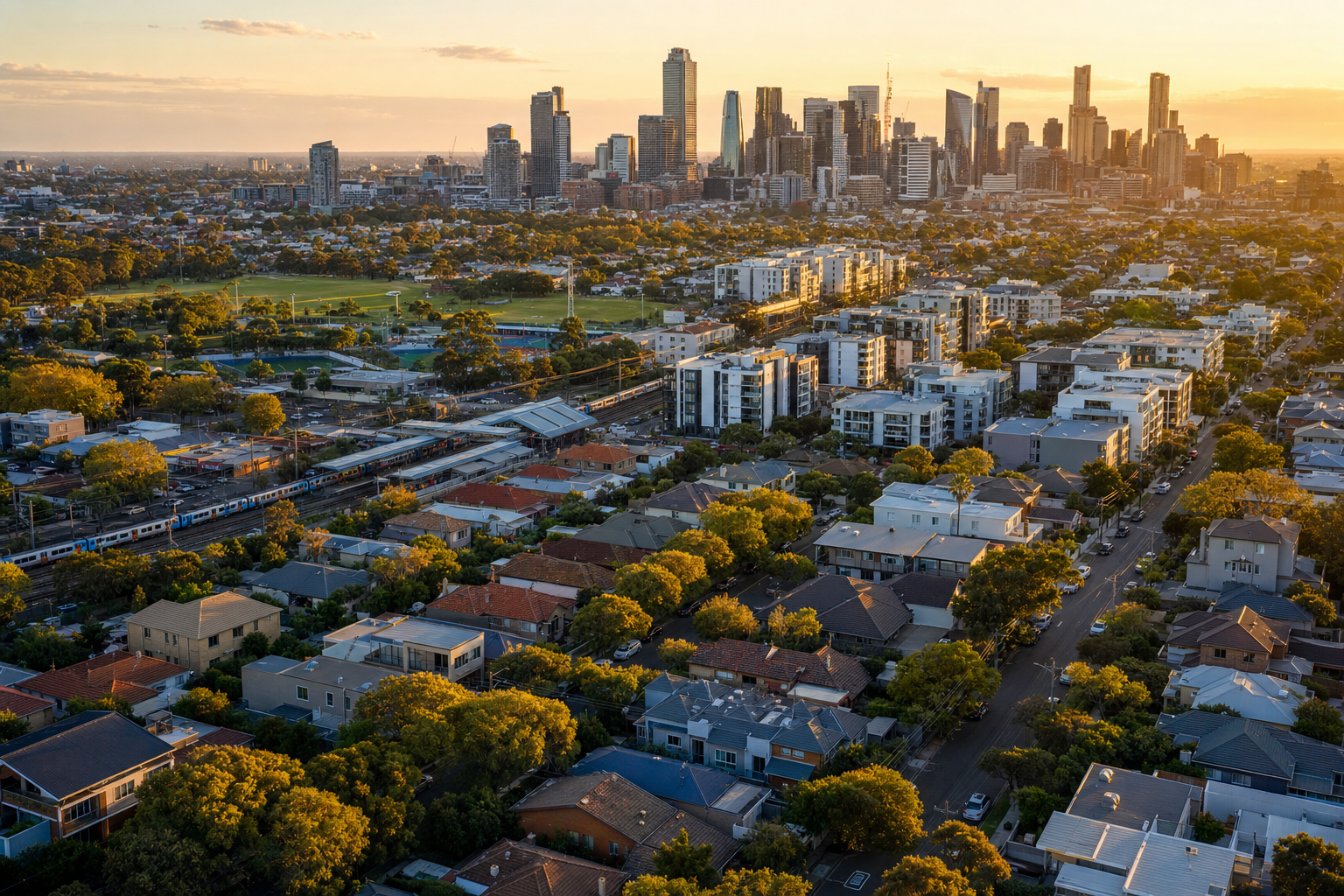
First‑Home Buyers: Using Suburb Knowledge to Get In Sooner
For Australian first‑home buyers, using suburb knowledge means choosing areas where real prices, government scheme caps and lender rules line up with your budget so you can buy sooner, not “someday”. Instead of fixating on a dream suburb, you use data to find its more affordable neighbours, target genuine entry‑level properties and avoid postcodes that banks dislike. Done well, this can bring your purchase forward by years.
In this guide we’ll walk through how to read suburb data, spot realistic price points, align with first‑home buyer schemes and avoid lending traps. You’ll finish with a shortlist you can test at open homes and with a broker this week.

Start your suburb strategy at the table, not at auctions.
1. Why suburb choice is your biggest ‘time‑to‑buy’ lever
1.1 The basic maths: price, deposit and time
The suburb you choose sets the purchase price, and that drives everything else: deposit size, stamp duty, borrowing power and your risk of mortgage stress.
Take a simple example:
- Suburb A (prime): entry‑level townhouse around $950,000
- Suburb B (next suburb over): similar townhouse around $800,000
Assume you’re aiming for a 20% deposit to avoid LMI:
- Suburb A: 20% deposit = $190,000 (plus costs)
- Suburb B: 20% deposit = $160,000 (plus costs)
If you’re saving $2,000 a month, that $30,000 difference is 15 months of extra saving. Even if you use a 5–10% deposit path, a lower price still cuts years off your savings task.
1.2 Government schemes are suburb‑sensitive
Most first‑home schemes have price caps that depend on where you buy. For example, the First Home Guarantee (FHBG) and state grants set maximum property values by region or city. A home priced just under the cap in one suburb might qualify, while a similar home across the border could miss out.
Using government guarantees like the FHBG or Family Home Guarantee can let eligible buyers borrow up to 95–98% LVR without traditional LMI, subject to caps and allocations (Housing Australia; see also /insights/sydney-first-home-buyer-market-2026). Choosing the right suburb can be the difference between qualifying or missing out.
1.3 Your repayment stress is suburb‑driven
Roy Morgan considers borrowers ‘At Risk’ of mortgage stress when repayments take a high share (25–45%) of after‑tax income. A cheaper suburb doesn’t just reduce the deposit; it reduces monthly repayments for decades.
With most lenders assessing you at 3 percentage points above your actual rate (APRA’s serviceability buffer), a $150,000 difference in loan size can make or break an approval. Suburb choice and property type are often more powerful levers than switching banks.
For a deeper look at how the deposit/rate/price trade‑off works, see our guide on Sydney’s 2026 first‑home market.
2. Step 1: Define “entry‑level” in the areas you like
2.1 Medians lie – look at real entry points
Most websites show median prices, but medians blend:
- Renovated and unrenovated homes
- Houses and units
- Quiet streets and main roads
As a first‑home buyer, you care about entry‑level stock, not the median. That usually means:
- Smaller units or townhouses
- Older properties needing cosmetic work
- Less “prestige” pockets within a postcode
Start by filtering for:
- 2‑bed units if you thought you “needed” a 3‑bed
- Older stock (built before 2000)
- Properties without recent high‑end renovations
You’ll quickly see that “entry level” might be 10–25% below the median in many suburbs.
2.2 Use sold data, not just dream asking prices
Asking prices are marketing. You need recent sold prices for:
- Similar bedroom/bathroom counts
- Comparable land size or unit type
- Similar condition
Look back 6–12 months to smooth out seasonal swings. Record a rough range for each suburb, like:
- Suburb X: 2‑bed units mostly $640k–$720k
- Suburb Y: 2‑bed units mostly $720k–$820k
This is your first reality check: in some “favourite” suburbs, entry level may already be above your safe borrow limit.
2.3 Realistic property type shifts
For many buyers, the “get in sooner” move is accepting:
- Unit or townhouse instead of house
- One less bedroom (but good floorplan)
- No parking but excellent transport
- Older building with potential to add value later
You’re not giving up on lifestyle; you’re trading a little space or polish now to be in the market earlier.
If you’re targeting a high‑price area like Rose Bay, our local guide on practical first and next‑home strategies walks through how to calibrate expectations to what’s actually financeable.
3. Step 2: Use suburb data to shortlist faster
3.1 What suburb data actually matters
Instead of endlessly scrolling listings, build a suburb short‑list based on numbers. For each candidate suburb, look up:
- Entry‑level sold prices for your target property type
- Price trend over the last 3–5 years
- Days on market (how quickly properties sell)
- Rental yields (helpful if you might rent it out later)
- Household incomes and local employment mix
- Dwelling mix (houses vs units, high‑rise vs low‑rise)
These indicators help you avoid:
- Ultra‑volatile mining towns or one‑industry regions
- Oversupplied high‑rise pockets that banks treat cautiously
- Areas already priced beyond first‑home budgets
3.2 Reading council and ABS profiles
Local council and ABS profiles give helpful context. For example, Woollahra in Sydney’s Eastern Suburbs had a median weekly household income of $3,203 in 2021, well above Greater Sydney’s $2,099 and Australia’s $1,740. High incomes and professional occupations usually correlate with high purchase prices and rents, which can push suburbs out of first‑home reach.
By contrast, middle‑ring or emerging suburbs might show:
- More mix of incomes
- More townhouses and low‑rise units
- Slightly longer days on market
That’s often where first‑home buyers actually succeed.
3.3 A simple suburb comparison example
Let’s compare three theoretical suburbs in the same city for a 2‑bed unit:
| Suburb type | Entry‑level price | 20% deposit | 5% deposit with FHBG* | Typical commute | Notes |
|---|---|---|---|---|---|
| Prime inner suburb | $900,000 | $180,000 | $45,000 | 15–20 mins | Very competitive, near price cap |
| “Neighbourhood twin” | $780,000 | $156,000 | $39,000 | 22–28 mins | Similar feel, fewer cafes |
| Emerging middle ring | $650,000 | $130,000 | $32,500 | 35–40 mins | New infrastructure planned |
*Illustrative only; FHBG eligibility and caps vary by region and change over time.
For many buyers, the middle row – the neighbourhood twin – is the sweet spot: big saving in deposit and stamp duty, smaller compromise in lifestyle.
4. Step 3: Find the “neighbourhood cousins” of your dream suburb
4.1 The next‑suburb‑over strategy
Most people start with a prestige or well‑known suburb in mind. A powerful tactic is to look for its “cousins”:
- One or two train stops further out
- Adjacent but slightly less fashionable postcodes
- Same school catchment, but different side of a main road
- Similar housing (e.g. Art Deco units) but less renovated
These areas often share:
- Similar architecture and street feel
- The same major parks or beaches
- Access to the same employment hubs
…yet entry‑level homes can be $100,000–$200,000 cheaper.
4.2 Map first, then inspect
Use an online map to:
- Drop a pin on your dream suburb.
- Draw a 5–8 km radius.
- Mark every suburb along your key transport routes (train, tram, major bus).
- For each, quickly check entry‑level sold prices.
You’ll often find two or three sleepers – places you rarely hear about, but where the numbers work better.
4.3 Look for infrastructure “pull factors”
Emerging suburbs can attract long‑term demand if they have:
- New or upgraded train/metro lines
- Planned town centres or retail hubs
- New schools or unis nearby
- Major road upgrades that cut commute times
You’re not speculating; you’re identifying areas likely to remain attractive to tenants and future buyers, which also reassures lenders.
For Sydney‑specific tactics, our guide on how Sydney first‑home buyers can actually buy in 2026 goes deeper into this “neighbourhood cousin” approach.
Neighbouring suburbs can offer similar lifestyle at a lower entry price.
5. Step 4: Match suburb choice to grants, caps and lender rules
5.1 First‑home grants and guarantees by suburb/region
Most first‑home benefits fall into three buckets:
- Federal guarantees – First Home Guarantee, Regional First Home Buyer Guarantee, Family Home Guarantee.
- State/territory grants – usually for new builds or off‑the‑plan.
- Stamp duty concessions/exemptions – often with price caps varying by metro vs regional.
These schemes usually set maximum property prices that differ by region (e.g. “capital city and large regional centres” vs “rest of state”). The practical suburb play is:
- Target areas where typical entry‑level stock fits comfortably under those caps.
- Avoid suburbs where entry‑level prices sit right on or just above the cap; you’ll constantly bump into the limit.
5.2 How price caps change your shortlist
Imagine your region’s FHBG cap is $800,000 (illustrative only). For a 2‑bed unit:
- Suburb A: entry‑level units $780k–$820k (many above cap)
- Suburb B: $720k–$780k (comfortably under cap)
- Suburb C: $640k–$700k (well under cap)
Suburb B and C are far more scheme‑friendly. In Suburb A you may constantly face:
- Properties slightly above the cap
- Valuations that come in higher than expected
- Needing extra cash or missing the guarantee entirely
5.3 Deposit strategy by suburb price point
For most first‑home buyers, choosing between a 20% deposit, 10% plus LMI, or 5% with a government guarantee is the single biggest lever affecting time to buy vs long‑term interest cost (see /insights/mortgage-brokers-first-home-buyers-australia).
At different suburb price points, the trade‑offs look like this (illustrative, ignoring costs):
- $650k suburb, 5% deposit = $32,500
- $780k suburb, 5% deposit = $39,000
- $900k suburb, 5% deposit = $45,000
If you stack a guarantee with a slightly cheaper suburb, you might bring your entry date forward by several years compared with chasing a 20% deposit in the prime postcode.
5.4 Serviceability: how lenders stress‑test your suburb choice
Most banks and non‑banks assess your borrowing using:
- Your income and living expenses (benchmarked against HEM)
- Current debts and credit limits
- A 3% buffer above the actual interest rate (APRA guidance)
They don’t directly care which suburb you pick, but the loan amount that flows from your choice must survive that stress test.
That’s why it helps to:
- Work out your realistic max borrowing power before you chase a suburb.
- Use that limit to reverse‑engineer where you can buy, rather than the other way around.
A broker can model this quickly and show the impact of different suburbs, schemes and deposit percentages. For a detailed checklist, see how mortgage brokers help first‑home buyers purchase sooner.
6. Step 5: Suburb features that lenders quietly care about
6.1 Postcodes and property types some lenders avoid
Lenders won’t always say it upfront, but they can treat certain postcodes and property types as higher risk, such as:
- High‑density unit clusters with lots of investor stock
- Very small apartments (often under ~50 m² internal)
- One‑industry or mining towns
- Flood‑ or bushfire‑prone areas
Outcomes can include:
- Lower maximum LVRs (e.g. 80% instead of 90–95%)
- Tougher valuation scrutiny
- Fewer lender options or slightly higher rates
Suburb knowledge here means asking early: “Is this postcode, and this property type, acceptable to a broad range of lenders?”
6.2 Valuation risk by suburb
In fast‑rising or very thin markets, contract prices can end up ahead of what valuers support. This is especially relevant for off‑the‑plan purchases in fringe or oversupplied suburbs.
During the build period, any fall in final valuation relative to the contract price increases your effective LVR and can force extra cash or LMI at settlement (see /insights/deposits-upfront-costs-off-the-plan-apartments).
That doesn’t mean you must avoid off‑the‑plan, but you should:
- Prefer suburbs with diverse local demand, not just investors
- Check how many similar projects are completing at the same time
- Keep a buffer in case the valuation comes in short
If you’re considering using the FHBG for off‑the‑plan, our guide on using the First Home Guarantee to buy off‑the‑plan explains the extra time and valuation risks.
6.3 Resale and rental strength
Even if you plan to live in the home for years, lenders like properties that are:
- Easy to rent out if needed
- Easy to sell if you have to
Suburbs with:
- Solid rental demand
- Diverse local employment
- Reasonable commute times and amenities
…tend to tick those boxes. You don’t need the hippest café strip, but you do want enduring fundamentals.
Solid, well‑connected suburbs often make the best first‑home launchpads.
7. Step 6: A one‑week action plan to use suburb knowledge
7.1 Day 1–2: Clarify your numbers
- Pull together your income, savings, debts and living costs.
- Get a quick borrowing power estimate with a broker (including the APRA 3% buffer).
- Discuss whether 20%, 10% or 5% deposit is realistic for you.
- Confirm which grants and guarantees you’re likely eligible for, and what the current price caps are for your target regions.
If you run a small business or are self‑employed, read our guide on buying your first home when you run a small business – the documentation rules are different, and timing matters.
7.2 Day 3–4: Build and refine your suburb shortlist
- List 3–5 favourite suburbs.
- For each, capture: recent sold prices for your target property, days on market, rental yields, and how they sit relative to scheme caps.
- Draw a radius and identify neighbouring suburbs with similar lifestyle but lower prices.
- Cut any suburb where entry‑level prices exceed your safe maximum or scheme caps by a meaningful margin.
You should end up with a shortlist of 4–8 viable suburbs.
7.3 Day 5–6: Get on the ground
Pick a Saturday and:
- Attend 3–5 open homes across several shortlisted suburbs.
- Talk to selling agents about actual sale prices, buyer competition and how often first‑home buyers succeed there.
- Walk the streets between transport, shops and parks to check if the day‑to‑day feel works for you.
Notice how different a suburb feels in person compared with how it looks online.
7.4 Day 7: Sense‑check with your broker and adjust
Circle back with your broker and:
- Share your updated price expectations for each suburb.
- Test borrowing capacity against realistic purchase prices, not hopes.
- Confirm which suburbs work best with your chosen deposit path and schemes.
- Decide on a primary target band (e.g. 2‑bed units $650k–$750k in Suburbs B, C and D).
From there, you’re ready to start making serious offers when the right property appears, rather than just browsing.
8. Special suburb tactics for different buyer types
8.1 Singles and professional women
If you’re buying on one income:
- Focus on suburbs where entry‑level units fit comfortably within your solo borrowing power.
- Prioritise safety, transport and amenities that suit your work hours.
- Be realistic about space; a well‑located 1‑bedroom can be smarter than a stretched 2‑bedroom far from everything.
8.2 Couples planning a family
For couples likely to have kids in a few years:
- Look for suburbs with flexible housing stock – e.g. 2‑bed units or townhouses now, with nearby 3‑bed options for later.
- Consider school zones but avoid over‑paying today for a school you may not use for a decade.
- Favour suburbs with parks, childcare options and realistic commute times from both workplaces.
8.3 Self‑employed buyers
If your income jumps around, lenders pay more attention to stability and buffers. Suburb strategy for you means:
- Avoiding price points where you’re right at the edge of serviceability.
- Choosing suburbs where you can still maintain a cash buffer after settlement.
- Considering slightly cheaper areas so you can keep extra funds in an offset account.
Alt‑doc loans can be a stepping stone for newer self‑employed buyers, with a plan to refinance later once two strong tax years are on the board.
8.4 Future investors and rentvestors
If you might later convert your first home to an investment or buy elsewhere while renting where you want to live:
- Prioritise suburbs with solid rental demand and decent yields.
- Avoid highly speculative, one‑industry towns.
- Choose properties that will appeal to a broad tenant base (good light, storage, transport, parking if possible).
Your “first home” is also your first investment decision. Suburb knowledge lets you play both roles well.
FAQs
How do I find the best suburbs for first‑home buyers?
Start by defining your budget and borrowing limit, then look for suburbs where entry‑level sold prices for your preferred property type sit comfortably under that number and any relevant grant or guarantee caps. Use online sold data, council/ABS profiles and local agents to narrow down 4–8 suburbs. Then visit open homes across them in one weekend to see which ones actually feel livable.
Should I buy a smaller place in a better suburb or a bigger place further out?
It depends on your priorities, but for many first‑home buyers a smaller or older home in a better‑connected suburb is the smarter first step. You can usually upgrade space later more easily than you can fix a difficult location. Just make sure the smaller property has broad appeal to future buyers and tenants, not just to you.
How far under grant or guarantee caps should I aim?
As a rule of thumb, try to stay comfortably below the relevant cap – enough that a slightly higher valuation or competitive bidding won’t push you over. If your region’s cap is, say, $800,000, focusing your search mostly in the $650k–$750k band gives you breathing room while still using the scheme effectively.
Can I use suburb knowledge if I’m buying off‑the‑plan?
Yes, but you need to pay extra attention to supply and valuation risk. Research how many similar projects are finishing nearby, what completed stock actually sells or rents for, and how conservative lenders are on that postcode. Prefer suburbs with diverse local demand and allow for the possibility that the final valuation could be lower than the contract price.
Is it a mistake to buy in a cheaper suburb and upgrade later?
Not usually. Many Australians build wealth by starting in a modest but solid suburb, building equity, then upgrading. The key is choosing a suburb with decent fundamentals – transport, employment access, and housing types that other buyers and tenants want. That way, when it’s time to upgrade, you have a liquid asset to sell or leverage against.
How do interest rate changes affect which suburb I can afford?
When rates rise, lenders apply that change plus a 3% buffer, which can cut your borrowing power significantly. That may shift your affordable price band down and push prime suburbs out of reach, at least for now. In that environment, being flexible on suburb and property type is often the difference between buying and waiting out another cycle.
Key takeaways
- Suburb choice directly drives your deposit size, repayments and eligibility for first‑home schemes.
- Focus on entry‑level sold prices, not medians, to understand what you can really buy.
- Look for “neighbourhood cousins” of your dream suburb where prices are lower but fundamentals are similar.
- Match your shortlist to current grant and guarantee caps, staying comfortably under the limits.
- Avoid postcodes and property types that lenders treat as higher risk or restrict at high LVRs.
- Use a one‑week plan: clarify numbers, shortlist suburbs, hit open homes, then refine strategy with a broker.
If you’d like help turning this into a suburb‑specific, lender‑ready plan, we can map your borrowing power, scheme options and target suburbs so you know exactly where you can buy and what to do next week.
General advice only.
Frequently asked questions
Talk to a CPA-certified broker
Free consultation, plain-English advice tailored to your situation.
