
Article
How Green Square Property Types Shape Your Home Loan Options
A decision-grade guide to how Green Square property types – high-rise, mixed-use, small apartments and commercial – affect your borrowing power, LVRs and lender choice this year.
Key Takeaway
Lenders apply stricter rules to many Green Square properties, especially small apartments under ~40 m², high-density towers and mixed-use buildings, often capping LVRs at 70–80% and tightening serviceability buffers. Building-level issues like cladding, defects and sinking fund strength frequently matter more than age or aesthetics. Buyers should pre-check lender appetite for specific buildings, stress-test borrowing with APRA’s 3% buffer and use standalone securities for investments to keep refinancing flexibility.
This topic is covered in full on Tailored Loans Sydney
A decision-grade guide to how Green Square property types – high-rise, mixed-use, small apartments and commercial – affect your borrowing power, LVRs and lender choice this year.
Read the full guide on tailoredloans.sydneyGreen Square’s property types don’t all finance the same way. High‑density towers, mixed‑use buildings, small apartments and commercial or live‑work spaces around Zetland, Waterloo and Rosebery each trigger different lender rules, LVR caps and valuation behaviours. If you ignore those differences, you risk a last‑minute “computer says no” or a valuation that blows up your settlement.
This guide breaks down the main local property types, the lending rules that usually apply, and what you can do this week to match your building and loan strategy – especially if you’re self‑employed, investing or upgrading.
Quick answers: how property type changes your borrowing power
1. High‑density apartments in Green Square often sit on lender restriction lists, which can cap LVRs at 70–80% or exclude specific buildings altogether.
2. Many lenders want a minimum internal area around 40 m² (excluding balcony and car space) for standard apartment lending; smaller units usually face lower LVR caps and fewer LMI options.
3. Mixed‑use buildings (retail below, residential above) and serviced‑apartment style stock can trigger commercial‑style policies, tighter valuations and higher deposit needs.
4. Building‑level risks – cladding, defect history, sinking fund strength – can matter more than age or finishes when a credit team decides your LVR and whether to approve your loan.
Act this week by checking your target building against lender policies, ordering a pre‑purchase strata report, and stress‑testing your numbers with at least a 3% rate buffer (in line with APRA guidance).
1. The Green Square context: why lenders treat it differently
1.1 High‑density postcodes under the microscope
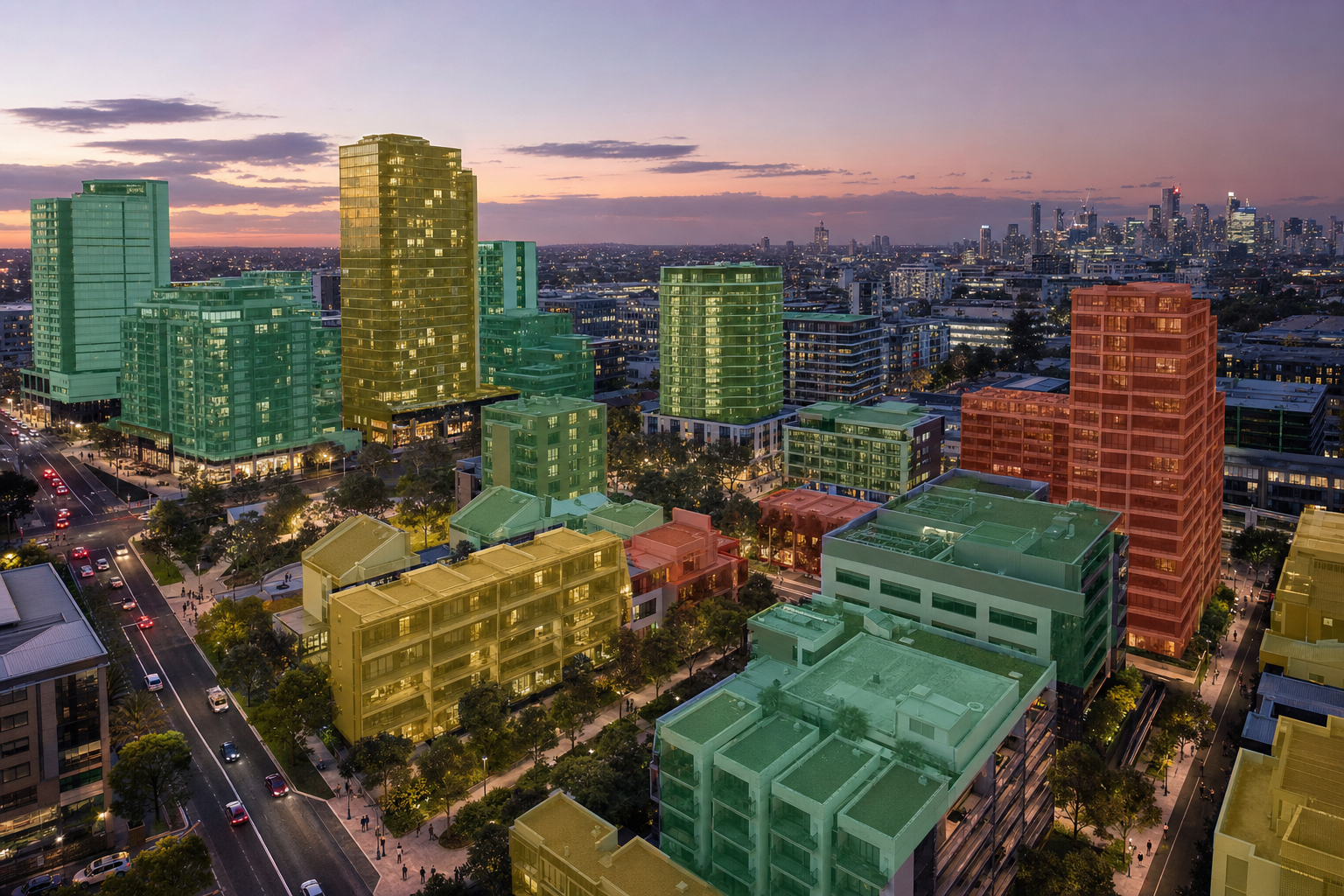
Green Square is one of Sydney’s densest precincts. Thousands of apartments in a tight radius means:
- Higher exposure for bank loan books if values fall in the area
- A lot of investor activity, especially in some towers
- More scope for building‑specific issues (defects, cladding, poor strata management)
As a result, many lenders flag individual buildings and entire postcodes as higher risk.
In Mascot, similar high‑density towers are often on lender restriction lists that cap LVRs at 70–80% or exclude certain towers entirely, even when neighbouring buildings look the same on the outside. Green Square sees the same pattern: individual buildings, not just the postcode, end up on internal watchlists [src: /insights/mascot-property-types-local-lending-rules; /insights/first-home-guarantee-off-the-plan-green-square].
1.2 Building selection is as important as lender selection
One of the key lessons from across the Green Square content hub is that your building choice can completely change your lending options, even if your income and deposit don’t change.
Local brokers increasingly keep informal matrices of which lenders and valuers are comfortable with specific complexes based on:
- Unit size profiles
- Mixed‑use vs purely residential
- Past valuation behaviour
- Known defects or cladding rectification
- Strength of the sinking fund
This is why a guide on local knowledge exists on its own: Why Green Square buyers often need a truly local mortgage broker. If you want an 80–90% lend in a tower that sits on a few restriction lists, that local intelligence can be the difference between approval and decline.
1.3 APRA buffer and valuation risk in high‑density
Two national rules bite harder in Green Square:
- APRA’s minimum 3% serviceability buffer: lenders test if you can afford repayments at your rate plus at least 3%. On a 6% actual rate, that’s 9%.
- Conservative valuers in high‑density areas: valuers may look harder at recent sales in your building, incentives from developers and investor concentration.
Our separate guide, How to stay ahead of valuation and settlement risk in Green Square, dives into this, but the short version is: leave more buffers in high‑density postcodes than you would in a standalone house suburb.
The strategy continues below
You've seen the problem and the groundwork — now unlock the exact steps our CPA-certified brokers use, including 7 more sections. Enter your email for instant, free full access.
Free access. No spam — unsubscribe anytime. Your details stay confidential.
Frequently asked questions
Talk to a CPA-certified broker
Free consultation, plain-English advice tailored to your situation.