
Article
Buying Or Refinancing With Heritage Or Overlays: Read The Fine Print
Heritage listings and planning overlays can quietly slash bank valuations and borrowing capacity. This guide shows how valuers price the risk and what to check before you buy, refinance or plan a development in Australia.
Key Takeaway
Heritage listings and planning overlays typically reduce bank valuations because they restrict demolition, extensions and redevelopment, shrinking buyer demand and increasing lender risk. Valuers focus on land value, development potential and comparable sales, then discount where overlays make future use more constrained. With around 30% of Australians at risk of mortgage stress in 2026, borrowers should pre-check zoning, speak to council, and run conservative scenarios with a broker before relying on best‑case development assumptions.
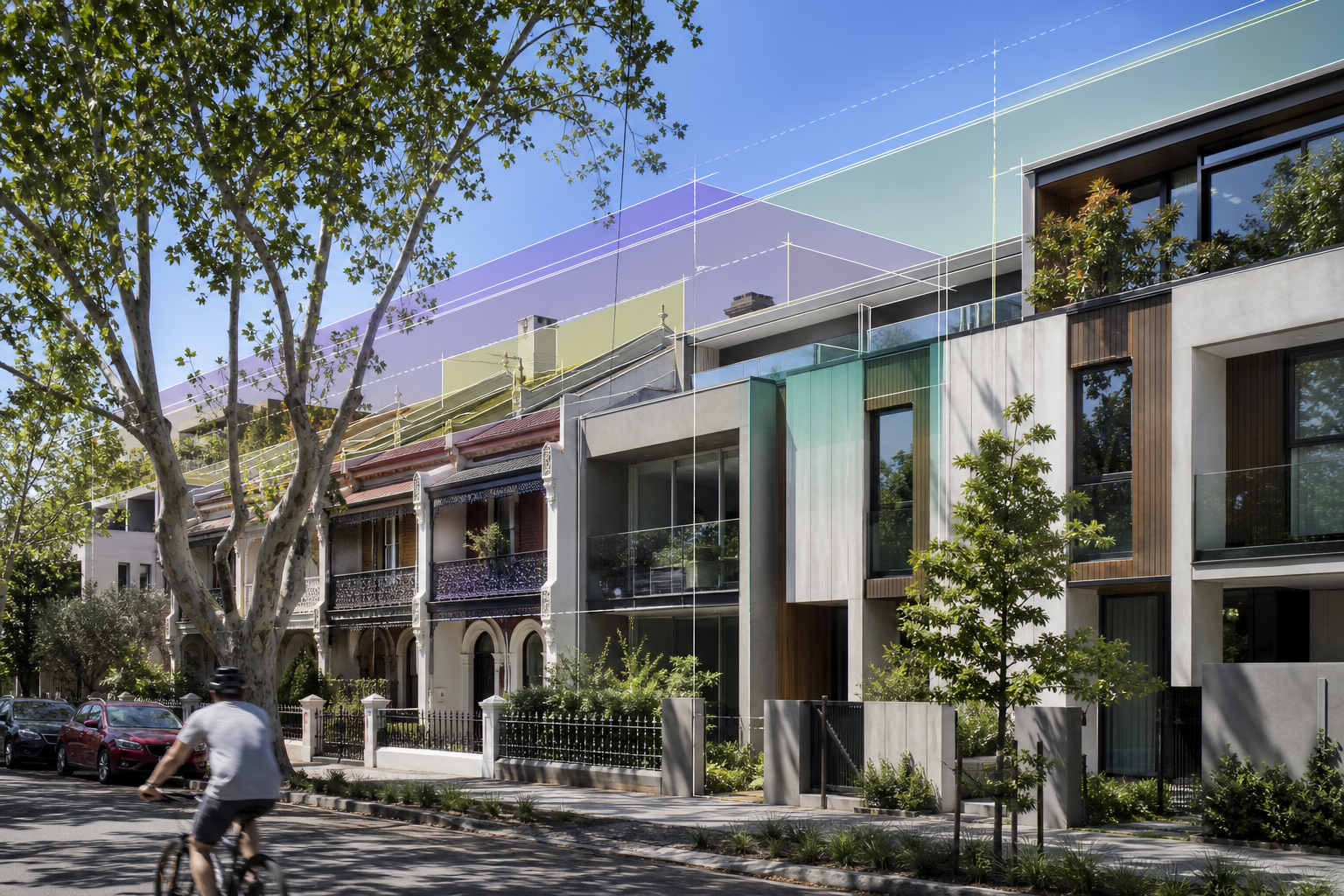
Heritage listings and planning overlays affect a bank valuation by changing what you’re allowed to do with the land and how big the future buyer pool is. Valuers price this risk into their numbers, which means your borrowing capacity, equity release or development feasibility can all shift – sometimes sharply – once the val comes back.
For any heritage‑listed property or block with overlays, assume: (1) the land may be worth less than a similar unencumbered block, (2) development upside is discounted, and (3) loan‑to‑value ratios (LVRs) or conditions may be tighter.

1. Heritage and overlays in plain English
1.1 What “heritage listed” really means for finance
A heritage listing is a legal control that protects part or all of a property. In practice it can:
- Ban demolition or major alteration of the façade or structure.
- Limit extensions, second storeys and reconfigurations.
- Increase build and maintenance costs (specialist trades, materials, consultants).
For valuers and lenders, this means fewer potential buyers and higher holding costs. Even if you love the charm, the bank sees a niche asset, not a mainstream house.
1.2 Planning overlays that worry valuers
Besides heritage, common overlays that impact finance include:
- Neighbourhood character / conservation overlays – limit density, height and style.
- Flood, bushfire or landslip overlays – add risk, extra build standards and insurance cost.
- Environmental / significant vegetation overlays – reduce usable area and subdivision potential.
On their own, overlays don’t make lending impossible. But they do change the “highest and best use” of the land – and that’s what a bank valuation is built around.
2. How valuers price heritage and overlay risk
Valuers follow evidence. They’re not guessing; they’re comparing your property to recent sales, then adjusting for restrictions, risk and cost.
2.1 The basic valuation playbook
A typical residential valuation for a lender will:
- Start with land value – based on recent comparable land or house sales nearby.
- Adjust for improvements – dwelling condition, size, layout, quality.
- Layer in planning risk – heritage and overlays, likely future use, demand depth.
- Check against rental yield (if investment) – to see if the figure is realistic.
Heritage or restrictive overlays usually hit steps 1 and 3: lower perceived land value and a tighter buyer pool.
2.2 Worked example: heritage vs non‑heritage terrace
Assume two near‑identical inner‑city terraces, both 3 bed / 1 bath:
- Non‑heritage: recent sales suggest around $1.50m.
- Heritage overlay with strict façade controls: valuer sees higher renovation cost and less scope for extension.
They might reasonably land at $1.35m–$1.40m for the heritage property – a 7–10% discount – even if you’d personally pay more.
At an 80% LVR, that’s the difference between being able to borrow about $1.20m vs $1.08m–$1.12m.
2.3 Comparison: heritage vs standard, from a bank’s eyes
| Factor | Standard house (no overlay) | Heritage / heavy overlays |
|---|---|---|
| Buyer pool size | Broad, mainstream | Niche, smaller |
| Renovation / extension flexibility | High | Often low to moderate |
| Build / maintenance cost | Standard | Higher (specialist requirements) |
| Development / subdivision potential | Depends on zoning only | Often reduced or heavily constrained |
| Typical lender comfort | Standard LVRs, broad panels | Possible LVR caps, more conditions |
| Valuation volatility | Lower | Higher (few comparable sales) |
For unique properties, the same issues appear – even without heritage. See how this plays out in practice in our guide on how valuers really price luxury and one‑of‑a‑kind homes.

The strategy continues below
You've seen the problem and the groundwork — now unlock the exact steps our CPA-certified brokers use, including 4 more sections. Enter your email for instant, free full access.
Free access. No spam — unsubscribe anytime. Your details stay confidential.
Frequently asked questions
Talk to a CPA-certified broker
Free consultation, plain-English advice tailored to your situation.