Loading the latest on mortgages, RBA & inflation…
Local Knowledge Finance

Article

Smart Home Loans for Self‑Employed Mascot Residents: A Local Playbook

A practical, Mascot‑focused guide to getting a home loan when you’re self‑employed, contracting or running a small business. Covers documents, full‑doc vs alt‑doc, BAS and bank‑statement loans, risk management and what to fix this week before you apply.

Published 17 July 2026Updated 17 July 202614 min read

Key Takeaway

Self‑employed Mascot residents can secure competitive home loans by aligning their documentation (tax returns, BAS or bank statements) with the right lender policy and using full‑doc or alt‑doc options strategically. Lenders apply at least a 3% APRA serviceability buffer and often shade self‑employed income to 70–80%, which can reduce borrowing power. The key actionable step is to spend a focused week cleaning up tax, BAS and bank accounts, then choose the optimal documentation pathway before applying.

Smart Home Loans for Self‑Employed Mascot Residents: A Local Playbook

Self‑employed Mascot residents absolutely can get strong home loan outcomes, but the rules are tighter than for salaried borrowers. Lenders will test your repayments at least 3% above the actual rate, often shade your income by 20–30%, and scrutinise your BAS, tax returns and business accounts. The borrowers who win in Mascot are the ones who treat this like a business project: tidy the numbers first, then choose the right documentation pathway and lender.

Below is a practical, decision‑grade guide you can act on this week.

Self‑employed Mascot business owner reviewing finances before applying for a home loan. Understanding your income story is the first step to a successful Mascot home loan.

1. What makes Mascot different for self‑employed borrowers?

Mascot is a hub for aviation, logistics, hospitality and small business. That means more contractors, ABN earners and shift‑based workers than the average Sydney suburb. Lenders see that as higher risk unless the story and documents are rock‑solid.

1.1 Local income patterns lenders worry about

Common Mascot income profiles that trigger extra lender questions:

  • Aviation contractors and flight crew with variable hours, overtime and allowances.
  • Airport‑adjacent SMEs (cafés, Uber drivers, freight, cleaning, security) with fluctuating turnover.
  • Tradie and construction contractors working across Mascot and inner‑south job sites.
  • Rideshare, delivery and gig‑economy work layered on top of another income.

Lenders often:

  1. Average the last two years’ income or use the lower year if your latest year dropped by ~20% or more.
  2. Shade variable or self‑employed income (for example, only counting 70–80%) before serviceability calculations, to allow for volatility.
  3. Apply a 3% serviceability buffer above the actual interest rate in line with APRA guidance.

The same borrower can pass one bank’s test and fail another because policies differ widely. That’s where a Mascot‑savvy broker can change the outcome.

For a deep dive into how lenders view complex local income, see Smart Mascot Home Loans for Aviation, Expats and Complex Income.

1.2 How much can you really borrow? A Mascot example

Say you run a Mascot‑based cleaning business and want to buy a $1,000,000 unit near the station.

  • Personal taxable income last year: $140,000
  • Previous year: $115,000
  • Business profit retained in company: $20,000
  • Existing car loan: $600/month
  • Proposed home loan: $800,000 over 30 years, P&I

Indicative numbers only (not product recommendations):

  • At 6.0% actual rate, lenders must test you at 9.0% (6.0 + 3.0% buffer).
  • On $800,000 over 30 years at 9.0%, repayments are about $6,440/month.
  • Many lenders will count roughly $140,000–$150,000 as assessable income after add‑backs and shading.

If your real living costs (not just HEM) and the car loan don’t leave room for that $6,440 test repayment, borrowing capacity shrinks quickly.

This is why the right documentation path and cleaning up personal debts can move the needle by hundreds of thousands of dollars.

2. Full‑doc vs alt‑doc vs low‑doc for Mascot self‑employed

The most important decision isn’t “which bank?” – it’s which documentation pathway? That dictates how much you can borrow, the interest rate, fees and the deposit you’ll need.

For a national overview, see Choosing the right documentation pathway for your next home loan. Here we’ll apply it to Mascot.

2.1 Full‑doc loans (cheapest if your paperwork is clean)

Who it suits in Mascot

  • Established contractors or business owners with 2+ years of lodged tax returns.
  • Company directors with consistent profit and drawings.
  • High‑income professionals doing consulting on an ABN.

Typical documentation

  • 2 years personal tax returns + ATO Notices of Assessment.
  • 2 years business/company/trust tax returns and financials.
  • Current ABN and GST registration where relevant.
  • Business activity statements (BAS) sometimes requested as a sense check.

Pros

  • Usually lowest rates and fees.
  • Higher maximum LVRs (up to 95% with LMI in some cases, depending on policy).
  • More lender competition = better negotiating power.

Cons

  • If you’ve minimised taxable income for tax, your borrowing power can be much lower.
  • A single low‑income year can drag everything down because many lenders use the lower year when income falls.

For how to use tax returns effectively, read How to Use Tax Returns to Prove Income for Your Home Loan.

2.2 Alt‑doc loans (bank statements and BAS)

Alt‑doc loans suit self‑employed Mascot borrowers whose recent trading is stronger than their last tax return – common after COVID, job changes or business pivots.

Common alt‑doc types in Mascot

  • BAS‑based loans – where lenders assess turnover and profit margins from your last 12–24 months of BAS.
  • Bank‑statement loans – where they look at 6–12 months of business and/or personal bank deposits.
  • Accountant‑letter loans – some lenders accept a declaration from your accountant of sustainable income.

Typical use cases:

  • You’ve only recently ramped up work around the airport.
  • You went from PAYG to ABN contractor within the last 1–2 years.
  • You’ve cleaned up your business but your last tax return still shows a tough year.

For a practical walk‑through, see Using Bank Statements and BAS for Your Home Loan: A Practical Guide.

2.3 Low‑doc loans (niche and more expensive)

True low‑doc is now a niche, higher‑cost option. You’ll usually need:

  • A larger deposit (often 20–30%+).
  • Higher rates and fees.
  • Stricter credit conditions and LVR caps.

In Mascot, low‑doc is typically a bridging solution for:

  • Recently self‑employed borrowers with limited paperwork but strong equity.
  • Investors with complex structures where full documentation isn’t yet tidy.

You generally want a clear exit plan – e.g. refinance to full‑doc once two clean tax years are lodged.

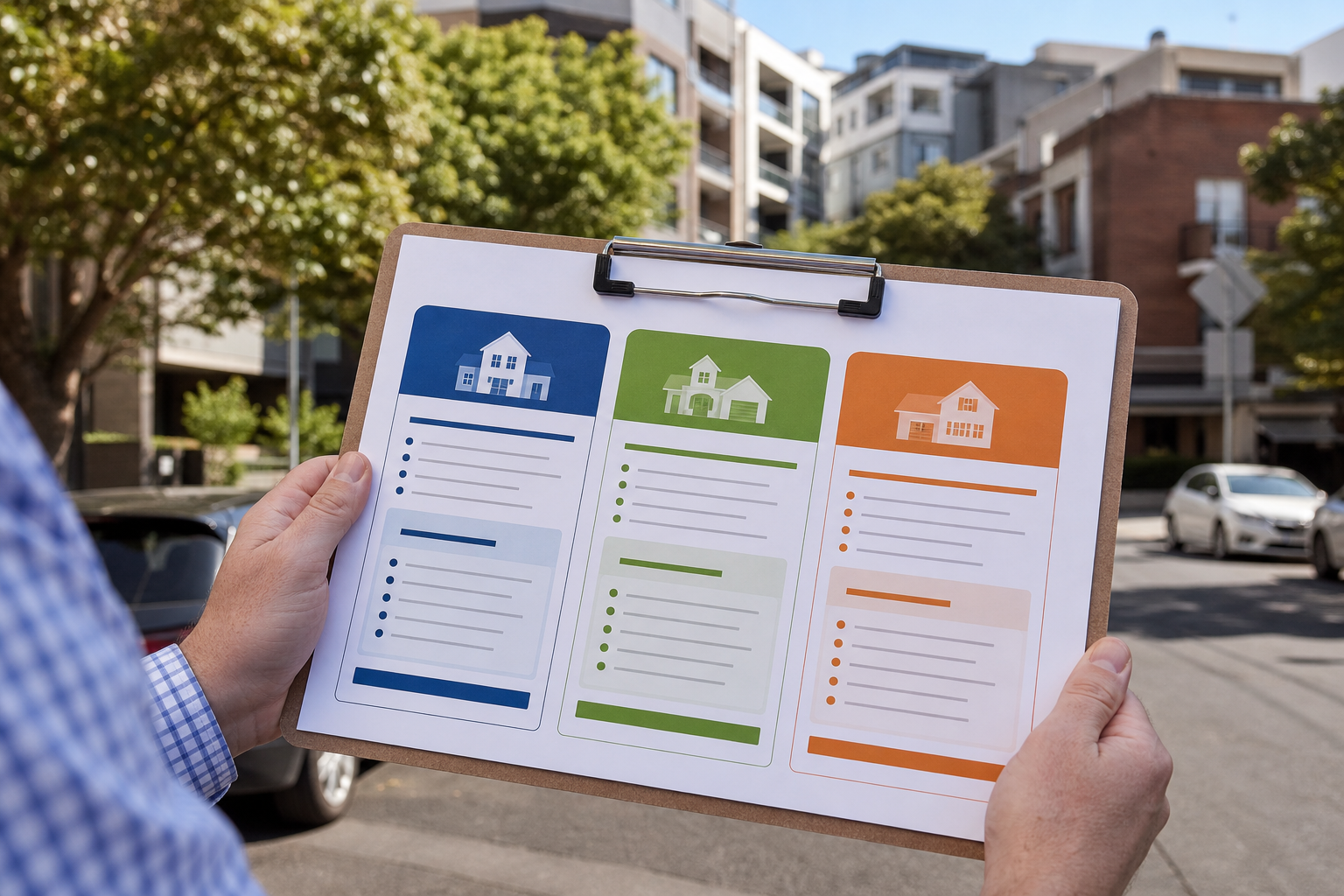
2.4 Pathway comparison for Mascot borrowers

FeatureFull‑docAlt‑doc (BAS/bank statements)Low‑doc
Typical rate (illustrative)Lowest+0.50% to +1.50% higherHighest
Max LVR (owner‑occupied)Up to 95% with LMI in some casesOften capped around 80% (some lower)Often 70–80%
Docs requiredFull tax returns & NOAsBAS, bank statements, accountant lettersMinimal income evidence
Best for Mascot borrowers who…Have clean, strong tax returnsHave improved income not yet in tax returnsHave equity but messy paperwork
Strategic useLong‑term structureTemporary step, refinance laterLast resort / short‑term solution

Comparison of full‑doc, alt‑doc and low‑doc home loan options. Choosing the right documentation pathway can change your borrowing power and rate.

3. What Mascot self‑employed lenders want to see

Lenders care far less about the logo on your ABN and far more about stability, consistency and compliance.

3.1 Income: stable, provable and sustainable

Key themes:

  • Time in business: 2 years is still the magic number for most banks, though some alt‑doc lenders will look at 12 months.
  • Rising or stable income: falling income can force lenders to use the lower year, hurting borrowing power.
  • Shaded income: many will only use 70–80% of variable or self‑employed income for serviceability.
  • Add‑backs: some expenses (non‑recurring costs, depreciation, extra super) can be added back to income.

If your income has jumped recently (new airline contract, major delivery contract, etc.), alt‑doc using BAS or bank statements may reflect the improvement faster than waiting for the next tax return.

3.2 Tax and BAS lodgements: non‑negotiable

For self‑employed Mascot borrowers, unlodged returns or ATO debts are red flags. Lenders treat tax compliance as part of your risk profile. Common issues:

  • Returns more than one year late.
  • Active ATO payment plans not disclosed.
  • GST/BAS under‑reported compared with bank deposits.

Cleaning this up 6–12 months before a purchase or refinance greatly improves your odds of approval and better pricing.

3.3 Business and personal debts

Lenders assess your whole picture:

  • Business overdrafts and equipment finance.
  • Credit cards and buy‑now‑pay‑later.
  • Personal car and personal loans.

Even if a car is “for the business”, if it’s in your personal name, it hits your serviceability.

A common Mascot move is to restructure or consolidate personal debts before applying, then demonstrate 6–12 months of clean conduct on all facilities.

For more on what lenders look for, see Small business home loan eligibility: what lenders want to see.

4. Documentation checklists for Mascot self‑employed

Different documentation pathways = different checklists. Here’s what to pull together.

4.1 Full‑doc checklist (aim for this where possible)

You’ll typically need:

  • Two most recent personal tax returns and ATO Notices of Assessment.
  • Two most recent business/company/trust tax returns and financial statements.
  • Latest BAS (4 quarters) if requested.
  • Business bank statements (3–6 months).
  • Identification and proof of address.
  • Loan statements for all existing debts.
  • ATO account statement to prove no undisclosed tax debt.

Use How to Use Tax Returns to Prove Income for Your Home Loan as a detailed companion to this list.

4.2 BAS‑based alt‑doc checklist

Best for Mascot businesses with solid GST turnover but thin tax returns.

  • Last 12–24 months of BAS.
  • Matching business bank statements.
  • Current ABN/GST registration details.
  • Simple P&L (if available) and accountant details.

Lenders will typically:

  1. Look at average quarterly turnover.
  2. Apply a conservative margin to estimate income.
  3. Shade that income before running serviceability with a 3% buffer.

4.3 Bank‑statement alt‑doc checklist

Useful when you have strong, regular deposits.

  • 6–12 months of business bank statements.
  • 3–6 months of personal bank statements.
  • Evidence of key contracts (e.g. airline or logistics contracts).

They’ll analyse:

  • Regularity and source of deposits.
  • Seasonality (e.g. airport peak periods vs lulls).
  • Undisclosed debts and recurring commitments.

For step‑by‑step help, refer to Using Bank Statements and BAS for Your Home Loan: A Practical Guide.

4.4 First‑home Mascot buyers who are self‑employed

If this is your first home and you run a small business around Mascot:

  • You can still use the First Home Guarantee, but the constraint is usually lender policy and documentation, not the scheme rules.
  • Expect closer scrutiny of income stability and tax compliance.

Buying Your First Home When You Run a Small Business gives a one‑week checklist that dovetails well with this guide.

Self‑employed Mascot couple meeting a mortgage broker to discuss loan options. Local, tailored advice helps Mascot self‑employed borrowers structure loans for resilience.

5. One‑week action plan for Mascot self‑employed borrowers

You’re busy running a business. Here’s what you can realistically do in one focused week.

Day 1–2: Get your numbers on the table

  • Download last 2 years of tax returns and NOAs.
  • Pull BAS statements for the last 4 quarters.
  • Export 12 months of business bank statements and 3–6 months of personal statements.
  • List all debts: balances, limits, repayments.

If something is missing or overdue (e.g. a late BAS), book time with your accountant now.

Day 3: Quick health check with an expert

Sit down with a broker who understands tax and small business (ideally someone who is also a CPA and tax agent). The goals:

  • Decide full‑doc vs alt‑doc for your situation.
  • Estimate borrowing power using shaded income and the 3% buffer.
  • Identify quick wins (e.g. closing unused credit cards, refinancing a costly car loan).

This is where the triple‑credential perspective helps: looking at tax, lending and business cashflow in one conversation.

Day 4–5: Tidy and de‑risk

  • Clear or reduce credit card limits where practical.
  • Fix obvious bank statement issues (overdrawn fees, gambling patterns, late payments).
  • Finalise and lodge any outstanding tax or BAS returns.
  • Get a simple business P&L for the last two years from your accountant.

A useful rule of thumb is to stress‑test yourself: could you handle loan repayments if rates went up another 2–3% and your business drawings dropped 30–50% for six months? If the answer is no, scale back the purchase price or delay until the numbers are stronger.

Day 6–7: Choose structure and strategy

Decide with your broker:

  • Owner‑occupier vs investment, P&I vs interest‑only.
  • Offset vs redraw to manage cashflow shocks.
  • Which debts sit in the business and which in your personal name.

Self‑employed investors around Mascot usually build more resilient portfolios when home, business and investment loans are structurally separated with clear security and repayment sources.

For high‑income self‑employed readers, Home loans for high‑income self‑employed professionals and owners dives deeper into structuring for long‑term wealth.

6. Worked case studies: Mascot self‑employed scenarios

6.1 ABN rideshare + part‑time job buying a Mascot unit

  • PAYG job near the airport: $40,000 p.a.
  • Rideshare income (ABN): $60,000 turnover, taxable income $35,000.
  • No dependants, small credit card $2,000.

A lender might:

  • Use $40,000 PAYG (usually at 100%).
  • Shade self‑employed income to ~80% of $35,000 = $28,000.
  • Total assessable income ~$68,000.

At an test rate of 9% (6% actual + 3% buffer), this may support a loan around $450,000–$500,000 depending on real living costs.

Improvement levers this week:

  • Lodge any outstanding returns to show consistent rideshare income.
  • Reduce credit card limit to $1,000 or close it.
  • Consider an alt‑doc pathway if recent bank statements show higher, consistent net income than last year’s tax return.

6.2 Mascot café owner refinancing family home

  • Own‑occupied home valued at $1.4m, current loan $950,000.
  • Café near the station trading strongly post‑COVID.
  • Last year’s taxable income low due to heavy deductions.

Goals:

  • Reduce rate.
  • Free up cashflow.
  • Build a buffer for business volatility.

Strategy options:

  1. Full‑doc refinance once two stronger tax years are lodged and ATO is tidy.
  2. BAS‑based alt‑doc refinance now, using strong recent turnover to justify income – likely at a slightly higher rate and capped at 80% LVR (so keep loan ≤$1.12m).

Plan:

  • Use alt‑doc as a temporary bridge for 1–3 years.
  • Aggressively build an offset balance as business buffer.
  • Refinance to sharp full‑doc pricing once tax returns catch up.

7. Common mistakes Mascot self‑employed borrowers should avoid

7.1 Chasing the lowest advertised rate only

For self‑employed borrowers, the best outcome is usually approval + flexibility + a competitive rate, not just the cheapest headline number. A lender that understands your income pattern and will work with BAS or bank statements can be worth 0.10–0.20% more in rate if the structure is better.

7.2 Over‑minimising tax just before a big loan

Heavy deductions and tax minimisation can be smart for cash, but terrible for borrowing capacity. With income shading and the 3% buffer, a $20,000 reduction in taxable income can slash borrowing power dramatically.

If you’re planning a Mascot purchase or refinance in the next 12–24 months, talk to your accountant and broker together before finalising returns.

7.3 Ignoring personal spending and buffers

Roy Morgan’s research shows more than a quarter of Australian mortgage holders are currently ‘At Risk’ of mortgage stress, with risk higher for variable and self‑employed income. In Mascot, high property prices magnify that risk.

Avoid stretching to the absolute maximum the bank will lend. Instead:

  • Model repayments at 2–3% above your expected rate.
  • Keep a 3–6 month expense buffer in offset.
  • Avoid using business cashflow as your only safety net.

7.4 Mixing business and home debt poorly

Using your family home as security for business debt can be dangerous if trading conditions change. Wherever possible:

  • Keep business working capital on a separate facility.
  • Avoid cross‑collateralising every property against every loan.
  • Document clear repayment sources for each facility.

For borrowers with both home and business lending, see the companion piece: Coordinating Home, Investment and Business Lending for Mascot Entrepreneurs (cluster article).


FAQs: Home loans for self‑employed Mascot residents

1. How long do I need to be self‑employed to get a home loan in Mascot?

Most mainstream lenders want at least two full years of self‑employed income, backed by lodged tax returns. Some alt‑doc lenders will consider 12 months in business if your BAS and bank statements are strong and consistent. The shorter your trading history, the more conservative lenders will be on loan size and loan‑to‑value ratio.

2. Can I get a Mascot home loan using just BAS or bank statements?

Yes, many alt‑doc lenders will assess income using BAS statements, business bank statements or a combination instead of relying only on tax returns. They’ll usually apply conservative margins and shading, and may cap LVR around 80%. These loans are best used as a temporary solution with a plan to refinance to a sharper full‑doc product once your tax returns reflect your true earning power.

3. Do lenders accept contractor and aviation income around Mascot?

They do, but they often treat it as variable or self‑employed income, even if you’re paid through a payroll company. Expect lenders to average two years’ income or use the lower year if your latest year dropped significantly, and to shade that income before testing serviceability. Providing clear contracts, flight schedules or roster history alongside bank statements can improve the way your income is assessed.

4. I haven’t lodged last year’s tax return yet. Should I wait to apply?

If your unlodged return will show stronger income than the last lodged year, it’s usually worth lodging first as lenders rely heavily on the last two assessed years. However, if late lodgement reveals significant ATO debts or a sharp drop in profit, approval can become harder. This is a decision to make with both your accountant and broker, looking at whether a full‑doc or alt‑doc pathway makes more sense.

5. Can self‑employed Mascot first‑home buyers use the First Home Guarantee?

Yes. The First Home Guarantee is neutral on employment type; self‑employed Mascot buyers can qualify if they meet scheme rules and a participating lender’s self‑employed credit policy. In practice the hurdle is having clean, up‑to‑date tax returns and enough provable income after shading and buffers. A broker familiar with both the scheme and self‑employed policies can tell you quickly whether it’s realistic.

6. How much deposit do I need as a self‑employed Mascot borrower?

For full‑doc loans, you may be able to borrow up to 90–95% of the purchase price (with LMI) if the rest of your profile is strong. For alt‑doc or low‑doc loans, many lenders cap LVR around 70–80%, so you’ll need a 20–30% deposit plus costs. The stronger and more stable your documented income, the more options you’ll have on deposit size and pricing.


Key takeaways

  • Self‑employed Mascot borrowers can get competitive home loans if income is stable, provable and well‑documented.
  • The biggest lever is choosing the right documentation pathway – full‑doc where possible, alt‑doc as a tactical bridge, low‑doc only as a last resort.
  • Lenders will shade your income and apply at least a 3% serviceability buffer, so plan your purchase price below your absolute maximum.
  • Clean, on‑time tax and BAS lodgements and well‑managed personal debts significantly increase approval odds and choice of lenders.
  • A focused one‑week prep sprint – collating documents, tidying debts and checking strategy with a triple‑qualified broker – can move you from “hopeful” to genuinely application‑ready.

Ready to map out your Mascot home loan strategy as a self‑employed borrower?

Book a free 15‑minute strategy call at https://localknowledge.finance. In one conversation you can cover your tax position, borrowing power and loan structure with a CPA, registered tax agent and mortgage broker in one. If you prefer to self‑check first, start with our borrowing power and repayment tools under /tools and then bring your numbers to the call.

General advice only.

Frequently asked questions

Most lenders want at least two full years of self‑employed income with lodged tax returns, especially for full‑doc loans. Some alt‑doc lenders may consider applications with 12 months in business if BAS and bank statements show strong, consistent trading. The shorter your history, the more conservative lenders will be on how much they’ll let you borrow.
Yes, many alt‑doc lenders will use BAS statements, business bank statements or both to verify income for self‑employed borrowers. They usually apply conservative assumptions and income shading, and often cap LVRs around 80%. These options can work well as a temporary solution until your tax returns reflect your current income.
Lenders do accept contractor and aviation income, but they typically treat it as variable or self‑employed income. That means they may average two years’ earnings, use the lower year if income has fallen, and shade it before calculating borrowing capacity. Supplying clear contracts, rosters and bank statements helps show the income is ongoing and reliable.
If the unlodged return will show stronger income than the last lodged year, it’s often better to lodge first because lenders rely heavily on the last two years of assessed income. If lodging will reveal a weaker year or a new ATO debt, the decision is more delicate. It’s wise to review the numbers with both your accountant and broker before applying.

Talk to a CPA-certified broker

Free consultation, plain-English advice tailored to your situation.

Your details are kept confidential. We’ll never share them.