
Article
Smart Splits and Offsets: Right-Sizing Your Structure As A Geared Investor
How many loan splits and offset accounts does a geared investor actually need? A practical, decision-grade framework so you can simplify, protect deductibility and improve cashflow – without creating admin you’ll never keep on top of.
Key Takeaway
Most geared investors in Australia only need one primary loan per property, 1–3 internal splits, and 1–2 well-placed offset accounts to stay flexible and tax-efficient. Separate splits by purpose (home, investment, business) and quarantine cash in offsets linked to non-deductible debt, while maintaining at least 3–6 months of portfolio holding costs as buffers. The actionable insight: design your structure around purposes and buffers, not the maximum number of accounts a lender will give you.

This topic is covered in full on Tailored Loans Sydney
How many loan splits and offset accounts does a geared investor actually need? A practical, decision-grade framework so you can simplify, protect deductibility and improve cashflow – without creating admin you’ll never keep on top of.
Read the full guide on tailoredloans.sydneyMost geared investors only need one main loan per property, 1–3 internal splits, and 1–2 offset accounts – not a dozen. The aim is simple: keep investment and personal debt quarantined, protect deductibility, and hold strong cash buffers without creating admin you’ll never maintain.
If you’re juggling multiple properties, businesses or changing tax rules, the right structure is one you can actually run week to week. The rest is noise.
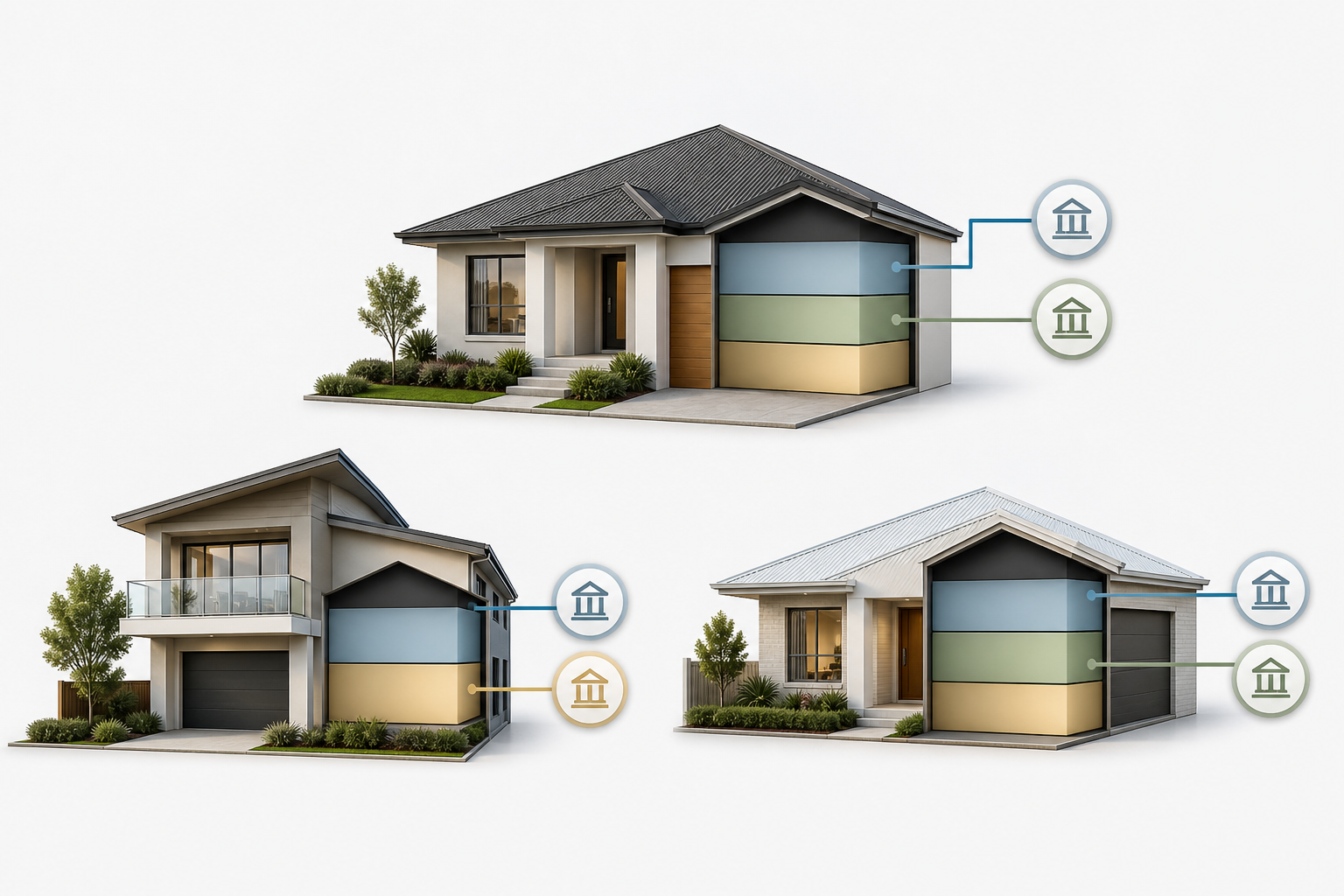
1. Start with the job, not the number of accounts
What are splits and offsets actually for?
Loan splits are separate sub‑loans under one facility. They let you:
- Separate different purposes (home, investment, business, renovations, buffers).
- Run different repayment types (P&I vs interest‑only).
- Apply different rates or fixed/variable mixes.
Offset accounts are bank accounts linked to a specific split. Every dollar in offset reduces the interest charged on that split, without changing the loan balance.
For tax and restructuring purposes, the critical rule (ATO guidance; see also our guide at /insights/using-loan-splits-offsets-redraw-track-deductible-non-deductible-debt) is: each split should have one clear purpose, and you should avoid using redraw for personal spending on investment loans.
Core design principles for geared investors
For most portfolio investors, a robust structure usually:
- Uses standalone loans per property, with internal splits where needed.
- Keeps home (non‑deductible) and investment (deductible) debt in separate splits.
- Uses offsets, not redraw, for cash buffers and short‑term parking.
- Holds 3–6 months of total portfolio holding costs in offset buffers (see facts 2, 7, 9, 20 above).
That matters even more with post‑2027 CGT and negative gearing reforms tightening how losses are used. (See /insights/updated-cgt-rules-geared-property-investors-2027-playbook.)
2. How many splits and offsets do you actually need?
A simple rules‑of‑thumb framework
Use this as a starting point, then adapt.
Owner‑occupier + 1 investment
- Splits: 3–4 total
- Home loan – main P&I split
- Home equity split – deposit/costs for investment (interest‑only)
- Investment loan – standalone against the investment
- Optional: separate split for renovations
- Offsets: 1–2
- Primary offset against home loan
- Optional second offset for tax/portfolio buffers.
Home + 2–4 investments
- Splits: typically 5–8
- Home main split + 1–2 home equity splits (each with a single purpose)
- One loan per investment property (each can have 1–2 internal splits if needed: e.g. base loan + reno split)
- Offsets: 2–3
- Main household offset against home loan.
- Portfolio/rent offset linked to an investment split or equity split.
- Optional business buffer offset if self‑employed.
Larger portfolio (5+ properties) or business owner
- Splits: 8–12 is usually enough even for complex portfolios.
- Offsets: rarely more than 3–4 in total.
If you’re running more than 12 splits or 4 offsets as an individual investor, you’re probably creating complexity with no extra benefit – or fixing problems that should be solved with structure and discipline instead.
Comparison: lean vs overloaded structure
| Structure type | Splits | Offsets | Pros | Cons |
|---|---|---|---|---|
| Lean, purpose-based | 5–8 | 2–3 | Clear tax tracing, manageable admin, flexible | Needs upfront planning |
| Over‑engineered, every idea split | 12–20 | 4–8 | Theoretical precision | High admin risk; easy to mis‑use/contaminate splits |
| Under‑split, one big loan | 1–2 | 0–1 | Simple to look at | Mixed purposes, messy tax, hard to restructure later |
The strategy continues below
You've seen the problem and the groundwork — now unlock the exact steps our CPA-certified brokers use, including 4 more sections. Enter your email for instant, free full access.
Free access. No spam — unsubscribe anytime. Your details stay confidential.
Frequently asked questions
Talk to a CPA-certified broker
Free consultation, plain-English advice tailored to your situation.