
Article
Kitchen and Bathroom Upgrades in High-Rise Units: Valuation and Loan Basics
How kitchen and bathroom renovations in high-rise Green Square and Zetland apartments actually affect your valuation, borrowing power and loan structure — with numbers you can use this week.
Key Takeaway
This guide explains how kitchen and bathroom upgrades in high‑rise Green Square and Zetland apartments affect bank valuations and lending options. Because lenders often value units ‘as is’ until renovations are complete, owners must fund works via savings, personal loans, or equity, keeping total debt under typical 80% LVR limits. A worked example shows how a $40,000 reno may lift value by $60,000 if aligned to the building’s price ceiling. The key action is to model pre‑ and post‑reno valuations and serviceability before signing any contracts.
This topic is covered in full on Tailored Loans Sydney
How kitchen and bathroom renovations in high-rise Green Square and Zetland apartments actually affect your valuation, borrowing power and loan structure — with numbers you can use this week.
Read the full guide on tailoredloans.sydneyUpgrading the kitchen or bathroom in a Green Square or Zetland high‑rise apartment only helps your finances when three things line up: the upgrade is in line with the building’s price ceiling, the valuer can see and quantify the uplift, and your loan structure supports the spend without stretching cashflow.
If those pieces don’t line up, you risk overcapitalising and making refinancing or selling harder, not easier.
1. How kitchen and bathroom upgrades change apartment value
In high‑rise buildings, valuers and lenders think in terms of relativity, not renovation receipts.
1.1 What valuers actually look for
For a Green Square or Zetland unit, a valuer will usually:
- Compare your apartment to recent sales in the same building or immediate pocket.
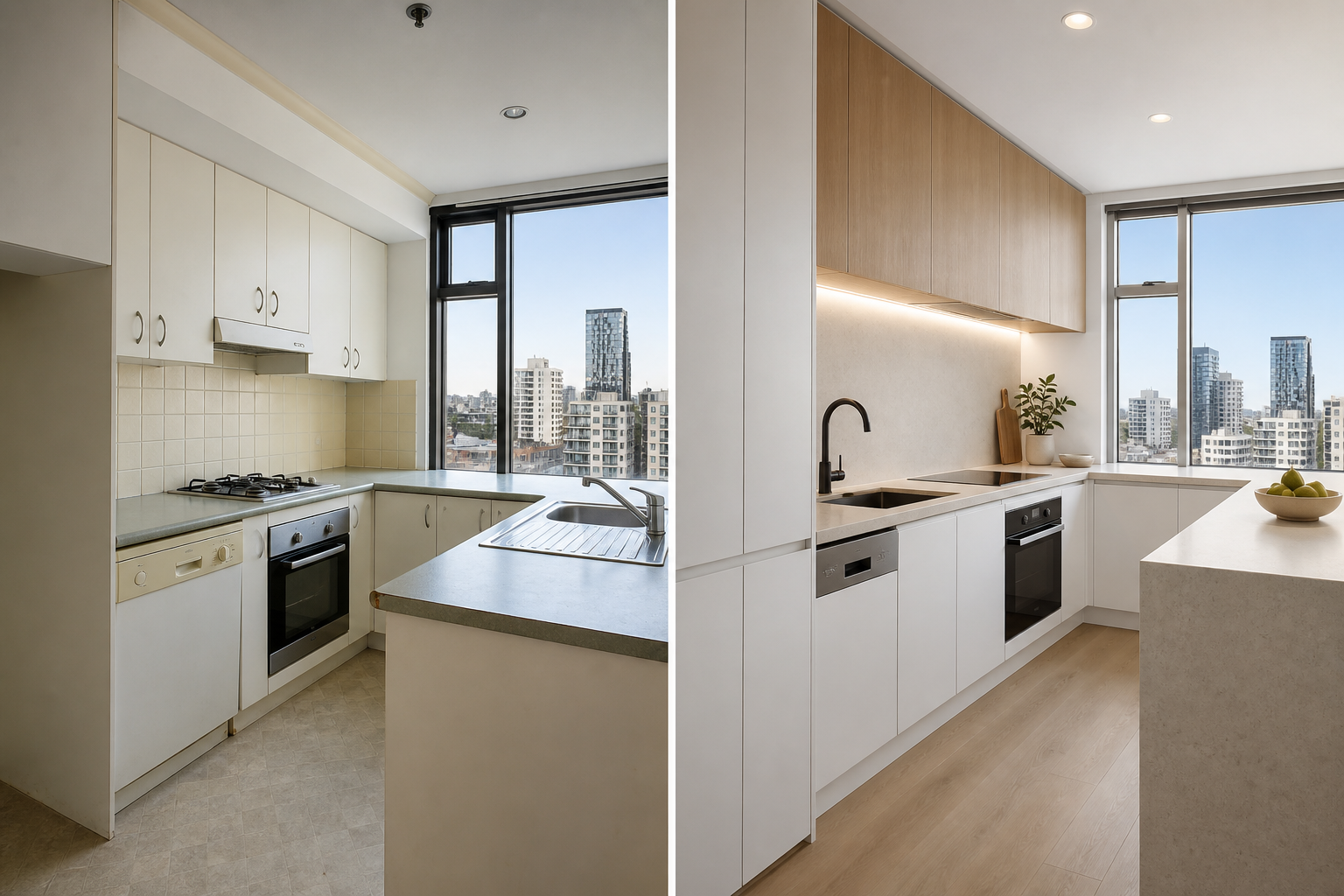
- Adjust value for condition: original vs partially updated vs fully renovated.
- Check the building’s price ceiling – there’s often a clear band most sales sit in.
A $40,000 kitchen renovation doesn’t automatically add $40,000 to value. It might add more, the same, or much less, depending on how far your unit was behind the market and how buyers respond.
1.2 Typical value uplift ranges (indicative only)
For mid‑range, quality‑but‑not‑luxury upgrades in inner‑south high‑rise stock:
| Upgrade scope | Typical spend (indicative) | Common uplift range* | Notes |
|---|---|---|---|
| Cosmetic kitchen refresh (doors, tops) | $12k–$20k | $10k–$25k | Works best when replacing very tired original kitchen. |
| Full kitchen (re‑layout, appliances) | $25k–$45k | $20k–$60k | Hard to recoup top‑end spend in entry‑level buildings. |
| Bathroom refresh (tiles, fittings) | $15k–$25k | $10k–$35k | Waterproofing and layout changes add cost quickly. |
| Kitchen + bathroom mid‑range package | $35k–$70k | $30k–$90k | Stronger in buildings where buyers expect ‘as‑new’. |
*These ranges are illustrative, not a promise. Local sales and building quality matter.
1.3 Worked example: Green Square kitchen + bathroom
- Current value (original condition): $850,000
- Planned spend (mid‑range kitchen + bathroom): $45,000
- Valuer’s post‑reno estimate based on recent renovated sales: $900,000
You’ve added $50,000 in value for a $45,000 spend – a small net gain and you now sit in the ‘renovated’ listing band that usually sells faster.
If the market is softer, or the building is already near its ceiling, the same upgrade might only lift value to $885,000. You’ve then effectively spent $45,000 to gain $35,000 on paper and mainly improved livability.
The key is to be clear whether you’re renovating for return, enjoyment, or a bit of both.
2. How lenders treat high‑rise renovation plans
Lenders are conservative with high‑density apartments, particularly around Green Square and Zetland. Many apply tighter rules, as outlined in more detail in /insights/high-density-small-studio-apartments-extra-lending-rules.
2.1 Will the bank lend against the “after renovation” value?
Usually no, unless:
- You are doing a major structural refurbishment with a fixed‑price building contract, and
- The lender uses a ‘as if complete’ valuation tied to that contract.
For standard kitchen and bathroom upgrades in a strata apartment, most lenders will:
- Value the unit ‘as is today’, ignoring planned cosmetic renovations.
- Let you access equity up to their maximum LVR based on that current value.
Any extra uplift from the works is a bonus you might tap later via refinance.
2.2 Common LVR settings for inner‑south high‑density units
Indicatively (policy varies by lender and building):
- Owner‑occupied, standard size (>50 m² internal): up to 80–90% LVR.
- Investor, high‑density postcode/building: often capped closer to 70–80% LVR.
If your Green Square valuation has been tight in the past, it’s worth revisiting options outlined in /insights/green-square-valuation-short-at-settlement-options before committing to a reno that relies on a higher bank value.
2.3 Serviceability and the APRA buffer
Regardless of LVR, your bank must test repayments with at least a 3% buffer on the actual rate (APRA guidance).
For example, if your current rate is 6.0% p.a., your borrowing is assessed around 9.0% p.a.
Adding a $45,000 top‑up at 6% over 25 years adds roughly $290–$310 per month in repayments. The bank will test your ability to afford that at a higher assessment rate, so any drop in income or higher existing debts can matter.
The strategy continues below
You've seen the problem and the groundwork — now unlock the exact steps our CPA-certified brokers use, including 4 more sections. Enter your email for instant, free full access.
Free access. No spam — unsubscribe anytime. Your details stay confidential.
Frequently asked questions
Talk to a CPA-certified broker
Free consultation, plain-English advice tailored to your situation.