
Loading the latest on mortgages, RBA & inflation…
Local Knowledge Finance

Article

Local Property Red Flags Your Nearby Broker Spots Before The Bank

Some buildings, developers and strata schemes quietly scare lenders. A nearby broker often sees the red flags months before they hit bank systems. Here’s how that protects your borrowing power and helps you avoid a finance dead-end.

Published 19 July 2026Updated 19 July 20265 min read

Key Takeaway

This article explains how a local mortgage broker can identify building, developer and strata red flags before they appear in bank systems, protecting borrowers from failed valuations and loan declines. It highlights risks like combustible cladding, major defects, builder insolvency, and underfunded sinking funds that commonly spook lenders. With around 70% of new Australian home loans written via brokers, the key takeaway is that buyers should get a broker to pre‑check a property’s local risk profile before signing or going unconditional.
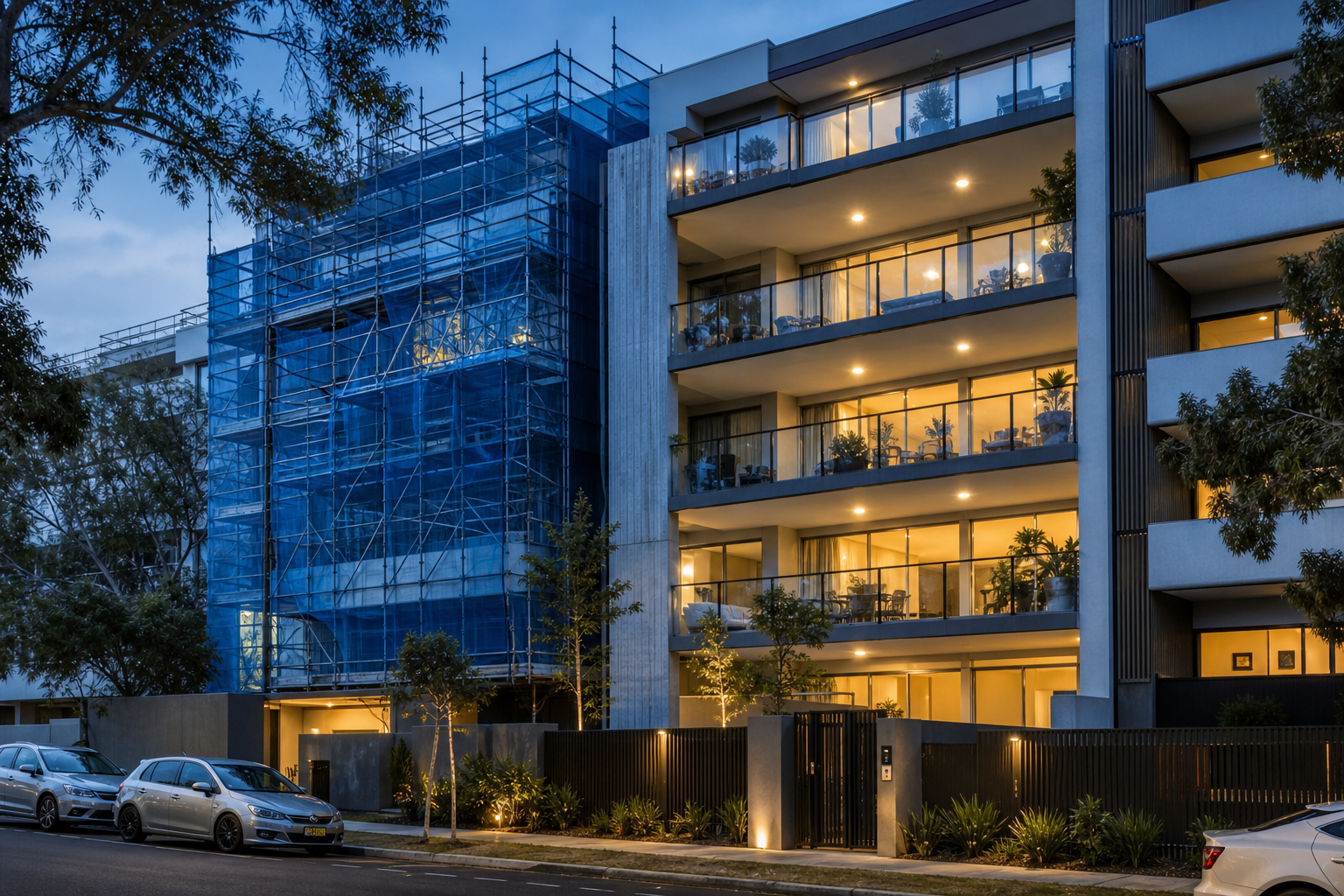
Local Property Red Flags Your Nearby Broker Spots Before The Bank

Some buildings, developers and strata schemes quietly end up on lender “avoid” lists, and a nearby broker will often know this long before you do.

That local history can be the difference between a smooth approval and a last‑minute loan collapse, especially for apartments, mixed‑use and newer developments.

Here’s how to use it this week.
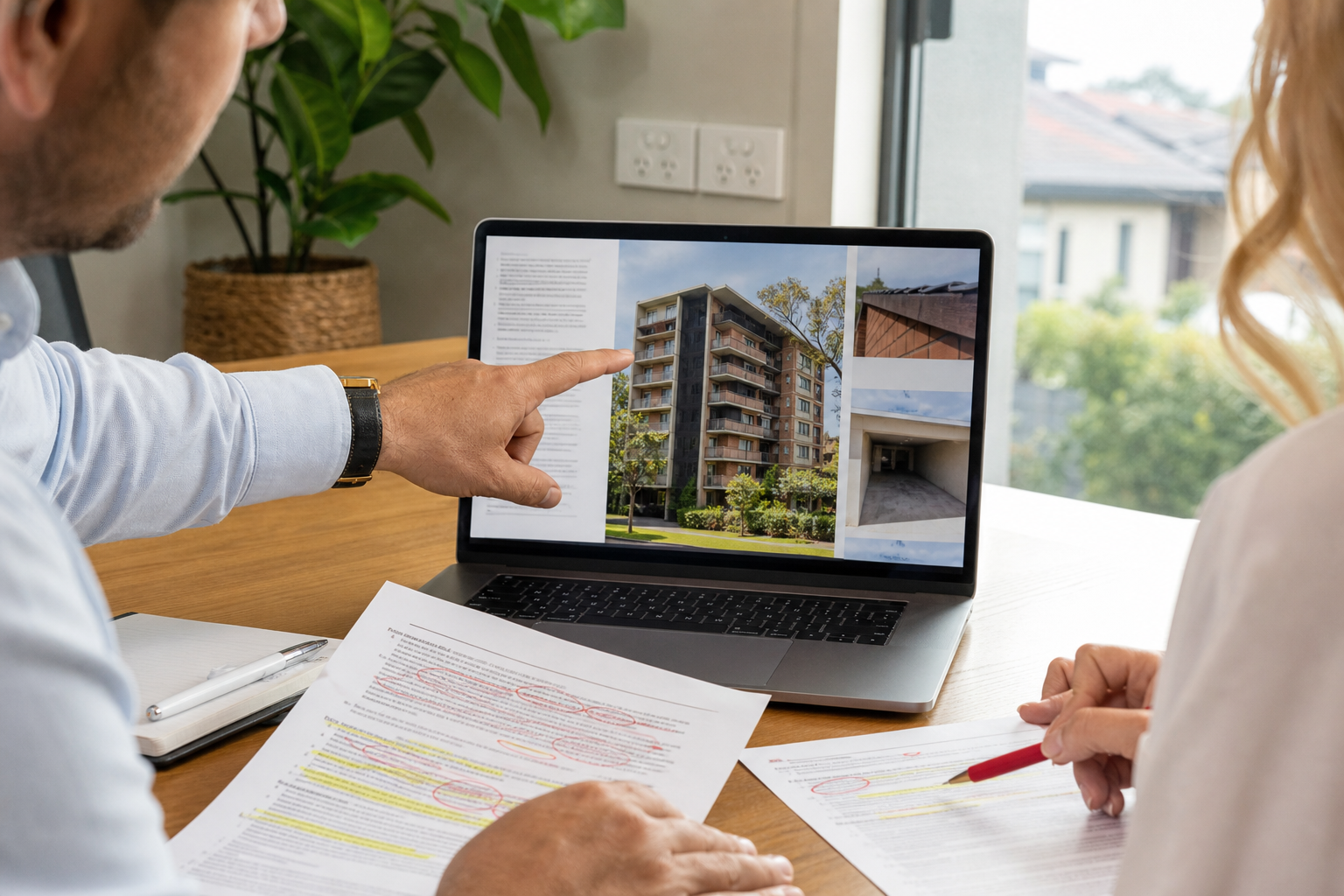
Local mortgage broker and client reviewing strata reports for red flags. A nearby broker can often see building and strata red flags before they reach bank systems.

The main red flags local brokers watch for

A suburb‑savvy broker tracks patterns across many clients, valuers and lenders.

They start to see the same addresses and developer names popping up with problems.

Common red flags:

  1. Major defect or cladding histories
    – Combustible cladding or serious water ingress.
    – Remedial works running into the millions.
    – Insurers hiking premiums or refusing cover.

  2. Developer and builder issues
    – Projects delivered late with lots of variations and defects.
    – Builder or developer insolvency on previous buildings.
    – Aggressive rental guarantees or furniture packages used to prop up valuations.

  3. Strata financial stress
    – Tiny or non‑existent sinking fund versus the age of the building.
    – Special levies every year to plug gaps.
    – Large unpaid levies, suggesting owner distress.

  4. Legal disputes and governance problems
    – Ongoing litigation with the builder, council or individual owners.
    – Dysfunctional or “captured” strata committees.
    – Disputes over by‑laws that may affect use (short‑stay, pets, parking).

These issues don’t just make living there painful.

They can make lenders nervous, crush valuations and trap you if you need to sell.

For a broader view of how brokers use risk insight (not just approvals), see /insights/local-broker-insight-manage-risk-not-just-approval.

How this actually affects your finance

Lenders and valuers don’t publicly publish “blacklists”, but they do quietly change appetite.

That shows up in a few ways:

  • Lower maximum LVRs
    A building that was fine at 90–95% LVR last year might quietly be capped at 70–80% today.

    On a $900,000 unit, that’s the difference between needing $45,000 deposit (95% plus costs) and $180,000 (80% plus costs).

  • Conservative valuations
    If valuers keep coming in 5–10% below contract price on a particular complex, the bank will follow their lead.

    Example: Contract $1,000,000, valuation $920,000. At 80% LVR, your loan max is $736,000, not $800,000.

  • Extra conditions or outright declines
    Some lenders will only lend if defects are fully remediated and funded. Others won’t touch specific postcodes or building types (e.g. very small units, high‑density with ongoing defect disputes).

A local broker sees these patterns across multiple borrowers and lenders.

They can steer you to:

  • A lender still comfortable with the building; or
  • A safer alternative property before you sink weeks of time and money.

What a nearby broker can see that you can’t

Online research helps, but it rarely shows you:

  • The valuers’ quiet feedback
    Local brokers talk to valuers weekly.

    They hear, “We’ve been told to be cautious in that block,” long before it appears in any policy.

  • Recent, not just historic, issues
    News articles might be from five years ago.

    Your broker is seeing whether buyers, tenants and lenders have actually moved on.

  • Which lenders are twitchy this month
    Credit appetites shift fast, especially under APRA’s 3% serviceability buffer and tighter risk settings.

    A building that passed easily six months ago might now trigger manual credit sign‑off.

  • Neighbouring property knock‑ons
    If the complex next door has major defects, valuers may treat your building cautiously too, even if it’s technically separate.

This is why complex or locally sensitive deals usually suit a genuinely local broker over a call centre – see /insights/online-phone-vs-local-mortgage-brokers-australia.

Checks you can do with a broker this week

In a 15–30 minute chat, a good local broker can run through a simple due‑diligence checklist:

  1. Address and developer sense‑check
    – Have they seen this building, developer or builder before?
    – Any recent valuation shortfalls on similar stock?

  2. Strata report red‑flag scan
    – Are there repeated defect references or large upcoming works?
    – Are levies way below what’s normal for building age and facilities?
    – Is the sinking fund healthy relative to expected capital works?

  3. Finance strategy if something is wrong
    – Can a different lender, LVR or structure reduce risk?
    – Should you proceed but budget for future levies?
    – Or is this one to walk away from entirely?

  4. Pre‑auction or pre‑cooling‑off check
    – For auctions, get your broker to sanity‑check the property before you bid.
    – For private treaties, avoid going unconditional until your broker has cleared any obvious property or strata risks.

If you’re a first‑home buyer juggling grants and low deposits, adding this layer of checking is crucial – use the checklist in /insights/mortgage-brokers-first-home-buyers-australia alongside the local red‑flag scan.

Who this matters most for

  • First‑home buyers
    Usually tight on deposit and borrowing capacity.

    A valuation shortfall can sink the whole deal.

  • Self‑employed borrowers
    Already face stricter assessment.

    A risky building on top can tip a borderline file into a decline.

  • Investors
    Need to think ahead to resale and rental demand, especially under the 2026 negative gearing and 2027 CGT reforms.

    A tarnished building can hurt both yield and exit price.

  • Small business owners using equity
    Your home or investment property is often security for business lending.

    A “tainted” building can reduce usable equity when you most need working capital.

Key takeaway: don’t just ask, “Can I get a loan?”

Ask, “Is this a property my future buyer, tenant and lender will still like?”

Key takeaways

  • Local brokers often hear about building, developer and strata problems months before banks formally change policy.
  • Those red flags can directly hit your valuation, maximum LVR and even basic lendability.
  • A 15–30 minute local property risk check with a broker before you bid or go unconditional can save you from failed finance and an expensive mistake.

Book a free 15‑minute strategy call at /contact to sanity‑check your target property – your tax, your loan, one expert (CPA + Tax Agent + Broker) in one conversation.

General advice only.

Frequently asked questions

Lenders don’t publish formal blacklists, but patterns emerge: repeated valuation shortfalls, lower maximum LVRs and extra conditions on certain buildings. A local broker sees this across many applications and valuers, so they can tell you if a property has been causing issues recently and which lenders are more comfortable with it, if any.
Sometimes, but only with eyes wide open. If defects are fully costed, funded and near completion, you may secure a discount that outweighs the pain. You need to factor in higher levies, resale stigma and lender choice. A broker and good solicitor together can help you decide if the risk and extra costs stack up for your situation.
Give your broker the full address, contract and strata report and ask: have you or your valuers seen problems here or with this developer, are any lenders restricting LVRs, and what happens to my loan if the valuation comes in short? Clarify your safe bid limit based on conservative valuation and your buffer, not just the maximum loan a bank might approve.

Talk to a CPA-certified broker

Free consultation, plain-English advice tailored to your situation.

Your details are kept confidential. We’ll never share them.