
Article
Stay In Control Of Progress Payments On Your Bronte Renovation
To manage progress payments and cost overruns on a Bronte renovation, lock in a clear schedule with your builder, line it up with your lender’s drawdowns, and ring‑fence a realistic contingency so surprises don’t blow up your whole household budget.
Key Takeaway
Managing progress payments on a Bronte renovation means matching your builder’s staged invoices to the lender’s drawdown schedule and keeping a 10–20% contingency buffer in cash or offset for cost overruns. With around 28% of mortgage holders already at risk of stress, tight control over variations and allowances is critical. Homeowners should separate personal and renovation buffers, insist on QS-backed budgets for major works, and negotiate contract changes early to keep both the bank and cashflow secure.
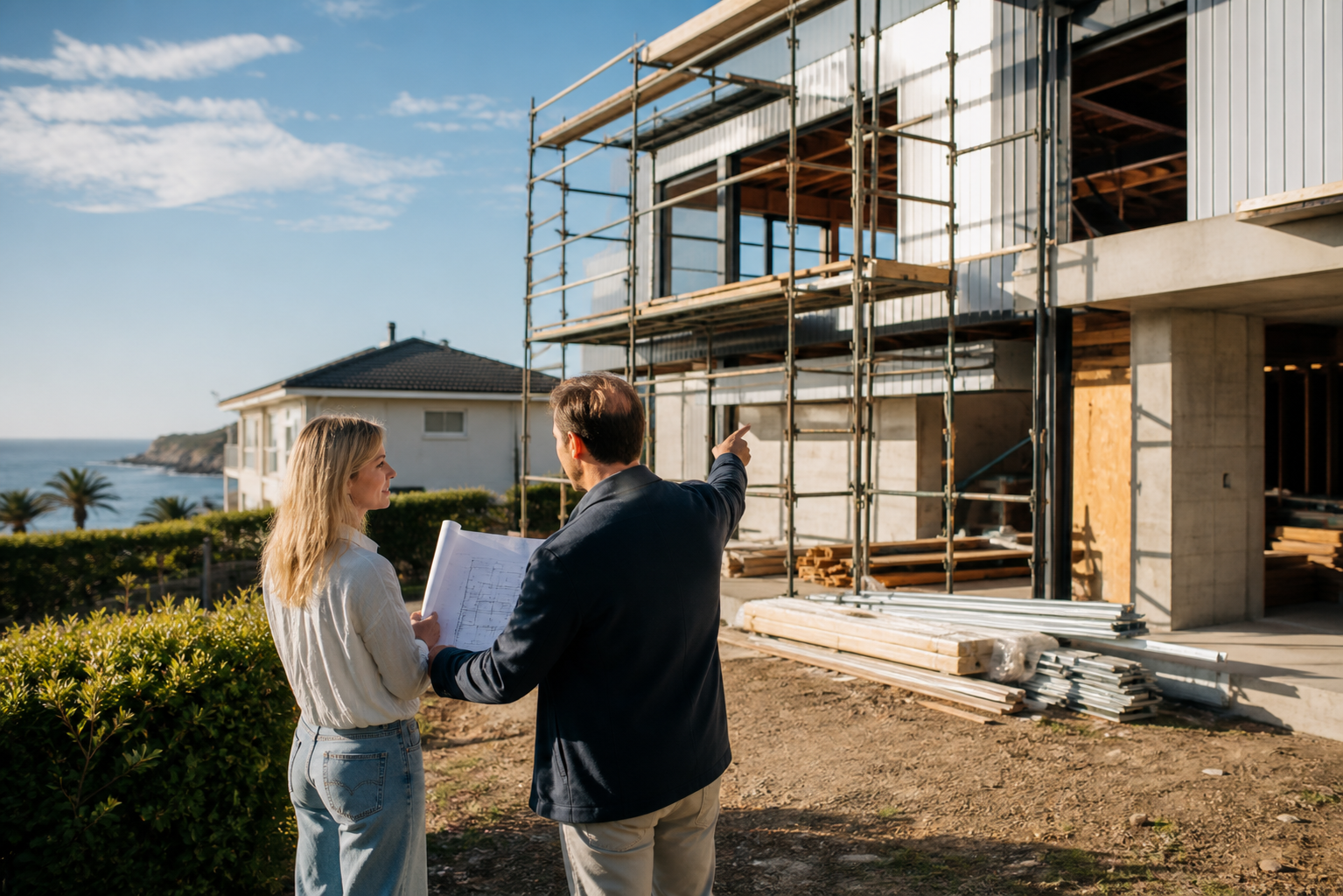
Managing progress payments and cost overruns on a Bronte renovation comes down to three things: a tight contract, a loan that matches the build stages, and a proper contingency buffer in cash or offset. Get those right and you massively reduce the risk of a half‑finished house, a nervous bank, or a household budget blow‑up.
In Bronte, renovation budgets are often six figures. On a $600,000 build, a sensible contingency is usually 10–20% ($60,000–$120,000) on top of your build cost, held separately from your day‑to‑day buffer. That’s in line with what we use for high‑end Eastern Suburbs projects.

How progress payments for a Bronte renovation actually work
Most Bronte renovations over about $200,000 will either run through a construction loan or a dedicated equity top‑up split. The money is never just handed to you in one lump sum.
A typical schedule on a major renovation might look like:
| Stage | % of contract | Example on $600k build |
|---|---|---|
| Deposit / planning | 5% | $30,000 |
| Demolition / strip‑out | 10% | $60,000 |
| Structural / framing | 25% | $150,000 |
| Lock‑up | 25% | $150,000 |
| Fix‑out | 25% | $150,000 |
| Practical completion | 10% | $60,000 |
Your builder invoices at each stage.
Your lender then releases funds when they’re satisfied the work is complete. For bigger stages they may send a valuer or ask for photos and council approvals.
For a good overview of the basics (with a different postcode flavour), have a quick skim of the Alexandria guide: /insights/managing-progress-payments-cost-overruns-alexandria-renovation.
The bank’s view vs the builder’s view
Your builder wants to be paid as early and smoothly as possible.
Your bank wants to see:
- The build is on budget and on time.
- The value of the works completed at least matches the amount drawn.
- You can still afford the final loan based on the APRA 3% buffer.
Your job is to make sure the contract, progress claims and lender conditions all line up.
Locking in a tight contract before you sign
You can’t fix a loose contract with a good loan.
Before you sign, push for:
- Clear progress stages – defined by actual work (e.g. “roof on, windows installed”) not vague dates.
- Realistic allowances (PCs and Provisional Sums) – especially for kitchens, bathrooms, glazing, retaining walls and rock excavation.
- A written variation process – price, time impact, when it’s payable, and whether your lender has to approve it first.
For Bronte‑scale projects, a quantity surveyor (QS) report is worth the money. It backs up the budget when your lender orders a valuation and helps flag under‑cooked allowances before they bite.
If you haven’t finalised how you’re drawing the money (construction loan vs equity top‑up), the Mascot explainer is helpful context: /insights/construction-loans-vs-equity-top-ups-mascot-renovation.
The strategy continues below
You've seen the problem and the groundwork — now unlock the exact steps our CPA-certified brokers use, including 4 more sections. Enter your email for instant, free full access.
Free access. No spam — unsubscribe anytime. Your details stay confidential.
Frequently asked questions
Talk to a CPA-certified broker
Free consultation, plain-English advice tailored to your situation.