
Article
How to Control Progress Payments and Cost Overruns on a Mascot Reno
Renovating in Mascot? Learn how to structure progress payments, build buffers and handle cost overruns before they blow up your budget or home loan.
Key Takeaway
Managing progress payments on a Mascot renovation means matching your builder’s payment schedule with your loan structure, cash buffer, and bank requirements, so you don’t run out of funds mid‑build. Cost overruns of 10–20% are common, especially on structural, compliance, and variations, making a contingency of at least 10–15% essential. By using a clear building contract, quantity surveyor reports, and multiple funding backstops, homeowners can keep control of both the budget and the bank throughout the project.
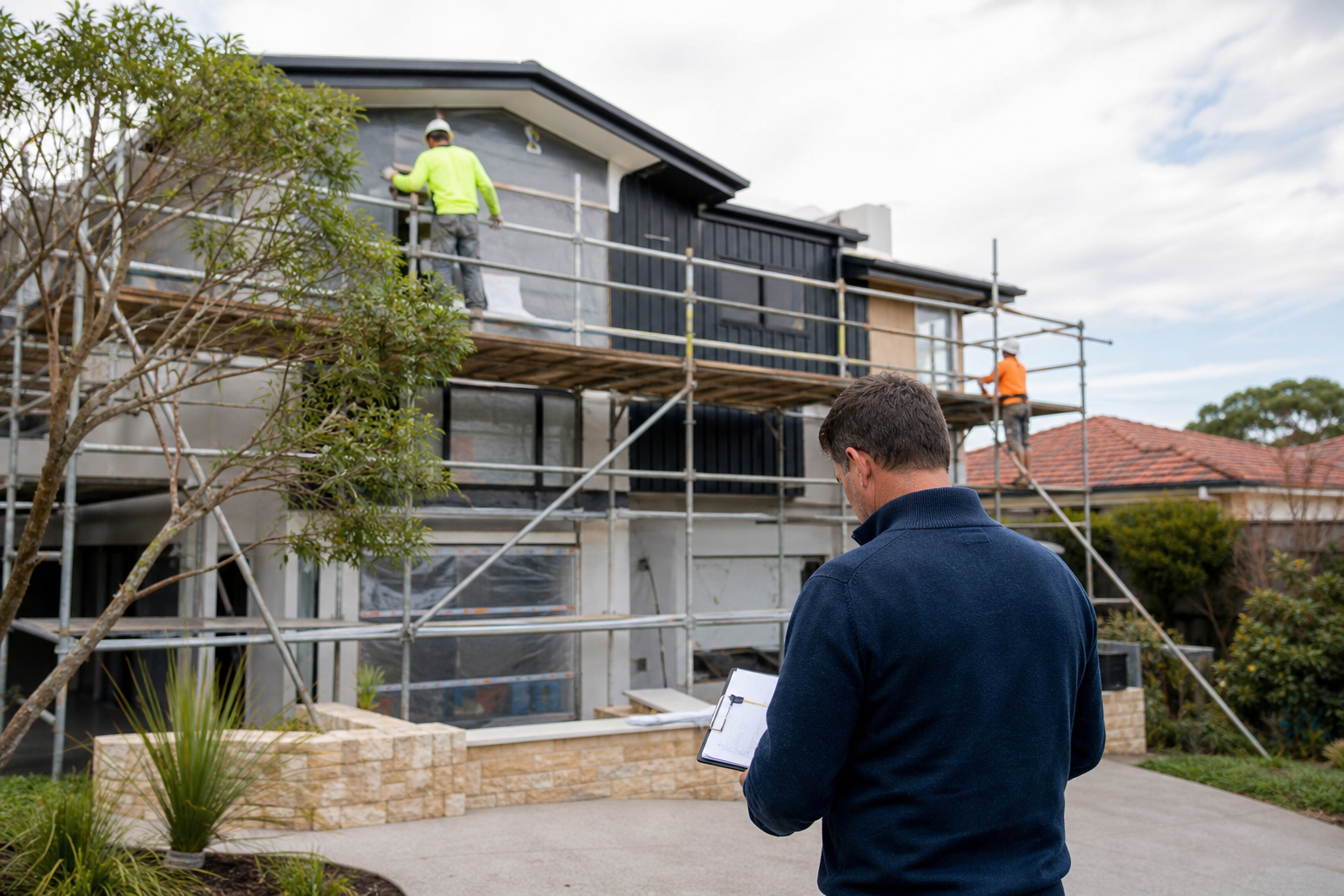
If you’re renovating in Mascot, managing progress payments well means aligning your builder’s payment schedule with your loan, cash buffer and bank rules so you never hit a “no cash, half‑built house” moment. Cost overruns of 10–20% are common on Sydney renos, so your plan has to assume blowouts will happen and give you clear levers to pull when they do.
This guide focuses on Mascot‑area renovations where you’re using a construction loan or equity top‑up, and the builder is paid in stages. By the end, you’ll know how to set up payments, monitor costs, and what to do this week to keep your renovation and finance under control.

1. How progress payments work on a Mascot renovation
1.1 The basic structure
On most Mascot renovations with a fixed‑price building contract, the builder is paid in stages known as progress payments. Typical stages are:
- Deposit
- Base / demolition / foundations
- Frame / structural
- Lock‑up (external shell finished)
- Fixing (internal linings, carpentry, services rough‑in)
- Practical completion
For construction loans, the bank or lender releases money at each stage rather than giving you the full amount upfront. They usually:
- Check an invoice from the builder
- Sometimes send a valuer or inspector
- Confirm the total drawdown remains within your approved limit and LVR
If you’ve used a simple equity top‑up instead of a construction loan, the bank may give you a lump sum; it’s then on you to manage the builder’s claims and your buffer.
For a refresher on when a full construction facility makes more sense than a simple top‑up, see Construction Loans vs Simple Equity Top‑Ups for Mascot Reno Projects and Construction loan or equity release: how to fund a luxury reno.
1.2 What the bank actually cares about
Lenders are mainly focused on four things:
- End value: Will the completed property value comfortably support the total debt at a safe LVR?
- Serviceability: Can you afford repayments once the loan is fully drawn, including the APRA 3% serviceability buffer on rates?
- Security position at each stage: Is the part‑completed property still reasonable security for the amount outstanding?
- Your contribution: Have your cash or equity contributions actually gone in when you said they would?
This is why banks are fussy about the building contract, your budget, and any big variations. From their perspective, uncontrolled cost overruns threaten both your cashflow and their security.
2. Setting up your Mascot reno for fewer nasty surprises
2.1 Get the contract and scope right upfront
Budget blowouts often start with a vague or optimistic contract. Before you sign:
- Push for a fixed‑price contract where practical (with clearly defined allowances).
- Make the scope detailed: finishes, PC items (appliances, tapware, tiles), and inclusions should be spelled out.
- Avoid low provisional sums (e.g. a $5,000 allowance for electrical that will obviously cost $10,000+).
- Clarify how variations will be priced, approved and invoiced.
The more detail you have now, the less room there is for “we didn’t include that” later.
2.2 Why a QS report is often worth it in Mascot
A quantity surveyor (QS) report can:
- Independently cost your renovation
- Break down materials, labour and contingencies
- Help your lender and valuer understand whether the budget is realistic
- Support depreciation claims if part of the property is income‑producing (speak to your tax adviser)
On a $300,000+ reno in Mascot, a QS fee (often $1,500–$3,000) can easily pay for itself by catching under‑costed items or unrealistic allowances before you’re locked in.
2.3 Build a genuine contingency – then quarantine it
For Mascot‑area projects, a 10–15% contingency on total build cost is sensible, higher if:
- You’re doing structural changes or second‑storey additions
- The house is older or has unknown services
- You’re moving walls, plumbing stacks or stairs
On a $350,000 renovation, that’s a $35,000–$50,000 buffer.
Crucially:
- Keep that buffer in a separate account or separate loan split.
- Treat it as “untouchable” for anything except genuine overruns.
- Run your personal budget as if the contingency doesn’t exist.
3. Aligning progress payments with your finance structure
3.1 Construction loan vs equity top‑up vs cash
A key decision is how you’ll actually pay each stage:
-
Construction loan
- Pros: Bank pays builder directly, interest only on drawn amounts, progress valuations help control risk.
- Cons: More paperwork, lender has more control, slower to change builder or scope.
-
Equity top‑up / refinance
- Pros: Lump sum in your account, simpler admin, more flexibility in dealing with builder.
- Cons: Easy to overspend, you pay interest on the full amount from day one.
-
Cash savings
- Pros: No extra interest, stronger negotiating position with builder.
- Cons: Drains buffers; risky if you’re self‑employed or income fluctuates.
Many Mascot clients end up with a hybrid: core build funded by construction loan, with finishes/variations from an equity split or cash. This matches the approach we explore more broadly in Construction loan or equity release: how to fund a luxury reno.
3.2 Example: Matching a Mascot reno budget to bank stages
Assume:
- Current Mascot house value: $1,400,000
- Existing loan: $700,000 (50% LVR)
- Planned renovation budget: $350,000 (builder), plus $50,000 contingency
- Total future loan (if fully borrowed): $1,100,000 (≈ 66% of post‑reno value if valuation hits $1,650,000)
A common structure:
- Construction loan limit: $350,000
- Separate loan split / offset cash: $50,000 contingency
Typical progress payment schedule might look like:
| Stage | % of Contract | Amount (on $350k) | How it’s funded |
|---|---|---|---|
| Deposit | 5% | $17,500 | Your cash / existing equity split |
| Base / foundations | 15% | $52,500 | Construction loan drawdown |
| Frame / structural | 20% | $70,000 | Construction loan drawdown |
| Lock‑up | 30% | $105,000 | Construction loan drawdown |
| Fixing | 20% | $70,000 | Construction loan + contingency if needed |
| Practical completion | 10% | $35,000 | Construction loan + remaining cash |
You’d check at each stage that:
- The total of all claims so far matches contract percentages.
- The bank’s updated valuation (if any) still supports the loan amount.
- Your contingency is still intact for later stages where overruns often bite (fixing and finishes).
3.3 Don’t forget living costs during the build
If you need to rent elsewhere while renovating, you’ll be juggling:
- Existing home loan repayments
- Construction loan interest (interest‑only during build)
- Rent on temporary accommodation
This is where having your overall home loan still competitive matters. If you haven’t reviewed your rate in a while, work through Is Your Mascot Home Loan Still Competitive? Use This One‑Week Checklist before locking in your reno finance.
The strategy continues below
You've seen the problem and the groundwork — now unlock the exact steps our CPA-certified brokers use, including 7 more sections. Enter your email for instant, free full access.
Free access. No spam — unsubscribe anytime. Your details stay confidential.
Frequently asked questions
Talk to a CPA-certified broker
Free consultation, plain-English advice tailored to your situation.