
Article
How to Control Progress Payments and Cost Overruns on a Rose Bay Renovation
A step‑by‑step guide to structuring, funding and monitoring progress payments on a high‑end Rose Bay renovation so you can keep control of cashflow, protect your buffers and handle cost overruns without panicking.
Key Takeaway
Managing progress payments on a high-end Rose Bay renovation means aligning your building contract stages with your construction loan drawdowns and keeping a 10–20% cash buffer for cost overruns. With construction input prices still rising 3–5% annually and lenders applying a 3% serviceability buffer, owners need fixed-price contracts, clear variation rules, and weekly cashflow tracking. The most effective safeguard is to lock in structure and buffers before demolition and document how any overruns will be funded and approved.

You keep control of progress payments and cost overruns on a high-end Rose Bay renovation by locking in a clear contract, matching it to your construction loan stages, and keeping a sizeable cash buffer in offset. The aim is simple: the builder stays paid, the bank stays calm, and you don’t drain the cash that keeps your household or business safe.
This guide is written for Rose Bay owners and investors who want a decision-grade framework you can act on this week – before demolition starts.
We’ll stay practical: how the bank actually releases funds, where budgets usually blow up, what to put in your building contract, and what to do the moment a cost overrun appears.
1. The Rose Bay renovation landscape: why progress payments matter more here
1.1 Why high-end Rose Bay projects are different
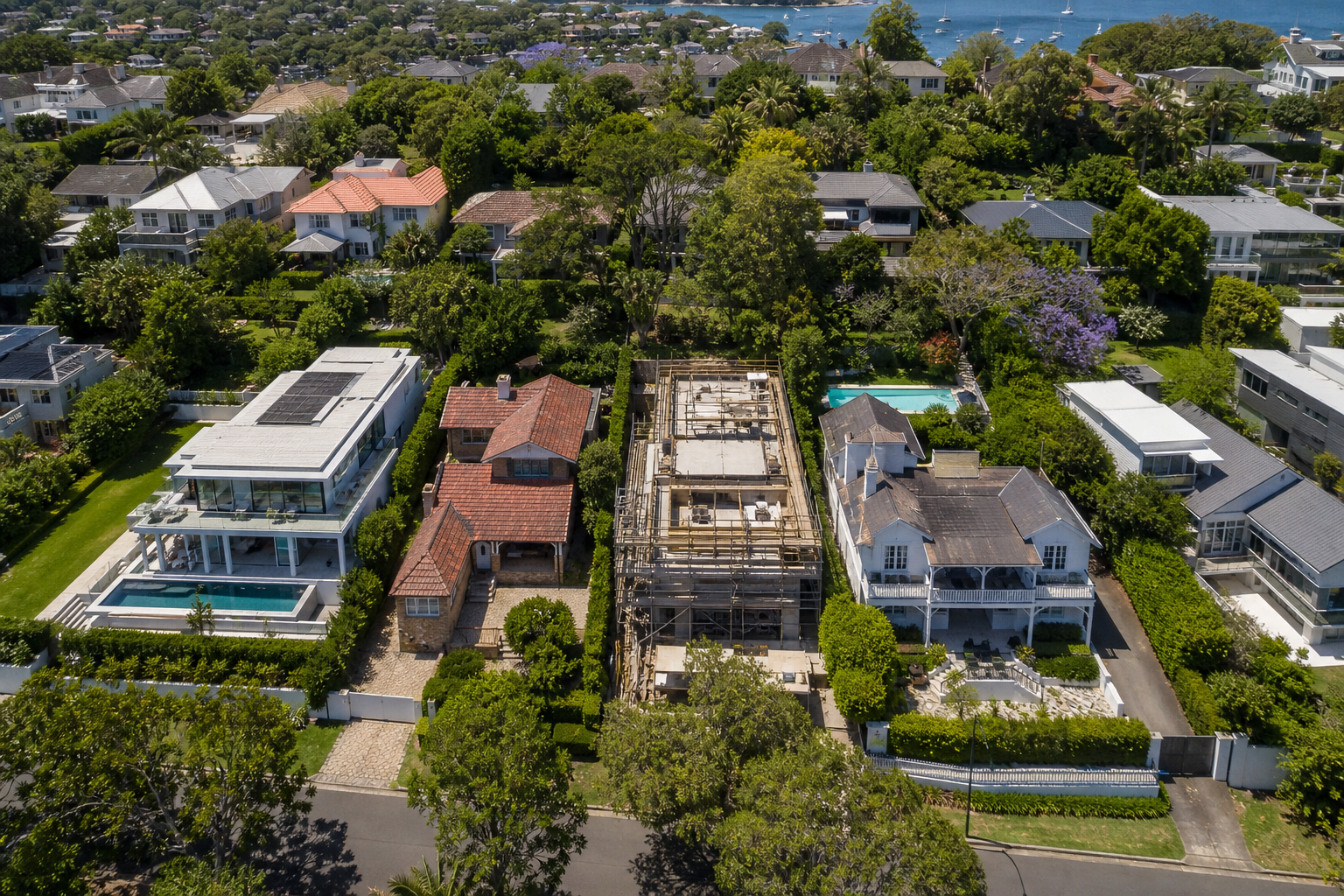
Rose Bay sits in Woollahra Council – one of Sydney’s highest-income, highly leveraged pockets. Renovation budgets here commonly run from $750,000 to $3 million+ for extensions, second-storey additions and near-rebuilds.
At that scale:
- The bank will almost always insist on a structured progress payment schedule.
- The valuation hinges on plans, specs and builder reputation.
- A 5–10% cost overrun can equal $100,000–$300,000, not $20,000.
That level of spend is more like a small development than a cosmetic refresh. The project can dominate your cashflow for 12–24 months, especially in a world of higher interest rates and rising building costs.
If you’re still weighing up structure, pair this guide with:
- How to Finance a Second‑Storey or Rear Extension in Rose Bay
- Construction Loans vs Simple Equity Top-Ups for Rose Bay Reno Projects
1.2 Cost pressures in construction right now
ABS Producer Price Indexes show strong upward pressure in construction inputs – petroleum, freight and building materials – driven by global supply shocks and labour constraints. Over a 12–18 month build, that can easily translate into:
- Higher quotes between initial budgeting and final contract
- Builders pushing harder for variations on materials and finishes
- Increased risk that your original contingency is too small
The message: if you planned this renovation in 2024 with a loose budget and are only now signing in 2026, go back and re-test the numbers. Allow for 10–20% contingency on total project cost, not 5%.
2. How progress payments work on a Rose Bay renovation
2.1 The basic mechanics
On a typical construction loan, the bank will:
- Approve a total facility based on land value plus construction cost.
- Hold the construction funds back and release them in stages.
- Pay the builder directly at each stage once conditions are met (inspections, invoices, sometimes a valuer sign-off).
Common stages for a major renovation or second-storey addition:
- Deposit
- Base/structural
- Frame
- Lock-up
- Fixing
- Practical completion
Your progress payment schedule sits inside your building contract. Your lender then maps its own internal stages to those contract stages. Misalignment here is one of the most common stress points.
For a deeper generic overview, see Mastering Progress Payments and Cost Overruns on a Coastal Renovation.
2.2 Example: $1.8m Rose Bay renovation – staged drawdowns
Assume:
- House currently worth: $4.5m (unrenovated)
- Loan today: $2.1m
- Renovation contract: $1.8m (inclusive of GST)
- Contingency: $200k (cash in offset)
- Bank approves construction facility to $3.7m total
Indicative progress claim schedule:
| Stage | % of contract | Amount (AUD) | Cumulative (AUD) |
|---|---|---|---|
| 1. Deposit | 10% | $180,000 | $180,000 |
| 2. Base/Structural | 20% | $360,000 | $540,000 |
| 3. Frame | 20% | $360,000 | $900,000 |
| 4. Lock-up | 20% | $360,000 | $1,260,000 |
| 5. Fixing | 20% | $360,000 | $1,620,000 |
| 6. Practical Comp. | 10% | $180,000 | $1,800,000 |
The bank might require you to fund the first $200,000–$300,000 from your own cash or equity before their money starts flowing. That’s why planning the order of drawdown – and how long your own cash is exposed – matters so much.
2.3 How interest and repayments change during the build
You generally pay interest-only on the drawn balance during construction. On a 30-year P&I loan with a construction facility component:
- Existing loan: $2.1m
- Construction portion drawn over 12 months: up to $1.6m–$1.8m
- Rate: say 6.5% p.a. (illustrative only – lenders vary)
Rough interest-only cost at full draw:
- Total balance: $3.9m
- Annual interest: ~$253,500
- Monthly: ~$21,125
The key is that repayments ramp up as each stage is paid. You need to model this against your household cashflow, taking into account the APRA-style 3% buffer lenders use and higher living costs (ABS LCIs show 3.7–4.7% annual rises across household types).
If you haven’t done a detailed affordability walkthrough recently, revisit the principles in Working Out If a Rose Bay Home Is Actually Affordable.
3. Setting up your building contract so the finance actually works
3.1 Fixed-price vs cost-plus in Rose Bay
For owner-occupiers and long-term investors, a genuinely fixed-price contract with clear inclusions is almost always safer than cost-plus in this part of Sydney.
Compare the two structures:
| Feature | Fixed-Price Contract | Cost-Plus Contract |
|---|---|---|
| Price certainty | Strong (subject to variations) | Weak – total cost can keep rising |
| Lender acceptance | High – easier to value and fund | Mixed – some lenders cautious |
| Builder risk | Higher – wears more cost risk | Lower – passes more cost onto owner |
| Owner oversight needed | Medium – focus on variations | High – line-by-line checking of costs |
| Best suited to | High-end renos where scope is well defined | Complex, evolving designs with trusted builder |
If your architect and builder insist on cost-plus due to complexity, you need even bigger buffers and much tighter tracking.
3.2 Aligning contract stages with lender stages
Your goal: no stage where the builder expects $300,000 and the bank is only willing to release $200,000 based on their internal milestones.
Actions this week:
- Ask your broker to obtain your lender’s standard construction stage schedule.
- Share that with your builder and architect before you sign.
- Adjust the contract percentages or sub-stage definitions so:
- The builder’s stage claim amounts fit within the lender’s stage caps.
- There’s no massive jump between stages that depends on a subjective assessment.
3.3 Variations: small paperwork, huge financial impact
Most budget blowouts come from variations. On a $1.8m contract, 10% in variations is $180,000.
You want your contract to state clearly:
- How variations are requested (in writing, with cost and time impact).
- Who can approve (both owners if joint borrowers).
- When they are paid (ideally folded into later stages, not immediate cash calls).
A good rule is: no variation is approved until you know exactly how it will be funded – via contingency, redraw, extra construction funds or post-completion works.
The strategy continues below
You've seen the problem and the groundwork — now unlock the exact steps our CPA-certified brokers use, including 9 more sections. Enter your email for instant, free full access.
Free access. No spam — unsubscribe anytime. Your details stay confidential.
Frequently asked questions
Talk to a CPA-certified broker
Free consultation, plain-English advice tailored to your situation.