
Article
How Mascot Property Types Shape Your Home Loan Options This Year
Mascot isn’t a one‑size‑fits‑all postcode for lenders. High‑density towers, flight‑path noise, small studios and mixed‑use buildings all trigger different bank rules. This guide shows how your specific Mascot property type changes borrowing power, LVR limits and approval risk – and what to check this week before you sign or refinance.
Key Takeaway
Mascot property types significantly affect home loan approval, with lenders often capping loan‑to‑value ratios on high‑density apartments, small studios and flight‑path‑affected homes. In dense postcodes, some buildings may be on lender restriction lists, limiting LVRs to around 70–80% or excluding them entirely. Buyers and refinancers should check building‑specific policies, noise and floor‑area rules, and mixed‑use zoning before committing, and structure finance to allow buffers and alternative lender options if a valuation comes in low.
This topic is covered in full on Tailored Loans Sydney
Mascot isn’t a one‑size‑fits‑all postcode for lenders. High‑density towers, flight‑path noise, small studios and mixed‑use buildings all trigger different bank rules. This guide shows how your specific Mascot property type changes borrowing power, LVR limits and approval risk – and what to check this week before you sign or refinance.
Read the full guide on tailoredloans.sydneyMascot property types change how banks will lend — even within the same street. High‑density towers, flight‑path noise, small studios and mixed‑use buildings each trigger different policy rules, LVR caps and valuation behaviour. If you’re buying or refinancing in Mascot, you need to understand how the exact property you pick affects borrowing power, approval risk and future flexibility.
This guide explains how lenders view key Mascot property types, typical policy traps, and the checks you can run this week so your finance actually fits the home or investment you’re targeting.
1. Why Mascot properties are treated differently by lenders
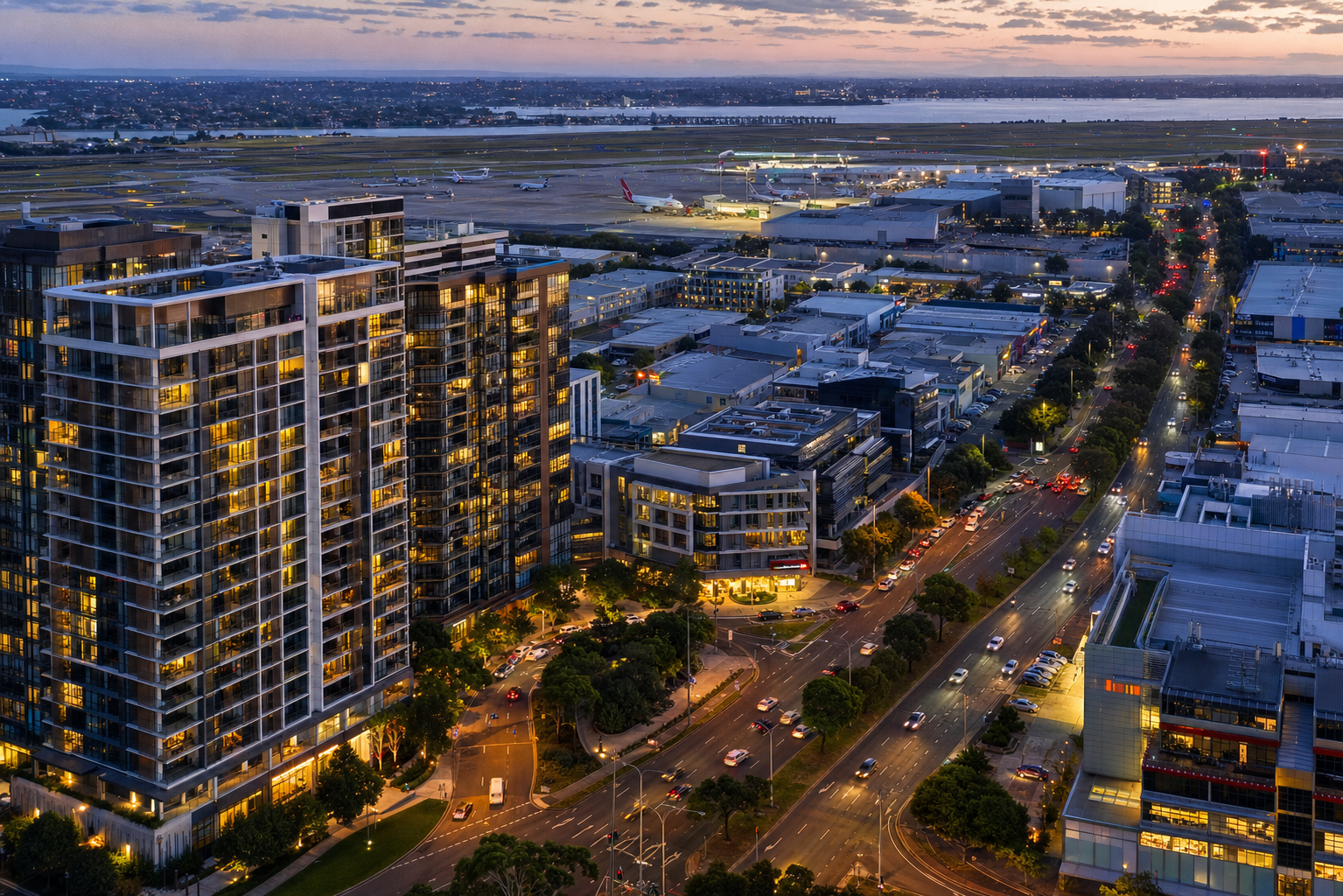
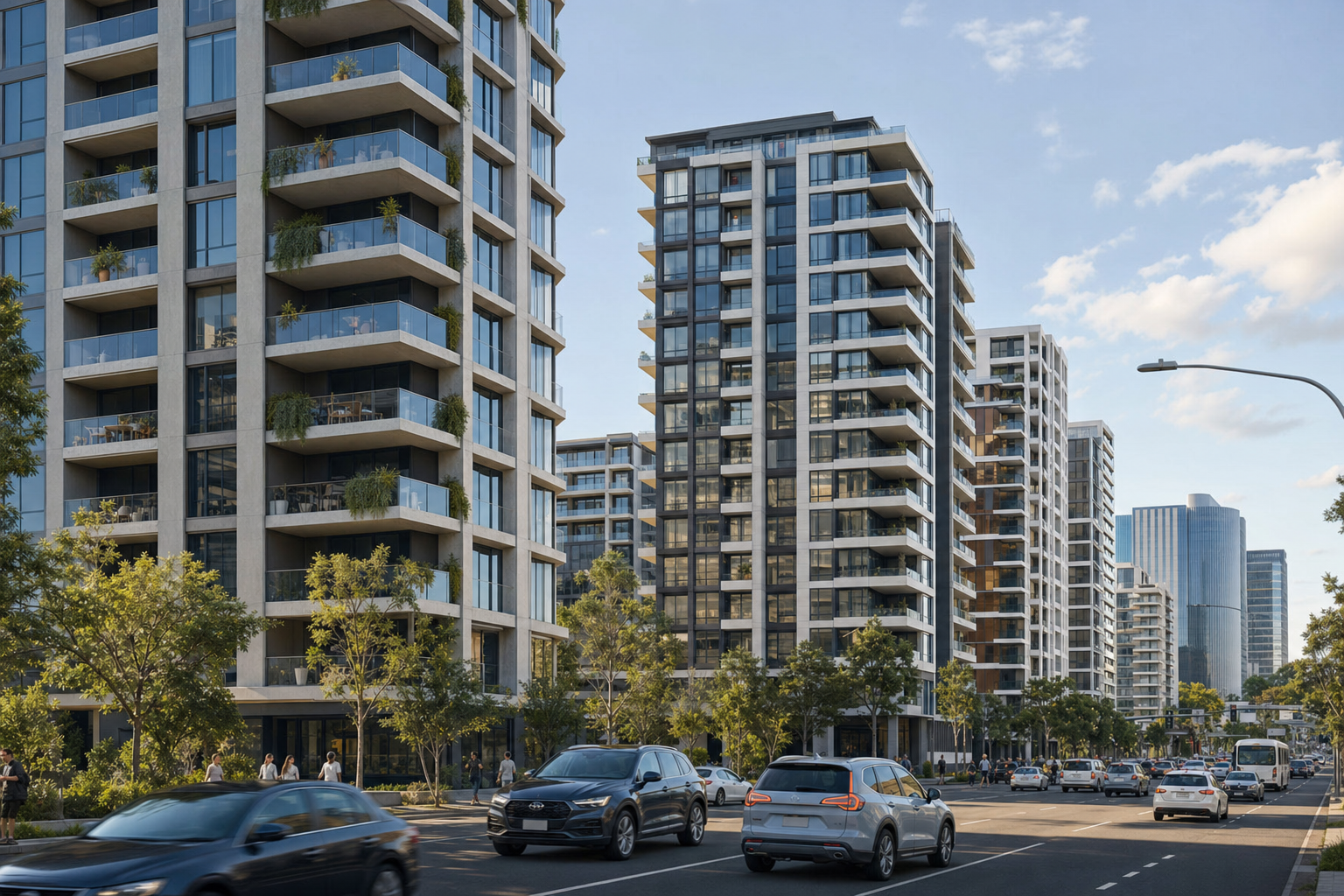
Mascot sits in a dense, airport‑adjacent corridor with a lot of newer apartments, busy roads and commercial activity. For lenders, that means higher concentration and resale risk than a typical low‑rise suburb.
Several things make Mascot “non‑standard” in bank credit models:
- High‑density classification – many complexes trigger high‑density policies (e.g. >50–100 units or specific postcodes). As seen in nearby Green Square, this often leads to building‑specific restriction lists and tighter LVRs (src: /insights/local-green-square-broker-building-knowledge).
- Airport and flight‑path noise – properties under heavy flight paths can raise valuation and resale concerns, especially for houses and low‑rise units that don’t have great sound insulation.
- Mixed‑use and commercial interfaces – retail podiums, serviced apartments, hotels and busy roads can all push a property into “non‑standard” territory.
- Building‑level risk – lender experiences with cladding, leaks or poor sinking funds in one building can lead to stricter rules for that exact address, even if neighbouring towers look identical (similar pattern noted in Rose Bay: /insights/rose-bay-property-types-lending-rules).
For Mascot, the message is clear: property risk management must include checks for building‑specific lender restrictions and local valuation behaviour, not just generic LVR rules (src: /insights/what-local-knowledge-looks-like-mortgage-broking).
2. High‑density Mascot apartments: what banks actually worry about
Most Mascot apartments sit in large complexes. Lenders worry less about you as a borrower and more about how easily they could resell that unit if they ever had to.
2.1 Common high‑density lending rules
Policies vary by lender and change regularly, but typical high‑density settings in Mascot‑style postcodes include:
- Lower maximum LVR – many lenders cap at 80% LVR, and some at 70–75% for specific buildings.
- Stricter valuation approach – valuers may be conservative, especially if there’s a lot of similar stock on the market.
- No LMI above certain LVRs – some lenders simply won’t use Lenders Mortgage Insurance (LMI) for high‑risk buildings, effectively blocking >80% loans.
- Income and deposit quality focus – tighter on overtime, bonuses or self‑employed income, because they want strong borrowers in higher‑risk buildings.
In dense apartment markets, this can extend to outright exclusions for some buildings (defects, cladding, sinking fund issues) or temporary limits until issues are resolved (src: /insights/common-first-home-off-the-plan-mistakes-green-square).
2.2 Example: LVR impact on a $750,000 Mascot apartment
Assume you’re buying a $750,000 two‑bed unit in a large Mascot complex.
- Buyer A: lender treats building as standard, allows 90% LVR with LMI.
- Minimum deposit (excl. costs): $75,000.
- Buyer B: lender flags building as high‑density; caps at 80% LVR.
- Minimum deposit: $150,000.
Same property, same price, but the building classification doubles the deposit needed.
2.3 Checks you can run this week
In the next seven days, you can materially reduce risk by:
- Getting a broker to run the exact building against multiple lender policy engines, not just postcode.
- Asking specifically: “Are there LVR caps, LMI bans or valuation issues on this complex?”
- Reviewing the strata report for: defect history, fire and cladding reports, insurance, and sinking fund strength.
If you’re deciding between buildings, these checks can be the difference between a smooth 90% LVR approval and a painful 70–80% cap.
3. Mascot flight‑path properties: how noise affects lending
Lenders don’t have a single “flight‑path policy”, but airport noise shows up indirectly through valuations and resale risk.
3.1 How valuers treat flight‑path risk
Valuers look at:
- Noise contour maps and insulation – double glazing, modern construction and proper sealing help.
- Comparable sales – if noisy streets consistently sell for less, that feeds into conservative vals.
- Market depth – if there are plenty of buyers despite noise (common near Mascot station), the risk is lower.
The result is usually lower valuations, not outright lender bans. That matters because the bank lends against the lower of price or valuation.
3.2 Worked example: valuation shortfall on a flight‑path home
You agree to buy a house near the airport for $1,500,000. Your lender will go up to 90% LVR, and you have $200,000 deposit plus costs.
- Target loan: 90% of $1,500,000 = $1,350,000.
- Suppose the valuer comes back at $1,420,000 due to noise.
- Max loan at 90% of valuation: $1,278,000.
- Shortfall: $1,350,000 – $1,278,000 = $72,000 extra cash required.
Without a buffer, that shortfall can kill the deal.
3.3 Practical moves if you’re under the flight path
This week you can:
- Ask your broker to order an upfront valuation where possible before you go unconditional.
- Build in a minimum 5–10% cash buffer above your ideal deposit to handle shortfalls.
- Consider negotiating slightly lower offer prices on noisier streets to give you a valuation safety margin.
If you work in aviation or with complex income, combine this with the strategies in /insights/complex-income-expat-aviation-borrowers-mascot so income and property risk don’t stack against you at once.
The strategy continues below
You've seen the problem and the groundwork — now unlock the exact steps our CPA-certified brokers use, including 8 more sections. Enter your email for instant, free full access.
Free access. No spam — unsubscribe anytime. Your details stay confidential.
Frequently asked questions
Talk to a CPA-certified broker
Free consultation, plain-English advice tailored to your situation.