
Article
Financing Mixed‑Use, Shop‑Top Housing and Live–Work Properties Safely
How to get finance approved for mixed‑use, shop‑top housing and live–work properties in Australia, without over‑stretching your risk or ruining future flexibility.
Key Takeaway
Mixed‑use, shop‑top housing and live–work properties are harder to finance than standard homes because lenders see their commercial components as higher risk and often cap LVRs around 60–80%. Buyers should confirm zoning, use restrictions, floor‑area ratios and GST status, then match lender type (retail, specialist or commercial) to how much of the property is residential. A practical step this week is to model repayments at rates 3% higher and ensure buffers of 3–12 months before committing.

This topic is covered in full on Tailored Loans Sydney
How to get finance approved for mixed‑use, shop‑top housing and live–work properties in Australia, without over‑stretching your risk or ruining future flexibility.
Read the full guide on tailoredloans.sydneyMixed‑use, shop‑top housing and live–work properties can be fantastic in real life – walk downstairs to your café, lease a shop on a busy strip, or live above your own studio. But from a lender’s perspective, they sit in the grey zone between residential and commercial, and that’s where a lot of finance applications come unstuck.
In lending terms, a mixed‑use or shop‑top property is any place where a meaningful portion is used (or can be used) for commercial activity – a ground floor shop with an apartment above, a warehouse with a residence at the back, or a live–work loft that’s zoned for both. Banks generally treat these as higher risk than a standard house or unit, so they limit how much they’ll lend, scrutinise the zoning, and sometimes push you into commercial-style terms.
This guide walks through how these properties are classified, how banks actually assess them, and the practical steps you can take this week to get finance approved safely – without blowing up your cashflow or tax position.
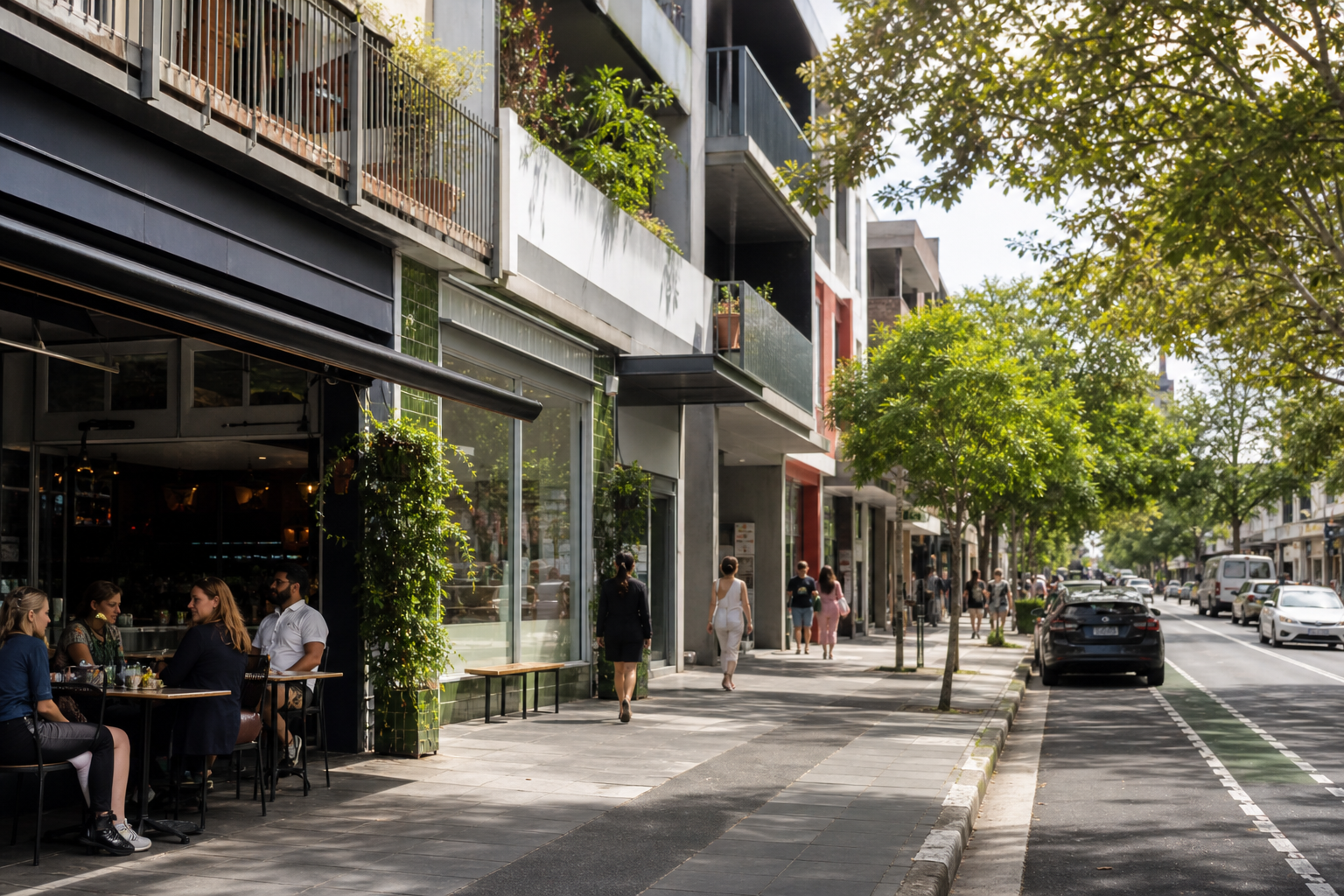
1. What counts as mixed‑use, shop‑top and live–work in lending land?
1.1 Working definitions in plain English
While each council and lender uses its own jargon, most properties fall into one of these buckets:
- Pure residential – Houses, townhouses, standard apartments with no commercial component.
- Mixed‑use / shop‑top housing – A building with a clearly separate commercial part (often ground floor) and one or more residential parts (usually above or behind).
- Live–work / home occupation – A single space or dwelling where residential and business uses are integrated (e.g. warehouse loft, artist studio, professional suite with residence).
For lending, the critical details are:
- Zoning – Residential (R), mixed‑use, business, commercial or industrial under local planning laws.
- Permitted uses – Whether council allows permanent residential use, short‑stay only, or restricts floor‑area used as a business.
- Physical layout – Separate titles or one title; separate entrances; proportion of floor area that is commercial.
These determine whether your loan can be written under residential lending policy or must be assessed as commercial, which is usually more conservative.
1.2 Why banks see these properties as riskier
Lenders attach higher risk to these assets because:
- Resale market is narrower – Fewer buyers want to live above a shop or run a business from home.
- Vacancy and tenant risk – If the shop sits empty, income drops and the property can be harder to sell.
- Specialised use – A fitted‑out café or medical suite costs more to repurpose.
- Regulatory risk – Councils can change parking, loading or planning rules.
That feeds into tighter credit policy: lower maximum loan‑to‑value ratios (LVRs), tougher serviceability and more conditions in your approval.
2. How lenders actually assess mixed‑use and shop‑top properties
2.1 The ‘how much is residential vs commercial’ test
The first filter most lenders use is the proportion of residential floor area and income.
- If residential is clearly dominant (for example 70–80%+ of the area and rent), many mainstream banks may still write the loan under residential policy, often with an LVR cap (say up to 80%, sometimes lower).
- If commercial is significant or specialised (e.g. restaurant fit‑out, medical practice), the deal is usually pushed into commercial lending – even if you plan to live upstairs.
Typical (illustrative) policy lines you might see:
- Residential component ≥70%: some lenders treat as residential with conditions.
- Residential 50–70%: case‑by‑case, often residential with lower LVR or commercial policy.
- Residential <50%: almost always commercial.
Each bank’s threshold is different, and they can change without notice, so treat these ranges as a guide only.
2.2 Residential vs commercial loan treatment – what changes
Here’s how residential and commercial treatment typically differ.
| Feature | Residential treatment (indicative) | Commercial treatment (indicative) |
|---|---|---|
| Max LVR | 80–90% (sometimes 95% with LMI) | Often 60–75%, sometimes 80% with strong profile |
| Lenders Mortgage Insurance | Yes above 80% (residential LMI) | Often not available; risk‑priced margin instead |
| Loan term | Up to 30 years, sometimes 35 | Often 15–25 years; shorter IO periods |
| Assessment | Household serviceability, APRA 3% buffer | Cashflow & DSCR (debt service coverage ratio) |
| Documentation | Full‑doc or alt‑doc, standard home loan docs | Cashflow statements, leases, often more detailed info |
| Pricing | Sharper owner‑occupier rates usually available | Higher rates and/or fees, especially for smaller loans |
| Security type | 1st mortgage residential | 1st mortgage commercial or mixed‑use security |
Table is illustrative only – not a quote or offer. Live policy and pricing vary by lender and over time.
The key is: a property that looks like a home can still be treated like a commercial property when it hits the bank’s credit system.
2.3 Valuation: what the valuer is really looking at
The valuer’s report can make or break your deal. For mixed‑use and shop‑top, they will focus on:
- Highest and best use – Is the main value driven by the residence, the shop income, or both together?
- Market comparables – Are there enough recent sales of similar properties nearby to support the price?
- Lease terms – If there’s a shop tenant, what’s the rent, term, options and outgoings? A vacant shop is riskier.
- Zoning and overlays – Flood risk, heritage overlays, parking restrictions and any use limitations.
For complex sites – for example with heritage or development upside – the issues can overlap with those in heritage and overlay assessments; see our related guide on how valuers think about those risks (/insights/financing-harbourside-rose-bay-homes-lending-rules-risks).
3. Common finance traps with mixed‑use and live–work properties
3.1 Assuming any bank will lend 80–90% like a standard home
Many buyers run affordability numbers on a standard home loan (say 80–90% LVR, 30‑year term) then discover late in the process that the bank:
- Will only lend 60–70% against the property; or
- Will require a commercial loan with a 15–20 year term and higher rate.
That can blow up your deposit assumptions and monthly repayments.
Worked example (illustrative only):
- Contract price: $1,200,000 (inner‑city shop‑top).
- Expected home‑style loan at 80% LVR: borrow $960,000, deposit $240,000.
- Actual bank policy after valuation: max 65% LVR on commercial terms.
- Max loan: $780,000.
- Required cash/equity: $420,000 plus costs.
If you only have $260,000 saved (including costs), you now have a $160,000 gap to fill – often at short notice.
3.2 Not checking zoning and use before signing
The contract and council planning certificate will reveal critical details like:
- Zoning (e.g. B1 Neighbourhood Centre, B4 Mixed Use, IN1 General Industrial).
- Whether residential use is permitted as of right or only as a secondary use.
- Any specific restrictions on hours of operation, noise or parking.
If council or the building’s development consent restricts permanent residential use, many lenders will decline outright – especially for live–work lofts that are supposed to be used as creative studios or offices with ancillary living.
3.3 Mixing home and business debt in one big facility
Because these properties blur home and business, a lot of borrowers are tempted to:
- Use a single large loan for both the property and business set‑up or equipment.
- Treat the home loan as a de‑facto overdraft for the business.
That often backfires:
- Tax deductions become messy because loan purpose, not security, drives deductibility (see multiple facts across our knowledge base).
- If the business hits a rough patch, your family home is on the line.
A better approach is usually to keep separate loan splits by purpose – home, investment and business – something we discuss in more depth when weighing up home equity vs dedicated business facilities (/insights/using-home-equity-vs-equipment-finance-risks-costs).
The strategy continues below
You've seen the problem and the groundwork — now unlock the exact steps our CPA-certified brokers use, including 7 more sections. Enter your email for instant, free full access.
Free access. No spam — unsubscribe anytime. Your details stay confidential.
Frequently asked questions
Talk to a CPA-certified broker
Free consultation, plain-English advice tailored to your situation.