
Article
Making Sense of Older Duplexes, Semis and Knockdown Sites in Dover Heights
How lenders really view older duplexes, semis and knockdown sites in Dover Heights – and how to structure your finance so you don’t get caught short mid‑project.
Key Takeaway
Older duplexes, semis and knockdown sites in Dover Heights are usually valued by lenders on current use and comparable sales, with land value and R2 or R3 zoning driving most of the number. Many banks restrict lending above 80% LVR for clear development sites or require construction‑style facilities for major knockdown‑rebuilds. Buyers should stress‑test repayments 3% above current rates, hold 6–12 months of buffers, and confirm lender treatment before bidding to avoid funding gaps.
This topic is covered in full on Tailored Loans Sydney
How lenders really view older duplexes, semis and knockdown sites in Dover Heights – and how to structure your finance so you don’t get caught short mid‑project.
Read the full guide on tailoredloans.sydneyMost older duplexes and semis in Dover Heights don’t get knocked down because they’re “too old”. They get knocked down because the numbers work better as land than as a home.
For lenders, that difference matters. An older duplex that looks like a dream development site to you can look like a higher‑risk asset to a bank. Understanding how valuations and lending rules work on these properties is the difference between a smooth settlement and scrambling for extra cash a week before you’re due to complete.
In Dover Heights, older duplexes, semis and knockdown sites are typically valued on current use, comparable sales and land value (especially zoning), while lenders decide how far they’ll go based on risk, your buffers and your exit plan. If you’re buying or refinancing this quarter, you need to know whether your property will be treated as a standard home, a borderline development site or something in between.
What I tell my clients: don’t assume the bank sees your block the same way your architect or buyer’s agent does. You need a lending plan that matches the current state of the property and your next move.
1. How lenders really see older duplexes, semis and knockdown sites
1.1 The quiet shift from “house” to “land value”
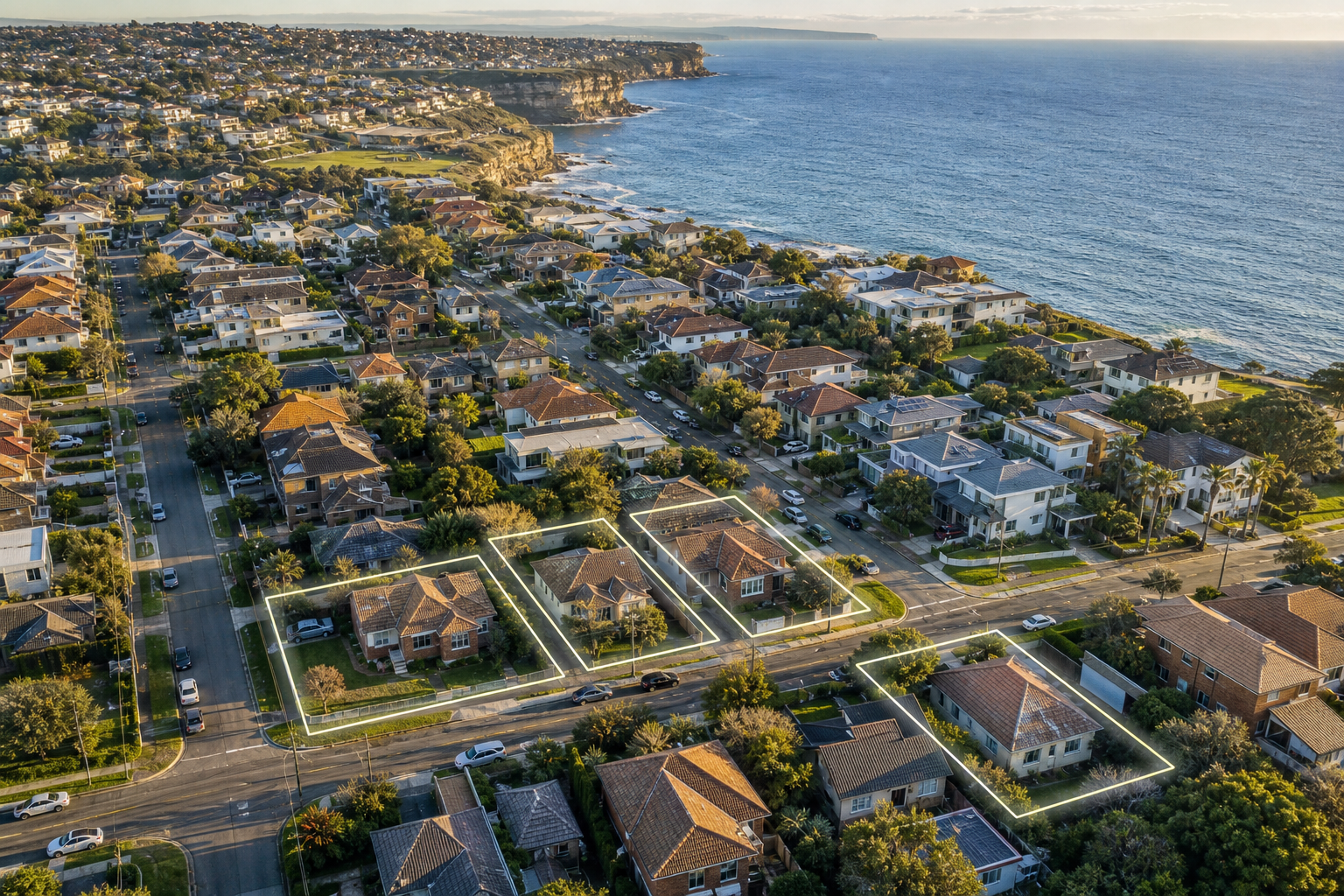
Take a typical Dover Heights semi or older duplex pair: tired façade, original kitchen, maybe 1950s wiring, on 350–450 m² of R2 land. To a local family, it’s an upgrade project. To a builder‑developer, it’s a potential knockdown.
Valuers and lenders are asking three questions:
- What is it today? Single dwelling, attached dwelling, two registered titles, or one title with dual occupancy?
- Who’s the likely buyer today? Owner‑occupier, investor, or small developer?
- Is the land more valuable than the building? If the building is functionally obsolete, the land drives the value.
When most of the value is in land, lenders become more sensitive to zoning, easements, overland flow, and any “flag” that the property is really a development site, not a long‑term residence.
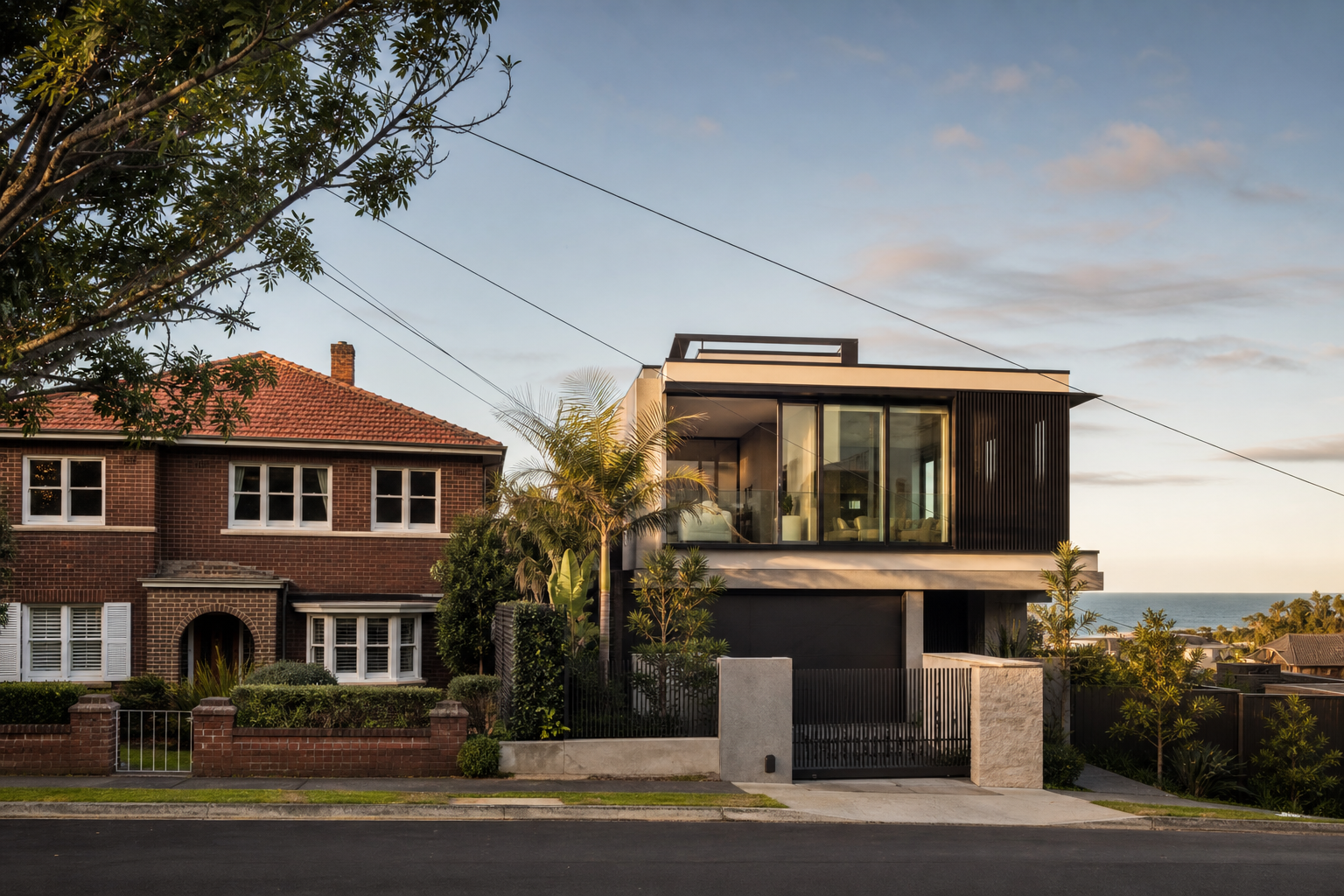
1.2 When your semi becomes a “development site” in the bank’s eyes
You don’t need DA approval for a lender to reframe your purchase as a development site. Common triggers include:
- Agent marketing it explicitly as a knockdown‑rebuild or “development opportunity”.
- Obvious structural issues or severe disrepair.
- Existing non‑conforming works (e.g. unapproved granny flat or excavation).
- Very high land‑to‑improvement ratio at the contract price.
Some lenders will still treat it as a standard residential security up to 80% LVR. Others may:
- Cap LVR at 70–75%.
- Require higher valuation scrutiny or a short‑form feasibility.
- Decline altogether if they think your stated use doesn’t match reality.
This is one of the reasons I argue in /insights/specialist-vs-generalist-mortgage-broker-dover-heights that Dover Heights borrowers often need a specialist, not a generalist. A generic broker may not spot the moment your “house” becomes “land” in a credit assessor’s mind.
2. Valuation basics for older duplexes, semis and knockdown sites
2.1 How valuers approach these properties
Most lender‑ordered valuations in Dover Heights will use a mix of:
- Direct comparison: recent sales of similar semis/duplexes on similar land.
- Summation: land value plus depreciated building value (used more when land clearly dominates).
- Highest and best use overlay: particularly for older duplex pairs on larger blocks.
Key drivers of the number:
- Land size, shape and slope (steep fall to the rear can hurt build costs).
- Zoning and controls (typically R2 Low Density Residential in Dover Heights; R3 pockets closer to main roads).
- Street character and existing built form (attached vs free‑standing neighbours).
- Quality and condition of existing structure.
- Vehicle access and parking potential.
What surprises buyers most is how conservative valuers can be when the market is hot. In an area where buyers are paying premiums for knockdown potential, valuers still need to justify their figure against settled sales, not hopeful list prices.
2.2 Typical valuation vs purchase price gaps
In my files, a few patterns keep appearing:
- Well‑located but dilapidated semi – buyers pay a premium for land and potential. Valuers sometimes come in 2–5% under contract, especially if the last comparable sale was six months ago.
- Old duplex on two titles – if clearly separated titles, valuers can sometimes support strong prices, but will still anchor to recent duplex sales, not raw land.
- Clear development play (wide frontage, R2 on 500+ m²) – where builders are active, purchase prices can run well ahead of “owner‑occupier” comps. Down‑vals of 5–10% aren’t rare in this micro‑segment.
A 5% gap on a $4m purchase is $200,000. If you’re at 80% LVR based on contract, and the valuer comes in 5% lower, your effective LVR for the bank jumps above policy and somebody has to plug the difference – you or a more flexible lender.
2.3 Quick worked example: down‑valuation pain
- Contract price: $4,000,000
- Your planned LVR: 80% → bank loan $3,200,000, deposit $800,000.
- Valuation returns: $3,800,000 (5% under).
Bank now lends 80% of $3.8m = $3,040,000.
You still have to pay the vendor $4,000,000, so your required cash/equity becomes:
- $4,000,000 – $3,040,000 = $960,000.
You’re now $160,000 short compared with your plan.
This is why I push clients to test at least two valuation pathways when buying premium sites, and why I often recommend pre‑work well before auction – similar to the planning we run in /insights/financing-knockdown-rebuild-when-highly-leveraged-premium-block.
The strategy continues below
You've seen the problem and the groundwork — now unlock the exact steps our CPA-certified brokers use, including 5 more sections. Enter your email for instant, free full access.
Free access. No spam — unsubscribe anytime. Your details stay confidential.
Frequently asked questions
Talk to a CPA-certified broker
Free consultation, plain-English advice tailored to your situation.