
Article
Downsizing With Two Homes At Once: Overlap, Bridging Loans And Risk
Thinking about downsizing but worried about briefly owning two homes? This guide explains how overlap works, bridging loans, serviceability tests, cash buffers and a one‑week action plan to reduce risk before you commit.
Key Takeaway
Owning two homes temporarily during a downsizing move is feasible if borrowers tightly control the overlap period, serviceability, and cash buffers. Australian lenders usually assess bridging loans using an end-debt position and apply at least a 3% serviceability buffer on rates, while around 30–40% of net income on housing costs is a practical stress limit. Downsizers should model a 10–15% sale price shortfall, three months of double-holding costs, and confirm bridging capacity with a broker before committing to a purchase contract.

This topic is covered in full on Tailored Loans Sydney
Thinking about downsizing but worried about briefly owning two homes? This guide explains how overlap works, bridging loans, serviceability tests, cash buffers and a one‑week action plan to reduce risk before you commit.
Read the full guide on tailoredloans.sydneyOwning two homes temporarily while you downsize is possible, but only safe if you tightly manage the overlap period, your borrowing capacity and your cash buffer. In practice that means knowing your numbers for a bridging loan, planning a clear exit from the old home, and stress‑testing for delays or a lower‑than‑hoped sale price before you sign any contract.
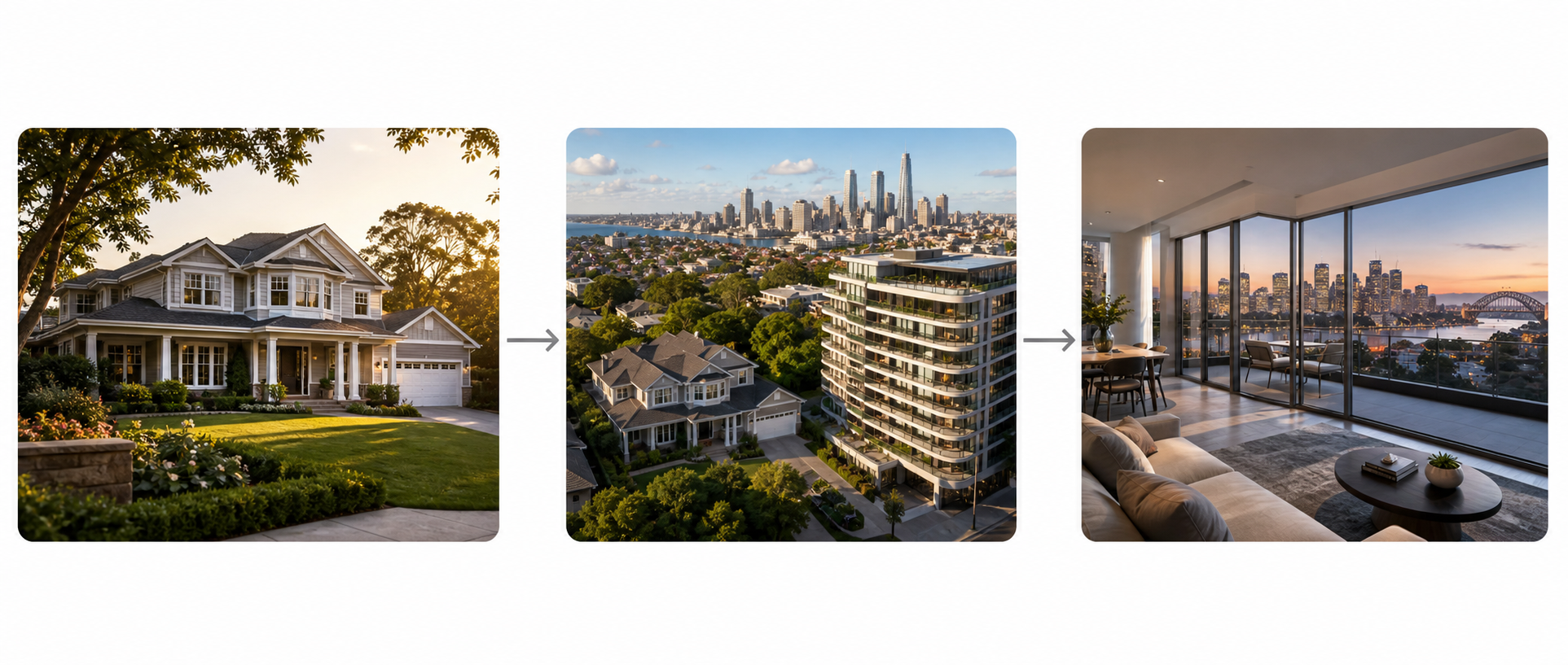
This guide focuses on downsizers moving from a larger family home into a luxury apartment or estate, where settlement dates and build times can easily leave you owning two properties at once.
1. How temporary two‑home ownership actually works
There are three common ways downsizers end up owning two homes briefly:
- Buy first with a bridging loan, then sell the old home.
- Sell first with an extended settlement, then buy and settle the new place during that window.
- Short period of double ownership where both settlements overlap for a few weeks.
The key decision is whether you can safely carry both properties for longer than planned if the sale is delayed or the buyer asks for a price reduction.
Core concepts to understand
- Peak debt: total debt while you own both homes.
- End debt: what you’ll owe once the old home is sold and the bridging loan is cleared.
- Serviceability: whether you can afford repayments on peak or end debt using lender calculators plus APRA’s 3% buffer.
- Holding costs: interest, council rates, strata, insurance and utilities for both homes.
Many of the risk‑management ideas here mirror how we plan off‑the‑plan settlements under rate uncertainty (see /insights/planning-rate-rises-before-off-the-plan-loan-drawdown).
2. Bridging loan basics for downsizers
A bridging loan is short‑term finance that lets you buy your next home before you sell the current one.
Typical Australian settings (illustrative only)
- Term: 6–12 months, sometimes up to 24.
- Structure: interest‑only during the bridging period, then reverts to a standard home loan on the new property.
- Security: usually both properties.
- Repayments: either monthly interest or “capitalised” interest added to the balance.
Lenders look closely at your end debt against your income and age, and will discount your expected sale price (for example, by 10%) to allow for market risk.
Worked example: bridging maths
Assume:
- Current home value: $2.4m
- Expected sale (conservative): $2.2m after discounting
- Current home loan: $400k
- New apartment price: $1.8m
- Costs (duty, legals, selling): say $160k
Peak debt during the overlap:
- Existing home loan: $400k
- New purchase (price + costs): $1.96m
- Peak debt ≈ $2.36m
When the old home sells:
- Sale proceeds: $2.2m
- Less existing loan: $400k
- Net cash: $1.8m
- Apply net cash to peak debt: $2.36m – $1.8m = end debt ≈ $560k on the new apartment.
The bank tests whether you can afford the end debt of ~$560k at a rate plus at least 3%, and often with some allowance for living costs being higher than HEM.
3. Overlap options compared
| Option | Pros | Cons / Risks | Best for |
|---|---|---|---|
| Buy first with bridging loan | Certainty of next home, smoother move | Short‑term higher debt, rate risk, sale pressure | Strong equity, reliable income |
| Sell first, long settlement | Lower debt risk, clearer budget | Must find and settle new place in fixed window | Cautious downsizers, weaker borrowing power |
| Minimal overlap (aligned settlements) | Reduced double costs, simpler finance | Less flexibility on dates, more coordination | Stable markets, flexible buyers/sellers |
The right path depends on your equity, risk appetite and how fast your local market is moving. Our bridging vs sell‑then‑buy guide for Mascot upgraders walks through similar trade‑offs in detail: /insights/bridging-loans-sell-then-buy-mascot-upgraders.
The strategy continues below
You've seen the problem and the groundwork — now unlock the exact steps our CPA-certified brokers use, including 4 more sections. Enter your email for instant, free full access.
Free access. No spam — unsubscribe anytime. Your details stay confidential.
Frequently asked questions
Talk to a CPA-certified broker
Free consultation, plain-English advice tailored to your situation.