
Article
How Your Postcode Changes LVR Limits and Bank Appetite
Australian lenders grade suburbs by risk. Your postcode can quietly cap your LVR, reduce your borrowing power or even block approval. Here’s how postcode risk, LVR limits and bank shading work — and what to do this week.
Key Takeaway
In Australia, postcode risk is how lenders grade suburbs by risk, and it directly affects maximum loan-to-value ratios (LVRs), LMI access and even whether they’ll lend at all. Many high-risk postcodes are capped at 70–80% LVR compared with 90–95% elsewhere, and are subject to stricter serviceability and valuation rules. Understanding your postcode category and adjusting your deposit, lender choice and structure accordingly is the key actionable step for home buyers and investors.
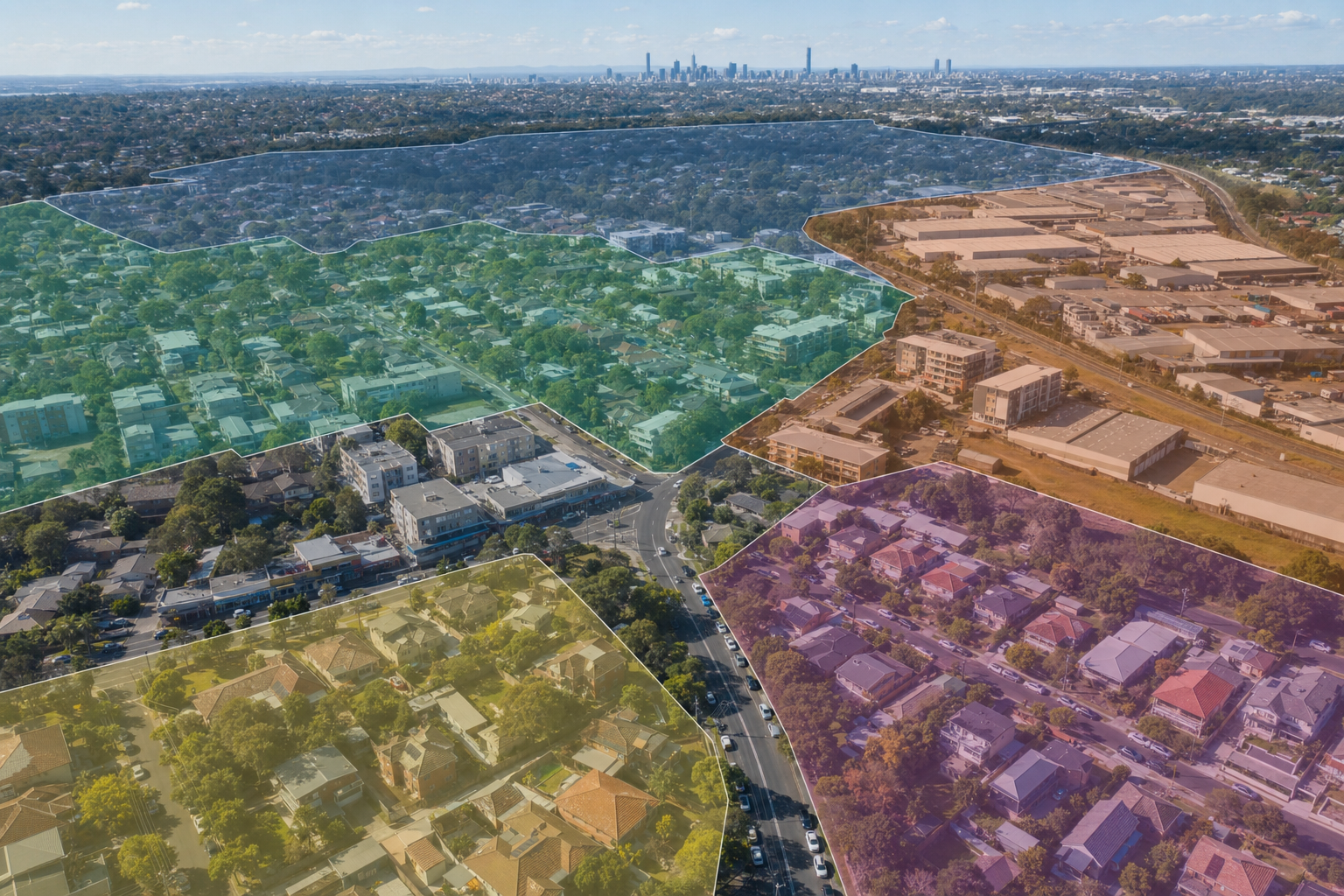
Buying or refinancing in Australia isn’t just about your income and credit score. Every lender also has a view on your suburb. Postcode risk is how banks quietly grade locations by risk, and it directly affects your maximum loan-to-value ratio (LVR), how your rent is assessed, and sometimes whether they’ll lend at all.
In simple terms: the same borrower can be approved at 90–95% LVR in one suburb but capped at 70–80% LVR in another, purely because of postcode risk. Knowing where your address sits – and choosing the right lender and structure – is essential if you want your deal to actually settle.
This guide unpacks postcode risk, LVR limits and bank “shading” by suburb, and gives you clear moves you can make this week, whether you’re an owner‑occupier, investor, self‑employed borrower or small‑business owner.

Your suburb can quietly change how much a bank will lend you.
1. What postcode risk actually means to a lender
Postcode risk is a lender’s assessment of how risky it is to hold property security in a given suburb or region. It’s about how easily they can sell your property and recover their money if things go wrong, not about you personally.
Key drivers include:
- Price volatility – areas that boom and bust (e.g. some mining towns).
- Market depth and liquidity – how many buyers exist if they need to sell quickly.
- Economic base – dependence on a single employer or industry.
- Dwelling mix – grade of stock, concentration of small or specialised apartments.
- Natural disaster exposure – flood, fire, erosion and insurance issues.
Internally, most banks classify each postcode into risk tiers. Names differ, but the logic is similar:
- Standard / Category A – broad market, diverse economy, good resale (e.g. established metro suburbs).
- Monitored / Category B–C – some concerns (e.g. oversupply of units, single‑industry towns, small regionals).
- Restricted / Category D or blacklisted – no high‑LVR lending, sometimes no lending at all.
APRA doesn’t issue postcode blacklists, but it does require banks to manage credit risk properly and to hold extra capital against higher risk lending. Postcode risk is one way lenders meet that obligation.
Bottom line: your postcode changes how much risk a bank is willing to take, so it changes maximum LVRs, pricing and policy.
2. How lenders use postcode risk lists and “shading”
Every mainstream lender maintains internal postcode lists in their credit policy. These aren’t public, change over time, and differ between lenders, which is why one bank can reject a property that another is comfortable with.
2.1 The three main levers lenders pull
When a postcode is tagged as higher risk, banks usually adjust three things:
- Maximum LVR – they cap how high you can gear.
- Lenders Mortgage Insurance (LMI) appetite – LMI providers may refuse high‑LVR loans in that postcode.
- Valuation and income shading – they get more conservative about the property’s value and rental income.
This can show up as policies like:
- “Max 80% LVR for units in this postcode.”
- “No LMI above 80% LVR for investment properties in this postcode.”
- “Serviced apartments in this postcode max 60–70% LVR.”
2.2 Areas that often attract postcode shading
While every lender’s list is different, some patterns are common:
- High‑density inner‑city unit pockets – especially where there’s a lot of investor stock, small apartments or prior valuation shortfalls. In suburbs like Mascot, some lenders also maintain internal watchlists of specific buildings with cladding or defect concerns, which can materially affect borrowing capacity and approval odds (see our Mascot discussion in /insights/mascot-mortgage-broker-vs-banks-non-local).
- Mining towns and single‑industry regions – values can crash when commodity prices or major employers change.
- Lifestyle and holiday areas – markets can be highly seasonal and illiquid in downturns.
- New fringe estates – where many similar homes could hit the market at once if conditions turn.
- Known flood or fire zones – particularly where insurance is expensive, limited or excluded.
2.3 What “bank shading” really means
In higher‑risk postcodes, lenders often shade:
- Valuations – valuers may use more conservative sales evidence or apply discounts to special‑use stock.
- Rental income – they may only count 60–70% of rent instead of 80%+ for investors.
- Unit characteristics – smaller floor areas (e.g. under 40–50m²), poor layouts or mixed‑use buildings attract extra caution.
Combine postcode shading with Australia’s standard 3% serviceability buffer on interest rates that most lenders apply (per APRA guidance and lender policy) and you can see why borrowing power can drop sharply in some suburbs.
3. Typical LVR limits by postcode and property type
Every lender and insurer is different, but the pattern is consistent: the more niche or volatile the property and postcode, the lower the maximum LVR.
Below is an indicative guide only – not a live policy. Real limits change regularly and differ lender‑to‑lender.
| Scenario (illustrative only) | Typical max LVR (OO) | Typical max LVR (INV) | LMI availability (indicative) | Notes |
|---|---|---|---|---|
| Established metro house in diversified suburb | 90–95% | 90% | Often up to 90–95% if strong profile | Broadest choice, sharpest pricing |
| Inner‑city high‑density unit (oversupply postcode) | 80–90% | 80% | Some LMI providers cap at 80% | Extra scrutiny on size and building |
| Small unit (<40m²) in standard postcode | 70–80% | 70–80% | Limited; some lenders/LMI decline entirely | Specialist policies only |
| Mining town house or unit | 70–80% | 70–80% or lower | Often restricted; some lenders avoid | Income/employer concentration risk |
| Prestige property $2m+ in standard postcode | 70–80% | 70–80% | Limited; many lenders avoid high‑LVR jumbos | Large exposure limits apply |
| Flood‑prone or disaster‑exposed location | 60–80% | 60–75% | Very case‑by‑case | Insurance and resale risk |
OO = owner‑occupier, INV = investor. Illustrative only – not a quote or policy.
3.1 Worked example: same borrowers, different suburb
Assume a couple with solid incomes want to buy an $800,000 unit as owner‑occupiers.
- In a standard metro postcode, one lender is comfortable at 90% LVR.
- Loan: $720,000
- Deposit + costs: around $80,000–$100,000 (depending on stamp duty, LMI etc.)
- In a high‑density, shaded postcode, the same lender caps at 80% LVR.
- Loan: $640,000
- Required deposit + costs: more like $160,000–$180,000.
Same borrowers. Same income. Same property price. The only difference is postcode risk.
This is why hitting ≤80% LVR is so powerful: it generally unlocks broader lender choice and sharper pricing, because LMI isn’t required and lender risk is lower (see our broader discussion of LVRs in /insights/risk-management-buffers-worst-case-planning-broker).

The same borrowers can face very different LVR caps depending on postcode.
4. How postcode risk interacts with your personal profile
Postcode risk never exists in a vacuum. Lenders combine location with who you are and what you’re buying.
4.1 Owner‑occupier vs investor
Investors are usually assessed as higher risk than owner‑occupiers. In a shaded postcode, that can translate to:
- Lower maximum LVR for investment loans than for homes you live in.
- Stricter rental income shading.
- Tighter cash‑buffer expectations.
Combine investor status with a high‑risk postcode, and suddenly 80% LVR becomes the ceiling where 90–95% would be fine elsewhere.
4.2 Self‑employed borrowers and documentation pathway
Self‑employed borrowers are already navigating extra complexity – tax returns, BAS, company structures and the question of full‑doc vs alt‑doc. Many alt‑doc lenders also run stricter postcode rules.
- A location that’s acceptable at 80% LVR full‑doc might be capped at 70–75% LVR alt‑doc.
- Interest rates can be higher and rental shading tougher.
If your income evidence isn’t straightforward, it’s worth reading our guide on choosing the right documentation pathway and our article on home loans for high‑income self‑employed professionals before locking in a property.
4.3 High‑value and prestige homes
Prestige properties above roughly $2 million are treated as “jumbo” exposures, even in blue‑chip postcodes. Add any postcode shading and the LVR gloves really come off.
Expect:
- Lower LVR caps (often 70–80%).
- Limited or no LMI options.
- Tighter serviceability, especially with other debts.
If you’re targeting a prestige property, read How to Borrow Safely for Prestige and High‑Value Homes and overlay that with postcode risk before you set your bidding limit.
4.4 Business owners using the home as security
Small‑business owners often use their home to secure business facilities. Lenders then need to consider:
- Business and industry risk (e.g. cyclical sectors).
- Personal income volatility.
- Plus the postcode risk of the security property.
For these clients, separating home, investment and business lending into clean splits – and choosing postcodes and property types lenders actually like – is crucial for long‑term flexibility.
5. Practical moves you can make this week
You can’t change your postcode, but you can change your strategy. Here’s what you can do in the next 7–10 days.
5.1 Map your postcode risk
Because postcode lists are internal, there’s no single public master list. Instead:
- Ask a broker to run your target postcodes through multiple lenders’ systems.
- Use early, no‑obligation “front‑door” checks to see which lenders flag your address.
- If you already own, have your broker check whether your address is now on any watchlists – these change over time.
This step alone can save weeks of wasted effort with the wrong bank.
5.2 Adjust your deposit and price expectations
Once you know the likely LVR cap:
- Reverse‑engineer the maximum price you can target for a given deposit.
- Decide whether to save longer, look for a lower‑priced property, or shift to a different suburb.
For example, if lenders cap you at 80% LVR in your chosen postcode, an extra $40,000–$60,000 of savings (or a family gift/guarantee) might be the difference between “not possible” and “approved”.
5.3 Choose lender and structure carefully
Because postcode policies differ, shopping around properly matters more for shaded locations. This is where a good broker earns their keep.
- Some non‑major or specialist lenders may be more comfortable with specific postcodes or property types.
- Others may accept higher LVRs but with trade‑offs (pricing, fees, or stricter conditions).
Our guide on why using a mortgage broker saves time, stress and money explains how a broker can translate your situation into lender language and avoid dead ends. For complex profiles, a specialist who works with self‑employed, professionals and small‑business owners can be particularly useful – see /insights/mortgage-brokers-self-employed-professionals-small-business-owners.
5.4 Do property‑by‑property checks before you bid
In shaded postcodes, not all properties are equal:
- Certain buildings may be blacklisted for defects, cladding or legal disputes.
- Tiny units, serviced apartments, student accommodation and mixed‑use stock can trigger much tougher LVR caps than standard apartments on the next street.
Before auction or signing a contract, have your broker and, if possible, a valuer sense‑check the specific property. The principles in Designing Auction‑Proof Home Loan Pre‑Approval for Rose Bay Buyers apply well beyond the Eastern Suburbs: tight pre‑approval, matched to the exact property type, beats generic online letters every time.
5.5 Strengthen your buffers and plan for worst‑case
In a high‑risk postcode, you want more margin for error:
- Bigger cash buffers in offsets.
- Conservative borrowing limits well below maximum.
- A clear plan if values soften and you need to sell or refinance.
Our guide to building safe borrowing plans with buffers and worst‑case planning walks through how to set conservative limits and separate home, investment and business risk.
A broker can navigate changing postcode policies across multiple lenders.
6. Common postcode traps in today’s market
While each cycle is different, some postcode‑and‑property combinations consistently cause headaches.
6.1 High‑density unit pockets
In some inner‑city areas, thousands of near‑identical units were built in a short period. Lenders worry about:
- Oversupply driving prices down.
- Investor sell‑offs in downturns.
- Hidden building defects or combustible cladding.
Result: tougher valuations, LVR caps and stricter treatment of rental income – even if the suburb’s headline median looks fine.
6.2 Small, specialised and serviced apartments
Even in standard postcodes, lenders get nervous about:
- Units under ~40–50m² internal.
- Serviced apartments with pooled rental returns.
- Student accommodation or hotel‑style stock.
These are often treated more like commercial than residential risk, with LVR caps of 60–70% and limited lender appetite.
6.3 Mining, regional and lifestyle towns
Many smaller towns are excellent places to live and invest, but from a bank’s perspective they can be vulnerable to:
- Major employer closures or industry downturns.
- Low sale volumes, making it hard to value accurately.
- Sharp swings in demand as projects start and finish.
Lenders respond with cautious LVRs, especially for investors or alt‑doc borrowers.
6.4 Disaster‑exposed areas
Where flood, fire or erosion risk is high – and particularly where insurance is difficult or very expensive – lenders face the risk of:
- Physical loss of the security.
- Lower resale demand.
Expect closer scrutiny of insurance, building reports and sometimes lower LVR caps in these locations.
7. Refinancing, equity release and postcode shading
Postcode risk doesn’t only bite at purchase. It matters when you refinance, restructure or release equity as well.
7.1 When your postcode moves from “standard” to “shaded”
Postcode lists change. A suburb that was once standard can become monitored after:
- Rapid, investor‑driven price growth.
- Emergence of building defects or cladding issues.
- Local economic shocks.
If you originally borrowed at, say, 90–95% LVR and your postcode is later shaded, you might find:
- Fewer lenders prepared to refinance you, especially above 80% LVR.
- Tougher valuations that make it harder to pull equity out.
7.2 Equity release: hitting realistic LVR targets
For renovations, investments or business funding, a common goal is to draw equity up to 80% LVR. But in a shaded postcode, lenders may only be comfortable at 70–75%.
That can mean:
- Scaling back or staging your plans.
- Paying down extra to move into a safer LVR band.
Given the RBA’s post‑COVID rate rises (and the 3% serviceability buffer most lenders apply), refinancing is also about managing cash flow risk – not just squeezing every dollar of equity out.
7.3 Don’t assume your current lender is best placed
Your existing bank is familiar with your property, but that doesn’t guarantee they’re the best option for:
- Repricing or restructuring your debt.
- Funding new investments secured by the same property.
A broker who understands both residential and business lending can often design separate splits for home, investment and business purposes and match each to the right lender – reducing the impact of postcode shading on your overall strategy.
8. When bespoke advice becomes non‑negotiable
Some scenarios are simply too complex, or too expensive to get wrong, to rely on generic calculators:
- Self‑employed borrowers buying in shaded or high‑density postcodes.
- Investors building multi‑property portfolios across mixed‑risk suburbs.
- Prestige buyers in blue‑chip suburbs facing both jumbo and postcode caps.
- Small‑business owners offering the family home as security for business lending.
In all of these cases, you want someone who can look at your numbers, your properties and your postcodes together, and then design a structure that keeps you safe even if rates rise further or values soften.
FAQs: postcode risk, LVR caps and shading
How do I know if my postcode is high risk for a mortgage?
There’s no single public master list of high‑risk postcodes. The most practical way is to have a broker run your postcode through several lenders’ systems to see where it’s classified and what LVR caps apply. You can also get clues from policy documents (e.g. “refer to credit for these postcodes”) and from valuers’ feedback on recent comparable sales.
Can I still get 90–95% LVR in a high‑risk postcode?
Sometimes, but it’s harder and more restricted. Many lenders cap high‑risk postcodes at 70–80% LVR, especially for investors or more complex properties like small units. Where 90–95% is possible, it’s usually only with strong income, clean credit, full‑doc paperwork and acceptable property types, and may involve higher rates or stricter conditions.
Do all banks use the same postcode risk list?
No. Each lender has its own postcode list and risk appetite, and these change over time. One bank may be very conservative in a suburb while another is comfortable up to 80–90% LVR, particularly for owner‑occupiers. This is why shopping around through a broker typically produces better options than going to a single bank branch.
How does postcode risk affect property investors specifically?
Investors are generally assessed as higher risk, so in shaded postcodes they can face lower LVR caps, tougher rental income shading and tighter servicing tests. That can significantly reduce borrowing power and make high‑LVR purchases unworkable. Planning portfolio growth around a mix of postcodes, property types and lenders – rather than piling into one riskier area – usually leads to a more resilient structure.
Will postcode risk stop me refinancing or releasing equity later?
It can, especially if you’re already highly geared or values have softened. If your postcode becomes shaded after you buy, some lenders may refuse to refinance you above 80% LVR or may apply conservative valuations that limit equity release. Keeping your LVR in safer bands and reviewing your structure regularly with a broker reduces the risk of getting stuck.
I’m self‑employed in a shaded postcode. What should I focus on first?
Start by tightening your income story – recent financials, BAS and clean business bank statements – and choosing the right documentation pathway (full‑doc if possible). Then have a broker map which lenders are comfortable with both your postcode and your income type. Often you’ll need a slightly larger deposit, stronger buffers and a more conservative property choice than a PAYG borrower in a standard suburb.
Key takeaways
- Banks maintain postcode risk lists that directly influence maximum LVRs, valuation conservatism and LMI options.
- High‑risk postcodes – like some mining towns, high‑density unit pockets and disaster‑exposed areas – commonly face LVR caps of 70–80%.
- The impact of postcode risk is magnified for investors, self‑employed borrowers and prestige or specialised properties.
- You can’t change your postcode, but you can change lender, structure, deposit and timing to work within the rules.
- A broker who understands both credit policy and tax/structuring is usually best placed to navigate postcode shading across home, investment and business goals.
If your current or target property might be in a shaded postcode, the smartest move this week is to have a broker run detailed lender and valuation checks before you commit to a contract or auction strategy. A couple of targeted conversations now can save you from an expensive, stressful finance scramble later.
General advice only.
Frequently asked questions
Talk to a CPA-certified broker
Free consultation, plain-English advice tailored to your situation.
