
Article
Smart Loan Structures To Stay Flexible When Rules Keep Changing
How to structure home, investment and business loans today so you can pivot quickly if APRA, ATO or Budget rules change again — without forced sales or messy tax problems.
Key Takeaway
To preserve future flexibility when loan and tax rules may change, borrowers should use standalone securities (one property per loan), separate loan splits by purpose, and maintain offsets and cash buffers rather than locking in extra repayments. APRA’s 3% serviceability buffer and upcoming negative gearing and CGT reforms mean tracing loan purpose will matter more for deductibility. A practical step this week is to review each loan’s security and purpose tags with a broker who also understands tax impacts.

This topic is covered in full on Tailored Loans Sydney
How to structure home, investment and business loans today so you can pivot quickly if APRA, ATO or Budget rules change again — without forced sales or messy tax problems.
Read the full guide on tailoredloans.sydneyYou preserve future flexibility by keeping each property and loan purpose separate, avoiding cross‑collateralisation, and using offsets and clean splits instead of one big blended loan. That way, if APRA or ATO rules change again, you can refinance or repurpose individual debts without triggering a messy, all‑or‑nothing restructure.
Quick answer you can act on this week:
- One property per loan wherever possible.
- Separate splits for home, investment and business purposes.
- Build buffers in offsets, not by locking in extra repayments.
- Avoid structures you can’t easily unwind (cross‑collateralisation, rushed trusts).
Why flexibility matters more under changing rules
Federal Budgets and ATO rulings are reshaping negative gearing and CGT, with many rules changing from 1 July 2027. APRA can also tweak serviceability rules, such as the current 3% assessment buffer on top of your actual rate.
When rules shift, you may want to:
- Sell one property but keep another.
- Move back into a rental or rent out your home.
- Recycle debt into deductible investment or business loans.
- Refinance to another lender to unlock equity.
If your loans are all tied together or purposes are mixed, every change becomes harder, slower and often more expensive.
For geared investors, this is even more important than rate shopping. See the deeper structure piece in How to Design Flexible Investment Loan Structures for Smarter Gearing.
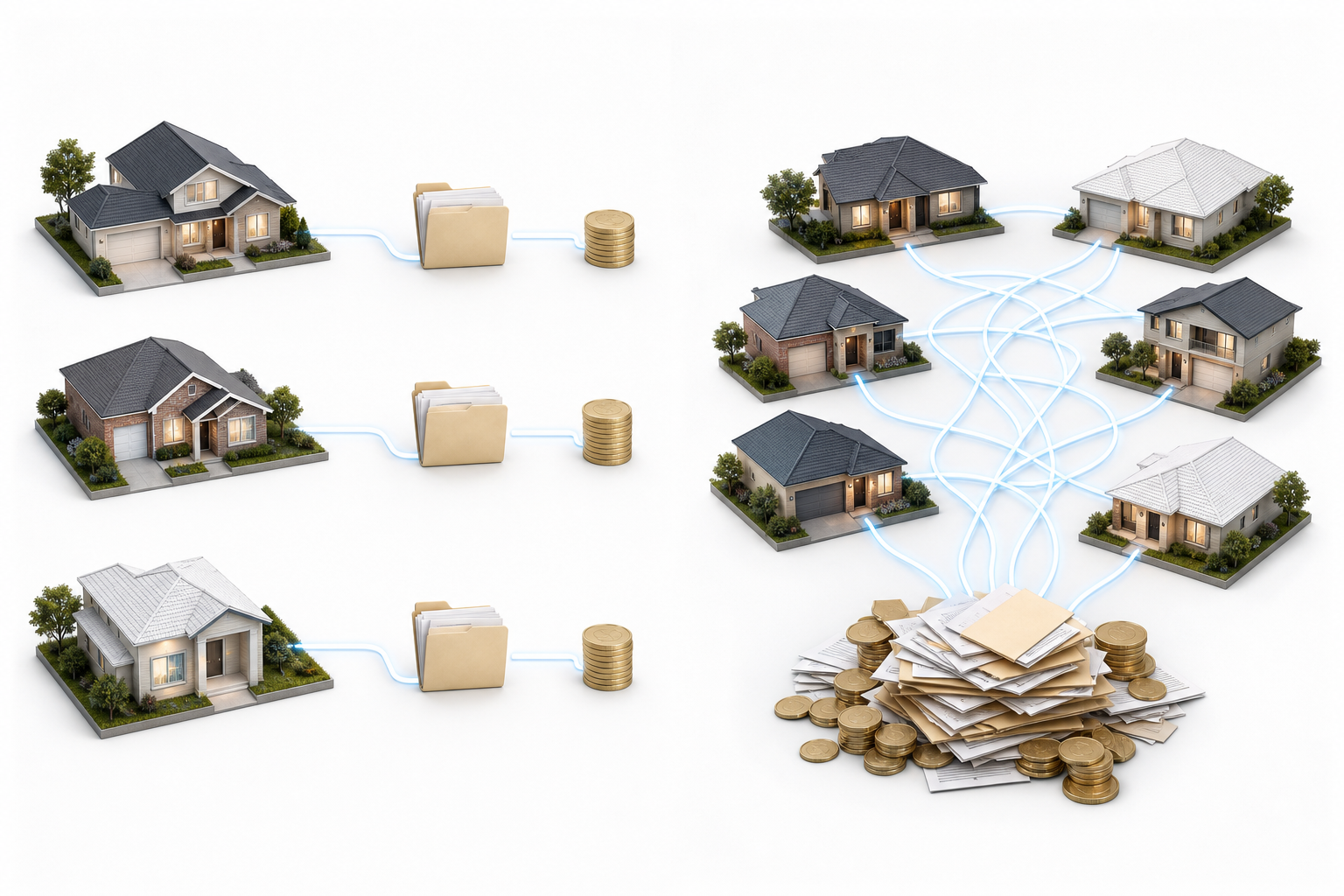
Standalone vs cross‑collateralisation
Standalone security means each property secures its own loan (or loan splits). Cross‑collateralisation means a lender uses multiple properties to secure multiple loans under one big security web.
Why standalone wins
Standalone structures typically give you:
- Cleaner exits – sell one property without a full portfolio re‑assessment.
- More lender choice – refinance one property while leaving others where they are.
- Simpler valuations – less chance of one low valuation strangling all your equity.
By contrast, cross‑collateralisation can:
- Trap equity when valuations are conservative.
- Force pay‑downs or extra security when you sell.
- Make any rule change a portfolio‑wide problem.
If your current loans are tangled, read How a Good Broker Keeps Your Properties Safely Uncrossed and plan an “uncrossing” over 6–24 months.
The strategy continues below
You've seen the problem and the groundwork — now unlock the exact steps our CPA-certified brokers use, including 5 more sections. Enter your email for instant, free full access.
Free access. No spam — unsubscribe anytime. Your details stay confidential.
Frequently asked questions
Talk to a CPA-certified broker
Free consultation, plain-English advice tailored to your situation.