
Article
Protecting Business Equipment: PPSR, Insurance And What Lenders Expect
A practical Australian guide to PPSR, insurance and lender conditions on equipment loans, with concrete steps you can take this week to protect your assets and borrowing options.
Key Takeaway
Australian lenders usually expect financed equipment to be registered on the PPSR and properly insured, often making this a condition of settlement and an ongoing covenant. For many small businesses, equipment-backed loans offer lower rates than unsecured options but expose assets to repossession if insurance lapses or covenants are breached. By mapping securities, confirming PPSR registrations and tightening insurance and documentation now, borrowers can reduce default risk and negotiate safer equipment finance structures.
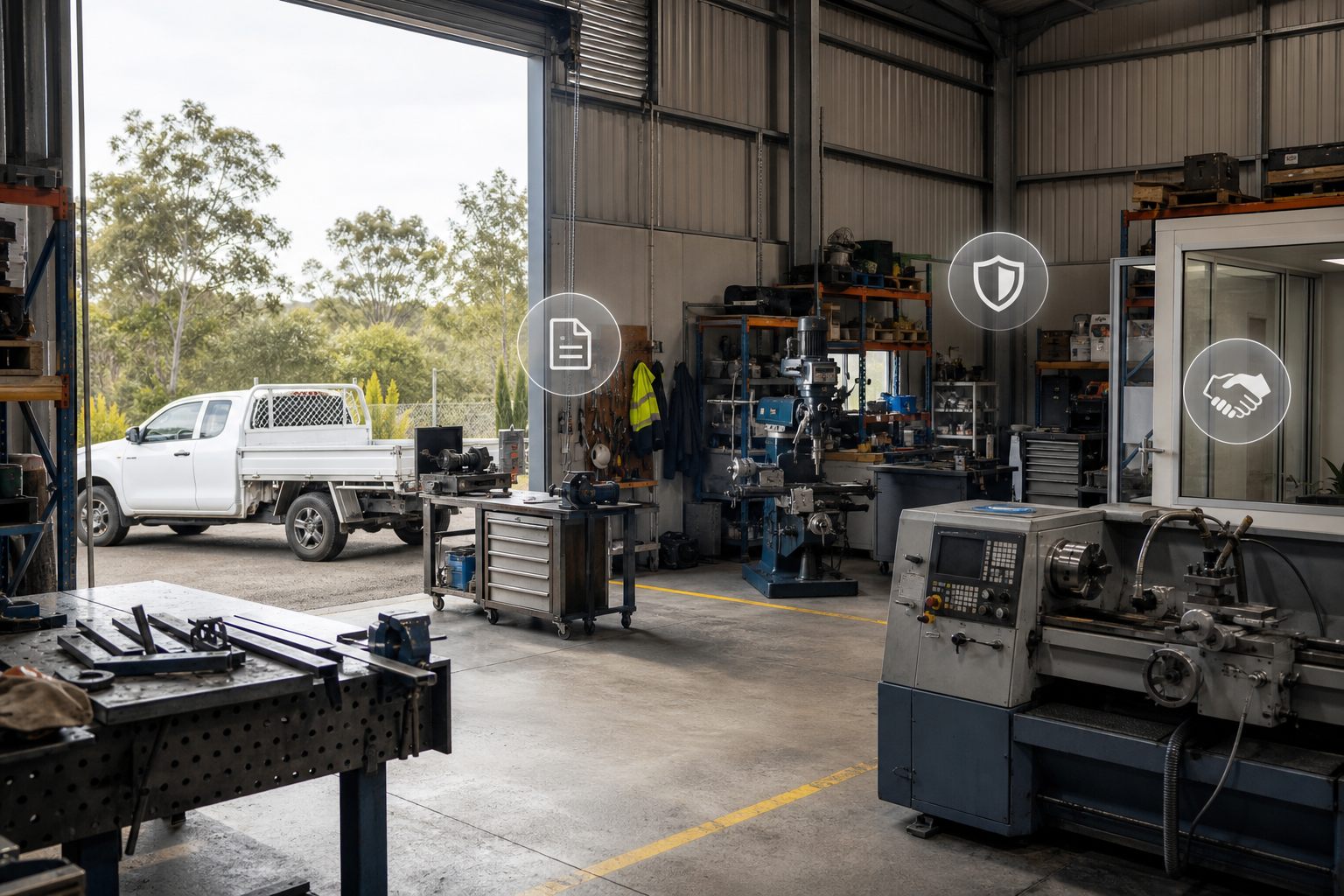
Protecting financed equipment isn’t just about avoiding theft or damage – it’s about meeting what your lender expects so you don’t accidentally default. In Australia, that usually means: (1) the lender registers security on the Personal Property Securities Register (PPSR), and (2) you maintain certain insurances and other covenants for the life of the loan. If you get those three things right – PPSR, insurance, covenants – you dramatically reduce nasty surprises.
This guide steps through how PPSR works, the insurance lenders actually care about, and the fine print that can quietly put your home or other assets at risk. You’ll walk away with a clear checklist you can act on this week.
1. What PPSR, Insurance And Covenants Really Mean In Practice
1.1 PPSR in one sentence
The Personal Property Securities Register (PPSR) is a national online register where lenders record their security interest over personal property – things like vehicles, machinery, fit‑out and equipment – so everyone can see who gets paid first if something goes wrong.
If you have (or are about to take) an equipment loan, there’s a high chance your lender will register a PPSR security over that asset. That doesn’t mean they “own” it, but it does mean they’re first in line to repossess or be repaid if you default or go broke.
1.2 Why lenders care so much about PPSR
Lenders use PPSR to:
- Prove priority over a financed asset
- Lower their risk, which can support sharper pricing than fully unsecured finance
- Avoid disputes with other lenders, suppliers or the ATO
For you, PPSR matters because:
- It affects who can seize which asset if things go wrong
- It can impact your ability to borrow elsewhere – other lenders will see existing registrations
- Wrong or broad registrations can tie up more assets than intended
If you haven’t already, check whether your current business and personal assets are encumbered. You can search the PPSR yourself for a small fee at ppsr.gov.au.
1.3 Insurance: the non‑negotiable safety net
For most equipment loans, a lender will require you to hold insurance over the financed asset at all times, with:
- Sum insured at or near replacement value
- The lender listed as an interested party or loss payee
If insurance lapses and the asset is damaged or stolen, both you and the lender are exposed. In the worst case, that can trigger a default and still leave you owing on a useless, uninsured asset.
1.4 Covenants: the rules you live by for the life of the loan
Covenants are promises written into your loan contract. Common examples for equipment finance include:
- Maintain insurance on the asset
- Keep the asset at a specified address
- Use the asset in a lawful, specified way
- Don’t sell or lease the asset without consent
- Provide updated financials annually once your debt or exposure hits certain levels
Breaching covenants – even if you keep making repayments on time – can give the lender the right to demand early repayment or repossess security.
If you haven’t looked at your existing covenants for a while, put “read my loan conditions” on this week’s list.
2. How PPSR Works On Equipment Loans

2.1 Which assets usually get registered?
For most small and medium businesses, PPSR registrations show up on:
- Work vehicles (utes, vans, trucks)
- Yellow goods (excavators, loaders)
- Manufacturing machinery
- Medical and dental equipment
- IT and servers
- Shop and hospitality fit‑out
On a secured equipment loan, the lender almost always takes a specific security interest over the asset they’re funding. On some structures, they may take a broader “all present and after-acquired property” (ALLPAAP) charge, which effectively covers all business assets.
Understanding the difference is critical when you’re weighing up secured vs unsecured options or when you’re using multiple lenders.
For a deeper comparison of secured vs unsecured structures, see /insights/secured-vs-unsecured-equipment-loans-rates-risks-fit.
2.2 Why timing matters – PMSI and priority
Many equipment facilities are written as a Purchase Money Security Interest (PMSI). If correctly registered within strict timeframes (often before you take possession or within 15 days, depending on the type of collateral), a PMSI can leapfrog other security interests over the same asset.
In plain English: even if another bank has a general charge over your business, the equipment lender can still take priority over the financed excavator if they get their PPSR registration right.
You don’t control how the lender registers, but you should:
- Ask what security interest they will register (specific asset vs ALLPAAP)
- Confirm they’re only registering against the intended asset if that’s what you negotiated
- Keep copies of the PPSR search results and your loan contract together
2.3 When PPSR bites: insolvency, disputes and refinancing
PPSR matters most when something goes wrong:
- Insolvency or liquidation – The secured creditor with the right PPSR registration is near the front of the queue for that asset.
- Disputes between lenders – If you try to refinance or add another facility, existing registrations can block or complicate the new deal.
- Sale of business or assets – Buyers and their banks will run PPSR searches; messy registrations can affect price and timing.
If you’re considering drawing on property equity to support your business, make sure you also understand how PPSR and property mortgages interact. This is covered in more depth in /insights/using-investment-property-equity-support-small-business-2 and /insights/cross-collateralisation-property-equipment-loans-pros-cons-alternatives.
3. Insurance Lenders Expect On Equipment
3.1 Core insurance types for equipment finance
Most lenders will expect some mix of the following, depending on the asset and risk:
- Property / equipment insurance – For plant, machinery and fit‑out (often under a business pack policy)
- Comprehensive motor insurance – For vehicles and mobile plant registered for road use
- Marine transit insurance – If high‑value items are shipped or regularly transported
- Business interruption – Not always a formal requirement, but increasingly expected for larger exposures
On bigger deals, lenders may also specify:
- Minimum policy wording standards
- Maximum excess amounts
- Specific named perils (e.g. flood, accidental damage)
3.2 Typical minimum standards lenders look for
While every lender’s policy differs, common expectations include:
- Sum insured close to replacement value, not just book value
- Australia‑wide cover if the asset moves between sites
- Lender noted as an interested party or loss payee
- Evidence of insurance before settlement and each renewal
If you’re financing a $250,000 piece of equipment, a bare‑bones policy with a $10,000 cap on theft won’t cut it.
3.3 Worked example: when insurance and PPSR save you
Assume:
- Excavator financed for $220,000 over 5 years
- Indicative rate 9.0% p.a. (illustrative only)
- Monthly repayment ≈ $4,560
Year 2, the excavator is stolen from a site.
- Because the lender is on PPSR and noted on the policy, the insurer pays $190,000 (after excess and depreciation) to the lender.
- You still owe $160,000 on the loan at that point.
- The payout clears the loan, surplus (if any) flows to you.
If you’d let the policy lapse and the asset wasn’t insured, you’d still owe the remaining $160,000 – with no excavator generating income.
3.4 Common insurance pitfalls that upset lenders
- Policy in the wrong name (e.g. sole trader vs company) – misaligns with who is on the loan
- Insufficient sum insured – especially after inflation and asset upgrades
- Lender not noted – claims get delayed or paid directly to the borrower
- Lapsed policies due to cashflow pressure
When cash is tight, it’s tempting to let insurance slide. From a risk perspective, that’s usually worse than delaying a small upgrade or non‑critical hire.
 A quick review of PPSR, insurance and covenants can prevent nasty surprises down the track. ### 4.1 Day‑one expectations (at settlement) To settle an equipment loan, you can expect your lender to require: - Signed loan and security agreements - Authority to register PPSR over the equipment (or broader business assets) - Certificate of currency for required insurance, with correct: - Insured name - Address/location - Asset descriptions or values - Lender as interested party They may also request: - Financial statements…
The strategy continues below
You've seen the problem and the groundwork — now unlock the exact steps our CPA-certified brokers use, including 6 more sections. Enter your email for instant, free full access.
Free access. No spam — unsubscribe anytime. Your details stay confidential.
Frequently asked questions
Talk to a CPA-certified broker
Free consultation, plain-English advice tailored to your situation.