
Article
Warning Signs Your Property Portfolio Is Over‑Geared (And How To Fix It)
Clear, decision‑grade guide to spotting when your Australian property portfolio is over‑geared and practical ways to de‑risk without panic selling.
Key Takeaway
This article explains how to tell if an Australian property portfolio is over‑geared and how to de‑risk without panic selling. Key signs include thin cash buffers, portfolio LVRs above 80–85%, and cashflow turning negative with a 3% interest rate rise, aligning with APRA’s common serviceability buffer. It outlines practical steps to reduce risk, like rebuilding buffers, restructuring loans and selectively deleveraging, with an emphasis on acting before forced sales become necessary.

This topic is covered in full on Tailored Loans Sydney
Clear, decision‑grade guide to spotting when your Australian property portfolio is over‑geared and practical ways to de‑risk without panic selling.
Read the full guide on tailoredloans.sydneyYou’re probably over‑geared if a 3% rate rise, a vacancy, or a big repair would quickly push you into arrears, eating through your buffer in months, not years. Over‑gearing is less about one big loan and more about fragile cashflow, thin buffers and high LVRs across the portfolio.
Here’s how to spot it this week and de‑risk without blowing up your long‑term plan.
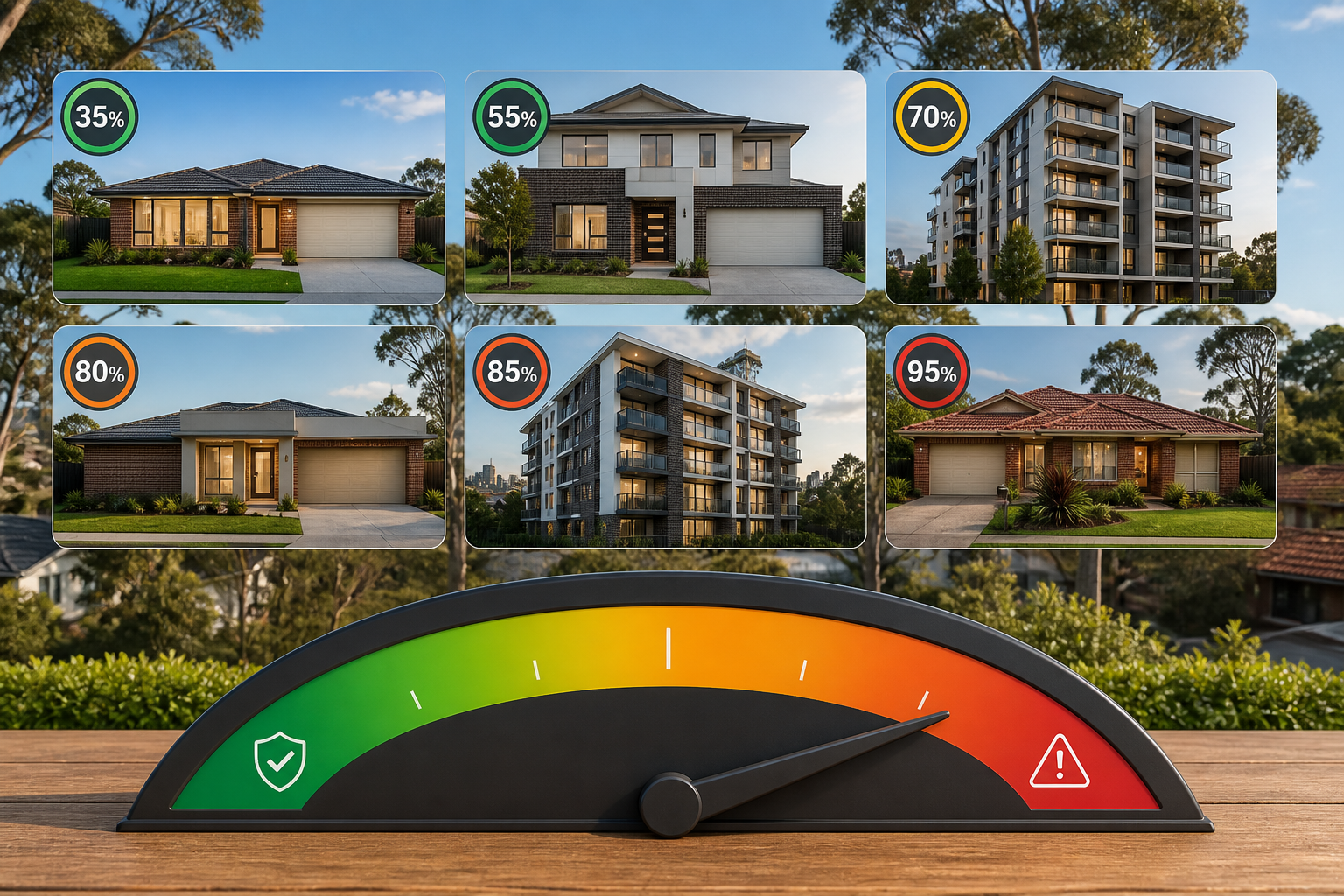
1. Red flags you’re over‑geared right now
a) Your buffers are measured in weeks, not months
Add up home and investment loan repayments, plus rates, insurance and basic living costs.
If you lost your main income tomorrow, how long would your cash + offsets last?
Red flag: less than 3 months of total repayments, especially if you own two or more properties. A more resilient target is 6–12 months of full holding costs in cash or offset.
b) Your portfolio LVR is quietly creeping above 80–85%
Work out total loans ÷ total property value.
Example: $2.5m portfolio, $2.1m in loans → LVR = 84%.
Red flags:
- Above ~85% across the portfolio; and/or
- Multiple individual properties above 90%, especially if cross‑collateralised.
High LVRs plus rising rates and weaker tax benefits after the 2027 reforms is a rough combination.
c) Stress test: a 3% rate rise breaks your cashflow
APRA expects banks to test new loans at least 3% above the actual rate.
Do the same at portfolio level:
- Take your current average rate (say 6%).
- Model 9% on all loans.
- Keep rents flat and assume no negative gearing benefit.
If you’d go negative by more than you can comfortably cover for 2–3 years, that’s a clear warning. For a worked method, see How to stress-test a geared property portfolio in one evening.
d) You’re living off tax refunds or refinance cashbacks
If your plan is “the tax refund will fix it” or “I’ll just refinance again next year”, you’re already relying on outside rescue.
With negative gearing benefits being restricted for many established properties from 1 July 2027, assuming tax will bail out your cashflow is risky.
e) You feel trapped
Common emotional signs:
- Sleepless nights about rates or vacancies.
- Avoiding looking at statements.
- Feeling you “can’t” sell anything because of tax or ego.
Feeling boxed in is usually a symptom of over‑gearing and poor structure, not just mindset.
The strategy continues below
You've seen the problem and the groundwork — now unlock the exact steps our CPA-certified brokers use, including 3 more sections. Enter your email for instant, free full access.
Free access. No spam — unsubscribe anytime. Your details stay confidential.
Frequently asked questions
Talk to a CPA-certified broker
Free consultation, plain-English advice tailored to your situation.