
Article
Choosing Between School Zones, Trains and Beaches: Smarter Borrowing Moves
How school zones, train lines and beaches in Sydney’s Eastern Suburbs change what you can safely borrow – and the finance tactics to use this week.
Key Takeaway
Location trade-offs between school zones, train lines and beaches in Sydney’s Eastern Suburbs directly affect borrowing capacity, cashflow and long-run risk. Premium school zones typically mean higher prices but stronger rents, while proximity to train lines can improve bank serviceability tests by reducing transport costs; beachside pockets add lifestyle but greater price volatility. By modelling each scenario with realistic buffers and loan structures, borrowers can select a location that fits their income, risk tolerance and long-term plans.
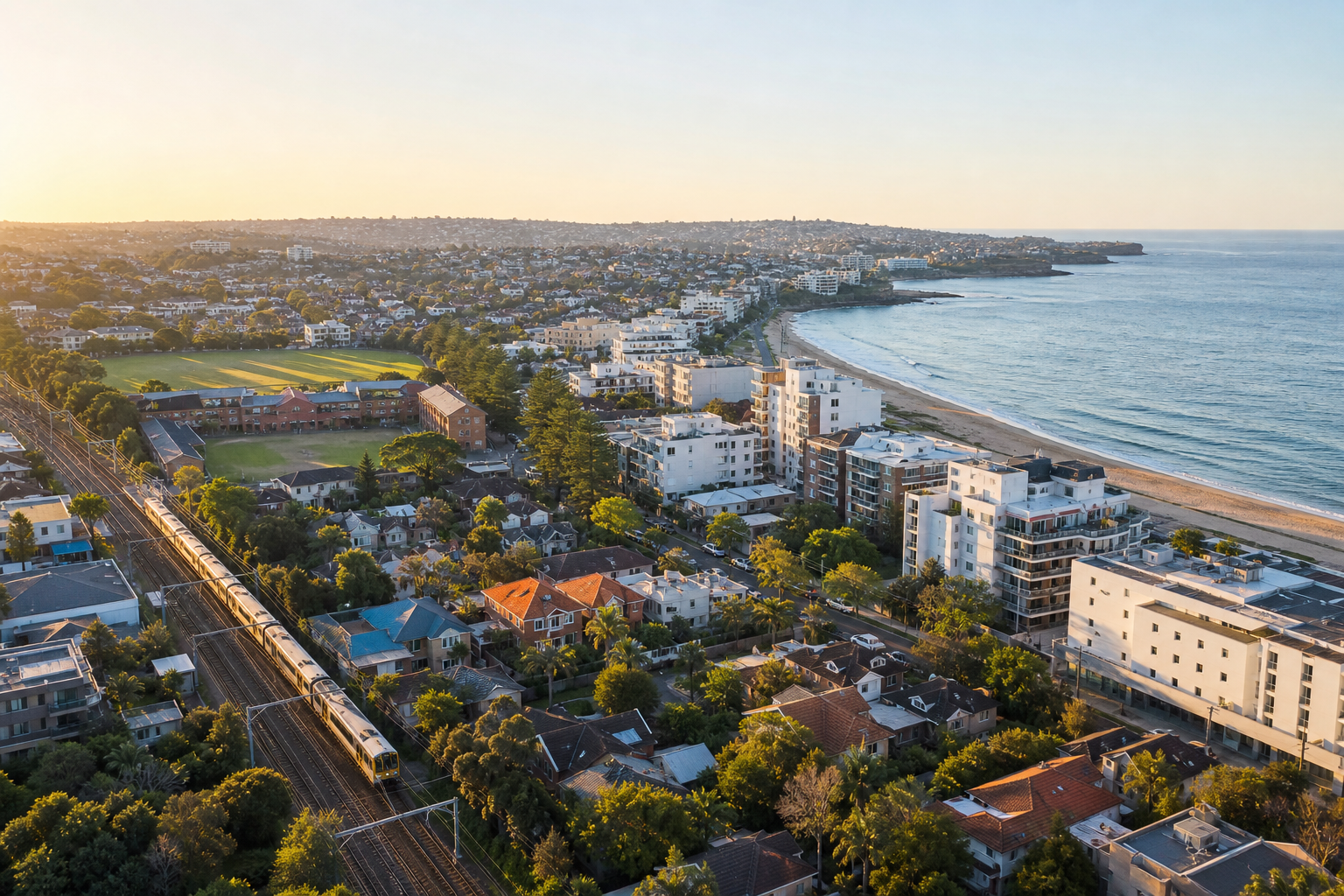
This topic is covered in full on Tailored Loans Sydney
How school zones, train lines and beaches in Sydney’s Eastern Suburbs change what you can safely borrow – and the finance tactics to use this week.
Read the full guide on tailoredloans.sydneyLiving in a prized school catchment, near a train line or close to the beach each changes what you can safely borrow and how a bank views your risk. In the Eastern Suburbs, the same household can have a very different borrowing limit and long‑term outcome depending on which of these three you choose.
Here’s the decision: for your budget, are you better off stretching for a top school zone, picking train access to maximise borrowing power, or prioritising beach lifestyle and accepting more price volatility?

How school zones, trains and beaches hit the numbers
1. School zone premium vs borrowing power
In Bronte, Waverley and Clovelly, good primary and high school catchments typically add a 5–20% price premium compared with similar homes outside the zone.
For a $1.8m home vs a 10% higher $1.98m school‑zone equivalent:
- 20% deposit path: $360k vs $396k deposit.
- Loan size: $1.44m vs $1.584m.
- At 6.0% P&I over 30 years (illustrative only):
- $1.44m ≈ $8,637 per month.
- $1.584m ≈ $9,507 per month.
That’s ~$870 more each month, or over $10k a year. Under APRA’s 3% buffer, the bank tests you as if the rate were ~9%, so your required income jumps sharply.
2. Train line benefit: serviceability and rent
Being near Bondi Junction, Edgecliff or Green Square can improve borrowing power indirectly:
- Lower transport costs mean more free cashflow in the household budget.
- Stronger rental demand helps investors pass lender rental‑income shading.
Many lenders shade rent to 70–80%. In a high‑demand train‑adjacent pocket, a $1,200/week rent might still be assessed at $840–$960/week, which materially helps serviceability.
3. Beach lifestyle: volatility and holding risk
Bondi, Coogee and Bronte beaches are globally recognisable. That’s great in a rising market, but it also means:
- Higher entry price for the same land size.
- More exposure to tourism and short‑stay cycles.
- Bigger swings in valuations if sentiment turns.
In a high‑stress environment (Roy Morgan had over 30% of borrowers ‘At Risk’ of mortgage stress in 2026), you don’t want your whole strategy hanging on peak‑cycle beach pricing.
Comparing three Eastern Suburbs choices side by side
The table below compares three typical options for a family with ~$360k cash and solid dual incomes. All numbers are illustrative and rounded.
| Scenario | Example area | Purchase price | Deposit | Loan | Est. P&I @ 6.0% | Rent potential (if rented) | Key risk |
|---|---|---|---|---|---|---|---|
| A: School zone first | Bronte / Waverley catchment | $1.98m | $396k (incl. costs) | $1.584m | ~$9,507/m | $1,600–$1,800/w | Highest repayments, tight buffers |
| B: Train + value | Randwick / Kensington near light rail or train access | $1.8m | $360k (incl. costs) | $1.44m | ~$8,637/m | $1,350–$1,550/w | Balanced, but less prestige |
| C: Beach first | Older Bondi / Coogee unit | $1.6m | $320k (incl. costs) | $1.28m | ~$7,675/m | $1,250–$1,450/w | Price volatility, strata risk |
The lesson: your borrowing plan must start with a realistic target scenario, not the other way around.
How lenders really view these locations
Valuations and risk flags
Lenders don’t formally say “we like this school zone more”, but they do care about:
- Valuation strength – established family streets with tight supply tend to value well.
- Market depth – how many buyers exist at resale price points.
- Property type – older art‑deco vs new builds (see /insights/art-deco-vs-new-build-finance-eastern-suburbs).
A solid family home in a good school catchment usually scores well on depth and valuation. An investor‑heavy new build near the beach might get more scrutiny.
Rental assumptions: school zone vs beach vs train
Lenders apply conservative views to rent:
- School zones: family tenancies, longer average stays, often higher rent for houses.
- Train‑adjacent: strong weekday demand, good for professionals and students.
- Beaches: premium rents but more seasonal in tourist‑heavy pockets.
For investors, this shapes how much rent the bank will recognise when calculating your borrowing limit.
The strategy continues below
You've seen the problem and the groundwork — now unlock the exact steps our CPA-certified brokers use, including 5 more sections. Enter your email for instant, free full access.
Free access. No spam — unsubscribe anytime. Your details stay confidential.
Frequently asked questions
Talk to a CPA-certified broker
Free consultation, plain-English advice tailored to your situation.