
Article
School catchments, bank valuations and your borrowing power explained
School zones can lift prices and bank valuations – but they can also hurt your LVR and loan approval. Here’s how catchments really feed into valuations and what to do this week to protect your borrowing power.
Key Takeaway
School zones influence loan approval mainly through bank valuations, because valuers rely on recent comparable sales that already reflect any local “school catchment premium”. In Sydney’s Eastern Suburbs, some blue‑chip catchments can trade 5–20% above nearby streets, which can create an equity shortfall if the bank doesn’t see enough comparable evidence. Borrowers should stress‑test borrowing at least 3% above current rates, pre‑check valuations where possible, and have a plan B lender when targeting premium school zones.
This topic is covered in full on Tailored Loans Sydney
School zones can lift prices and bank valuations – but they can also hurt your LVR and loan approval. Here’s how catchments really feed into valuations and what to do this week to protect your borrowing power.
Read the full guide on tailoredloans.sydneySchool zones affect loan approval because banks pick up catchment demand through their valuations – but they don’t always accept the full “school zone premium”.
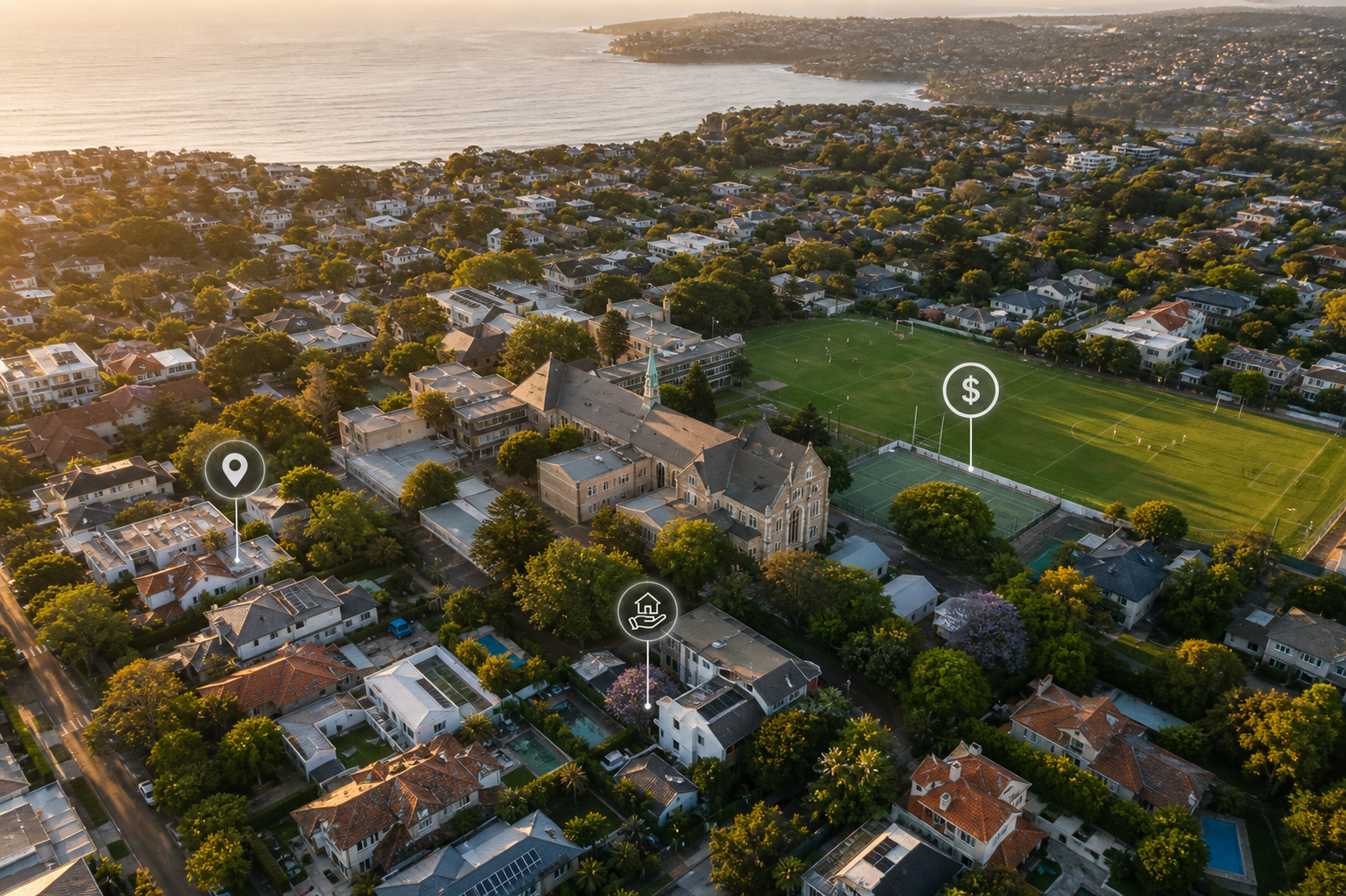
If the price you pay is ahead of recent comparable sales, the bank may value lower, cutting your usable equity, LVR and sometimes your approval. Understanding that link is critical if you’re buying or refinancing in a top catchment, especially in Sydney’s east.
How school catchments flow through to bank valuations
Valuers don’t tick a box for “good school zone”. They capture it indirectly through recent comparable sales.
What actually happens:
- The valuer maps your property to nearby recent sales (usually within 6–12 months).
- If the catchment has been hot, those sales will already bake in the premium.
- If your purchase price is well above those sales, the valuer often lands closer to the evidence, not your contract.
In some Eastern Suburbs family pockets, premium public school zones can add 5–20% over similar stock just outside the line. But if the recent sales evidence is thin, banks can get conservative. That’s why two seemingly similar homes can value very differently, as we unpack in /insights/why-two-eastern-suburbs-properties-valued-so-differently.
The strategy continues below
You've seen the problem and the groundwork — now unlock the exact steps our CPA-certified brokers use, including 3 more sections. Enter your email for instant, free full access.
Free access. No spam — unsubscribe anytime. Your details stay confidential.
Frequently asked questions
Talk to a CPA-certified broker
Free consultation, plain-English advice tailored to your situation.