
Article
Can Your Small Business Qualify For Equipment Finance Today?
A practical eligibility checklist to see if your Australian small business can qualify for equipment finance this week, plus what to fix before you apply.
Key Takeaway
Most Australian small businesses can qualify for equipment finance if they have an active ABN, at least 6–24 months of trading, stable turnover, and bank statements that support repayments. Lenders typically cap total asset age at 10–15 years for vehicles and machinery, and 5–7 years for tech. This article provides a step‑by‑step eligibility checklist and shows how to fix common hurdles, giving owners a practical path to apply within one week.
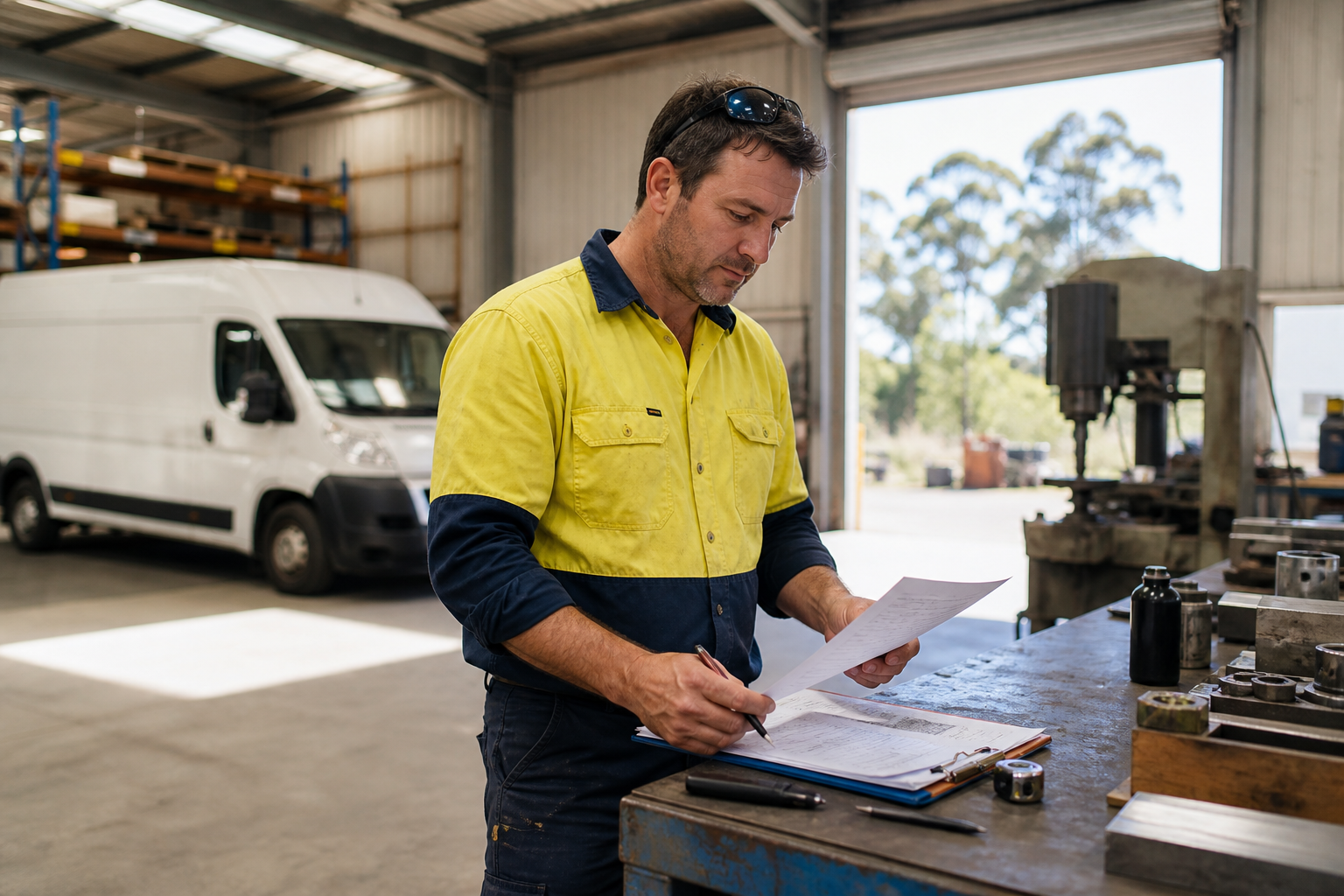
Most Australian small businesses can qualify for equipment finance if they have an active ABN, basic trading history, stable cashflow and the right asset. The key is matching your situation to the right lender and fixing obvious issues (ATO debts, messy bank accounts) before you apply.
This checklist shows you, in under 15 minutes, whether you’re likely to qualify and what to focus on this week.

1. Quick equipment finance eligibility checklist
Use this as a yes/no screen. If you tick most of these, you’re in the game.
Business basics
- Active ABN (and GST registered if turnover ≥ $75k).
- ABN age usually at least 6–24 months, depending on lender.
- Australian business buying equipment used mainly (>50%) for business.
Money and conduct
- Turnover and margins comfortably cover proposed repayments.
- Business and personal accounts not regularly overdrawn.
- No unpaid ATO debt, or an ATO payment plan you’re actually meeting.
(For how lenders read your numbers in detail, see /insights/equipment-finance-basics-eligibility.)
Credit file and security
- No recent defaults/judgments, or they’re paid with a clear explanation.
- The equipment has reasonable resale value and a normal working life.
- Loan term broadly matches asset life (often 3–7 years).
If you’re shaky on credit or tax debt, there are still options, but you’ll need a strategy – start with /insights/equipment-finance-after-credit-blip-ato-debt.
2. ABN age and trading history: how new is too new?
Lenders care less about your logo and more about whether the business model works.
Typical ABN age rules
| Scenario | Typical ABN age lenders like | Common conditions |
|---|---|---|
| Established business | 2+ years | Full-doc (financials, tax returns) often required |
| Growing small business | 12–24 months | Bank statements + BAS may be enough |
| New venture, experienced owner | 6–12 months | Strong industry history, maybe a deposit or extra security |
| Brand new start-up | < 6 months | Harder: usually smaller limits, more security, or personal income support |
These are indicative ranges, not hard rules. Some niche lenders will go earlier if:
- You have strong PAYG income alongside the business; or
- You’re buying standard, easily resold equipment; and
- The deal size is modest (e.g. under $75k–$150k).
What to have ready
- Last 6–12 months business bank statements.
- Latest BAS and/or management accounts.
- Any existing contracts that rely on the new equipment.
If your numbers are messy, fix that before you apply – this alone can improve pricing and approval odds (see /insights/fast-track-equipment-finance-approvals-present-business-to-lenders).
3. Cashflow and serviceability: will repayments actually fit?
Lenders assess equipment finance serviceability based on business cashflow after expenses and owners’ drawings, not just your top-line turnover.
Worked example: will this truck repayment fly?
- Price of truck (incl. GST): $150,000
- Deposit / trade-in: $30,000
- Amount financed: $120,000
- Term: 5 years (60 months)
- Indicative rate (for illustration only): 9.00% p.a., P&I
Monthly repayment (approx.): $2,490
If your business generates $15,000 per month net of direct costs, and fixed overheads plus owners’ drawings are $11,000, that leaves $4,000. A $2,490 repayment consumes more than half of that buffer – borderline if your work is lumpy.
Lenders will look for:
- 1.25–1.5x coverage of repayments from recurring cashflow.
- No pattern of cashflow crises (frequent overdrawn fees, dishonours).
Quick self-test
- Add up all existing loan and lease repayments.
- Add the proposed new equipment repayment.
- Compare that total to your average monthly net operating cashflow.
If you’re under 1.2x coverage or relying heavily on your personal credit cards, tidy things up first or look at staging purchases.
The strategy continues below
You've seen the problem and the groundwork — now unlock the exact steps our CPA-certified brokers use, including 5 more sections. Enter your email for instant, free full access.
Free access. No spam — unsubscribe anytime. Your details stay confidential.
Frequently asked questions
Talk to a CPA-certified broker
Free consultation, plain-English advice tailored to your situation.