
Article
Solar, Pools And Basements In Prestige Homes: What Banks Really See
Thinking about adding solar, a pool or a basement to a prestige Eastern Suburbs home? This guide shows how lenders and valuers really treat these upgrades, how to avoid over‑capitalising, and what to line up this week before you sign a building or finance contract.
Key Takeaway
Lenders and valuers rarely give dollar‑for‑dollar value to solar, pools or basements on prestige homes, instead anchoring valuations to recent comparable sales and overall land value. In blue‑chip Eastern Suburbs areas, over‑capitalisation risk is high because lifestyle upgrades can add less than 50–70% of cost to bank valuation. The most practical move is to model valuations conservatively, keep 6–12 months of stressed repayments in cash or offset, and structure finance so lifestyle projects don’t trap equity or kill future borrowing power.

This topic is covered in full on Tailored Loans Sydney
Thinking about adding solar, a pool or a basement to a prestige Eastern Suburbs home? This guide shows how lenders and valuers really treat these upgrades, how to avoid over‑capitalising, and what to line up this week before you sign a building or finance contract.
Read the full guide on tailoredloans.sydneyAdding solar, a pool or a basement to a prestige home can absolutely improve lifestyle and long‑term appeal. But lenders and valuers don’t see these upgrades the same way you and your architect do.
From a bank’s point of view, your value is anchored in land, location and comparable sales — not how much joy the pool brings the kids. Understanding that difference is the key to avoiding over‑capitalising and keeping your borrowing power intact.
In lender language: solar, pools and basements are often partially valued lifestyle extras. The bank will usually only credit a portion of what you spend, based on what similar nearby homes have actually sold for.
This guide focuses on Eastern Suburbs‑style prestige and blue‑chip locations, but the principles apply anywhere in Australia.
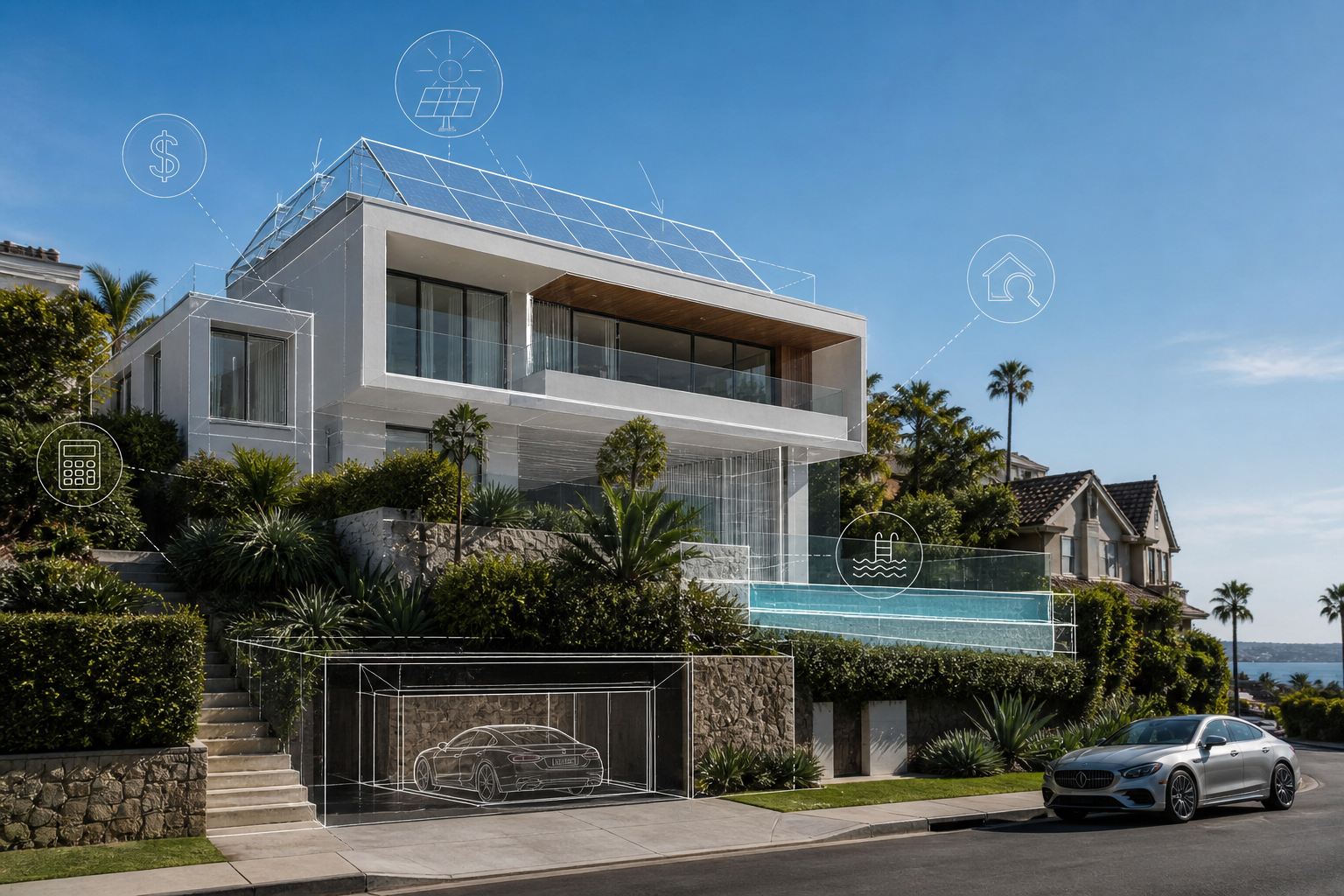
1. How lenders and valuers look at prestige home upgrades
1.1 The valuation engine: comparable sales, not build cost
When you add a pool, solar or basement, your bank valuation is usually based on:
- Comparable sales ("comps") – what similar homes nearby have sold for in the last 3–6 months.
- Land value and position – aspect, views, street reputation, noise, risk (cliffside, flooding, etc).
- Overall improvement level – the home as a whole: condition, layout, quality of finishes.
- Market depth – how many buyers want what you’re building.
The build cost is only a sense‑check, not the starting point.
That’s why two Eastern Suburbs properties that look similar on paper can value very differently. If you haven’t read it yet, it’s worth pairing this article with our case‑based explainer: Why Two Eastern Suburbs Properties Value So Differently (Real Cases).
1.2 Bank mindset: risk, not aesthetics
Banks care about three things:
- Can they get their money back if they have to sell quickly?
- How volatile is that sale price likely to be?
- Are you leaving yourself with enough buffer after the reno?
Roy Morgan research in mid‑2026 shows around one‑third of Australian mortgage holders are now ‘At Risk’ of stress due to rising rates and stretched budgets. In that environment, lenders are more conservative about any upgrade that:
- pushes total debt higher without clear valuation support; or
- appeals to a smaller buyer pool (e.g. huge deep basements, ultra‑high‑maintenance pools).
1.3 Prestige suburbs: high prices, high over‑capitalisation risk
In blue‑chip pockets (Bondi, Bronte, Tamarama, Double Bay, Vaucluse, Dover Heights):
- Land is already priced for perfection.
- Extra spend can quickly outpace what buyers will pay above the existing premium.
- Valuers lean harder on recent settled sales, not your cost base or architect’s estimate.
For a deeper street‑level lens on how banks view different pockets, see Finding Real Value in Sydney’s Eastern Suburbs: A Lender’s Street‑Level View.
2. Solar on prestige homes: green ticks, modest valuation uplift
Solar is often the lowest‑risk upgrade in this trio, but it still doesn’t get full credit in valuations.
2.1 How valuers treat solar on high‑end homes
Valuers typically look at solar as part of overall property condition, not a separate line item.
They’ll consider:
- How common is solar in this suburb? If it’s standard, you’re just bringing your home up to par.
- Size and quality of the system – reputable brands, clean install, good roof integration.
- Documentation – invoices, warranty, compliance certificates.
In practice, many valuers treat solar as value‑neutral to mildly positive. You might get some uplift, but usually not dollar‑for‑dollar.
We dive into solar‑specific valuation rules here: Solar, Batteries And Bank Valuations: What Actually Gets You Credit.
2.2 When solar helps your finance story
Solar can still help your overall risk profile, even if it doesn’t dramatically change the valuation:
- Lower bills improve cashflow, which matters for serviceability.
- Ongoing savings can help rebuild a cash or offset buffer after a big renovation.
- For self‑employed clients, stable ongoing savings can smooth volatile income.
You’ll get the most benefit when you:
- Treat quoted savings cautiously – stress‑test them 20% lower than sales pitches, and assume loan repayments at 3% above current rates, consistent with APRA’s buffer and our own risk rules from earlier solar work.
- Maintain a dedicated solar buffer – 6–12 months of solar loan repayments plus at least one quarterly power bill in offset, as we’ve recommended across multiple solar guides.
2.3 Finance options for solar on prestige homes
A quick comparison of how banks might see different ways to finance a $25,000 high‑end solar + battery system on a prestige home:
| Option | Typical structure | How lenders often view it | Pros | Risks |
|---|---|---|---|---|
| Equity top‑up on home loan | P&I or IO over 25–30 years | Low rate, but long term. Valuer must support higher LVR. | Lowest headline rate, simple structure, can use offset. | Total interest over time can dwarf savings if not repaid faster. Equity tied up. |
| Green loan / separate personal loan | 5–10 year term, higher rate than mortgage | Short term, clear purpose. May be unsecured. | Faster payoff, keeps home loan cleaner. | Higher monthly repayment; can strain cashflow if stress‑tested poorly. |
| Vendor / installer finance | Often bundled, teaser rate | Scrutinised closely; some lenders dislike complex vendor finance. | Low upfront cost, quick approval. | Hidden fees, balloon payments, hard to refinance around later. |
The smartest approach is to start from the cash price of the system, then map each finance option over its full term – a principle we’ve laid out in detail in What A Solar And Battery System Really Costs Australians In 2026.
The strategy continues below
You've seen the problem and the groundwork — now unlock the exact steps our CPA-certified brokers use, including 6 more sections. Enter your email for instant, free full access.
Free access. No spam — unsubscribe anytime. Your details stay confidential.
Frequently asked questions
Talk to a CPA-certified broker
Free consultation, plain-English advice tailored to your situation.