
Article
Should You Fix The Roof Before Solar? Finance Risks Explained
Old or damaged roofs can quietly blow up your solar plans and finance. Here’s how lenders view roof risk, when to replace before installing solar, and smart ways to finance both together without over‑stretching your budget.
Key Takeaway
Old or damaged roofs can undermine solar investments and increase finance risk because lenders rely on the roof’s condition when valuing a property and assessing solar savings. In Australia, a 20–25 year solar system mounted on a 5–10 year roof can lead to double labour costs and unplanned cash outlays. Borrowers should assess roof life, get written repair quotes, and, if needed, finance roof and solar together using conservative savings assumptions and a 3% interest rate buffer. The key actionable step is to run a combined roof‑plus‑solar budget before signing any installer contract.
This topic is covered in full on Tailored Loans Sydney
Old or damaged roofs can quietly blow up your solar plans and finance. Here’s how lenders view roof risk, when to replace before installing solar, and smart ways to finance both together without over‑stretching your budget.
Read the full guide on tailoredloans.sydneyOld or damaged roofs make solar finance riskier because they shorten the system’s effective life, increase maintenance surprises, and can even reduce your property valuation.
If your roof is near end‑of‑life, it’s usually smarter to price repairs or replacement in before you borrow for solar, and run the numbers assuming conservative savings, a 3% higher interest rate, and a cash buffer that can handle delays or extra costs.
Why roof condition matters to your loan and valuation
Lenders don’t care about solar panels in isolation.
They care whether the overall property is good security and whether your cashflow is robust if things go wrong.
A tired roof can cut across both.
1. Valuation risk
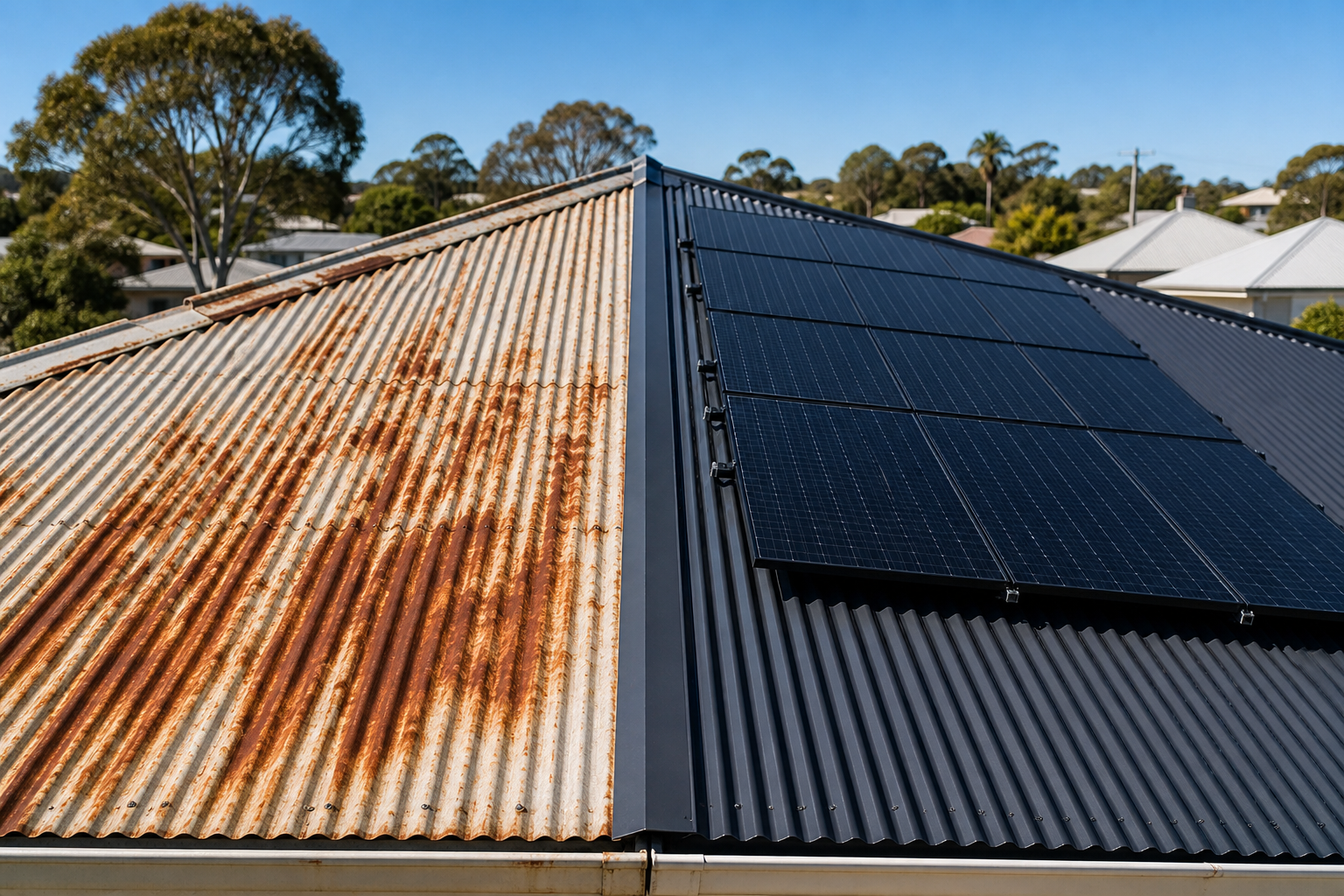
Valuers note visible roof issues – rusted metal, slipped tiles, sagging, previous leaks.
Major defects can:
- Trigger a lower valuation, reducing how much equity you can access.
- Push your loan over key LVR bands, increasing or triggering LMI.
- Lead to a ‘subject to repair’ comment that must be addressed before full approval.
If you’re planning to use home equity for solar, a weaker roof report can quietly shrink your borrowing room.
2. Cashflow and risk modelling
Solar only makes sense if savings outweigh repayments under stress.
We recommend modelling solar savings at 20% below installer quotes and loan rates 3% above today’s rate, consistent with our broader solar finance guides.
Add a weak roof and you introduce another variable: unplanned capital works.
If you’re already stretching to make a solar loan fit, a $12,000 emergency roof job in three years can be the thing that tips cashflow into trouble.
The strategy continues below
You've seen the problem and the groundwork — now unlock the exact steps our CPA-certified brokers use, including 4 more sections. Enter your email for instant, free full access.
Free access. No spam — unsubscribe anytime. Your details stay confidential.
Frequently asked questions
Talk to a CPA-certified broker
Free consultation, plain-English advice tailored to your situation.