
Article
Smart Truck and Heavy Vehicle Finance Decisions for Owner‑Drivers
Owner‑drivers can use truck and heavy vehicle finance to grow income without crushing cashflow. Learn the key loan types, approval requirements, tax angles and a one‑week plan to move from quote to confident decision.
Key Takeaway
Truck and heavy vehicle finance lets Australian owner‑drivers fund prime movers, rigids and trailers over 3–7 years, usually secured by the vehicle itself, with loan amounts often between 80–110% of the asset price. Lenders assess income stability, existing debts and the viability of transport contracts, applying serviceability tests similar to home loans. Choosing the right structure, term and balloon is critical so repayments fit conservative cashflow and the loan does not outlive the truck’s earning life.

Truck and heavy vehicle finance lets owner‑drivers spread the cost of a prime mover, rigid or trailer over 3–7 years, usually using the truck itself as security instead of the family home. The key is choosing the right structure, term and balloon so repayments still work when fuel spikes or a contract ends.
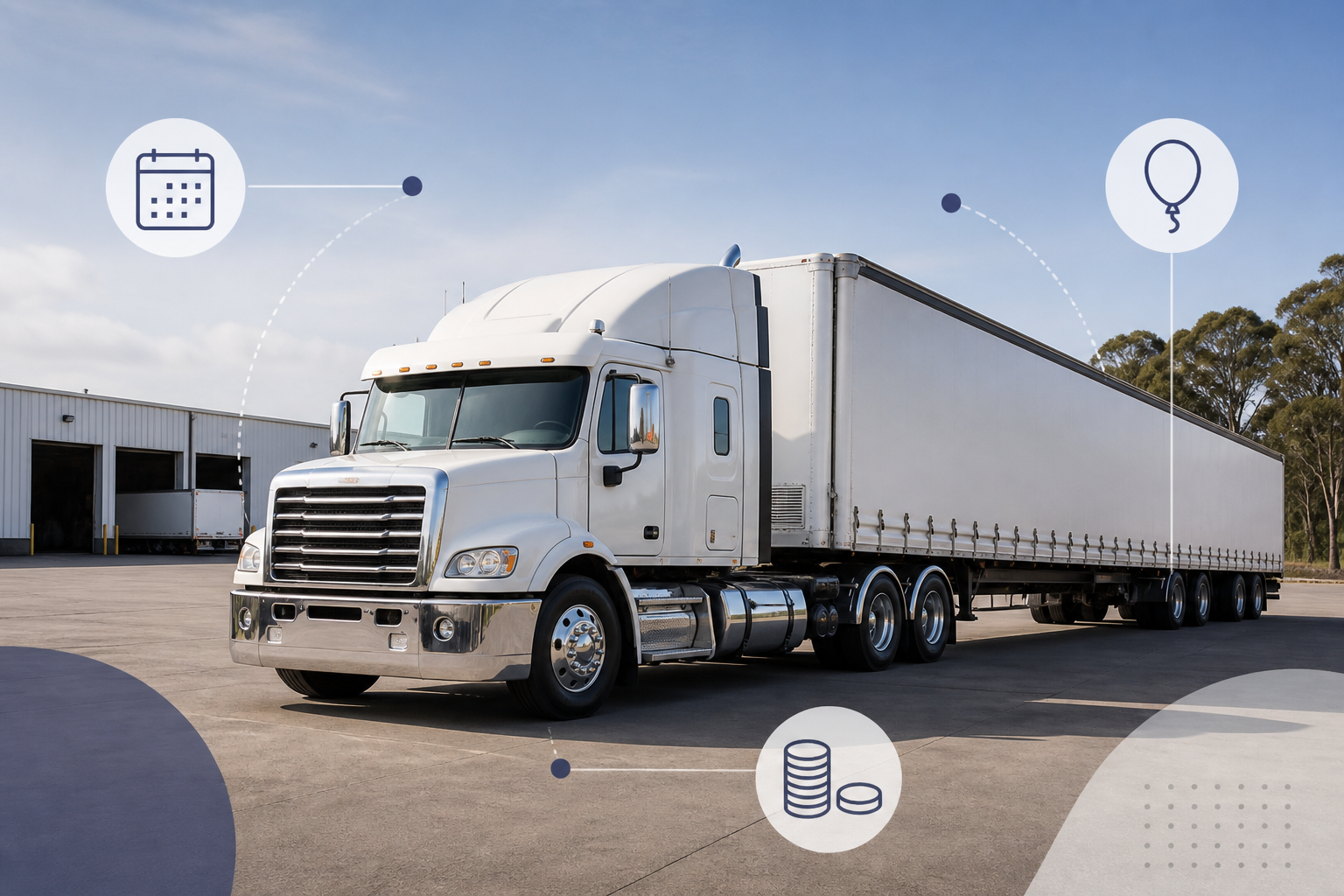
Your main truck finance options in Australia
For most owner‑drivers and small fleets, you’ll see three structures:
- Chattel mortgage (most common)
- Finance lease
- Commercial hire purchase
The right choice depends on tax, GST and ownership – and ideally should be checked with your accountant. There’s a deeper comparison in /insights/chattel-mortgage-vs-lease-vs-hire-purchase, but here’s the short version.
| Option | Who owns truck during term? | Typical term | GST timing | Good fit for |
|---|---|---|---|---|
| Chattel mortgage | You/your entity | 3–7 years | Claim GST on full purchase price upfront (if registered) | Most small transport businesses |
| Finance lease | Lender | 3–5 years | GST on each payment | Newer businesses needing flexibility |
| Hire purchase | Lender until final payment | 3–5 years | Similar to chattel mortgage but timing varies | Certain tax/accounting preferences |
For many owner‑drivers, a chattel mortgage with a sensible balloon is the default starting point.
What lenders actually look for with heavy vehicle loans
Truck finance is business finance, so lenders care less about payslips and more about how the truck will earn money.
Core approval requirements
Most lenders will want to see:
- ABN – usually 1–2 years minimum; some will look at shorter with strong experience.
- Income evidence – tax returns, BAS, or bank statements if you’re using an alt‑doc option.
- Experience – history as an employee driver or prior owner‑driver experience.
- Contracts or work sources – linehaul contract, tipper runs, local distribution, etc.
- Clean-ish credit history – a couple of old defaults can be workable, frequent arrears is harder.
Typical maximums are 100–110% of the truck price (to include on‑roads and fit‑out), but expect tighter if you’re new or the truck is older.
If you also want a home loan in the next few years, treat this like any other business debt – it will affect your borrowing power. Our home‑loan guide for business owners at /insights/small-business-owner-home-loan-eligibility-checklist shows how lenders read these commitments.
Full‑doc vs alt‑doc
- Full‑doc: lodged tax returns, BAS and financial statements – usually better rates.
- Alt‑doc: accountant’s letter, BAS or bank statements instead of full financials – faster and more flexible but often a bit pricier.
Alt‑doc can be useful for fast growth, but plan to refinance to full‑doc once you’ve got two years of strong lodged returns.
The strategy continues below
You've seen the problem and the groundwork — now unlock the exact steps our CPA-certified brokers use, including 4 more sections. Enter your email for instant, free full access.
Free access. No spam — unsubscribe anytime. Your details stay confidential.
Frequently asked questions
Talk to a CPA-certified broker
Free consultation, plain-English advice tailored to your situation.