
Article
Smart ways to use offsets, splits and redraw under new tax rules
How to use loan splits, offsets and redraw to separate pre‑ and post‑reform debt on each property so you can protect interest deductibility and stay ATO‑ready.
Key Takeaway
This guide explains how Australian property investors can use loan splits, offsets and redraw to track pre‑ and post‑reform borrowing on each property for the 2026–27 negative gearing changes. It outlines why offsets do not change loan purpose while redraw does, and shows how to label splits so interest remains deductible under ATO tracing rules. A worked example and one‑week action plan give readers a concrete structure they can implement with their broker or accountant.

This topic is covered in full on Tailored Loans Sydney
How to use loan splits, offsets and redraw to separate pre‑ and post‑reform debt on each property so you can protect interest deductibility and stay ATO‑ready.
Read the full guide on tailoredloans.sydneyFrom this week, the cleanest way to track old versus new tax rules on each property is to use labelled loan splits for every borrowing event, match offsets to those splits, and avoid using redraw for everyday spending. That structure lets you show exactly which interest is deductible under the pre‑reform rules and which sits under the tighter post‑2026 regime.
In a world of shrinking negative gearing benefits, how you bank day‑to‑day matters almost as much as which property you own.
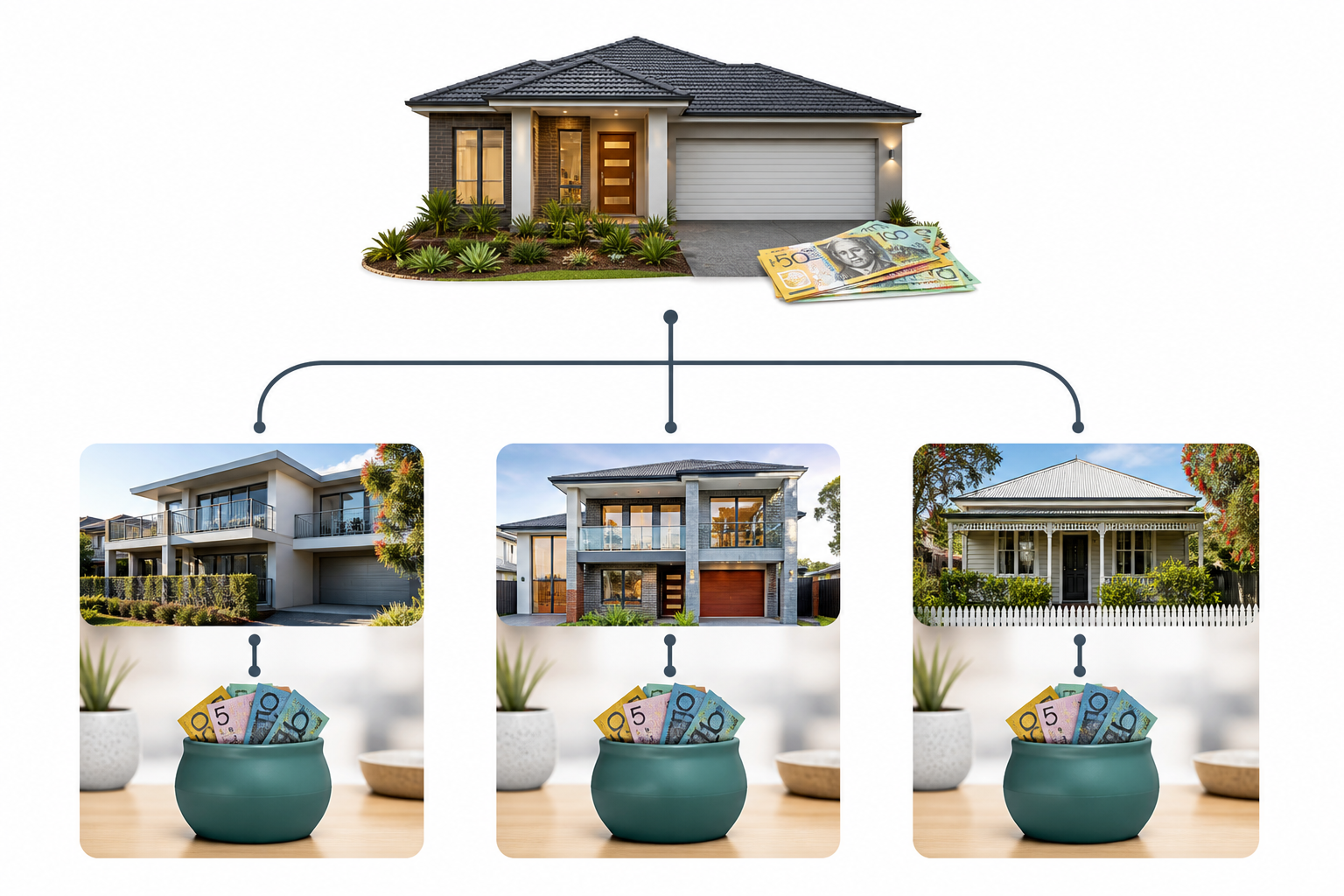
1. Why the new tax rules make structure and banking critical
From the 2026–27 Budget changes, many residential investments bought or geared after the start date will have rental losses quarantined or capped rather than fully offset against wages.
Two things follow:
- You must be able to show which interest relates to a grandfathered (old‑rules) property or loan.
- Mixing uses in one loan or redraw line can permanently blur deductibility.
APRA’s 3% serviceability buffer and higher rates (RBA, 2026) mean there’s less room for sloppiness. Good structure protects both your tax position and your borrowing power.
If you’re still setting everything up under one big blended loan, start with clean structures for your first couple of investments, then refine your banking around that.
2. Offsets vs redraw vs splits: what they actually do for tax
The key to tracking old vs new rules is understanding how each tool interacts with ATO tracing rules.
2.1 Definitions in plain English
- Loan split: a sub‑loan under one facility. Each split has its own balance, rate and purpose.
- Offset account: a separate bank account whose balance reduces the interest charged on its linked loan or split. Moving money in/out does not change the loan’s purpose.
- Redraw: access to extra repayments you’ve made on a loan. Taking money out changes the purpose of that portion from the date of redraw.
2.2 Tax effect comparison
| Feature / tool | Loan split | Offset account | Redraw facility |
|---|---|---|---|
| Changes original loan purpose? | No (fixed by how funds are used) | No (balance is just cash, not a new loan) | Yes – each redraw is a new borrowing with its own purpose |
| Best primary use | Separate each investment / rule set | Park cash, manage cashflow without affecting deductibility | Temporary access to extra repayments; avoid for spend |
| Helps track old vs new rules? | Yes, if clearly labelled | Yes, when matched to correct split | Usually makes tracking harder |
| Everyday spending friendly? | Not applicable | Yes – ideal for bills/salary routing | Risky – easy to taint deductibility |
As set out in our guide on quarantining investment and personal debt, using offsets rather than redraw for daily cashflow is critical because redraw changes loan purpose while offset movements don’t.
The strategy continues below
You've seen the problem and the groundwork — now unlock the exact steps our CPA-certified brokers use, including 5 more sections. Enter your email for instant, free full access.
Free access. No spam — unsubscribe anytime. Your details stay confidential.
Frequently asked questions
Talk to a CPA-certified broker
Free consultation, plain-English advice tailored to your situation.