
Article
Funding The Second Site: Working Capital Moves That Keep You Safe
Written and reviewed by James Chee, CPA · Last reviewed
Opening a second site? Here’s a decision‑grade working capital plan so you don’t blow cashflow, over‑gear the group, or quietly risk the family home.
Key Takeaway
When opening a second business location, owners should separate fit-out, launch stock, and early trading losses, then fund each with different facilities to avoid over-gearing short-term working capital. A practical rule is to hold 3–6 months of new site fixed costs in cash buffers and ensure total working capital debt remains serviceable within 12–24 months from normal trading. Mapping both sites’ cashflows and aligning facilities to asset life helps protect the family home and borrowing power while scaling.
Watch the short answer
Can I get a home or business loan with a 12‑month-old business?
Working out how to fund site two with a young business? This video walks through how lenders view 12‑month trading histories.
Read the transcript
Started a wildly successful business 12 months ago? The bank still thinks you're a startup risk. The standard institutional rule is that you need 2 full years of ABN history to get a mortgage, but if your cash flow is booming right now, you shouldn't have to wait another 12 months to buy a house. At Local Knowledge Finance, we have access to specialist alt doc lenders who will approve your loan with just 6 to 12 months of ABN registration and clean bank statements. Your success shouldn't be penalised by arbitrary timelines. DM me the word 'BUSINESS' to bypass the 2-year rule.
General information only, not personal advice. Your situation is assessed before any recommendation.

This topic is covered in full on Local Knowledge Finance
Opening a second site? Here’s a decision‑grade working capital plan so you don’t blow cashflow, over‑gear the group, or quietly risk the family home.
Read the full guide on ding.financialOpening a second location safely means planning working capital up front: separate the cash for fit‑out, opening stock, and early trading losses, then match each bucket to the right type of finance and a realistic buffer. If you can’t show on paper that both sites survive 6–12 weak months without raiding your home loan or ATO money, the plan isn’t ready yet.
Step 1: Map the real cash needs of the second site
Don’t start with “what will the bank give me?”. Start with “what will this site actually burn through?”
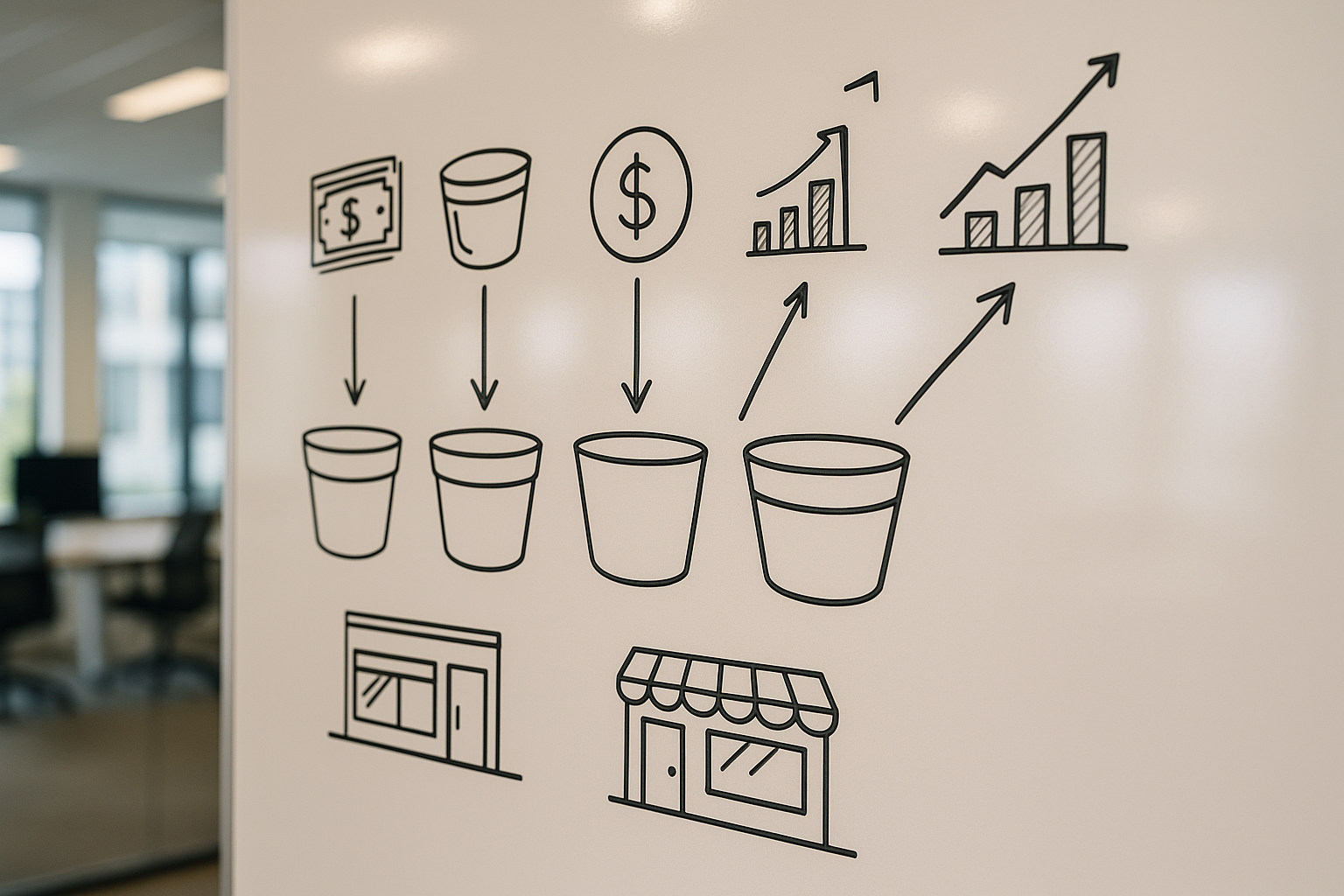
Break it into four buckets:
- Fit‑out and equipment – once‑off, long‑life items.
- Opening stock / pre‑launch costs – once, but shorter‑life.
- Working capital for trading – the day‑to‑day gap between paying suppliers and getting paid.
- Buffer for slow ramp‑up – the ugly first 6–12 months.
A quick worked example
Say you’re opening a second café or clinic:
- Fit‑out and equipment: $300,000 (life 5–7 years)
- Opening stock / pre‑launch marketing: $60,000
- Fixed monthly burn (rent, wages, utilities, basics): $70,000
- You expect it to be cashflow break‑even in month 9.
If you assume 9 months to break‑even and want a 3‑month extra buffer, your working‑capital‑plus‑buffer need is roughly:
(9 + 3) × $70,000 = $840,000
That doesn’t mean you borrow $840k as working capital – but it does mean you need a clear plan for how that gap is funded and repaid.
For a deeper overview of structures and safe leverage, see Working Capital Basics: Structures, Costs And Safe Limits For SMEs.
The strategy continues below
You've seen the problem and the groundwork — now unlock the exact steps our CPA and Registered Tax Agent-led brokers use, including 4 more sections. Enter your email for instant, free full access.
Free access. No spam — unsubscribe anytime. Your details stay confidential.
Frequently asked questions
Talk to a broker who is a CPA and Registered Tax Agent
Free consultation, plain-English advice tailored to your situation.