
Article
Balancing Catchment And Coast: Smart Eastern Suburbs Choices Now
A decision-grade guide to weighing school catchments versus beach proximity in Sydney’s Eastern Suburbs, with numbers, risks and next steps families can act on this week.
Key Takeaway
This article explains how families can choose between premium school catchments and coastal locations in Sydney’s Eastern Suburbs by comparing prices, borrowing capacity and risk. It outlines that catchment and coastal premiums can easily add $300k–$600k to purchase prices, which materially changes monthly repayments and serviceability tests under APRA’s 3% buffer. The guide ends with a practical three-step plan to set a safe budget, shortlist suburbs and structure loans so lifestyle upgrades don’t overstretch cashflow.
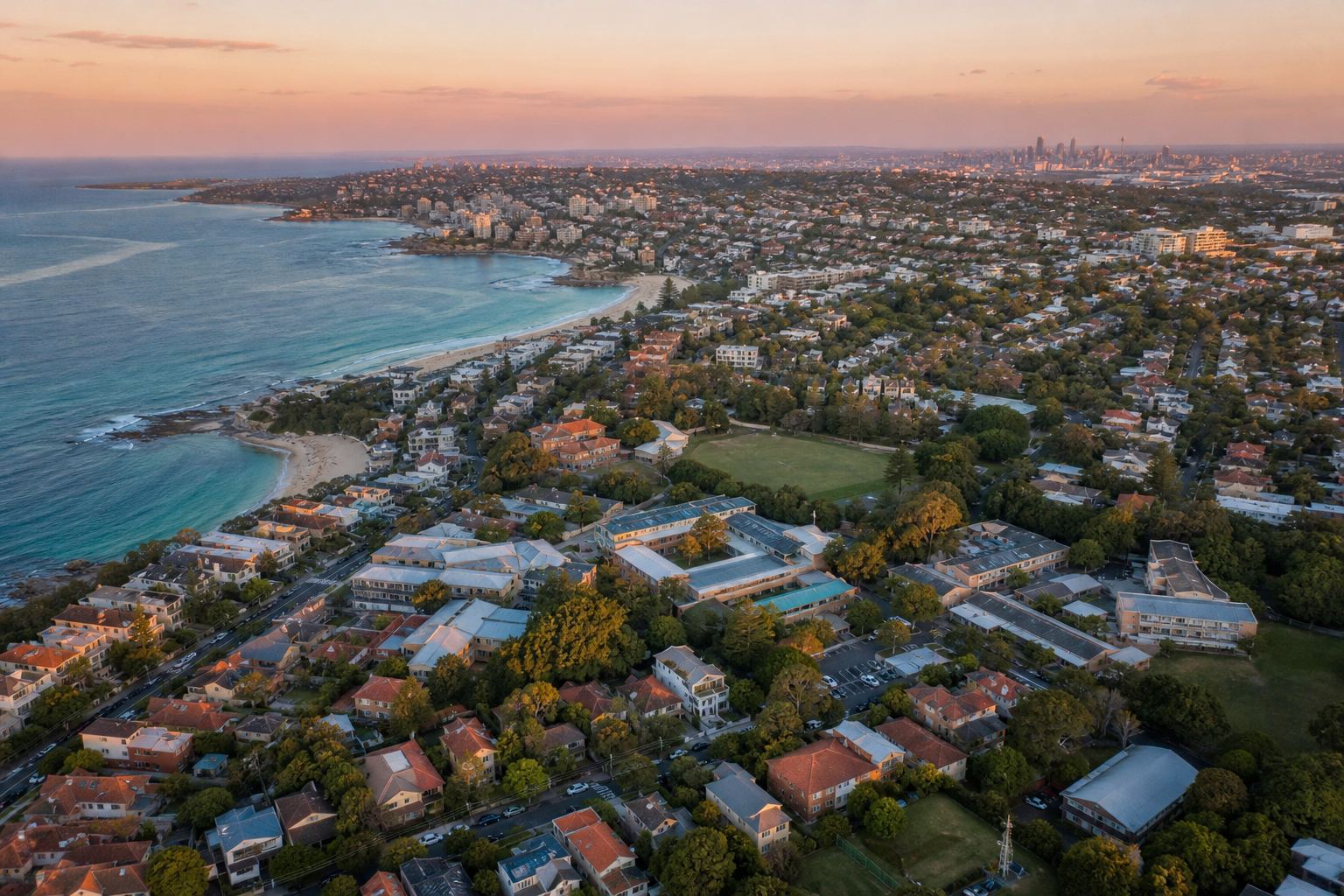
This topic is covered in full on Tailored Loans Sydney
A decision-grade guide to weighing school catchments versus beach proximity in Sydney’s Eastern Suburbs, with numbers, risks and next steps families can act on this week.
Read the full guide on tailoredloans.sydneyFor Eastern Suburbs families, choosing between a top school catchment and living near the beach is ultimately a numbers decision wrapped in lifestyle emotion. The right move is the one where the price gap, borrowing capacity, school outcomes and everyday travel all stack up under a 3% interest‑rate buffer and a realistic family budget.
Here’s how to compare catchment and coast this week so you can act without second‑guessing yourself for the next decade.

1. How catchment vs coast really changes the numbers
The first step is to translate lifestyle preferences into dollars, repayments and risk. In Sydney’s East, school‑zone and beach premiums can easily add $300k–$600k to a purchase price, which can be the difference between a safe loan and over‑stretching.
1.1 Typical price patterns by pocket
These are indicative ranges only – every street is different – but they show the shape of the trade‑off:
| Location type (Eastern Suburbs) | Illustrative price (family home) | Comment on premium vs “middle belt” |
|---|---|---|
| Inner catchment, walk to top primary/secondary | $3.0m–$4.0m+ | Strong competition from families and downsizers |
| Walkable to beach (Bronte, Coogee, Clovelly etc) | $3.2m–$4.5m+ | Coastal premium plus low stock |
| Mid‑belt, good but not top catchment, drive to beach | $2.4m–$3.1m | Often better land/house for the money |
| Fringe/post‑war pockets further from both | $1.9m–$2.4m | Lower entry price, more investor activity |
Source: broad agent price guides and recent listing ranges, not a valuation.
On a $2.5m home with an 80% LVR, the loan is about $2.0m. On a $3.2m property, the loan might be $2.56m – an extra $560k.
1.2 Worked repayment example
Assume a 30‑year principal and interest home loan at an indicative 6.0% p.a. (not a quote):
- Loan A (middle‑belt family suburb): $2,000,000 → approx. $11,990 per month
- Loan B (coastal or premium catchment): $2,560,000 → approx. $15,347 per month
That’s about $3,350 extra every month, or $40,000 a year, before rates rise or private school fees appear.
Lenders will then apply an APRA‑guided 3% buffer, testing these loans as if the rate were ~9%. If your budget only works at today’s rates, that’s a red flag. Our related guide on location trade‑offs and borrowing power goes deeper into this stress testing: /insights/school-zones-train-lines-beaches-borrowing-strategy.
2. Catchment first: when paying the school premium makes sense
Buying into a high‑demand school zone usually costs more up front, but can create resilience and options if you get the numbers right.
2.1 Why families pay for school zones
Common reasons we see:
- Replacing or avoiding private school fees (often $20k–$35k+ per child per year).
- Wanting walkable schools and activities to cut commute stress.
- Betting on stronger resale demand from the next wave of families.
From a lender’s perspective, quality catchment suburbs with stable house‑and‑land stock can look safer, which can help with valuation confidence and, sometimes, sharper pricing.
Our deep dive on family‑stronghold suburbs in the East covers how these pockets behave under stress: /insights/family-strongholds-sydneys-east-schools-space-smarter-home-loans.
2.2 Key risks of stretching for the right school
The main danger is treating the school premium as non‑negotiable and then quietly raiding buffers to make it work.
For self‑employed clients especially, drawing on business working capital or ATO money to get into a top zone can cut both business resilience and borrowing power at the same time (see the risks outlined in /insights/school-zones-train-lines-beaches-borrowing-strategy).
Sanity checks:
- Test repayments at 3% above today’s rate and assume one income is down 20–30% for six months.
- Keep at least 3–6 months of total living + loan costs in cash or accessible offset.
- If private school is still on the cards, model those fees alongside the bigger mortgage.
The strategy continues below
You've seen the problem and the groundwork — now unlock the exact steps our CPA-certified brokers use, including 5 more sections. Enter your email for instant, free full access.
Free access. No spam — unsubscribe anytime. Your details stay confidential.
Frequently asked questions
Talk to a CPA-certified broker
Free consultation, plain-English advice tailored to your situation.