
Article
Combining Two Green Square Units: Finance, Titles and Timing
Thinking of joining two Green Square or Zetland apartments into one larger home? Here’s how to structure the purchase, loans and titles, and what to line up with your broker, lawyer and strata before you start knocking down walls.
Key Takeaway
Combining two units in Green Square usually involves buying both apartments with separate loans, obtaining strata and council approvals to amalgamate the lots, completing structural works, then refinancing to a single loan once a new strata plan is registered. Lenders typically advance 70–80% of the combined value, subject to serviceability and APRA’s 3% buffer, and some will not lend during major works. A staged finance‑plus‑title plan, agreed in writing with broker and solicitor, minimises valuation, legal and cashflow risk.
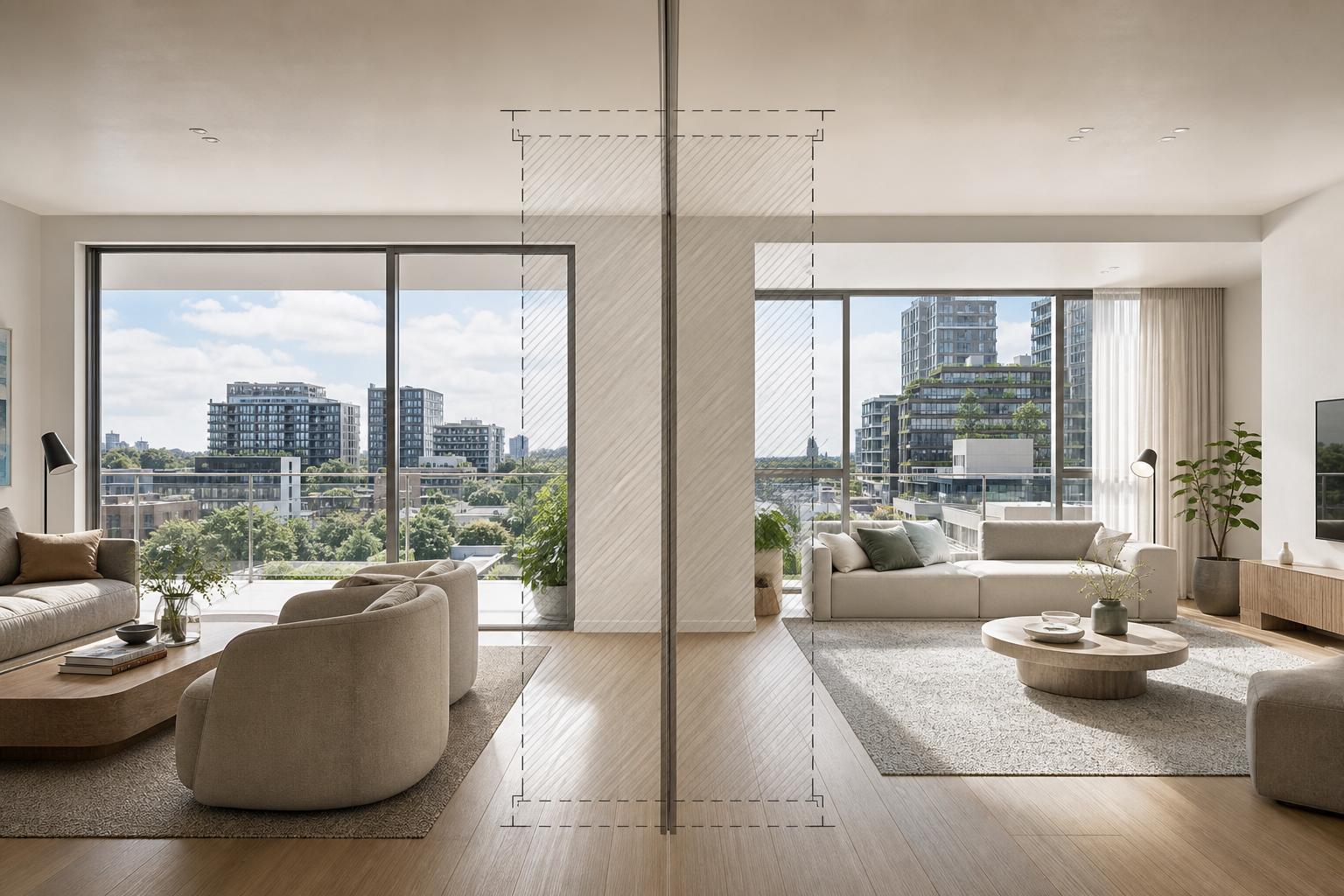
Turning two Green Square units into one larger apartment is doable, but only if you structure the finance and titles deliberately. The cleanest way is usually to buy both units (often on separate loans), secure strata and council approvals to amalgamate the lots, complete the works, then refinance into a single loan once the new, larger lot is registered and valued.
This guide walks through each decision so you can choose a structure and timeline you can act on this week.
1. First decision: why combine two units at all?
For Green Square and Zetland owners, joining two apartments can solve a specific problem:
- You want a family‑sized home without leaving the area.
- You want a unique, higher‑end apartment that may rent or sell better later.
- You bought one off‑the‑plan and can now pick up a neighbour at a discount.
Before you start, check this move fits your longer plan. If your real goal is a house in 10–15 years, you might be better mapping a series of simpler steps instead of a complex amalgamation – see /insights/10-15-year-property-plan-starting-green-square.
2. Core finance structures: one loan or many?
2.1 Three common ways to structure the lending
Every lender has nuances, but most Green Square borrowers end up with one of three patterns.
| Structure | How it works | Pros | Cons | Best for |
|---|---|---|---|---|
| Separate loans per lot | Two standard loans, often same lender, each secured by its own unit | Simple at purchase, easy valuations | More fees, harder to manage long‑term | Staged works, lower risk appetite |
| Cross‑collateralised loan | One (or two linked) loans secured by both titles | Maximises combined equity, can boost borrowing power | Harder to refinance or sell one lot later | Owners comfortable staying long‑term |
| Buy one in cash / high deposit, gear the other | One low‑LVR loan, one unencumbered | Strong flexibility, easier future refinance | Higher cash outlay upfront | Higher‑income or cashed‑up buyers |
For most clients, I prefer separate loans per lot initially, then a clean refinance to a single loan once the new combined lot is registered. It keeps your exit options open if something goes wrong.
2.2 How much can you borrow on two units?
Indicatively, lenders might allow 70–80% loan‑to‑value ratio (LVR) on each Green Square apartment, sometimes lower for small or investor‑heavy buildings. On a pair of $950,000 units:
- Unit A: $950,000 value, 80% LVR → $760,000 loan
- Unit B: $950,000 value, 80% LVR → $760,000 loan
- Combined purchase: $1.9m, combined loans: $1.52m
At a 6.5% P&I rate over 30 years, that $1.52m total is around $9,622 per month in repayments. Lenders will also apply APRA’s ~3% buffer, so they test you as if rates were ~9.5–9.75%.
If you’re highly geared or self‑employed, aim to keep at least 3–6 months of total repayments and living costs in cash or offset after settlement, not just the 2–3 months of essentials suggested for first‑home buyers in /insights/can-you-afford-first-home-green-square-numbers-walkthrough.
The strategy continues below
You've seen the problem and the groundwork — now unlock the exact steps our CPA-certified brokers use, including 5 more sections. Enter your email for instant, free full access.
Free access. No spam — unsubscribe anytime. Your details stay confidential.
Frequently asked questions
Talk to a CPA-certified broker
Free consultation, plain-English advice tailored to your situation.