
Article
How banks really see Double Bay and Bellevue Hill prices
Double Bay and Bellevue Hill often trade miles above Sydney averages — and banks know it. Here’s why prices behave differently, how valuers think, and what that means for your borrowing power and pre‑approval this week.
Key Takeaway
Double Bay and Bellevue Hill prices defy Sydney averages because of extreme land scarcity, global demand and tightly-held stock, and banks recognise this but still rely on conservative comparable sales and postcode rules. Prestige postcodes often attract standard or even favourable LVRs, yet valuers may shade unique homes 5–10% below agent price guides. Buyers and refinancers in these harbourside micro‑markets should run lender‑specific valuation checks and structure finance conservatively before auctions or listings to avoid shortfalls.

This topic is covered in full on Tailored Loans Sydney
Double Bay and Bellevue Hill often trade miles above Sydney averages — and banks know it. Here’s why prices behave differently, how valuers think, and what that means for your borrowing power and pre‑approval this week.
Read the full guide on tailoredloans.sydneyDouble Bay and Bellevue Hill sit miles above Sydney averages because they’re true scarcity markets – and banks know it – but valuers still anchor to recent sales, not glossy price guides.
In practice, that means you can see 10–20% swings between what locals are paying and what a conservative bank valuation will support, especially for unique homes and trophy assets.
1. Why prices here ignore the Sydney “average”
These suburbs are their own micro‑market. Median Sydney charts are almost useless once you cross New South Head Road.
Core reasons prices behave differently:
-
Finite, blue‑chip land
Very little new land ever comes on. Most sales are recycled family homes or knocked‑down rebuilds. When you mix small supply with deep pockets, medians drift upwards and rarely come back far. -
Global and inter‑suburb money
Buyers are often upgrading from elsewhere in the East, selling $4–6m homes to buy $7–12m homes, or bringing in offshore capital. Their budget isn’t tied to local wages, so they keep clearing prices even when wider Sydney slows. -
Lifestyle and school premiums
Walk-to-village, walk-to-ferry, school catchments and quick CBD access put a large, enduring premium on relatively few streets. That premium can be hundreds of thousands of dollars between near-identical houses. -
Ultra‑thin, emotional auction stock
With only a handful of quality listings at any time, one emotional under‑bidder can push a result 5–10% beyond the last comp. That doesn’t mean the next valuer will agree.
If you’re planning a 10‑year roadmap in the East, treat Double Bay/Bellevue Hill as their own lane, not just “expensive Eastern Suburbs”. The broader planning approach in /insights/long-term-property-mortgage-planning-eastern-suburbs still applies – the numbers are just bigger and less forgiving.
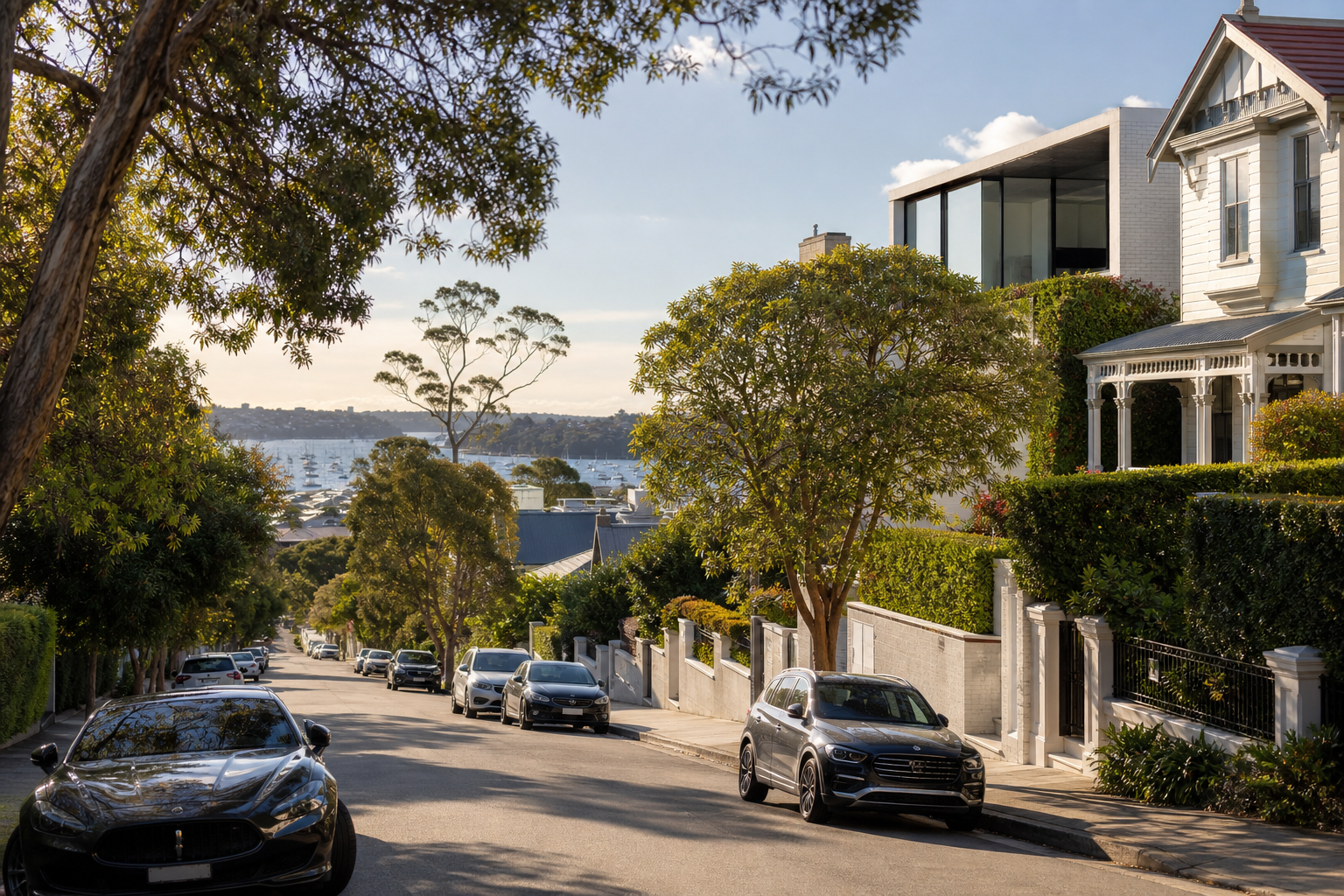
2. How banks actually see Double Bay and Bellevue Hill
The good news: prestige Eastern Suburbs postcodes are not on most lenders’ “high‑risk postcode” lists.
Compared with mining towns or high‑density unit pockets, they’re usually seen as:
- Low default risk – strong incomes, diversified borrowers.
- High liquidity – quality stock tends to sell quickly, even in slow markets.
From a credit policy lens, this often means:
- Standard 80% LVR for houses and well‑located units.
- Up to 90–95% with LMI for strong applications (subject to income and property checks).
- Normal rental shading for investment loans.
Where things get tricky is the valuation, not the postcode label.
For more on how postcode lists work, see /insights/postcode-risk-lvr-limits-bank-shading-suburb.
The strategy continues below
You've seen the problem and the groundwork — now unlock the exact steps our CPA-certified brokers use, including 4 more sections. Enter your email for instant, free full access.
Free access. No spam — unsubscribe anytime. Your details stay confidential.
Frequently asked questions
Talk to a CPA-certified broker
Free consultation, plain-English advice tailored to your situation.