
Article
How to Finance a Rose Bay Penthouse Without Nasty Strata Surprises
Thinking about a high-end Rose Bay apartment or penthouse? This guide shows how lenders really treat prestige units, the strata checks that can kill a deal, and the steps to get finance ready this week.
Key Takeaway
Financing a high-end Rose Bay apartment or penthouse hinges on lender rules for prestige apartments and the strength of the strata, more than just borrower income. Banks often cap loan-to-value ratios at 70–80% for luxury or complex buildings and may decline properties with cladding, major defects, or weak sinking funds. Buyers should order an early strata report, test valuations, and match their lender choice to the specific block before making an offer.
This topic is covered in full on Tailored Loans Sydney
Thinking about a high-end Rose Bay apartment or penthouse? This guide shows how lenders really treat prestige units, the strata checks that can kill a deal, and the steps to get finance ready this week.
Read the full guide on tailoredloans.sydneyFinancing a high‑end Rose Bay apartment or penthouse comes down to two things: how your lender classifies the property, and whether the strata looks rock solid. Get those right and 70–80% LVR is often workable; get them wrong and you can be cut back to 60–70% or declined, even with strong income.
Here’s how to make a decision you can act on this week.
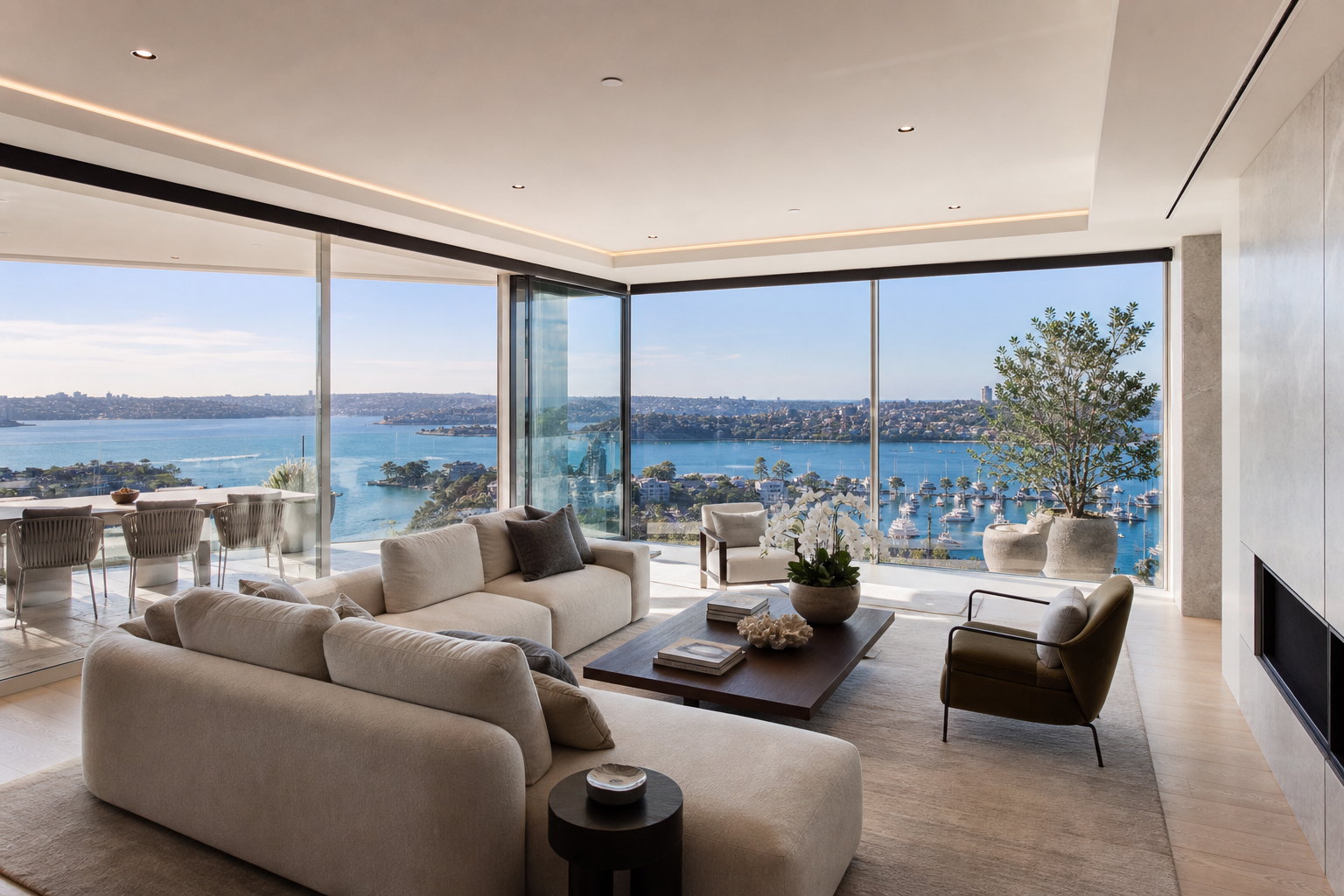
1. How lenders really see a prestige Rose Bay apartment
Many borrowers assume a $3–6m Rose Bay apartment is just a “bigger home loan”. Banks don’t.
They look at:
- Property type – penthouse, sub‑penthouse, whole‑floor, or standard unit.
- Building size – small boutique block vs 100+ units.
- Location and views – true harbourside vs busy road or compromised aspect.
- Resale depth – how many genuine buyers exist at that price point.
For more background on how banks slice Rose Bay by property type, see Decoding Rose Bay Property Types and Lending Rules This Year.
Typical LVR bands (illustrative only)
These are common patterns, not promises – every lender has its own matrix:
| Property profile | Likely max LVR* |
|---|---|
| Standard 2–3 bed, quality block, no red flags | 80% (sometimes 90%) |
| High‑end apartment $3–4m, strong building | 75–80% |
| Penthouse / whole‑floor $4–8m | 60–75% |
| Single, very unique luxury unit | 60–70% |
*Indicative only. Lenders also apply at least a 3% serviceability buffer (APRA guidance).
Worked example:
- Target penthouse: $5m
- Conservative lender LVR: 70%
- Maximum loan: $3.5m
- Required cash/equity: $1.5m plus stamp duty (about $270k in NSW on $5m) and costs.
If you walked in expecting 80% LVR, you’d be short around $500k.
The strategy continues below
You've seen the problem and the groundwork — now unlock the exact steps our CPA-certified brokers use, including 4 more sections. Enter your email for instant, free full access.
Free access. No spam — unsubscribe anytime. Your details stay confidential.
Frequently asked questions
Talk to a CPA-certified broker
Free consultation, plain-English advice tailored to your situation.