
Loading the latest on mortgages, RBA & inflation…
Local Knowledge Finance

Article

Mascot first‑home buyers: practical steps to buy your first place

A decision‑grade guide for first‑home buyers targeting Mascot and nearby suburbs. Understand prices, rent vs buy maths, scheme caps, Mascot‑specific lending quirks and a one‑week action plan you can start this weekend.

Published 2 July 2026Updated 2 July 202613 min read

Key Takeaway

First‑home buyers targeting Mascot and nearby suburbs should start by matching realistic entry‑level prices (often $750k–$950k for one‑ and two‑bed units) to NSW stamp duty concessions, Housing Australia scheme caps, and lender postcode rules. Because many lenders flag high‑density postcodes, borrowers must check LVR caps and building restrictions early. Modelling rent vs buy, stacking schemes like FHBG and FHSS, and running a Mascot‑specific borrowing assessment gives buyers a practical 6–24 month plan to purchase sooner and safely.

Mascot first‑home buyers: practical steps to buy your first place

Buying your first home around Mascot means juggling airport‑side apartments, changing lending rules and tight budgets. The goal of this guide is simple: give you a decision‑grade plan you can act on this week, not just more realestate.com.au scrolling.

In Mascot and nearby suburbs, first‑home buyers should focus on three things: (1) realistic local price points, (2) how grants, guarantees and stamp duty concessions interact with those prices, and (3) postcode‑specific lending rules that can quietly limit your borrowing. Once you know those, you can build a 6–24 month roadmap that actually works.
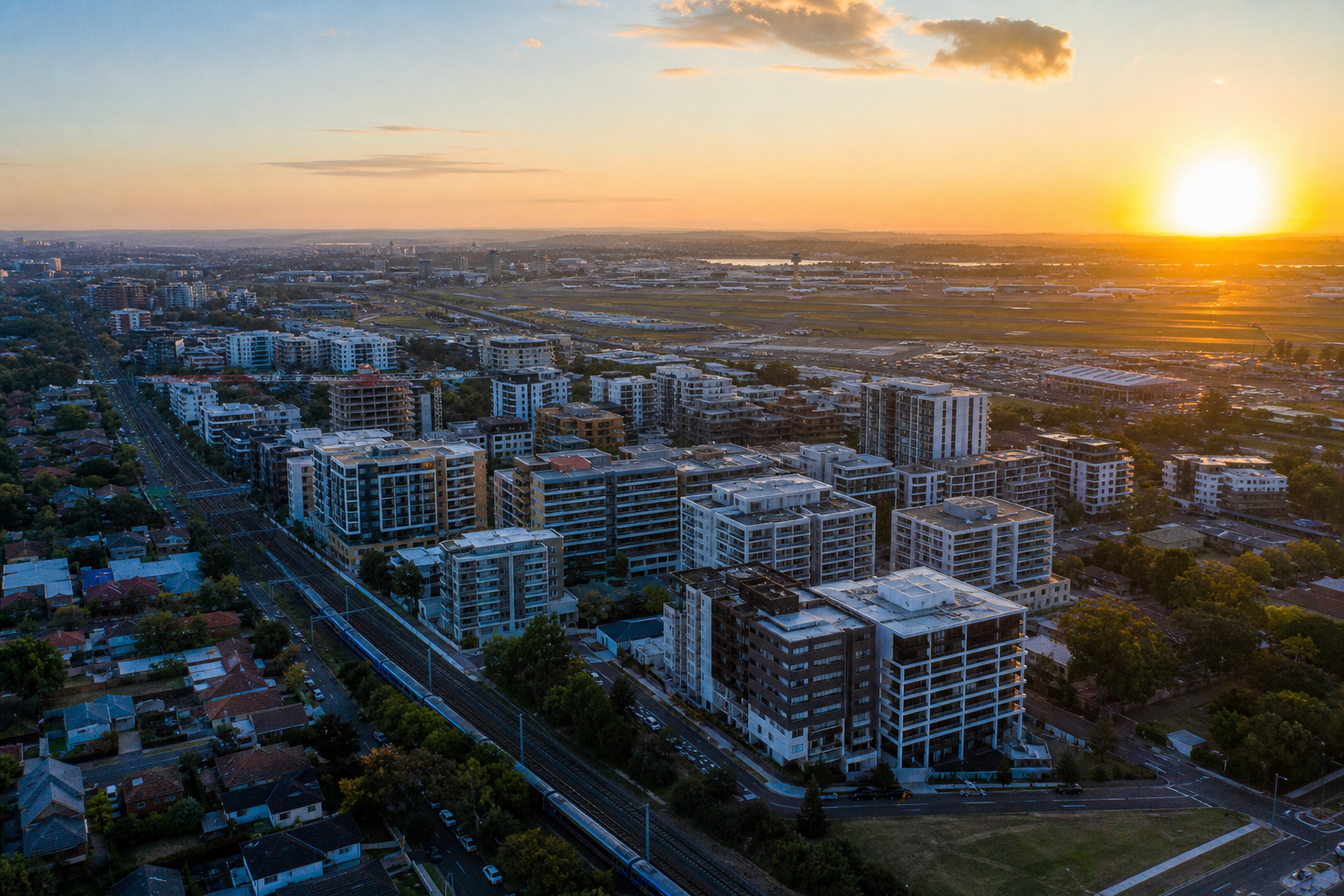
Aerial view of Mascot apartment precinct and airport corridor. Mascot’s airport corridor offers density, transport and relative value for first‑home buyers.


1. Mascot as a first‑home market: where do you actually fit?

Mascot sits in a pocket of Sydney where infrastructure, density and aircraft noise all collide. That creates both opportunity (more stock, some relative value) and risk (lender postcode flags, building issues, noise corridors).

1.1 What “entry‑level” realistically looks like

Numbers change month to month, but as at 2026, indicative ranges for first‑home‑friendly stock are:

  • One‑bed apartment in Mascot: roughly $750k–$850k
  • Two‑bed apartment in Mascot: roughly $850k–$1.0m
  • Older walk‑up unit in nearby suburbs (Rosebery, Eastlakes): sometimes $700k–$850k
  • Townhouses or terraces within a short drive: often $1.2m+

This matters because first‑home buyer price caps for grants and guarantees are set by broad regions, not individual suburbs. Targeting areas where typical prices sit under those caps makes it much more likely you can actually use the schemes you’re reading about (see /insights/first-home-buyers-suburb-knowledge-get-in-sooner).

1.2 Mascot vs neighbouring options

If Mascot proper feels just out of reach, consider its near neighbours as stepping stones:

  • Rosebery / Eastlakes – older stock, some smaller complexes, fewer building‑wide amenities. Sometimes better value per square metre.
  • Zetland / Green Square – glossier, higher prices and more off‑the‑plan risk, but also strong tenant demand if you later rentvest.
  • Alexandria / St Peters – mix of converted warehouses, older units and terraces; good for buyers willing to compromise on size or parking.

Your first decision is whether Mascot is the end goal or a 5–7 year stepping stone. That choice influences what you buy, how much you borrow and whether you lean towards growth, rentability or lifestyle.


2. Rent vs buy in Mascot: the real maths

2.1 A worked example

Let’s compare renting vs buying a two‑bed unit in Mascot.

  • Purchase price: $900,000 (indicative)
  • Buyer deposit: 10% ($90,000) plus costs
  • Loan: $810,000
  • Interest rate: 6.0% p.a. P&I (illustrative only)
  • Term: 30 years

Approximate monthly repayment at 6.0%: $4,850.

Now compare to renting the same style unit:

  • Weekly rent: say $900–$1,000
  • Monthly rent: ~$3,900–$4,300

On the surface, renting might look cheaper by $500–$900 per month. But owning builds equity in two ways:

  1. Principal you pay down every month.
  2. Any long‑term price growth (which no one can guarantee).

2.2 How to decide in this rate environment

With interest rates higher after the RBA’s moves to contain inflation, many Mascot renters are paying less monthly than they would as owners. That doesn’t automatically make renting smarter.

Consider:

  • Stability: fixed repayments vs uncertain rents.
  • Discipline: forced savings via principal repayments.
  • Flexibility: renting may be better if you’re unsure about staying near the airport corridor for 5+ years.

A pragmatic rule: if you can comfortably pass bank serviceability tests (usually 3 percentage points above the rate you actually get, per APRA guidance), and plan to stay 7+ years, buying often stacks up, even if year‑one cashflow looks worse.


3. Grants, concessions and schemes: Mascot‑friendly combinations

NSW and federal schemes can shave years off your saving timeline, but only if the price caps line up with Mascot’s reality.

3.1 NSW stamp duty concessions around Mascot

NSW offers stamp duty discounts and exemptions for eligible first‑home buyers up to specific price thresholds. The brackets and rules shift from time to time, but in practice:

  • There’s usually an exemption or big discount for lower‑price purchases.
  • A tapered concession applies up to a higher limit (often around the $800k–$1m range for units, depending on current policy).

For a $900k Mascot apartment, even a partial concession can mean $10k–$30k difference in upfront cash.

Your jobs this week:

  1. Check the latest thresholds on the NSW Government site.
  2. Plug two scenarios into a calculator: with and without concession.
  3. See if adjusting your target price band by $25k–$50k could keep you inside the concession window.

3.2 Federal schemes: FHBG, HBG and more

The Housing Australia schemes are often essential for Mascot buyers who don’t have a 20% deposit.

Common options include:

  • First Home Guarantee (FHBG): as little as 5% deposit, no LMI, strict price caps and owner‑occupier rules.
  • Regional and specialist guarantees: less relevant to Mascot itself but useful if you later pivot to a regional rentvesting strategy.

Key points for Mascot:

  1. The FHBG doesn’t care whether you’re PAYG or self‑employed. It’s neutral on employment type; the tougher hurdle is lender policy and proving stable income (see /insights/first-home-guarantee-self-employed-small-business-owners).
  2. Many Mascot‑suitable units can still sit under the scheme price caps — but two‑bed, newer stock can easily push you over.
  3. You must move in and meet occupancy rules; FHBG isn’t an investor scheme.

3.3 First Home Super Saver (FHSS)

The FHSS lets you withdraw voluntary super contributions to use as part of your deposit.

For Mascot‑level prices, FHSS rarely covers the whole deposit, but it can:

  • Top you up from, say, 7% to a 10% deposit.
  • Reduce LMI or combine with FHBG to build a more comfortable cash buffer.

Coordinate contributions with your tax planning. A broker who’s also a CPA and registered tax agent can map out the super, tax and borrowing impacts in one go, rather than you having three separate conversations.


4. Mascot‑specific lending quirks you can’t ignore

Not all postcodes are equal in the eyes of lenders. High‑density areas like Mascot often appear on internal watchlists.

4.1 Postcode LVR caps and building blacklists

Based on our experience with the airport corridor:

  • Some lenders cap LVR at 80–85% for certain Mascot properties, even if a government guarantee would allow 95%.
  • Others won’t touch specific buildings due to:
    • Cladding or structural issues.
    • Mixed‑use developments with a high commercial component.
    • Valuation history that shows repeated shortfalls.

This lines up with our broader finding that in high‑density precincts, lender postcode caps and informal building watchlists can materially affect borrowing capacity and approval odds.

4.2 Why this matters for first‑home buyers

Imagine this scenario:

  • You plan to use FHBG at 5% deposit.
  • Contract price: $800,000.
  • Your savings: $40,000 plus help from FHSS.

If the lender you apply to caps the LVR at 85% for that building:

  • Maximum loan at 85%: $680,000.
  • Required cash contribution: $120,000 plus costs.

Suddenly your 5% plan is a 15–20% reality.

This is why lender selection is not just about rate in Mascot. A broker with local building data can avoid lenders that will quietly cap you and instead match you to one treating that postcode more favourably (see /insights/mortgage-brokers-first-home-buyers-australia).

4.3 Serviceability in a high‑rate world

Most lenders test your repayments at least 3 percentage points above the rate you actually get, due to APRA’s buffer guidance.

If your real rate is 6%, the bank might assess you at 9%. That can significantly cut borrowing power, especially if your income includes:

  • Overtime or allowances (common for airport and transport roles).
  • Bonuses or commissions.
  • Self‑employed income.

Clean, up‑to‑date tax returns and a realistic spending profile become extra important in Mascot, where loan sizes are high relative to income.

Mascot first-home buyer reviewing loan options in a modern apartment. Running the numbers on rent vs buy and deposit options is crucial before targeting Mascot.


5. Self‑employed and aviation‑adjacent buyers: getting Mascot‑ready

Many Mascot buyers work in aviation, logistics, hospitality or run small businesses. Lenders often see this income as more variable, so you need a slightly different playbook.

5.1 Documentation that actually works

For self‑employed and small business owners targeting Mascot:

  • Aim for two years of lodged tax returns (personal and business) with consistent or rising income.
  • Clean up discretionary expenses that heavily reduce taxable profit — they also reduce your borrowing power.
  • Keep business debts and personal debts clearly separated.

The First Home Guarantee is technically open to you, but in practice the constraint is lender serviceability and paperwork, not the scheme rules themselves (see /insights/first-home-buyer-small-business-owner-guide).

5.2 Structuring loans when you wear multiple hats

If you:

  • Run a business,
  • Want a Mascot home now, and
  • Plan to buy an investment later,

it’s crucial to keep your loan purposes separate from day one.

That can mean:

  • One split for your owner‑occupied Mascot apartment.
  • Another split for any business‑related borrowings secured against the property.

A broker who understands both residential and business lending can structure this to preserve future interest deductibility and refinancing flexibility.


6. Choosing the right property: Mascot stock and risk filters

Your first place in Mascot doesn’t have to be your forever home. But it should be financeable, liveable and resellable.

6.1 Key property filters for first‑home buyers

When shortlisting apartments:

  • Building size & type: Smaller, well‑run complexes can fare better with lenders than mega‑towers.
  • Strata health: Look for adequate sinking funds and transparent records on defects or cladding.
  • Noise and flight paths: Inspect at different times of day; check double glazing.
  • Owner‑occupier ratio: Higher owner‑occupier presence can support long‑term value and building upkeep.

6.2 Mascot vs nearby suburbs: a quick comparison

FactorMascotRosebery / EastlakesZetland / Green Square
Typical FHB stock1–2 bed apartmentsOlder units, some townhousesNewer, high‑rise apartments
Price level (indicative)Mid to upper FHB rangeSlightly lower for older stockOften higher, premium amenities
Lender postcode sensitivityModerate to highModerateHigh in some towers
Lifestyle featuresTrains, airport proximityQuieter residential pocketsRetail, dining, brand‑new feel
Off‑the‑plan exposureSome new stock, smaller scaleLimitedHeavy off‑the‑plan presence

If you’re open to Green Square off‑the‑plan options as well, read the local guide on off‑the‑plan risk management at /insights/green-square-off-the-plan-strategies-first-home-buyers before signing anything.

6.3 One‑bed vs two‑bed: long‑term thinking

Common Mascot trade‑off:

  • One‑bed: Cheaper, easier entry, but may limit resale and lifestyle if your household grows.
  • Two‑bed: Higher price and stamp duty but more flexible — room for a flatmate, home office or future child.

For many buyers, a two‑bed with a flatmate for the first few years can improve cashflow and long‑term liveability.

First-home buyers inspecting Mascot apartments at an open home. Weekend open homes in Mascot and nearby suburbs quickly sharpen what’s realistic for your budget.


7. Finance structure: deposit options, buffers and loan features

How you structure your borrowing often matters more than the exact property you pick.

7.1 Deposit paths in Mascot

For first‑home buyers, the big lever is usually: 20% deposit vs 10% deposit with LMI vs 5% deposit with a guarantee.

In Mascot, this choice affects:

  • How soon you can buy.
  • Which lenders will consider your building and postcode.
  • Your long‑term interest and LMI costs.

For a $900,000 purchase:

  • 20% deposit: $180,000 plus costs.
  • 10% deposit: $90,000 plus costs, plus likely LMI.
  • 5% deposit using FHBG: $45,000 plus costs, no LMI but tighter rules.

Remember to hold a 2–3% cash buffer on top of deposit and costs for:

  • Moving expenses.
  • Basic furniture and appliances.
  • Unexpected strata or repairs.

7.2 Loan features that actually help first‑home buyers

In Mascot, with larger debt levels, prioritise:

  • 100% offset account: Keeps your cash working to reduce interest.
  • Ability to make extra repayments without penalty.
  • Split loans: e.g. part fixed, part variable to balance stability and flexibility.

Redraw can be useful, but offset is generally cleaner for tax if you ever convert the property to an investment later.

7.3 A quick repayment scenario

Take that same $810,000 loan at 6.0% over 30 years:

  • Minimum monthly repayment: about $4,850.
  • If you pay an extra $300/month from day one, you could shave roughly 3–4 years off the term and save tens of thousands in interest (exact numbers depend on future rate changes).

Building this kind of buffer into your budget from the start reduces your risk of mortgage stress if rates or strata fees rise.


8. A one‑week action plan for Mascot first‑home buyers

The point of this guide is action. Here’s how to turn it into progress this week.

8.1 Day 1–2: Clarify budget and timeframe

  1. List your net income, fixed expenses and savings.
  2. Decide your realistic purchase window: 6–12 months or 12–24 months.
  3. Use an online borrowing power calculator to get a ballpark, then mentally trim 10–15% to allow for conservative lender assessments.
  4. Read the broader Sydney market strategy at /insights/navigating-sydney-first-home-buyer-market-2026 and note which levers you haven’t used yet.

8.2 Day 3–4: Scheme and postcode checks

  1. Confirm latest NSW stamp duty concessions for your likely price band.
  2. Check current Housing Australia scheme caps for Metropolitan Sydney.
  3. Book a chat with a Mascot‑experienced broker to:
    • Test your borrowing power at bank level.
    • Check for postcode LVR caps affecting Mascot and nearby suburbs.
    • See which buildings on your radar are lender‑friendly.

8.3 Day 5–6: On‑the‑ground suburb work

  1. Attend at least two Mascot open homes and one in a neighbouring suburb (e.g. Rosebery or Eastlakes).
  2. Compare real listings with your budget — adjust expectations if needed (size, car space, amenities).
  3. Ask agents directly about:
    • Strata fees and recent special levies.
    • Owner‑occupier vs investor ratios.
    • Any known building issues.

8.4 Day 7: Lock in your plan

  1. Decide your primary target: Mascot now, nearby suburb now, or Mascot in 12–24 months after saving more.
  2. Set monthly savings and debt‑reduction goals that align with that target.
  3. Map out your next 3–5 steps with your broker, including when to:
    • Lodge FHSS contributions.
    • Prepare scheme applications.
    • Order a pre‑approval and start shortlisting seriously.

If you follow this for one week, you’ll move from “not sure if we can buy in Mascot” to a clear yes/no with a timeframe and a dollar figure.


FAQs: Mascot first‑home buyers

1. Is Mascot still a good area for first‑home buyers, given all the apartments?

Mascot can still work well if you’re selective. The large apartment supply creates more choice and sometimes sharper pricing, but it also means you must do extra due diligence on building quality, strata health and lender appetite. Focus on financeable, well‑run buildings in good micro‑locations rather than buying purely on amenities or styling.

2. Can I use the First Home Guarantee for a Mascot apartment?

Yes, provided the property is under the scheme’s price cap and you meet all eligibility and lender criteria. The bigger issue is that some lenders cap maximum LVRs or exclude specific Mascot buildings, which can undermine a 5% deposit plan. Check both scheme rules and lender postcode policies early so you’re not surprised just before settlement.

3. I work at the airport with lots of shift penalties. Will banks count my income?

Most banks will include a portion of allowances and shift penalties, but they usually average them over time and apply shading (for example only counting 70–80%). They’ll also assess your loan at a rate well above the one you actually pay due to APRA buffers. Having stable rosters and at least 6–12 months of payslips showing consistent patterns helps maximise your assessed income.

4. Should I wait for prices to fall before buying in Mascot?

No one can reliably time the market, especially in a well‑connected corridor like Mascot where demand and infrastructure support values. A better approach is to focus on your own numbers: when can you comfortably pass serviceability tests, hold a buffer and buy a quality asset you’re happy to own for 7–10 years? If those pieces line up, overly waiting for a perfect dip can cost you more in missed equity and rising rents.

5. Is off‑the‑plan too risky for Mascot first‑home buyers?

Off‑the‑plan can work, but it carries extra risk around valuations, build quality and lending rules that might change before settlement. If you consider it, model what happens if the final valuation comes in 5–10% lower and check whether you could still settle under postcode LVR caps and scheme limits. A larger cash buffer and careful project selection are non‑negotiable.

6. How much emergency buffer should I keep after I buy in Mascot?

As a rule of thumb, aim to keep at least 3–6 months of essential living expenses plus a 2–3% buffer of the property price in accessible savings or offset. That helps cover income interruptions, rate rises or unplanned strata costs without immediately pushing you into mortgage stress or forcing a distressed sale.


Key takeaways

  • Mascot offers realistic first‑home options if you match your budget to local prices, scheme caps and lender postcode rules.
  • Rent vs buy decisions should be based on long‑term plans and bank‑tested repayments, not just today’s rent comparison.
  • Government schemes like FHBG and FHSS can cut years off your savings timeline, but only if your chosen property sits within regional caps.
  • Lender LVR caps and building exclusions in high‑density postcodes can quietly derail low‑deposit plans; check them early.
  • Self‑employed and aviation‑adjacent buyers can absolutely buy in Mascot with the right documentation, structure and buffers.

If you’d like a Mascot‑specific game plan, you can book a free 15‑minute strategy call at localknowledge.finance. In one consultation you’ll cover your tax, your loan and your first‑home options with a CPA, tax agent and mortgage broker in one. Or start by testing your numbers with our borrowing power calculator at localknowledge.finance/tools.

General advice only.

Frequently asked questions

Mascot can still work well for first-home buyers if you’re selective about buildings and locations. The high apartment supply creates more choice and sometimes sharper pricing, but you must pay close attention to strata health, building quality and lender appetite for the postcode. Focus on well‑run complexes near transport and amenities rather than simply the newest or flashiest project.
You can use the First Home Guarantee for a Mascot apartment if the price is under the scheme cap and you meet the eligibility and lender rules. However, some lenders restrict maximum LVRs or exclude particular Mascot buildings, which can undermine a 5% deposit strategy. It’s important to check both scheme criteria and postcode‑specific lender policies before committing to a contract.
Banks typically include a portion of shift penalties, allowances and overtime when assessing income, but they average it and often apply shading, such as only counting 70–80%. They also test your ability to repay at an interest rate several percentage points above the actual rate. Keeping steady rosters and at least 6–12 months of payslips showing consistent patterns will help maximise your assessed income.
Waiting for a perfect price dip is risky because no one can reliably time the market. In a well‑connected suburb like Mascot, demand, infrastructure and airport‑adjacent employment often support values over time. It’s better to focus on when you can comfortably pass bank serviceability tests, maintain a cash buffer and buy a quality property you’re happy to hold for 7–10 years.

Talk to a CPA-certified broker

Free consultation, plain-English advice tailored to your situation.

Your details are kept confidential. We’ll never share them.