Loading the latest on mortgages, RBA & inflation…
Local Knowledge Finance

Article

Off-the-plan loans in Green Square when you’re self-employed

A decision-grade guide for self-employed buyers and small business owners trying to secure off-the-plan finance for a Green Square or Zetland apartment – with specific steps you can take this week.

Published 18 July 2026Updated 18 July 202619 min read

Key Takeaway

Self-employed buyers can get off-the-plan finance in Green Square by planning 12–24 months ahead, choosing the right documentation path, and protecting against valuation risk at settlement. Lenders typically want two years of tax returns and will test repayments at least 3% above the actual rate under APRA guidance. The most effective action is to map your income, buffers and target buildings now so you can lock in the right structure before you sign a contract or commit to a deposit.
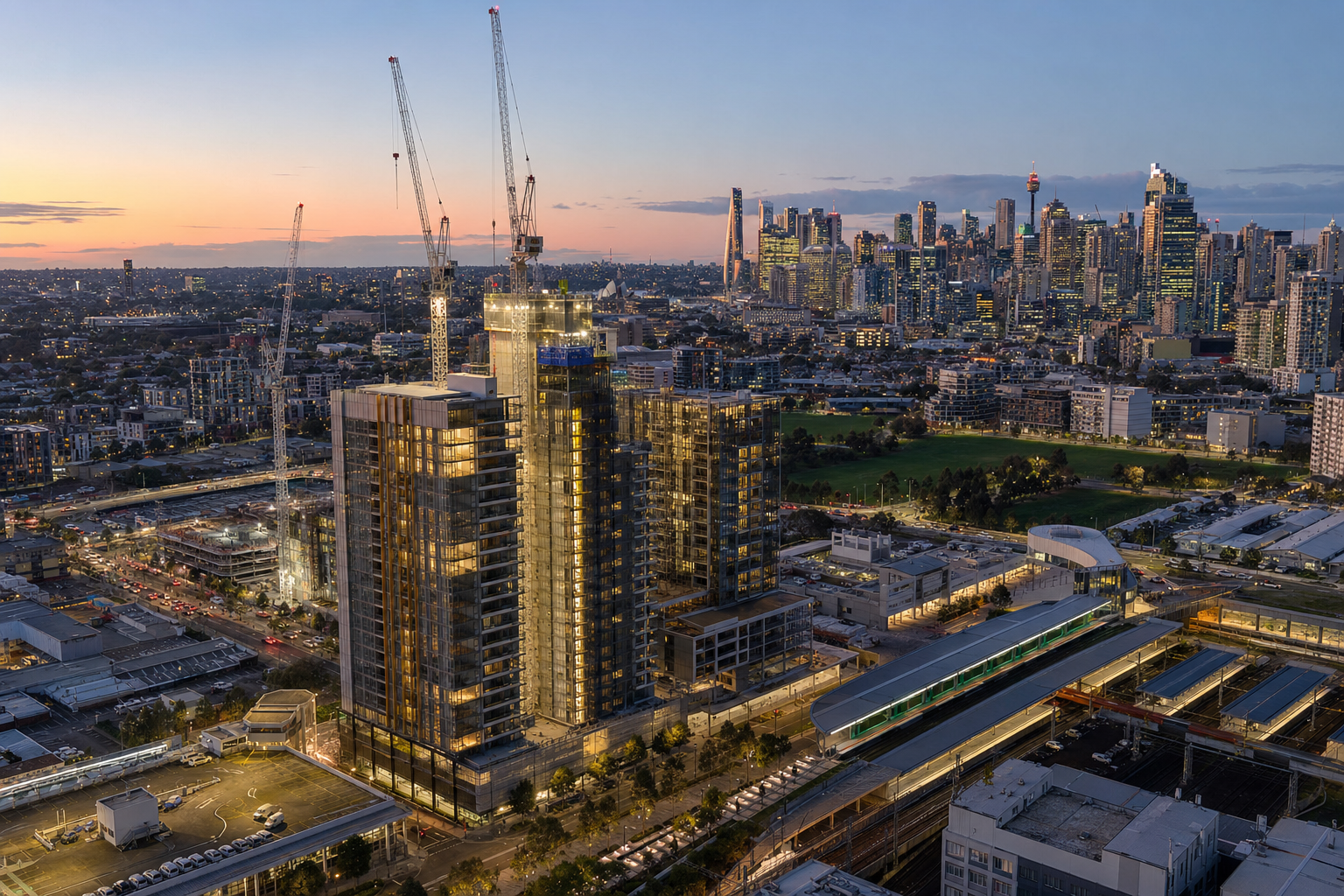
Off-the-plan loans in Green Square when you’re self-employed

Buying off-the-plan in Green Square when you’re self-employed is possible – but the finance side is less forgiving than for a standard PAYG borrower.

You’re dealing with three moving parts at once: (1) your business income, (2) lender policy and rates, and (3) the final valuation on a brand-new apartment in a high-density area. This guide shows you how to line those up so you can sign a contract – and settle – without nasty surprises.

If you take nothing else away: start planning before you pay a holding deposit, keep your tax and BAS lodgements clean, and size your buffers for both your household and your business.


1. Why off-the-plan is different when you’re self-employed in Green Square

Off-the-plan lending is already more complex because lenders are taking a view on something that doesn’t exist yet. In Green Square and Zetland, you add two more wrinkles:

  1. High-density, often high-LVR-sensitive buildings.
  2. Self-employed or variable income the banks don’t see as “simple”.

If you haven’t already, it’s worth reading the broader area guide, “How to Finance a New or Off-the-Plan Apartment in Green Square” for a full overview of timelines and risk points. Here we’ll narrow in on what changes when you own a business or work for yourself.

1.1 Three risks you must manage from day one

For self-employed off-the-plan buyers, three risks matter most:

  • Income documentation risk – what your tax returns and BAS actually show when the lender reassesses you.
  • Valuation risk – whether the completed apartment values up to the contract price.
  • Policy and buffer risk – how lender rules and the required APRA 3% serviceability buffer might change before settlement.

You can’t remove these risks. You can, however, design your purchase so you have options if any of them move against you.

1.2 Why Green Square and Zetland are treated differently by banks

Lenders don’t view all Sydney postcodes the same. Inner-south, high-density pockets – particularly around Green Square Station and central Zetland – often attract:

  • Lower maximum LVRs (for example, capping at 80–85% instead of 90–95%).
  • Stricter treatment of small apartments (under ~50–55sqm internal).
  • More conservative valuations, especially if many similar units are completing at once.

As outlined in “How Green Square Property Types Shape Your Home Loan Options”, the exact building and floor plan you pick can change:

  • Which lenders are open to you.
  • Whether LMI is required.
  • Your borrowing power and cash requirement at settlement.

For self-employed borrowers, that can be the difference between a smooth approval and a shortfall you’re scrambling to cover.


2. How lenders assess self-employed income for off-the-plan

2.1 Full-doc vs alt-doc: which lane are you in?

When you’re self-employed, lenders will usually assess you in one of two lanes:

  • Full-doc – you provide at least two years of business and personal financials and tax returns, ATO portals are clean, and income is stable or rising.
  • Alt-doc – you don’t have sufficient, consistent lodged returns yet, so you use BAS statements, accountant letters and/or business bank statements to evidence income.

Graduating from alt-doc to full-doc is usually most viable once you have two full years of lodged returns showing stable or increasing income (see /insights/switching-alt-doc-to-full-doc-mainstream-lending). Planning which lane you’ll be in at settlement, not just today, is critical.

2.2 What “serviceability” looks like in practice

All lenders will stress-test your repayments at a buffer above the actual rate, as required by APRA. In practice, that usually means:

  • If the actual rate is ~6.00% p.a., lenders may test you at 9.00% p.a. (6% + 3% buffer).
  • They will also apply either a benchmark living cost (HEM) or your actual disclosed expenses, whichever is higher.

For small business owners, that stress test needs to sit comfortably alongside your business overheads and any existing business debt. The Roy Morgan research showing around 28.2% of mortgage holders “At Risk” of stress highlights why this buffer matters: rates and income can both move quickly.

2.3 How much income will a lender actually use?

Common patterns for self-employed assessment include:

  • Average of the last two years’ taxable income.
  • Lower of the last two years, if income has dropped.
  • Most recent year only, but only if it’s clearly sustainable and not a spike.

For company and trust structures, lenders often:

  • Start with net profit after expenses.
  • Add back your salary, director fees and some non-cash items (e.g. depreciation).
  • Adjust for one-off items.

They then apply a haircut to variable components such as bonuses, commissions or distributions from discretionary trusts.

Alt-doc lenders may instead use:

  • Average of the last 12 months’ BAS turnover, adjusted for expenses and tax.
  • Business bank statements to support a declared income figure.

The trade-off is that alt-doc loans often come with:

  • Higher rates and/or fees.
  • Lower maximum LVRs.

3. Off-the-plan timeline: how far ahead you need to plan

3.1 The typical Green Square off-the-plan journey

A common pattern for new builds around Green Square and Zetland looks like this:

StageTimeframeWhat happensFinance implications
Pre-contract0–4 weeksYou inspect display suites, compare buildings, negotiate priceCan get an indicative pre-approval, but it won’t last until settlement
Contract exchangeMonth 0Pay 5–10% deposit, sign contractNo final loan approval yet; you’re committing based on expectations
ConstructionMonths 1–24+Building progresses; market movesYour income, tax position and lender policies may all change
Pre-settlement1–3 months before completionBank orders valuation, reassesses your income and expensesActual loan approval is given; any shortfall appears now
SettlementCompletion dateYou pay the balance and draw down the loanNeed all funds ready – including any extra cash if valuation is low

Self-employed buyers reviewing off-the-plan documents with Green Square buildings behind them. Planning off-the-plan finance early gives self-employed buyers more options in Green Square.

The critical mistake is assuming that a pre-approval at contract exchange two years earlier means you’re safe. For off-the-plan, the lender will recheck you closer to completion.

3.2 When to lock in your documentation strategy

For a 18–24 month project, you want a plan that covers:

  • This financial year and next – how much income you’ll show.
  • Lodgement dates – when returns will be lodged and what they’ll show.
  • Any big business changes – new equipment, staff, leases or loans.

Because lenders will use your most recently lodged returns at the time of assessment, a decision to heavily minimise taxable income can directly cut your borrowing power at settlement (see /insights/off-the-plan-valuation-change-before-settlement).

Aim to sit down with a broker and your tax adviser before the end of the financial year prior to settlement and map out:

  • Target taxable income you need to evidence.
  • What that means for your tax bill and cash flow.
  • Whether you’ll likely be full-doc or alt-doc when the bank reassesses you.

4. The Green Square building and LVR side: why your choice matters more when you’re self-employed

4.1 How lenders categorise Green Square and Zetland buildings

As highlighted in “How Green Square Property Types Shape Your Home Loan Options”, banks often apply special rules to:

  • High-density towers (typically 50+ units, sometimes flagged by postcode).
  • Mixed-use developments (residential with retail or commercial on lower floors).
  • Smaller apartments under 50–55sqm internal.

Those rules can mean:

  • Lower maximum LVRs (e.g. max 80% rather than 90–95%).
  • Stricter minimum sizes.
  • Fewer lenders willing to take the building at all.

For a self-employed borrower with already-tighter serviceability, losing 10–15 percentage points of LVR can make a good deal unworkable.

4.2 LVR, LMI and settlement risk in practice

Consider a $950,000 two-bedroom apartment in a mid-rise Green Square building.

ScenarioContract priceFinal valuationMax LVR policyMax loanCash required (excl. costs)
A – Ideal$950,000$950,00090%$855,000$95,000
B – Conservative LVR$950,000$950,00080%$760,000$190,000
C – Val shortfall$950,000$900,00080%$720,000$230,000

In Scenario A, you may be able to get 90% LVR with LMI, depending on the building and your profile.

In Scenarios B and C – which are common in high-density zones – you need much more cash. If your business has a lean period just before settlement, that extra $40–135k may not be comfortable.

This is why earlier cluster pieces emphasise a three-part buffer – personal, business and settlement risk (see /insights/build-two-three-year-cash-buffer-off-the-plan). Off-the-plan in Green Square without that buffer is essentially a leveraged bet.

4.3 Practical building filters before you fall in love

Before you commit to a specific building, have your broker run a “policy sense-check”:

  • Is the building flagged as high-density or restricted by any major lenders?
  • What are typical maximum LVRs for similar stock in this pocket?
  • Any history of valuation shortfalls for comparable projects nearby?

Often, there are two or three projects that meet your lifestyle goals, but one will be much easier to finance as a self-employed borrower.
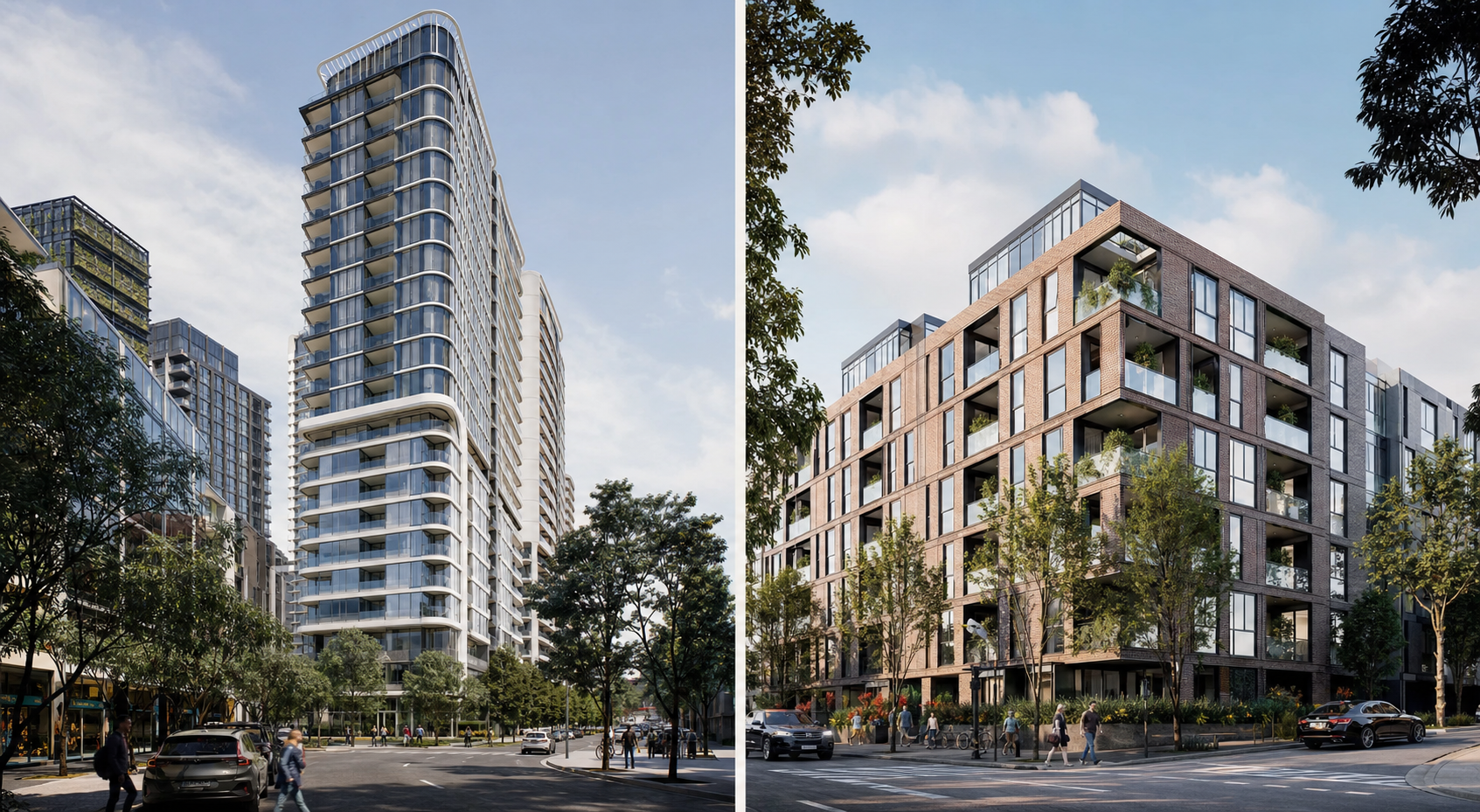
Comparison of high-density and mid-rise apartment buildings with different lending rules. Lenders treat different Green Square building types very differently for self-employed borrowers.


5. Documentation paths for self-employed Green Square buyers

5.1 Common self-employed profiles and what works

Here are some typical local scenarios and how lenders tend to respond.

ProfileIncome docsLikely pathKey watchpoints
Solo consultant in tech/creative2+ years tax returns, rising incomeFull-doc with mainstream lendersKeep trust distributions consistent; avoid big drops in declared income
Café or bar owner near Green SquareFluctuating profit, strong cash businessMix of full-doc and alt-doc optionsLenders will be wary of volatility; need strong BAS and bank statements
Contractor via company or trustPersonal salary + distributionsFull-doc if both years lodgedDon’t strip all profit; ATO debt is a red flag
Start-up founder with low taxable incomeMinimal profit, relying on growth storyAlt-doc or more specialist lendersBorrowing power will be limited; may need bigger deposit

5.2 Full-doc: preparing your numbers the way banks think

To be full-doc-ready, focus on:

  • Timely lodgement – both business and personal returns lodged, no outstanding BAS.
  • Clean ATO portals – minimal or well-managed tax debt.
  • Stable or rising taxable income – at least across the two most recent years.

Worked example:

  • Year 1 taxable income: $150,000.
  • Year 2 taxable income: $180,000.

A typical lender might:

  • Average to $165,000.
  • Deduct HEM-based living costs and other commitments.
  • Test repayments at 9% P&I, 30-year term.

Depending on your broader financial picture, that might support a total loan in the $900k–$1.1m range. But a big drop to $120k in Year 2 could materially shrink that.

5.3 Alt-doc: when it helps and when it hurts

Alt-doc is not a dirty word. It exists because many solid businesses don’t fit the neat full-doc box right now.

Alt-doc lenders might:

  • Accept 6–12 months of BAS or bank statements.
  • Use an accountant’s declaration to support your stated income.

But they often require:

  • Lower LVRs, especially in high-density suburbs – commonly max 70–80%.
  • Higher interest rates and/or fees.

In Green Square, that means if you’re going alt-doc, you probably need a bigger deposit up front, and you should have a clear plan to refinance to full-doc later once your tax returns support it (see /insights/switching-alt-doc-to-full-doc-mainstream-lending).


6. Buffers, business risk and cash flow planning

6.1 The three-buffer model for off-the-plan

For self-employed Green Square buyers, a robust plan usually includes:

  1. Personal buffer – 3–6 months of essential living costs and home loan repayments.
  2. Business buffer – several months of fixed business overheads (rent, wages, leases).
  3. Settlement risk buffer – extra cash to cover valuation shortfalls, LMI and costs.

Research from Roy Morgan and rising default rates shows why this matters: when rates jump and income dips together, people with thin buffers are pushed into “At Risk” territory quickly, especially if they’re self-employed.

6.2 A practical stress test for small business owners

A practical stress-test (see /insights/managing-home-loan-small-business-owner) is to model:

  • A 2–3% rise in rates, plus
  • A 30–50% drop in business drawings for 3–6 months.

Ask yourself:

  • Can you still cover personal essentials and the loan?
  • Can the business survive without taking on high-cost short-term debt?

If the answer is “not really”, you either:

  • Need a smaller purchase price.
  • Need more time to build cash reserves.
  • Or need a different loan structure (for example, interest-only for a period with strong buffers).

6.3 Example: building a buffer around a $1m Green Square purchase

Assume:

  • Purchase price: $1,000,000.
  • Target LVR: 80%.
  • Loan: $800,000 at 6.0% p.a., 30 years, P&I.

Indicative repayment: around $4,800 per month.

A reasonable buffer plan might be:

  • Personal buffer – 6 months of repayments + essential costs: say $4,800 × 6 = ~$28,800, plus living costs.
  • Business buffer – 3–4 months of fixed overheads: e.g. $15,000 × 3 = $45,000.
  • Settlement buffer – 5–10% of purchase price: $50,000–$100,000.

That’s a lot of cash, but spread over the construction period it’s achievable for many professionals and business owners around Green Square – especially if you know the target early and structure drawings, dividends and tax payments around it.

Cafe owner near Green Square reviewing business cash flow and an apartment listing. Balancing business risk, buffers and home loan commitments is critical before buying off-the-plan.


7. Quick readiness check: is off-the-plan right for you now?

Use this as a blunt diagnostic. If most of your answers are “no” or “not sure”, off-the-plan might still work, but you’ll want a more cautious approach.

7.1 Income and documentation

  • Do you have (or will you have by settlement) two years of lodged tax returns with stable or rising income?
  • Is your ATO position clean (no overdue BAS or unmanageable tax debt)?
  • Can you articulate a clear, evidence-based income story to a lender – not just “my business will grow”?

7.2 Buffers and business resilience

  • Do you currently hold, or can you realistically build, a three-part buffer (personal, business, settlement)?
  • If your business drawings dropped by 30–50% for six months, could you still cover:
    • personal essentials, and
    • minimum loan repayments?

7.3 Property and policy

  • Have you checked that your chosen building and floor plan fit within mainstream lender policies for Green Square and Zetland?
  • Have you seen recent valuations or sales evidence for similar completed apartments nearby?
  • Would a 5–10% valuation shortfall still be survivable, without fire-selling other assets or your business?

If your answers are mostly “yes, with some work”, an off-the-plan purchase can double as a forcing function to tidy your business finances and tax profile over the next 12–24 months.

For a broader strategic view, the case studies in “How a Green Square Broker Builds a 10-Year Property Plan” are worth working through.


8. Structures, entities and tax: what helps and what doesn’t

8.1 Personal name vs company/trust ownership

Some self-employed buyers ask whether they should buy their Green Square apartment through their company or family trust.

For an owner-occupied home, this often doesn’t deliver what people hope, because in Australia interest on loans for your main residence is generally not tax-deductible, even if an entity holds title. Deductibility follows purpose, not structure (see /insights/lending-reality-buying-home-through-entity-2).

Entity ownership can also:

  • Narrow your lender options.
  • Increase complexity around serviceability assessments.
  • Interact awkwardly with first home buyer schemes and land tax.

8.2 Keeping home, investment and business debt cleanly separated

What matters more is clean separation of loan purpose, particularly if you:

  • Use equity from an investment property to support your business.
  • Plan to convert your Green Square home into a rental later.

Maintaining separate splits for home, investment and business purposes (see /insights/unwinding-cross-collateralisation-complex-securities and /insights/financing-rose-bay-renovations-extensions-rebuilds):

  • Preserves tax deductibility where it legitimately applies.
  • Makes future refinancing and restructuring far simpler.
  • Reduces the risk of messy mixed-purpose loans that confuse banks and the ATO.

Working with someone who understands both residential and business lending can help structure this correctly from day one (see /insights/benefits-using-mortgage-broker-australia).

8.3 Upcoming tax changes and why clean structures matter

With the 50% CGT discount being abolished from 1 July 2027 and a 30% minimum tax on net capital gains coming in, future tax settings are clearly trending toward heavier taxation of investment income and gains.

That makes it even more important to:

  • Keep your home and investment debt clearly split.
  • Avoid casually using home equity to fund business or lifestyle spending.
  • Get tax advice before major restructures.

You want flexibility in a world where rules will keep shifting.


9. Worked scenarios: common Green Square self-employed cases

9.1 Solo professional buying first home off-the-plan

  • 35-year-old self-employed UX designer.
  • Net taxable income last year: $160,000; year before: $145,000.
  • Target property: $900,000 one-bed + study in Zetland.
  • Savings: $150,000.

Plan:

  • Buy at 80% LVR to avoid LMI: loan $720,000, deposit $180,000.
  • Use $150,000 savings + 2 years to build extra $30,000–50,000 buffer.
  • Keep taxable income steady or slightly rising through to settlement.

Finance approach:

  • Full-doc, mainstream lender comfortable with building.
  • 30-year P&I, consider offset to hold buffers.

Outcome: manageable borrowing with room for a 5–10% valuation shortfall if needed.

9.2 Café owner upgrading from older unit to new Green Square apartment

  • Couple running a café nearby, trading through a company.
  • Existing unit in Mascot with $500,000 loan and $250,000 equity.
  • Want to buy a $1.2m three-bed in Green Square.

Complications:

  • Business profit volatile; one weak COVID-era year in the last two.
  • Considering alt-doc because recent BAS and bank statements look stronger than old returns.

Plan:

  • Sell existing unit to release equity and simplify debt.
  • Target 80% LVR: loan $960,000, cash/equity $240,000.
  • Use some sale proceeds to build a larger business buffer (3–4 months of overheads) before committing.

Finance approach:

  • Test both full-doc and alt-doc pathways.
  • If alt-doc needed at settlement, accept slightly higher rate with a structured plan to refinance to full-doc once two strong years of returns are lodged.

9.3 Contractor with company/trust income buying as an investor

  • 42-year-old IT contractor paid into a company, distributing to a discretionary trust.
  • Existing investment in another city, interest-only, positive cash flow.
  • Wants to buy a $1m Green Square apartment as an investment, 20–30% down.

Key points:

  • Needs lender comfortable with both complex income and Green Square high-density risk.
  • Needs clean segregation of loans by purpose to keep tax deductibility clear.

Plan:

  • Purchase in personal name but maintain clear splits:
    • Existing investment loan split.
    • New Green Square investment loan split.
  • Ensure distributions in trust deed and tax returns show stable, recurring pattern.

Finance approach:

  • Full-doc with a lender that “gets” contractor income.
  • Detailed explanation of structure and income flows with accountant’s support.

10. Your one-week action plan: what to do now

If you’re serious about an off-the-plan Green Square purchase in the next 6–18 months, here’s how to use one focused week.

Day 1–2: Clarify budget and buffers

  • Use a borrowing power calculator to get a rough range based on your current income and debts.
  • List your current cash, likely savings pathway over the next 12–24 months, and any help from family.
  • Sketch your three-part buffer targets: personal, business, settlement.

Day 3–4: Pull together your financial “data room”

Gather:

  • Last two years’ personal tax returns and notices of assessment.
  • Last two years’ business financials and tax returns (company/trust/partnership).
  • Last 12 months of BAS, if registered.
  • Business and personal bank statements.
  • Details of all loans, leases and credit cards (business and personal).

This is the same foundational work recommended in “Small business home loan eligibility: what lenders want to see”.

Day 5: Shortlist buildings and floor plans

  • Narrow your list to 2–3 projects and specific floor plans you would happily live in or rent out.
  • Check approximate size (sqm), use (pure residential vs mixed-use) and height.
  • Ask your broker to quickly sanity-check how mainstream lenders view each.

Day 6: Strategy session – tax and lending together

Ideally, have a joint conversation involving both:

  • A broker who understands self-employed lending and Green Square specifically.
  • Your accountant or tax adviser.

Cover:

  • Full-doc vs alt-doc path at settlement.
  • Income and dividend strategy for this year and next.
  • ATO position and any planned payment arrangements.
  • How to structure loan splits for home vs investment vs business.

Day 7: Decide your go/no-go criteria

Before you fall in love with a specific display suite, write down:

  • Maximum purchase price and LVR you’re truly comfortable with.
  • Minimum buffer levels you insist on before exchanging contracts.
  • Red lines: for example, “I will not proceed if I can only get alt-doc at >80% LVR in this building.”

Having those constraints written down now will make it much easier to say no to a deal that doesn’t stack up – before you’re under pressure from a sales agent.

For a bigger-picture plan beyond this purchase, use the frameworks from “Buying New in Green Square When You’re Self-Employed or a Professional” and “Smart Ways to Upgrade Apartments in Green Square and Zetland”.


FAQs

1. Can I get 90–95% LVR on an off-the-plan Green Square apartment if I’m self-employed?

Sometimes, but it’s harder than for a standard PAYG buyer. Many lenders cap LVRs lower in high-density suburbs like Green Square and Zetland, especially for self-employed or complex-income borrowers. If 90–95% LVR is essential, you’ll need very strong income evidence, clean credit and a building that sits comfortably within lender policy.

2. What if my income drops before settlement because I minimise tax?

Aggressively minimising taxable income in the year or two before settlement can significantly reduce your borrowing capacity when lenders reassess you. For self-employed buyers, it’s crucial to coordinate with your accountant so you balance tax efficiency with the income level you need to show banks. In some cases, paying more tax in the short term protects a much larger opportunity.

3. How early should I start planning finance for an off-the-plan purchase?

For self-employed buyers, 12–24 months’ lead time is ideal. That gives you time to lodge two strong years of returns, tidy your ATO position, and build buffers while the building is under construction. Leaving it until the last few months before completion limits your options if income, valuation or policy move against you.

4. Do I have to go alt-doc if my business is young?

Not necessarily, but younger or fast-changing businesses are more likely to fall into alt-doc territory because they can’t show two years of consistent lodged returns yet. Some mainstream lenders can work with one year of strong financials in specific cases. A broker can model both full-doc and alt-doc options so you can decide whether to wait, increase your deposit, or accept a short-term alt-doc loan with a clear refinance plan.

5. How much extra cash should I allow for a valuation shortfall?

For high-density pockets like Green Square, planning for a 5–10% valuation shortfall is prudent. On a $900,000 contract, that’s $45,000–$90,000 of additional capacity you might need. This doesn’t mean you must hold all of it in cash on day one, but you should know where it would come from without jeopardising your business or personal buffers.

6. Can I use business assets or equipment as security to help with the loan?

Residential lenders usually prefer standard residential property as security and may treat business loans or leases as ongoing commitments that reduce your borrowing capacity. While separate equipment or business finance can free up cash, it can also constrain your home loan options if repayments are high. It’s important to assess any new business finance for both business ROI and impact on personal borrowing power.

7. Is it safer to buy a completed apartment instead of off-the-plan?

Completed stock removes valuation and construction timing risk because the bank can value the property as it stands today. For self-employed buyers with variable income or limited buffers, that can be safer. However, off-the-plan can still make sense if you plan ahead, lock in a good price, and use the construction period to build your income evidence and cash position deliberately.


Key takeaways

  • Self-employed buyers can absolutely finance off-the-plan apartments in Green Square, but you need to plan 12–24 months ahead around income, tax and buffers.
  • Lenders will reassess your position close to settlement, often using your latest lodged tax returns and applying a 3% APRA serviceability buffer.
  • Green Square and Zetland buildings come with specific LVR caps and valuation risks, so your exact project and floor plan choice has a big impact on finance options.
  • Full-doc lending with two strong years of returns generally gives you better rates and higher LVRs than alt-doc, but alt-doc can be a useful bridge if planned properly.
  • Robust buffers – personal, business and settlement – are non-negotiable for self-employed off-the-plan buyers in a volatile rate and tax environment.
  • Clean separation between home, investment and business debts makes tax and future refinancing much simpler, especially with coming changes to capital gains tax.
  • A one-week sprint to gather documents, sanity-check buildings and coordinate tax and lending advice will massively improve your chances of a smooth settlement.

Next step:

If you’re considering an off-the-plan purchase in Green Square or Zetland, book a free 15-minute strategy call at /contact. In one conversation, you’ll get an integrated view of your borrowing power, tax position and business risks – your tax, your loan, one expert. From there, we can sketch a practical 12–24 month roadmap so you only sign a contract your future self can comfortably settle.

General advice only.

Frequently asked questions

It’s possible but uncommon, especially in high-density areas like Green Square and Zetland. Many lenders cap LVRs lower for both the postcode and self-employed borrowers, and may require stronger income evidence and cleaner credit. If you need 90–95% LVR, you’ll likely need to be full-doc with stable, rising income and choose a building that fits mainstream lender policy well.
If your taxable income drops noticeably, most lenders will use the lower figure or an average, which can significantly cut your borrowing capacity. For self-employed off-the-plan buyers, aggressive tax minimisation just before settlement is risky. It’s important to coordinate with your accountant so your declared income still supports the loan you’ll need when the bank reassesses you.
Self-employed buyers should ideally start planning 12–24 months before settlement. That timeframe lets you lodge two strong years of tax returns, clear or manage any ATO debts, and build up personal, business and settlement buffers. Leaving planning to the last few months before completion limits your options if valuations, rates or your income move against you.
Not always, but younger businesses or those without two solid years of lodged returns often fall into alt-doc territory. Some lenders will consider one year of strong financials in specific circumstances. A broker can model both full-doc and alt-doc scenarios for you so you can decide whether to wait, increase your deposit, or use a short-term alt-doc loan with a clear refinance strategy later.

Talk to a CPA-certified broker

Free consultation, plain-English advice tailored to your situation.

Your details are kept confidential. We’ll never share them.