
Article
Navigating $3m+ Prestige Home Loans In Sydney’s Eastern Suburbs
Buying or refinancing a $3m+ prestige home in Sydney’s East is as much a finance strategy problem as a property choice. This guide unpacks lender risk views, jumbo loan traps and practical structures so your loan can survive rate rises and patchy liquidity.
Key Takeaway
This article explains how to manage lending risks on $3m+ prestige owner‑occupier properties in Sydney’s Eastern Suburbs, where jumbo home loans can exceed $2m and rely heavily on variable income. It details how banks view prestige strips as higher-liquidity risk, why borrowers should cap stressed repayments at ~35% of after-tax income, and why 6–12 months of cash buffers in offset are critical. Readers learn concrete structuring tactics to keep their family home insulated from market and business shocks.

This topic is covered in full on Tailored Loans Sydney
Buying or refinancing a $3m+ prestige home in Sydney’s East is as much a finance strategy problem as a property choice. This guide unpacks lender risk views, jumbo loan traps and practical structures so your loan can survive rate rises and patchy liquidity.
Read the full guide on tailoredloans.sydneyPrestige owner‑occupier strips in Sydney’s East look safe on the surface: blue‑chip postcodes, limited stock, deep-pocketed buyers.
From a lender’s desk, they’re some of the riskiest loans on the book once debt runs past $3m. Prices are more volatile in downturns, buyers are more discretionary, and jumbo loans lean hard on bonuses, business income and hoped‑for future earnings.
This guide shows how to treat a $3m+ prestige home as a finance project first and a lifestyle purchase second – so you can still sleep at night if rates rise, business slows or the market goes quiet for a year.
1. What counts as a prestige owner‑occupier strip – and why it matters
In Sydney’s East, “prestige owner‑occupier” isn’t just about price. It’s about who buys there and why.
Prestige owner‑occupier strips are pockets where:
- Most buyers intend to live in the property long term, not chase yield.
- Median or typical transactions sit at $3m+, often $5m–$10m.
- Stock is tightly held and highly differentiated (views, aspect, architectural quality).
- Demand is global or at least city‑wide, not just local.
Think sections of:
- Waterfront or view-lines in Vaucluse, Dover Heights and Rose Bay.
- Prime streets in Bellevue Hill, Woollahra, Paddington and Centennial Park.
- Blue‑chip beachside strips in Bronte, Tamarama and parts of Bondi.
These areas sit alongside more “everyday” family pockets. Our cluster piece on postcode types – Match Your Loan Strategy To Your Eastern Suburbs Postcode – shows why banks segment them differently.
For the bank, prestige strips are:
- High ticket – single exposures can be $3m–$10m+.
- Low yield – rent and running yield rarely justify price.
- Patchy liquidity – properties can sit unsold for months if sentiment turns.
That shapes everything from maximum LVRs to how hard they interrogate your bonus and business income.
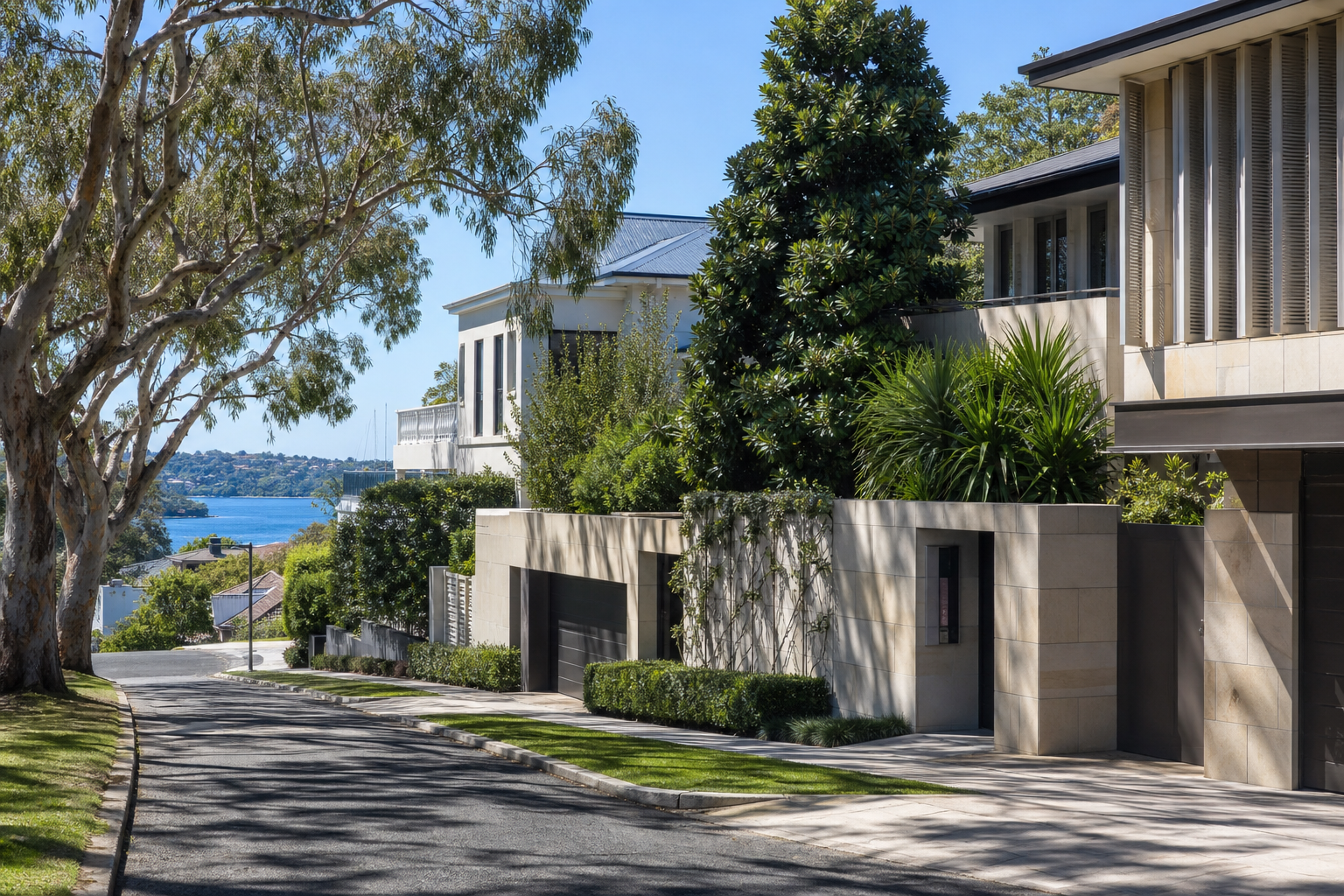
2. How banks really see $3m+ prestige home loans
Banks don’t publish a “prestige risk manual”, but patterns are clear if you read enough credit reports and policy notes.
2.1 Risk lens: big numbers, thin markets
Above about $3m purchase price (or $2m+ loan size), the bank’s concerns shift from “Will this borrower pay?” to also include “If they don’t, can we get out cleanly?”
Key quiet worries:
- Concentration risk – one property may represent a big share of the bank’s NSW book.
- Valuation uncertainty – few truly comparable sales; one forced sale can set a low benchmark.
- Liquidity risk – in a downturn, the buyer pool shrinks quickly as equity markets fall and bonuses dry up.
That’s why prestige strips tend to cop:
- Stricter LVR caps (often 70–80% vs 90–95% in family suburbs).
- Harsher shading of bonus, commission and business income.
- Less tolerance for complex structures with weak documentation.
If you’ve read How Eastern Suburbs Prestige And Fringe Markets React To Economic Shocks, you’ll recognise this: prices can hold up surprisingly well until they don’t – then volumes dry first, followed by sharp repricing when a forced seller appears.
2.2 Serviceability in 2026: APRA and real stress
APRA still expects banks to test new home loans at at least 3% above the actual rate.
If your rate is 6.0%, they may use 9.0% in the calculator.
From a risk point of view, a sensible internal limit is to keep total home loan repayments under about 35% of after‑tax income under this stressed rate. That roughly aligns with Roy Morgan’s ‘At Risk’ mortgage stress thresholds, which, as at July 2026, show 32.5% of owner‑occupier borrowers nationally are ‘At Risk’ or worse.
For jumbo prestige loans, pushing to the bank’s absolute maximum often means:
- No meaningful buffers left in cash or offset.
- Heavy reliance on variable income continuing.
- No room for business or career shocks.
2.3 Self‑employed and bonus‑heavy borrowers
Most prestige strip buyers are:
- Self‑employed professionals, practice owners, founders.
- Senior executives with significant bonus/RSU components.
Banks will often:
- Average 2–3 years of income, not just your best year.
- Discount bonuses and commissions (e.g. count 60–80%).
- Heavily shade add‑backs like depreciation.
This can knock $500k–$1.5m off the practical borrowing limit compared with your mental number.
3. Three big lending risks unique to $3m+ prestige homes
Let’s break down what makes a $3m+ prestige owner‑occupier loan fragile.
3.1 Price and liquidity risk if you need to sell
In family strongholds (see Family Strongholds in Sydney’s East), there is nearly always a buyer for a well‑located, sensibly-priced house.
In prestige strips:
- Buyer pools are thinner and fussier.
- Properties are more idiosyncratic (view side vs road side, one-off architecture).
- Open‑for‑inspection numbers evaporate quickly when confidence dips.
If you’re forced to sell with a big loan balance, you risk:
- A longer campaign and higher holding costs.
- Discounting 10–20% to meet the market.
- Walking away with less equity than you assumed, or even residual debt.
From a finance perspective, the practical response is:
- Lower starting LVRs (ideally ≤70% if you’re stretching).
- Bigger cash buffers to avoid being a forced seller.
3.2 Jumbo loan exposure and rate sensitivity
Say you buy at $4.5m with a $900k deposit (20%) and borrow $3.6m on principal & interest over 30 years.
Indicative example only, not a quote:
- At 6.0% p.a., repayments ≈ $21,600 per month.
- At 9.0% p.a. (a 3% APRA‑style buffer), repayments jump to ≈ $29,100 per month.
That’s a $7,500 per month difference.
If your net household income is $55,000 per month, that’s the line between:
- 39% of after‑tax income at 6%.
- 53% at 9% – deep into mortgage‑stress territory.
Your real risk is not just “Can I afford it at today’s rate?” but “Could we survive 12–24 months at stressed rates if the RBA keeps conditions tight?”
3.3 Business and balance‑sheet concentration
Many prestige buyers are also entrepreneurs or professionals with significant business risk. It’s common to see:
- Business loans supported by personal guarantees and, sometimes, the family home.
- Directors quietly funding short‑term business cashflow from home‑loan redraw or offset.
This amplifies concentration risk:
- A downturn hits both business cashflow and home value.
- Bank appetite for restructuring or extending facilities shrinks exactly when you need it.
A safer rule is to keep the family home ring‑fenced from business risk as far as possible and avoid pledging it as security for operating facilities unless you’ve carefully modelled worst‑case scenarios.

The strategy continues below
You've seen the problem and the groundwork — now unlock the exact steps our CPA-certified brokers use, including 5 more sections. Enter your email for instant, free full access.
Free access. No spam — unsubscribe anytime. Your details stay confidential.
Frequently asked questions
Talk to a CPA-certified broker
Free consultation, plain-English advice tailored to your situation.