
Article
Financing Rural Residential, Acreage and Lifestyle Blocks Without Nasty Surprises
A practical Australian guide to how rural, acreage and lifestyle zoning affects home loans, LVRs and lender appetite — and what checks you can run this week to avoid finance knock-backs.
Key Takeaway
Rural residential, acreage and lifestyle blocks face tighter lending rules because zoning, land quality and services can restrict lender appetite and lower maximum LVRs, often to 60–80% compared with up to 95% for standard homes. Many banks treat properties over 10–20 hectares or without town water and sealed road access as specialised security. Buyers should obtain zoning certificates, speak to valuers and brokers early, and structure loans across city and lifestyle properties to keep flexibility and avoid last‑minute finance declines.
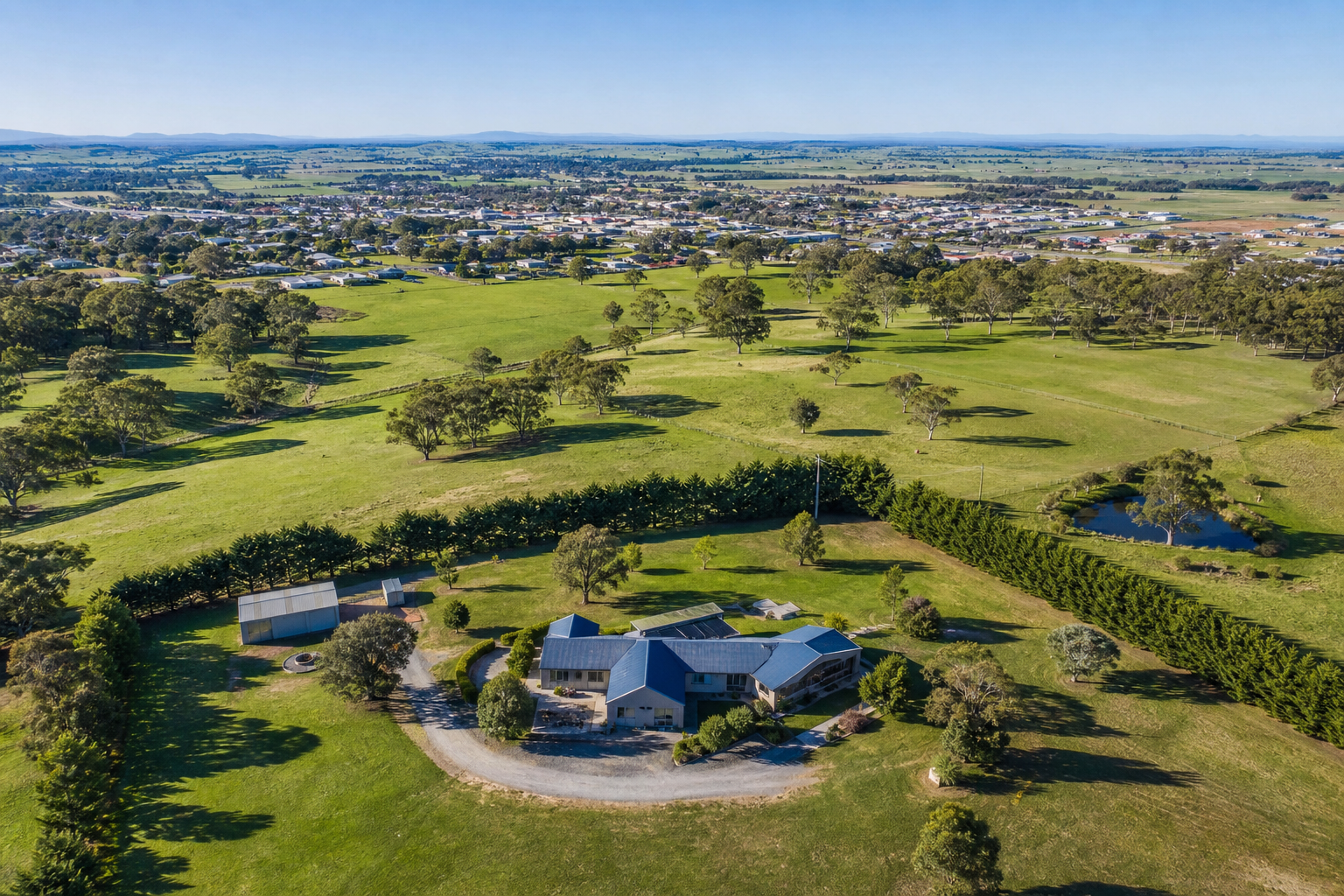
This topic is covered in full on Tailored Loans Sydney
A practical Australian guide to how rural, acreage and lifestyle zoning affects home loans, LVRs and lender appetite — and what checks you can run this week to avoid finance knock-backs.
Read the full guide on tailoredloans.sydneyIf you’re buying a rural residential, acreage or lifestyle block in Australia, your loan options are often narrower than for a standard suburban house. Lenders care deeply about zoning, land size, services (water, power, roads) and whether the property is really a home, a small farm, or a quasi‑business. These factors change how much you can borrow, which lenders will touch it, and how the valuer writes their report.
This guide explains how zoning limits your finance, what questions to ask before you fall in love with a property, and the steps you can take this week to avoid a last‑minute “computer says no” from the bank.
1. Why rural, acreage and lifestyle zoning changes your loan options
1.1 How lenders look at non‑standard properties
For city houses and standard units, most lenders follow fairly predictable rules: up to 95% loan‑to‑value ratio (LVR) in some cases, standard valuation methods, and familiar risks.
Once you step into rural residential, large acreage or lifestyle blocks, three things change:
- Marketability risk – A smaller buyer pool and slower resale times.
- Use risk – Is it really a home, or is there an expectation of farming or business income?
- Servicing and infrastructure risk – What happens if there’s a fire, flood, drought or access problem?
These risks mean lenders often:
- Cap maximum LVRs (e.g. 60–80% instead of 90–95%).
- Restrict which postcodes, zoning codes or land sizes they will consider.
- Require full‑doc applications even if you might otherwise qualify for alt‑doc.
- Apply conservative valuations that strip out part of the land or ancillary improvements.
If you’ve only bought city or inner‑suburban property before, these rules can feel arbitrary. They aren’t – they reflect how hard it can be to sell a 20‑hectare hobby farm quickly if the lender ever needs to recover their money.
For a broader primer on how lenders think about different property types, it’s worth reading our overview article, “How Property Types, Zoning and Titles Derail (or De‑risk) Your Finance”.
1.2 Key definitions: rural residential vs acreage vs lifestyle blocks
There’s no single national definition, but in practice:
- Rural residential: Larger‑than‑suburban lots (often 2,000 m² to 2–5 hectares), usually on the edge of towns, often with town power and sometimes town water, but not always sewer. Zoning might be called “Rural Residential”, “Large Lot Residential” or similar.
- Acreage: Colloquial term for any multi‑acre block. Could be rural residential, general rural, primary production or environmental zoning.
- Lifestyle block: Any semi‑rural property bought primarily for lifestyle, not profit. Could be 1–40 hectares, with or without genuine farming.
From a lender’s perspective, the real questions are:
- Is this mainly a home or mainly a farm/business asset?
- Is it in a residential‑style zone with clear dwelling rights?
- How large is the land, and how easy would it be to sell to the next buyer?
2. Zoning basics: the single biggest factor in your loan options
2.1 Common rural and lifestyle zonings (high level)
Each state has its own planning scheme, but there are some recurring patterns:
| Broad zoning type | Typical labels (examples) | Lender view (illustrative) |
|---|---|---|
| Rural residential / large‑lot residential | R5, RU5, “Large Lot Residential” | Often acceptable as standard or near‑standard residential lending, subject to land size and services. |
| General rural | RU1, RU2, “Rural”, “Farming Zone” | Mixed appetite; often viewed as rural / specialised security, especially for larger parcels. |
| Primary production / farming | “Primary Production”, “Rural Farming” | Often treated as commercial or agri lending once above small acreage sizes. |
| Environmental / conservation | E2, E3, “Environmental Living” | Can be very tricky; tight LVRs or outright ineligible with many lenders. |
| Mixed use with dwelling | e.g. “RU1 Primary Production with dwelling entitlement” | Policy depends on land size, improvements, and whether genuine farm income is expected. |
Your contract will usually reference zoning, but you should also order a section 10.7 (NSW), planning certificate or equivalent for your state. That document is often what lenders and valuers rely on when deciding which credit policy to apply.
2.2 Why zoning affects LVR and lender choice
Zoning affects your loan because it drives:
- Who your future buyer is. A larger, more specialised property has a smaller buyer pool.
- What you’re allowed to do with the land. If there’s strict environmental protection or limited ability to build additional dwellings, the valuer may take a more conservative stance.
- How the lender categorises the risk. Many banks draw a sharp line between “residential” and “rural/commercial” security for capital and regulatory reasons.
Indicatively:
- Urban house or unit: some lenders go to 90–95% LVR (with LMI).
- Rural residential on 2–5 ha with good services: common caps around 80–90%.
- Mixed rural / hobby farm 10–40 ha: many lenders sit around 60–80%, with more manual credit scrutiny.
- Large rural / farming enterprise: often commercial or agri finance with very different rules.
These are not live rates or policy promises – just typical ranges we see in practice.
2.3 Minimum and maximum land sizes lenders prefer
There isn’t a single magic “minimum land size for a home loan”, but lenders often use both minimums and maximums:
- Minimums – Some city‑focused lenders get nervous if the block is too small or has no separate title. That’s more relevant for tiny units, so we address it in other articles like our title and zoning guide.
- Maximums – Many lenders have thresholds like:
- Up to 2 ha – treated broadly as standard residential (if zoning is residential‑style).
- 2–10 ha – acceptable but may require stronger income, max 80% LVR and better serviceability.
- 10–40 ha – case‑by‑case; some lenders will only go to 60–70% LVR.
- Over 40 ha – frequently categorised as rural or commercial security.
The key message: land size isn’t the only factor, but once you push past 10–20 ha, your lender panel shrinks quickly.
3. Other property features that trigger tougher lending rules
Zoning is just the start. Several on‑the‑ground features matter a lot to valuers and credit teams.
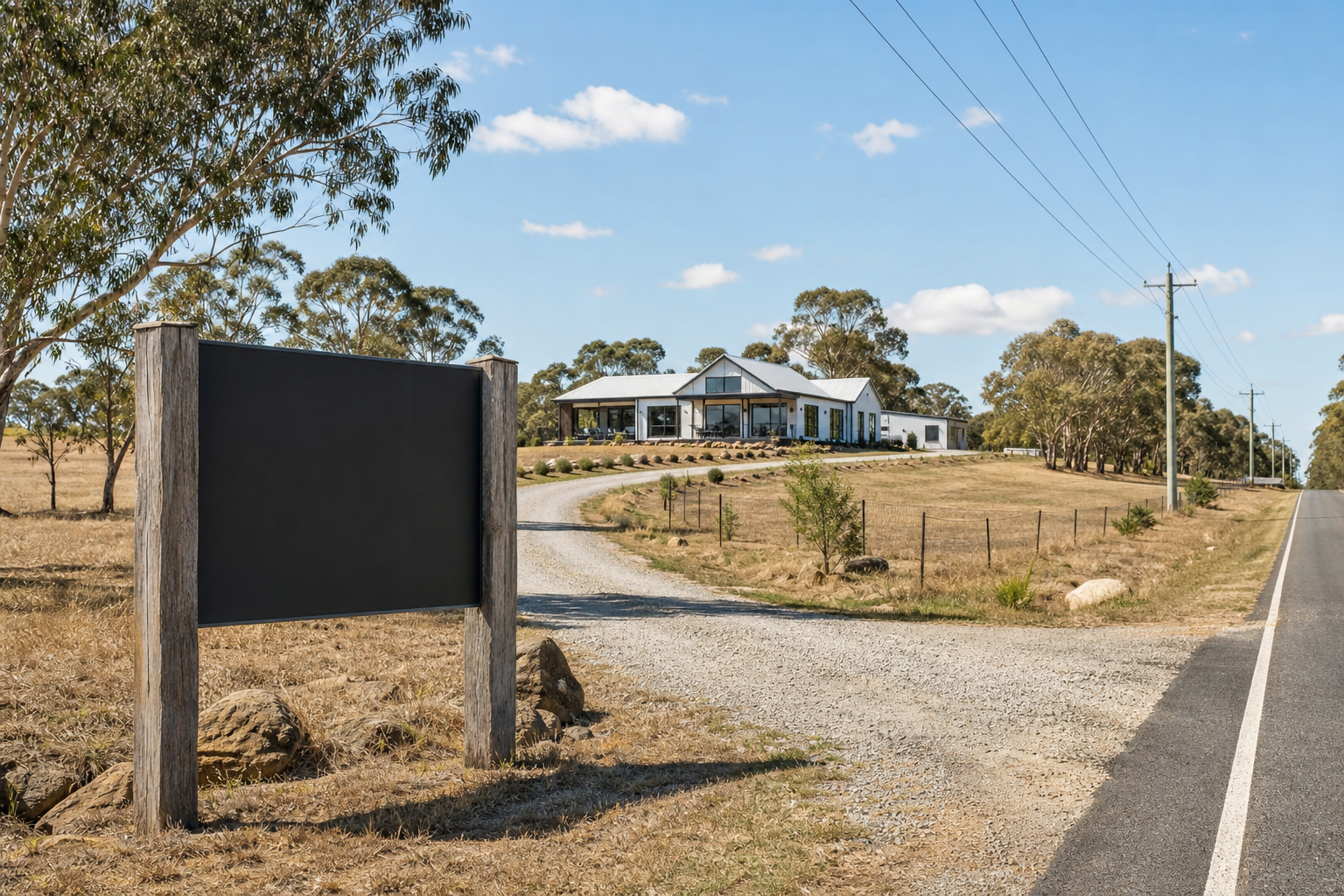
3.1 Services: water, power, road access, sewer
Lenders typically like to see:
- Sealed road access to the front gate or at least to within a short distance.
- Mains power (off‑grid solar can be fine, but expect more questions and occasional lender exclusions).
- Reliable water source, ideally town water or a high‑capacity bore/tank system with evidence of supply.
- Sewer or approved septic system meeting council standards.
If any of these are missing, lenders may:
- Cap LVRs more tightly (e.g. 70–80% instead of 90%).
- Require a specialist valuation with commentary on resaleability.
- Decline the property entirely under residential policy.
3.2 Outbuildings, sheds and secondary dwellings
Many lifestyle blocks have:
- Large sheds or workshops.
- Secondary dwellings, studios or granny flats.
- Horse facilities, arenas or stables.
These can add value, but can also change how the lender categorises the loan:
- If the property looks like a small commercial enterprise (e.g. equestrian centre, truck depot), a residential policy may not apply.
- If a second dwelling is separately rentable, some lenders will treat income cautiously, while others may lean on it.
- Unapproved structures can trigger valuation shortfalls or conditions to regularise approvals.
3.3 Flood, bushfire and other hazard overlays
Many rural properties sit in areas with:
- Bushfire attack level (BAL) ratings that increase building costs and insurance.
- Flood or overland flow risk.
- Landslip or erosion concerns.
Valuers are now expected to comment on these explicitly. For some high‑risk overlays, lenders will:
- Require evidence you can obtain insurance at a reasonable cost.
- Mark down the value or pull back LVR.
- Decline the property if risk is extreme.
It’s worth pulling the planning overlays yourself before committing. Your solicitor or conveyancer can help, and they will often form part of the contract review.
4. How valuers treat rural residential and acreage properties
4.1 Why your valuation may be lower than the contract price
A common shock for acreage buyers is a valuation shortfall, where the bank’s valuer comes in lower than you paid.
This can happen because:
- The valuer focuses on recent comparable sales within a tight radius. Rural residential markets can be thinly traded.
- The valuer may use a “house plus limited land” approach, valuing the dwelling and a core curtilage (say 1–2 ha) at near‑residential rates and applying a steeper discount to additional hectares.
- Specialised features (stables, dams, improved pastures) might not translate to full dollar‑for‑dollar value if they appeal to a narrow buyer pool.
If your contract price is driven by emotional appeal or scarcity, the lender won’t necessarily follow you there.
4.2 Residential vs rural valuation approaches
Indicatively, valuers might approach two otherwise similar properties like this:
| Feature | Suburban house | 8‑ha lifestyle block |
|---|---|---|
| Land treatment | Entire block valued at residential comparable sale rate. | First 1–2 ha valued at higher residential‑style rate; remaining 6–7 ha discounted as surplus land. |
| Improvements | House, garage, landscaping clearly valued. | House and immediate improvements prioritised; farm‑style improvements valued cautiously. |
| Method | Direct comparison with many nearby sales. | Combination of direct comparison, limited local sales, and sometimes income potential commentary. |
The result: your acreage may value less generously relative to the purchase price than a normal suburban home.
4.3 Worked example: valuation shortfall and LVR caps
Assume:
- Purchase price: $1,200,000 lifestyle block on 12 ha.
- Contract calls it rural residential, but the planning certificate shows mixed rural zoning.
- You expect to borrow 80%: $960,000.
The lender orders a valuation. The valuer:
- Values the property at $1,100,000 (thin sales evidence and surplus land discount).
- Notes the zoning is partly rural and the property is more specialised.
- The lender then caps LVR at 70% for this property type.
Your maximum loan becomes the lesser of:
- 80% of contract ($960,000); or
- 70% of valuation (0.70 × $1,100,000 = $770,000).
You now have a $190,000 gap versus expectations. Without extra cash, additional security or a different lender/policy, the deal stalls.
 Structuring loans across city and lifestyle properties can keep your finance options open. ### 5.1 Using your city home or investment as anchor security If you already own a standard residential property with decent equity, one common approach is…
The strategy continues below
You've seen the problem and the groundwork — now unlock the exact steps our CPA-certified brokers use, including 8 more sections. Enter your email for instant, free full access.
Free access. No spam — unsubscribe anytime. Your details stay confidential.
Frequently asked questions
Talk to a CPA-certified broker
Free consultation, plain-English advice tailored to your situation.